 WhatsApp Us (24/7)
 +91 926 888 0303 (24/7)


To Book an Appointment
Call us+91 926 888 0303To Book an Appointment
Call us+91 926 888 0303Recent Articles

Diabetic Patients: Why Regular Health Check-Ups Are Crucial
Living with diabetes means more than just watching what you eat or taking your medicines on time. It is a lifelong journey that demands consistent attention, awareness, and medical supervision. Regular health check-ups form the backbone of effective diabetes care, helping detect potential problems early and allowing you and your doctor to take timely action. Ignoring these visits may allow silent complications to progress unnoticed, eventually leading to serious health issues.
Dr. Priyamvada Tyagi In Endocrinology & Diabetes
Dec 03 , 2025 | 6 min read
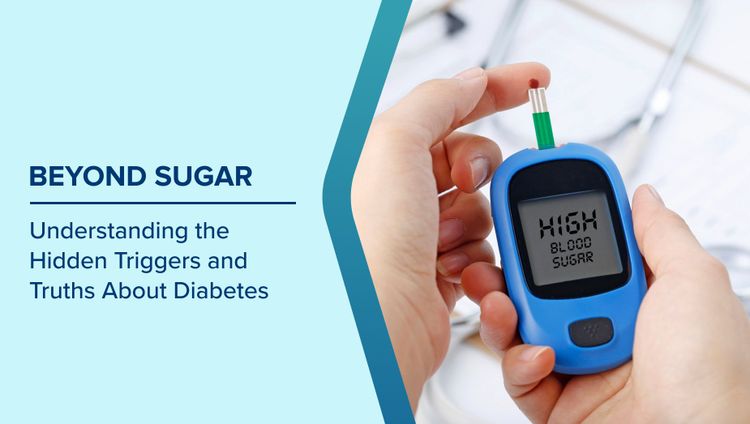
Beyond Sugar: Understanding the Hidden Triggers and Truths About Diabetes
When people think about diabetes, the first thing that comes to mind is sugar. But the truth is far deeper. Diabetes isn’t just about eating sweets. It’s a complex metabolic condition that develops when your body can’t properly regulate blood sugar due to multiple hidden triggers, genetics, stress, sleep, hormones, weight, and lifestyle choices all play a part.
Dr. Aprajita Pradhan In Endocrinology & Diabetes
Dec 02 , 2025 | 3 min read

Gen Z and Millennials: Why Are They at Growing Risk of Type 2 Diabetes
For years, Type 2 diabetes was largely considered a health condition that developed later in life. However, recent trends show a concerning shift; an increasing number of young adults, particularly Gen Z and Millennials, are being diagnosed with it. The condition, once associated with older age and long-term lifestyle habits, is now emerging as a major threat among people in their 20s and 30s.
Dr. Shreya Sharma In Endocrinology & Diabetes Paediatric (Ped) Endocrinology
Nov 27 , 2025 | 4 min read

Visceral Fat: The ‘Invisible’ Belly Fat That Screams Diabetes
When you think of belly fat, what usually comes to mind is the soft layer of fat you can pinch near your waist. But beneath that lies something far more harmful and silent: visceral fat. This “invisible” fat doesn’t sit under your skin. It wraps itself around your internal organs like the liver, pancreas, and intestines. What makes it truly concerning is that you may not even realise it’s there until it begins to affect your health.
Dr. Saket Kant In Endocrinology & Diabetes
Nov 26 , 2025 | 7 min read
Most read blogs

Loose motions or Diarrhea is one of the most common ailments across every age group – from infants and mothers to the elderly. Diarrhea is the frequent passage of watery or loose stools across irregular intervals. There are many possible causes of Diarrhea. These include allergies, food poisoning, infections, and stress. As such, Diarrhea is merely a symptom of one of many possible causes. Most of the time, loose motions is not a serious problem and can be treated at home. Below, we've outlined 3 simple h
Max Team In Internal Medicine
Feb 22 , 2018 | 7 min read

To make sure that what you eat helps your body and also helps you stay interested, spread out your food through the day by following different food ideas. You can mix and match the following depending on how much you can eat and whether you are vegetarian or non vegetarian.
Max Team In Obstetrics And Gynaecology Nutrition And Dietetics
Nov 07 , 2020 | 7 min read
When you have loose motions, the most effective way to return to full health is by changing your diet. There are many foods which can help you to soothe your stomach, but there are some foods that can irritate your stomach. We'll proceed by listing out some of the things that you should and shouldn't do when you have loose motions.
Max Team In Internal Medicine
Mar 21 , 2018 | 7 min read

Many people think that squint is a permanent condition and cannot be corrected. But the truth is that eyes can be straightened at any age. Commonly known as “Strabismus”, where the eyes are not aligned in the same direction, this can be present only part of the time, in one or alternating between two eyes. The squinting may turn in (converge), turn out (diverge) or sometimes turn up or down.
Max Team In Ophthalmology Eye Care / Ophthalmology
Nov 13 , 2020 | 7 min read

Mounjaro (Tirzepatide): Its Uses in Diabetes and Obesity
Mounjaro is primarily an anti-diabetic medication and is highly effective in people with type 2 diabetes, even those with a BMI of 27. It not only helps improve insulin secretion and control blood glucose levels but also significantly aids in weight loss. Additionally, GLP-1 receptor agonists, such as Mounjaro, protect vital organs, including the heart, liver, and kidneys. In summary, the key benefits of diabetes management are:
Dr. Ambrish Mithal In Endocrinology & Diabetes
Nov 20 , 2025 | 2 min read
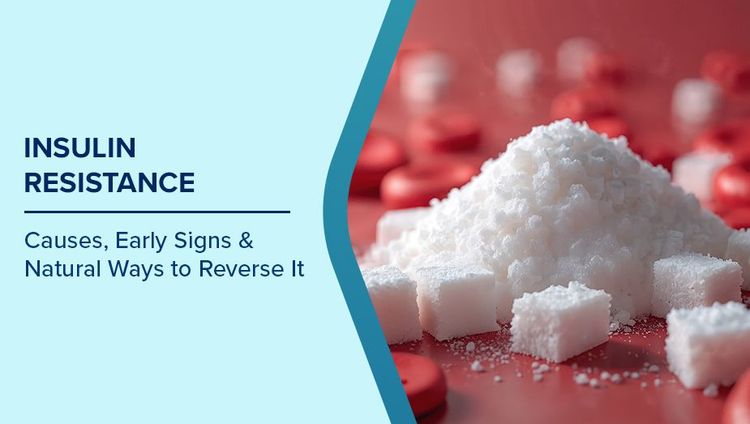
Insulin Resistance: Causes, Early Signs & Natural Ways to Reverse It
Modern lifestyles often create hidden metabolic conditions. One such condition growing quietly is insulin resistance. Understanding its root causes can empower you to make simple but meaningful changes.
Dr. Aprajita Pradhan In Endocrinology & Diabetes
Aug 04 , 2025 | 2 min read

Diabetes Management in Hot Weather: Tips for Safety & Hydration
When the temperature rises, managing diabetes becomes more complex. Hot weather can affect blood sugar levels, hydration, and overall well-being for people with diabetes. Whether you're heading outdoors for a walk or planning a vacation during the hotter months, it's important to know how to keep your body balanced, cool, and safe.
Dr Divya Garg In Endocrinology & Diabetes Internal Medicine
Jun 03 , 2025 | 4 min read

Blood Sugar Spikes After Eating: What’s Normal and When to See a Doctor
After a meal, blood sugar levels usually rise as part of the body’s normal response to food. This happens because the carbohydrates in your meal are broken down into glucose, which then enters the bloodstream and provides energy. The amount and type of food containing carbohydrates you eat affects how quickly this rise happens. In most cases, insulin helps keep these levels within a healthy range by transporting glucose into the cells. But when this process doesn’t work as it should, blood sugar may rise too much or stay elevated longer than expected. Keeping track of these changes is important, especially if they happen often or come with symptoms. This blog will help you understand when a rise in blood sugar after eating is normal and when it might be a concern. Let’s begin by looking at what’s considered a normal blood sugar level after eating.
Dr. Emmy Grewal In Endocrinology & Diabetes
Jun 02 , 2025 | 10 min read
By Specialities
- Aesthetic And Reconstructive Surgery
- Allergy
- Anaesthesia
- Arthroscopic Surgery
- Arthroscopy & Sports Injury
- Audiology
- Ayurveda Medicine
- Bariatric Surgery / Metabolic
- Bone Marrow Transplant
- Breast Cancer
- Cancer Care / Oncology
- Cardiac Anesthesia
- Cardiac Electrophysiology-Pacemaker
- Cardiac Sciences
- Cardiac Surgery
- Cardiac Surgery (CTVS)
- Cardiology
- Child Development Clinic
- Clinical Psychology
- Critical Care
- Dental Care
- Department of General Surgery and Robotics
- Dermatology
- Diabesity Clinic
- Diabetes Educator
- Dietetics
- Emergency & Trauma
- Emergency Medicine
- Endocrinology & Diabetes
- Endodontist & Cosmetic Dentist
- ENT
- ENT(Ear Nose Throat)
- Eye Care / Ophthalmology
- Foetal Medicine
- Gastro Intestinal & Hepatopancreatobiliary Surgical Oncology
- Gastroenterology, Hepatology & Endoscopy
- Gastrointestinal & Hepatobiliary Oncology
- Gastrointestinal Surgery
- General Surgery
- Gynaecologic Laparoscopy
- Gynecologic Oncology
- Haematology
- Hair Transplant
- Hand & Limb Reconstruction
- Head & Neck Oncology
- Health And Wellness
- Hematology
- Hematology Oncology
- Infertility & IVF
- Institute of Laparoscopic, Endoscopic & Bariatric Surgery
- Internal Medicine
- Interventional Cardiology
- Interventional Neurology
- Interventional Radiology
- Kidney Transplant
- Laboratory Medicine / Pathology
- Laparoscopic / Minimal Access Surgery
- Liver Transplant and Biliary Sciences
- Lung Transplant
- Maternity
- Maxillofacial Surgery and Implantology
- Medical & Surgical Gastroenterology
- Medical Oncology
- Mental Health And Behavioural Sciences
- Metabolic And Bariatric Surgery
- Molecular Oncology & Cancer Genetics
- Musculoskeletal Oncology
- Musculoskeletal Surgical Oncology
- Neonatology
- Nephrology
- Neuro Oncology
- Neurology
- Neurosciences
- Neurosurgery
- Nuclear Medicine
- Nutrition And Dietetics
- Obstetrics And Gynaecology
- Oncology Reconstructive Surgery
- Ophthalmology
- Orthopaedics & Joint Replacement
- Paediatric (Ped) Cardiac Surgery
- Paediatric (Ped) Cardiology
- Paediatric (Ped) Endocrinology
- Paediatric (Ped) Gastroenterology
- Paediatric (Ped) Hematology
- Paediatric (Ped) Intensive Care
- Paediatric (Ped) Nephrology
- Paediatric (Ped) Neurology
- Paediatric (Ped) Neurosurgery
- Paediatric (Ped) Oncology
- Paediatric (Ped) Pulmonology
- Paediatric (Ped)/Medical Oncology
- Paediatric Haematology
- Paediatrics (Ped)
- Pain Management
- Palliative Care
- Periodontology
- Physiotherapy & Rehabilitation Medicine
- Psychiatry
- Pulmonology
- Radiation Oncology
- Radiology
- Rheumatology
- Robotic Joint Replacement
- Robotic Surgery
- Spine Surgery
- Surgical Oncology
- Thoracic Oncology
- Thoracic Oncology Surgery
- Thoracic Surgery
- Transfusion Medicine
- Uro-Oncology
- Urology
- Vascular Surgery