 WhatsApp Us (24/7)
 +91 926 888 0303 (24/7)


To Book an Appointment
Call us+91 926 888 0303To Book an Appointment
Call us+91 926 888 0303Recent Articles

20 FAQs about Restless Legs Syndrome Answered
Restless Legs Syndrome (RLS) is a complex and often misunderstood condition that affects millions of people worldwide. Despite its prevalence, there are many misconceptions and questions surrounding RLS. In this article, we aim to provide clarity by answering the frequently asked questions about Restless Legs Syndrome. From its symptoms and triggers to treatment options and lifestyle modifications, we address common inquiries to help individuals better understand and manage this condition.
Dr. Puneet Agarwal In Neurosciences Neurology
Jan 05 , 2026 | 7 min read

Chronic Fatigue Syndrome: Causes, Symptoms and Treatment
Living with Chronic Fatigue Syndrome (CFS) can feel overwhelming and isolating, and it is more common than what most people think. Globally, millions of individuals are affected by CFS. Unfortunately, there is still not much awareness about this growing health concern. That’s why in this article, we aim to provide a comprehensive guide to CFS, offering insights into its causes, symptoms, and effective treatments. With the right knowledge and support, there is hope for managing CFS and enhancing the quality of life for those affected by it. Let’s begin with understanding the disorder.
Dr. Khushboo Patel In Neurology
Jan 05 , 2026 | 6 min read

Meningioma Brain Tumors: Answers to Commonly Asked Questions
A meningioma tumor can be a severe condition, as it typically occurs on the brain, which means it causes a number of other serious conditions. In most cases, these tumors can grow slowly or quickly, depending on the classification of being benign or cancerous. Fortunately, around 90% of these tumors are benign. However, just because they are benign doesn’t mean they can’t cause complications, especially if they continue to grow at a steady pace.
Jan 05 , 2026 | 3 min read

Transient Ischemic Attack (TIA): Symptoms, Effects & Care
Learn about Transient Ischemic Attack (TIA), its symptoms, risks, and long-term effects on brain function. Book an online appointment with the best Neurologist at Max Hospital.
Dr. (Col) Joy Dev Mukherji In Neurosciences Neurology
Jan 05 , 2026 | 1 min read
Most read blogs

Loose motions or Diarrhea is one of the most common ailments across every age group – from infants and mothers to the elderly. Diarrhea is the frequent passage of watery or loose stools across irregular intervals. There are many possible causes of Diarrhea. These include allergies, food poisoning, infections, and stress. As such, Diarrhea is merely a symptom of one of many possible causes. Most of the time, loose motions is not a serious problem and can be treated at home. Below, we've outlined 3 simple h
Max Team In Internal Medicine
Feb 22 , 2018 | 1 min read

To make sure that what you eat helps your body and also helps you stay interested, spread out your food through the day by following different food ideas. You can mix and match the following depending on how much you can eat and whether you are vegetarian or non vegetarian.
Max Team In Obstetrics And Gynaecology Nutrition And Dietetics
Nov 07 , 2020 | 1 min read
When you have loose motions, the most effective way to return to full health is by changing your diet. There are many foods which can help you to soothe your stomach, but there are some foods that can irritate your stomach. We'll proceed by listing out some of the things that you should and shouldn't do when you have loose motions.
Max Team In Internal Medicine
Mar 21 , 2018 | 1 min read

Many people think that squint is a permanent condition and cannot be corrected. But the truth is that eyes can be straightened at any age. Commonly known as “Strabismus”, where the eyes are not aligned in the same direction, this can be present only part of the time, in one or alternating between two eyes. The squinting may turn in (converge), turn out (diverge) or sometimes turn up or down.
Max Team In Ophthalmology Eye Care / Ophthalmology
Nov 13 , 2020 | 1 min read

Stroke Risk: Crucial Stroke Signs to Act Before It’s Late
A stroke can strike without warning, yet it's one of the most preventable and treatable medical emergencies if caught early. A stroke, often referred to as a "brain attack," occurs when the brain's blood supply is disrupted, leading to the quick death of brain cells. This can lead to permanent disability or even death if not treated in time. Recognising the warning signs and acting fast can save lives.
Dr. Rajneesh Kummar In Neurosciences Neuro Oncology Neurology
Jan 05 , 2026 | 3 min read
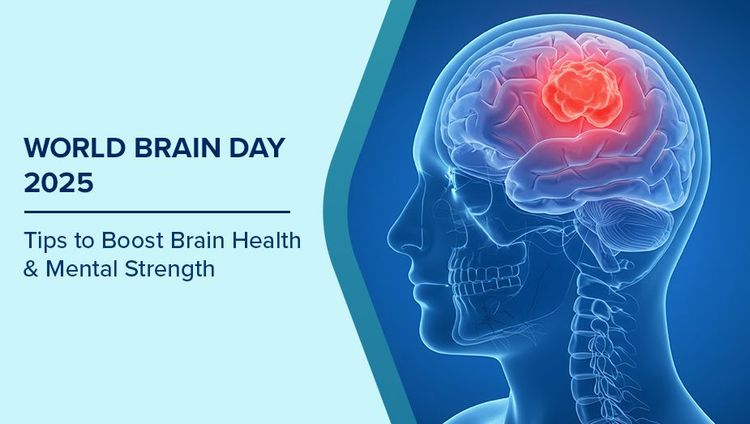
World Brain Day 2025: Tips to Boost Brain Health & Mental Strength
Our brain powers everything we do, from thinking and feeling to movement and memory. In today’s fast-paced, always-connected world, we’re constantly exposed to stress, screens, and an overwhelming amount of information. All of this adds pressure on our brain’s ability to stay healthy. Now more than ever, prioritising brain health with simple habits is essential for maintaining focus, emotional balance and long-term cognitive well-being.
Dr. Shamsher Dwivedee In Neurosciences Neurology
Jan 05 , 2026 | 3 min read

Stroke: What you should know?
Stroke (also known as cerebrovascular accident or brain attack) occurs when part of the brain loses its blood supply and stops working. This lead to paralysis of the part of body which that injured part of brain controls. Stroke occurs mostly due to a sudden loss of blood supply and in that case is an ischemic stroke. Stroke that happens due to bleeding in the brain is called hemorrhagic stroke
Max Team In Neurology
Jan 05 , 2026 | 1 min read

Epilepsy: Triggers, Diagnosis, and Management
Abnormal body jerky movements due to abnormal diffuse electrical activity in the brain are known as seizures. A normal person can get one episode of seizure in his lifetime. Two or more episodes of seizures 24 hours apart or one episode of seizure with a high propensity to develop recurrent seizures in the next 10 years is known as case epilepsy.
Dr. Khushboo Patel In Neurology
Jan 05 , 2026 | 2 min read
By Specialities
- Aesthetic And Reconstructive Surgery
- Allergy
- Anaesthesia
- Arthroscopic Surgery
- Arthroscopy & Sports Injury
- Audiology
- Ayurveda Medicine
- Bariatric Surgery / Metabolic
- Bone Marrow Transplant
- Breast Cancer
- Cancer Care / Oncology
- Cardiac Anesthesia
- Cardiac Electrophysiology-Pacemaker
- Cardiac Sciences
- Cardiac Surgery
- Cardiac Surgery (CTVS)
- Cardiology
- Child Development Clinic
- Clinical Psychology
- Critical Care
- Dental Care
- Department of General Surgery and Robotics
- Dermatology
- Diabesity Clinic
- Diabetes Educator
- Dietetics
- Emergency & Trauma
- Emergency Medicine
- Endocrinology & Diabetes
- Endodontist & Cosmetic Dentist
- ENT
- ENT(Ear Nose Throat)
- Eye Care / Ophthalmology
- Foetal Medicine
- Gastro Intestinal & Hepatopancreatobiliary Surgical Oncology
- Gastroenterology, Hepatology & Endoscopy
- Gastrointestinal & Hepatobiliary Oncology
- Gastrointestinal Surgery
- General Surgery
- Gynaecologic Laparoscopy
- Gynecologic Oncology
- Haematology
- Hair Transplant
- Hand & Limb Reconstruction
- Head & Neck Oncology
- Health And Wellness
- Hematology
- Hematology Oncology
- Infertility & IVF
- Institute of Laparoscopic, Endoscopic & Bariatric Surgery
- Internal Medicine
- Interventional Cardiology
- Interventional Neurology
- Interventional Radiology
- Kidney Transplant
- Laboratory Medicine / Pathology
- Laparoscopic / Minimal Access Surgery
- Liver Transplant and Biliary Sciences
- Lung Transplant
- Maternity
- Maxillofacial Surgery and Implantology
- Medical & Surgical Gastroenterology
- Medical Oncology
- Mental Health And Behavioural Sciences
- Metabolic And Bariatric Surgery
- Molecular Oncology & Cancer Genetics
- Musculoskeletal Oncology
- Musculoskeletal Surgical Oncology
- Neonatology
- Nephrology
- Neuro Oncology
- Neurology
- Neurosciences
- Neurosurgery
- Nuclear Medicine
- Nutrition And Dietetics
- Obstetrics And Gynaecology
- Oncology Reconstructive Surgery
- Ophthalmology
- Orthopaedics & Joint Replacement
- Paediatric (Ped) Cardiac Surgery
- Paediatric (Ped) Cardiology
- Paediatric (Ped) Endocrinology
- Paediatric (Ped) Gastroenterology
- Paediatric (Ped) Hematology
- Paediatric (Ped) Intensive Care
- Paediatric (Ped) Nephrology
- Paediatric (Ped) Neurology
- Paediatric (Ped) Neurosurgery
- Paediatric (Ped) Oncology
- Paediatric (Ped) Pulmonology
- Paediatric (Ped)/Medical Oncology
- Paediatric Haematology
- Paediatrics (Ped)
- Pain Management
- Palliative Care
- Periodontology
- Physiotherapy & Rehabilitation Medicine
- Psychiatry
- Pulmonology
- Radiation Oncology
- Radiology
- Rheumatology
- Robotic Joint Replacement
- Robotic Surgery
- Spine Surgery
- Surgical Oncology
- Thoracic Oncology
- Thoracic Oncology Surgery
- Thoracic Surgery
- Transfusion Medicine
- Uro-Oncology
- Urology
- Vascular Surgery