 WhatsApp Us (24/7)
 +91 926 888 0303 (24/7)


To Book an Appointment
Call Us+91 926 888 0303How Heartburn Actually Feels: Diagnostic Tests & Lifestyle Changes
By Dr. Suhang Verma in Gastroenterology, Hepatology & Endoscopy
Mar 12 , 2026

Heartburn is one of those problems people live with quietly. It often starts small. A burning feeling after meals. A sour taste in the mouth at night. Discomfort that feels annoying but not serious. Many people brush it off as acidity or something they ate.
What makes heartburn tricky is that it can look harmless for years and still cause real damage inside the body. For some, it is occasional and mild. For others, it becomes a daily struggle that affects sleep, appetite, work, and peace of mind. In certain cases, untreated heartburn can even lead to long-term complications.
What Heartburn Really Feels Like
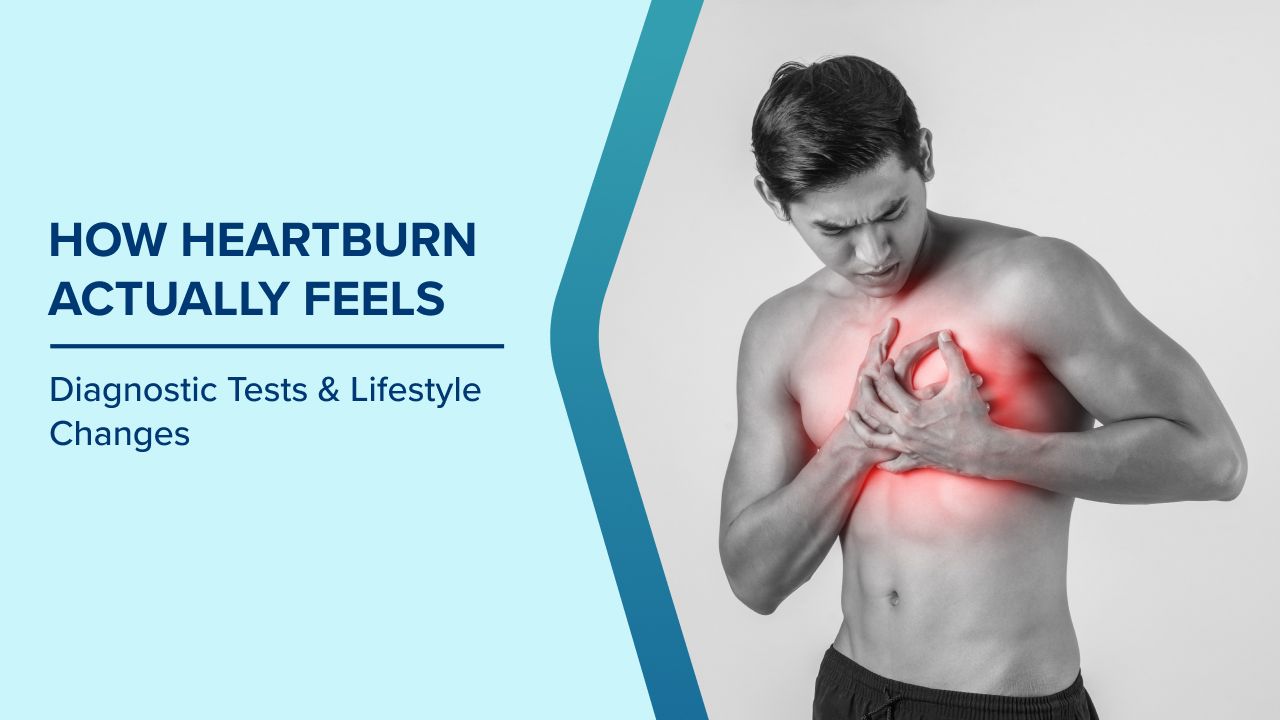
The word heartburn can be misleading. The pain has nothing to do with the heart, yet the discomfort often sits behind the breastbone. That is why many people feel confused or anxious when symptoms appear.
Heartburn happens when stomach acid flows upward into the food pipe. This acid irritates the sensitive lining and creates a burning or tight sensation. But not everyone feels it as burning.
Some common but overlooked symptoms include:
- A dull pressure in the chest after meals
- Frequent throat clearing or hoarseness in the morning
- Bitter or sour taste at the back of the mouth
- A feeling of food coming back up after eating
- A dry cough that lingers without infection
- Discomfort that worsens when lying down or bending
Many patients do not label these as heartburn at all. They think it is stress, poor posture, sinus issues, or ageing. This delay in recognition is one of the reasons heartburn often becomes chronic before treatment begins.
When Heartburn Is More Than Occasional Acidity
Occasional heartburn after a heavy or spicy meal is common and usually harmless. The concern starts when symptoms become frequent or persistent. Warning signs that deserve medical attention include:
- Heartburn more than twice a week
- Symptoms that wake you up at night
- Difficulty swallowing food or liquids
- Unexplained weight loss
- Chest discomfort that feels different from usual acidity
- Heartburn that does not improve with over-the-counter medicines
These signs suggest gastroesophageal reflux disease, often called GERD. In this condition, acid reflux happens repeatedly and can damage the food pipe over time. Ignoring these symptoms does not make them go away. It only allows silent injury to continue.
Why Some People Develop Chronic Heartburn
Many people eat similar food and live similar lifestyles, yet only some develop persistent heartburn. The difference often lies in how the lower end of the food pipe functions.
At the junction of the food pipe and stomach sits a valve that opens to let food in and closes to keep acid down. When this valve weakens or relaxes at the wrong time, acid escapes upward. Factors that increase this risk include:
- Excess body weight that increases pressure on the stomach
- Pregnancy due to hormonal and physical changes
- Smoking which weakens the valve and irritates tissues
- Regular use of pain medicines like certain anti-inflammatory drugs
- Large meals eaten late at night
- Chronic stress that affects digestion and gut movement
Understanding these triggers helps explain why heartburn is not just about food choices. It is often a mix of physical, hormonal, and behavioural factors.
How Doctors Diagnose Heartburn
Many patients assume a heartburn diagnosis is based only on symptoms. While symptoms provide clues, doctors use structured methods to confirm the cause and rule out other conditions. Diagnosis usually begins with a detailed discussion about:
- When symptoms occur
- What makes them worse or better
- Nighttime symptoms
- Response to previous medicines
If symptoms are mild and typical, treatment may begin without tests. However, further evaluation is advised when symptoms are severe, long-standing, or unusual.
Common Diagnostic Tests
- Upper Endoscopy: A thin flexible camera is used to view the food pipe and stomach. This test helps detect inflammation, ulcers, narrowing, or early tissue changes.
- pH Monitoring: This test measures how often acid enters the food pipe over a day. It helps confirm acid reflux when symptoms are unclear.
- Manometry: This checks muscle movement and valve function in the food pipe. It is useful when swallowing issues or treatment failure is present.
These tests are not done routinely for everyone. They are carefully selected based on symptoms and treatment response.
Why Accurate Diagnosis Matters More Than People Realise
Heartburn symptoms can overlap with other conditions. Chest discomfort can mimic heart problems. Throat symptoms can resemble allergies. Stomach pain may suggest ulcers.
Treating heartburn without confirming the cause may delay the diagnosis of:
- Esophageal strictures
- Barrett changes in the food pipe
- Motility disorders
- In rare cases, early cancer
Accurate diagnosis ensures the right treatment is given at the right time. It also prevents unnecessary long-term medication use when reflux is not the true cause.
Treatment Is Not Just About Stopping Acid
- Short-term relief: For occasional symptoms, doctors may recommend medicines that neutralise acid or reduce its production.
- Healing the Food Pipe: For frequent symptoms, acid-reducing medicines are used for a defined period to allow damaged tissue to heal.
- Long-Term Control: Once symptoms improve, treatment focuses on maintaining comfort with the lowest effective dose and lifestyle adjustments.
In selected patients, especially those with severe reflux or complications, surgical options may be discussed to strengthen the valve mechanism.
Lifestyle Changes That Actually Make a Difference
- Eating smaller meals instead of one heavy dinner
- Keeping a gap between dinner and bedtime
- Elevating the head of the bed slightly
- Identifying personal trigger foods
- Wearing loose clothing around the abdomen
The goal is not restriction but balance. Patients who understand why changes help are more likely to follow them long term.
Heartburn and Emotional Well-being
Living with constant discomfort affects more than digestion. Many patients report anxiety around eating, fear of symptoms in public, and disturbed sleep. Nighttime reflux in particular impacts rest and concentration. Over time, this can affect mood and daily functioning.
Clear diagnosis and a structured treatment plan often provide emotional reassurance. Knowing what is happening inside the body reduces fear and uncertainty.
When Heartburn Needs Long-Term Monitoring
- Long-standing reflux
- Tissue changes seen on endoscopy
- Family history of digestive cancers
- Symptoms starting later in life
Monitoring helps detect changes early and adjust treatment as needed. It is not about alarm but about prevention.
Living Comfortably With Heartburn
- Early treatment prevents complications
- Consistency matters more than intensity
- Understanding triggers gives control
- Follow-up visits provide clarity
- Treatment plans can evolve over time
Heartburn does not have to control daily life. With the right approach, most people regain comfort and confidence.
Conclusion
Heartburn is common, but it should never be dismissed. Paying attention to symptoms, seeking timely diagnosis, and following a structured treatment plan can prevent discomfort from turning into disease.
Frequently Asked Questions
Can heartburn occur without stomach pain?
Yes, many people experience throat irritation, cough, or chest pressure without classic stomach pain.
Is heartburn dangerous if left untreated?
Occasional heartburn is usually harmless, but persistent symptoms can damage the food pipe and lead to complications.
Do heartburn medicines lose effect over time?
Some medicines may become less effective if misused. Proper dosing and follow-up help maintain benefit.
Can heartburn be confused with heart problems?
Yes, chest discomfort should always be evaluated, especially if symptoms are new or different.
Does heartburn always require lifelong treatment?
No, many patients improve with a combination of short-term medication and long-term lifestyle changes.
Written and Verified by:

Related Blogs

Dr. Nivedita Pandey In Gastroenterology, Hepatology & Endoscopy , Liver Transplant and Biliary Sciences
Nov 07 , 2020 | 2 min read

Dr. Nivedita Pandey In Gastroenterology, Hepatology & Endoscopy , Liver Transplant and Biliary Sciences
Nov 07 , 2020 | 2 min read
Blogs by Doctor


What is Giardiasis? Transmission, Symptoms, and Treatment Explained
Dr. Suhang Verma In Gastroenterology, Hepatology & Endoscopy
Nov 14 , 2025 | 10 min read
Most read Blogs


Related Blogs
Dr. Nivedita Pandey In Gastroenterology, Hepatology & Endoscopy , Liver Transplant and Biliary Sciences
Nov 07 , 2020 | 2 min read
Dr. Nivedita Pandey In Gastroenterology, Hepatology & Endoscopy , Liver Transplant and Biliary Sciences
Nov 07 , 2020 | 2 min read
Blogs by Doctor
What is Giardiasis? Transmission, Symptoms, and Treatment Explained
Dr. Suhang Verma In Gastroenterology, Hepatology & Endoscopy
Nov 14 , 2025 | 10 min read
Most read Blogs