 WhatsApp Us (24/7)
 +91 926 888 0303 (24/7)


To Book an Appointment
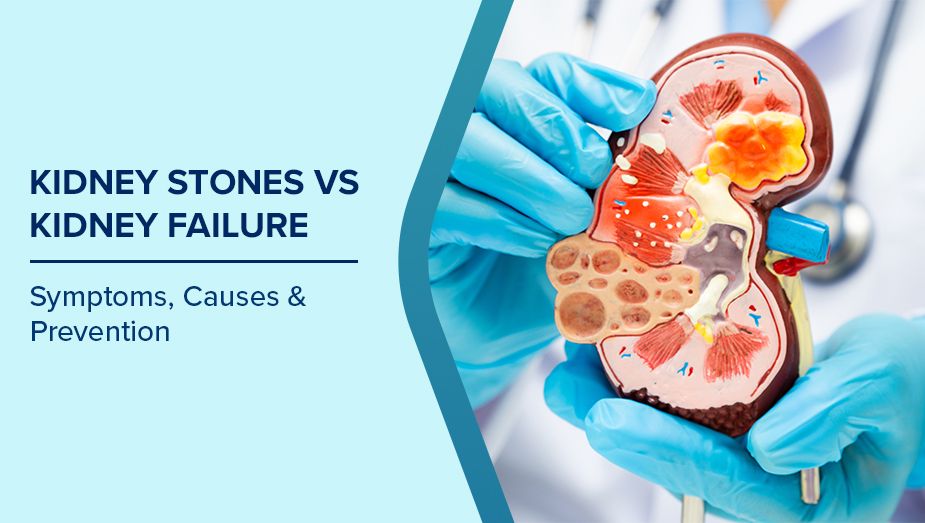
Call Us+91 926 888 0303Kidney Stones vs Kidney Failure: Symptoms, Causes & Prevention
By Dr. Ashish Nandwani in Nephrology , Kidney Transplant
Aug 04 , 2025 | 3 min read

Many people use the term "kidney problem" without fully understanding its meaning. Two of the most common kidney-related conditions, kidney stones and kidney failure, are often confused with each other. While both affect the same organ, they differ significantly in their development, symptoms, and treatment. Understanding the difference is important for taking the right steps toward diagnosis, treatment, and long-term kidney health.
What Are Kidney Stones?
Kidney stones are small, hard deposits that form inside the kidneys when minerals, such as calcium or uric acid, build up. They're like tiny "pebbles" that may cause sharp pain when they move through the urinary tract.
Common Kidney Stone Symptoms
- Sudden, severe pain in the back or side
- Pain while urinating
- Blood in the urine
- Frequent urge to urinate
- Nausea or vomiting
Kidney stones can range from tiny grains to large stones that may require medical intervention. Some stones pass naturally, while others require treatments such as shockwave therapy or minor surgery.
What is Kidney Failure?
Unlike kidney stones, kidney failure means the kidneys are no longer able to filter waste and excess fluids from the blood effectively. It can happen suddenly (acute kidney failure) or over time (chronic kidney disease leading to end-stage renal failure).
Kidney Failure Early Signs to Watch
- Swelling in the legs, ankles, or face
- Fatigue and weakness
- Reduced urine output
- Shortness of breath
- Confusion or difficulty concentrating
This condition is far more serious than kidney stones. If not managed properly, it may require dialysis or even a kidney transplant.
Kidney Failure vs. Kidney Stones: Key Differences
Kidney stones are usually painful but treatable. Kidney failure is more serious and, if not managed on time, can lead to complete loss of kidney function.
Kidney stone pain is usually sudden and intense, while kidney failure often creeps in silently. That's why kidney health awareness is so important — you may not feel anything until it's too late.
What Causes Each Condition?
Kidney Stones
- Dehydration
- Diets high in salt, protein, or sugar
- Obesity
- Family history
- Certain medications or supplements
Kidney Failure
- Long-term diabetes or high blood pressure
- Repeated kidney infections
- Autoimmune diseases
- Genetic disorders like polycystic kidney disease
Lifestyle Impact: A Hidden Burden
People with kidney stones often fear the pain returning. It disrupts sleep, work, and travel. On the other hand, chronic kidney care involves ongoing treatment, strict diets, and regular dialysis sessions, which affect emotional well-being and finances.
Ignoring early signs of either condition can be costly, both financially and in terms of quality of life.
Why Timely Diagnosis Matters
Delaying the diagnosis of kidney disease can lead to permanent damage. Simple blood and urine tests can detect early kidney problems. Renal failure diagnosis often begins with checking your creatinine levels and glomerular filtration rate (GFR). For kidney stones, imaging techniques such as ultrasound or CT scans confirm their presence.
With early detection, many kidney issues can be managed or even reversed. That's why kidney health awareness needs to go beyond just drinking water.
Prevention Tips for Both Conditions
- Stay hydrated, especially in hot climates
- Limit salt and processed food intake
- Control blood sugar and blood pressure
- Avoid overuse of painkillers
- Get regular kidney function tests
Small steps can prevent big problems. Taking charge of your lifestyle can help avoid both stones and failure.
Conclusion
Both kidney stones and kidney failure can sneak up when you least expect them. But being informed and proactive can make all the difference.
You don't have to wait for symptoms to act. Regular check-ups, even when you feel fine, can protect your kidneys in the long run. Whether it's preventing kidney stone symptoms or avoiding chronic kidney disease, the right time to care for your kidneys is now.
Frequently Asked Questions
Can stress lead to kidney stones or kidney failure?
Chronic stress alone doesn't directly cause kidney disease, but it can contribute to high blood pressure, which affects kidney function.
How much water should I drink to prevent kidney stones?
About 2 to 3 litres a day is ideal, but individual needs may vary depending on your activity level and climate.
Are all kidney stones visible in an ultrasound?
Not always. Some small or uric acid stones might need a CT scan for detection.
Can someone have kidney stones and kidney failure at the same time?
Yes, in rare cases, untreated stones can lead to infections or blockages that damage kidney function over time.
What is the role of diet in managing kidney failure?
For kidney failure, a doctor may suggest a low-sodium, low-potassium, and controlled-protein diet tailored to your needs. A dietitian can help guide this.
Written and Verified by:

Related Blogs

Dr. Puneet Arora In Nephrology
Nov 11 , 2020 | 2 min read

Nov 11 , 2020 | 9 min read
Blogs by Doctor

Hypertension & Kidney Disease Diet: Best Foods & Tips
Dr. Ashish Nandwani In Nephrology , Kidney Transplant
Apr 02 , 2025 | 4 min read
Protect Your Kidneys: Tests & Tips to Prevent Kidney Disease
Dr. Ashish Nandwani In Nephrology , Kidney Transplant
Aug 04 , 2025 | 2 min read
Most read Blogs


Related Blogs
Dr. Puneet Arora In Nephrology
Nov 11 , 2020 | 2 min read
Nov 11 , 2020 | 9 min read
Blogs by Doctor
Hypertension & Kidney Disease Diet: Best Foods & Tips
Dr. Ashish Nandwani In Nephrology , Kidney Transplant
Apr 02 , 2025 | 4 min read
Protect Your Kidneys: Tests & Tips to Prevent Kidney Disease
Dr. Ashish Nandwani In Nephrology , Kidney Transplant
Aug 04 , 2025 | 2 min read
Most read Blogs