 WhatsApp Us (24/7)
 +91 926 888 0303 (24/7)


To Book an Appointment
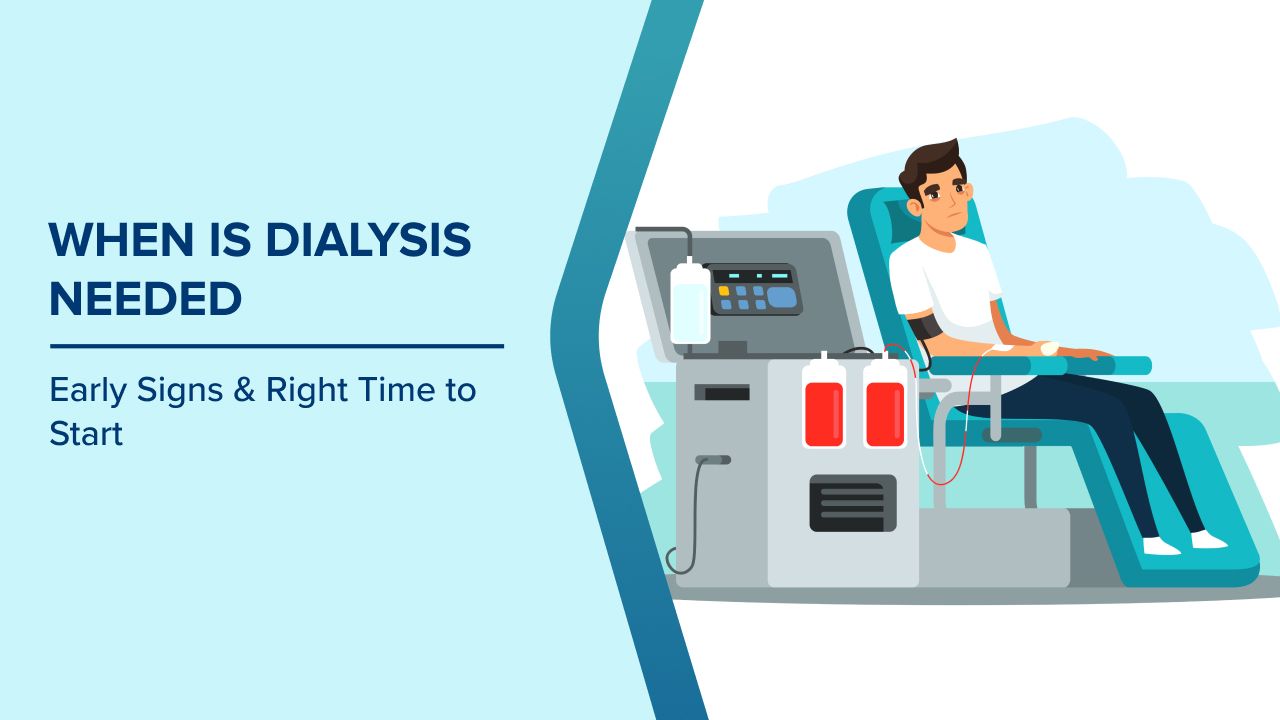
Call Us+91 926 888 0303When is Dialysis Needed: Early Signs & Right Time to Start
By Dr. Vishal Saxena in Nephrology , Kidney Transplant
May 08 , 2026

For many people living with kidney disease, one of the biggest concerns is knowing when dialysis becomes necessary. Hearing that dialysis may be needed can feel worrying, but the decision is not based on a single test result.
Dialysis is usually recommended when the kidneys are no longer able to remove enough waste, extra fluid, and toxins from the body to keep it functioning safely. At Max Hospital, Gurugram, nephrology specialists carefully assess each patient to determine the right time to start treatment.
What Is Dialysis?
Dialysis is a treatment that performs some of the work of healthy kidneys. It helps remove waste products, maintain fluid balance, and regulate the levels of important minerals in the blood when the kidneys are no longer able to do so effectively.
Not every patient with kidney disease needs dialysis immediately. Many people with reduced kidney function can continue taking medicines, making diet changes, and having regular monitoring for some time.
When Do Doctors Recommend Dialysis?
Doctors recommend dialysis when kidney failure begins to cause symptoms or complications that can no longer be controlled with medicines or lifestyle measures. Dialysis may be needed if a patient experiences:
Severe symptoms of kidney failure
These may include:
- Persistent nausea or vomiting
- Extreme tiredness or weakness
- Loss of appetite
- Difficulty concentrating
- Persistent itching
- Confusion or unusual drowsiness
Fluid build-up in the body
When the kidneys cannot remove extra fluid, swelling can develop in the legs, feet, or face. In more serious cases, fluid can collect in the lungs, leading to shortness of breath.
High potassium levels
A dangerous rise in potassium can affect the heart rhythm and may require urgent treatment, including dialysis.
Acid build-up in the blood
If the kidneys cannot remove enough acid from the body and medicines are no longer effective, dialysis may be necessary.
Is Dialysis Started Based Only on Kidney Function Numbers?
Doctors often use the estimated glomerular filtration rate (eGFR) to monitor kidney function. While dialysis is usually discussed in advanced stages of kidney disease (eGFR less than 12-15ml/min), the decision is not based on a single number.
Some patients may tolerate low kidney function for a while, while others may need dialysis sooner, depending on their symptoms and overall condition.
Can Dialysis Be Temporary?
Yes, in some cases of Acute kidney injury, dialysis may only be needed for a short period until kidney function improves.
In advanced chronic kidney disease, dialysis may become a long-term treatment if the kidneys do not recover.
Can Dialysis Be Delayed?
In many cases, yes. Early diagnosis and proper management of kidney disease can help slow its progression. Good control of diabetes and high blood pressure, regular follow-up, and following medical advice can often delay the need for dialysis.
Conclusion
Dialysis is usually needed when the kidneys can no longer maintain the body’s balance of waste products, fluids, and minerals. The right time to start dialysis depends on symptoms, blood test results, and the patient’s overall health, not just a single laboratory value.
At Max Hospital, Gurugram, kidney specialists guide patients through every stage of kidney care and help determine when dialysis is truly needed.
Written and Verified by:

Related Blogs

Dr. Puneet Arora In Nephrology
Nov 11 , 2020 | 2 min read

Nov 11 , 2020 | 9 min read
Blogs by Doctor
Why Uncontrolled Blood Pressure is the Leading Risk Factor for Kidney Failure
Dr. Vishal Saxena In Nephrology , Kidney Transplant
Sep 12 , 2025 | 2 min read

From Dialysis to New Life: Understanding Benefits of Kidney Transplant
Dr. Vishal Saxena In Nephrology , Kidney Transplant
Oct 27 , 2025 | 2 min read
Most read Blogs


Related Blogs
Dr. Puneet Arora In Nephrology
Nov 11 , 2020 | 2 min read
Nov 11 , 2020 | 9 min read
Blogs by Doctor
Why Uncontrolled Blood Pressure is the Leading Risk Factor for Kidney Failure
Dr. Vishal Saxena In Nephrology , Kidney Transplant
Sep 12 , 2025 | 2 min read
From Dialysis to New Life: Understanding Benefits of Kidney Transplant
Dr. Vishal Saxena In Nephrology , Kidney Transplant
Oct 27 , 2025 | 2 min read
Most read Blogs