 WhatsApp Us (24/7)
 +91 926 888 0303 (24/7)


To Book an Appointment
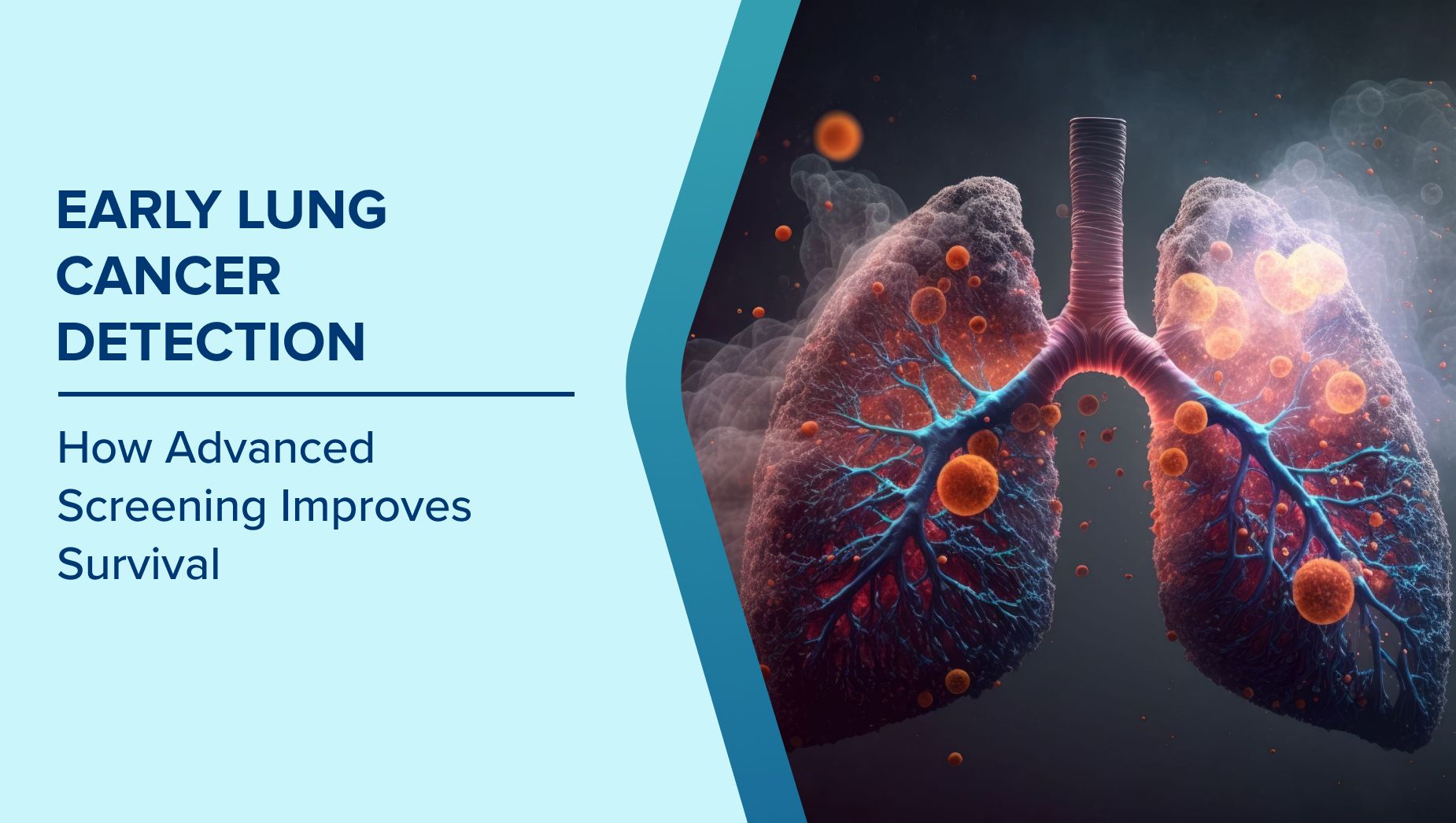
Call Us+91 926 888 0303Early Lung Cancer Detection: How Advanced Screening Improves Survival
By Dr. Kumardeep Dutta Choudhury in Cancer Care / Oncology , Thoracic Oncology , Robotic Surgery
Jan 06 , 2026 | 4 min read

Lung cancer remains one of the major causes of cancer-related deaths across the globe. Its detection is often difficult because symptoms may not appear until the disease has progressed to a later stage, when treatment options are more limited and survival chances are lower.
Fortunately, recent advancements in medical technology have made it possible to identify lung cancer at an earlier stage, thereby improving the prospects for effective treatment. Through modern approaches, it is now possible to identify the disease before it progresses.
This shift in focus from late treatment to early identification is transforming outcomes. With advanced lung cancer screening methods becoming more widely available, the potential to improve survival rates and provide patients with a better quality of life has never been greater.
Why Early Detection Matters for Lung Cancer Survival
The stage at which lung cancer is detected is one of the most important factors in determining survival. Patients diagnosed at an early stage often have access to less invasive treatments, shorter recovery times, and significantly higher survival rates compared to those diagnosed at later stages.
Advances in Lung Cancer Screening Technologies
The evolution of cancer detection has been remarkable. Traditional chest X-rays, once considered the main tool, have limited accuracy in spotting small tumours. In contrast, today’s advanced lung cancer screening methods provide far greater detail and precision.
- Low-dose CT scan for lung cancer: This technology uses lower levels of radiation compared to standard CT scans but delivers highly detailed images. It can detect tiny nodules that may not be visible on X-rays.
- AI-assisted imaging: Artificial intelligence is increasingly used to analyse CT scans. AI tools can highlight subtle abnormalities and reduce the risk of missed diagnoses.
- Biomarker testing: Blood-based and sputum-based biomarker tests are emerging as valuable tools to detect molecular changes linked to lung cancer, helping with earlier and more accurate diagnosis.
- Genetic testing: Personalised cancer screening is now possible by identifying genetic mutations that raise lung cancer risk. This helps doctors recommend targeted surveillance for those who need it most.
These technologies are not only improving accuracy but also making screening more patient-friendly and accessible.
Who Should Consider Advanced Screening?
Not everyone requires regular lung cancer check-ups, but there are groups who are at higher risk and therefore more likely to benefit.
- Current and former smokers: Tobacco use remains the leading lung cancer risk factor, particularly for those with a long history of smoking.
- People with occupational exposure: Individuals working in industries with asbestos, diesel fumes, or certain chemicals may face increased risk.
- Those with a family history: A close relative diagnosed with lung cancer may indicate a genetic predisposition.
- Individuals with existing lung conditions: Chronic obstructive pulmonary disease (COPD) and other respiratory illnesses, can heighten vulnerability.
By targeting high-risk groups with advanced lung cancer screening, healthcare systems can detect the disease earlier while using resources more effectively.
How Early Screening Translates into Better Prognosis and Survival
The direct link between early lung cancer detection and improved outcomes cannot be overstated. Identifying cancer in its initial stages means that surgical removal or targeted therapies are more likely to succeed. Treatments are often less aggressive, and patients have a greater chance of maintaining normal day-to-day life.
Furthermore, the early-stage lung cancer prognosis is far more optimistic. Patients detected through advanced screening enjoy longer survival times and reduced recurrence rates. Beyond statistics, this translates into more time with loved ones, the ability to continue work or education, and an overall better quality of life.
Conclusion
The future of lung cancer care is shifting from reaction to prevention. Early lung cancer detection through advanced screening technologies is giving patients a stronger chance of survival and a better quality of life. From low-dose CT scans to AI-driven analysis and personalised genetic testing, the tools available today are powerful and continually improving.
For individuals at risk, a lung cancer check-up is more than just a test. It is an opportunity to safeguard the future. Consulting with specialists and exploring personalised cancer screening options can make all the difference. With continued innovation and broader adoption, lung cancer survival rates can improve dramatically, turning early detection into a life-saving reality.
FAQs
Can lung cancer be detected through a routine chest X-ray?
Chest X-rays can sometimes reveal abnormalities, but they are not sensitive enough to reliably detect early-stage lung cancer. Advanced imaging, such as low-dose CT, is more accurate.
How often should high-risk individuals undergo lung cancer screening?
Most guidelines recommend annual low-dose CT scans for people at high risk, though frequency can vary based on personal history and medical advice.
Are there any risks associated with low-dose CT scans?
The radiation exposure is minimal, but there is a small chance of false positives. The benefits of early detection, however, usually outweigh these risks.
What lifestyle changes complement early screening in reducing lung cancer risk?
Quitting smoking, avoiding occupational hazards, exercising regularly, and maintaining a balanced diet all contribute to lowering lung cancer risk.
Can lung cancer be detected before symptoms appear?
Yes, advanced screening methods like low-dose CT scans and biomarker tests can identify lung cancer at an early stage, often before any symptoms develop.
Written and Verified by:

Related Blogs

Dr. Kanika Batra Modi In Cancer Care / Oncology
Nov 07 , 2020 | 3 min read

Dr. R.Ranga Rao In Medical Oncology , Cancer Care / Oncology , Thoracic Oncology
Nov 07 , 2020 | 2 min read
Blogs by Doctor
Most read Blogs


Related Blogs
Dr. Kanika Batra Modi In Cancer Care / Oncology
Nov 07 , 2020 | 3 min read
Dr. R.Ranga Rao In Medical Oncology , Cancer Care / Oncology , Thoracic Oncology
Nov 07 , 2020 | 2 min read
Blogs by Doctor
Most read Blogs