 WhatsApp Us (24/7)
 +91 926 888 0303 (24/7)


To Book an Appointment
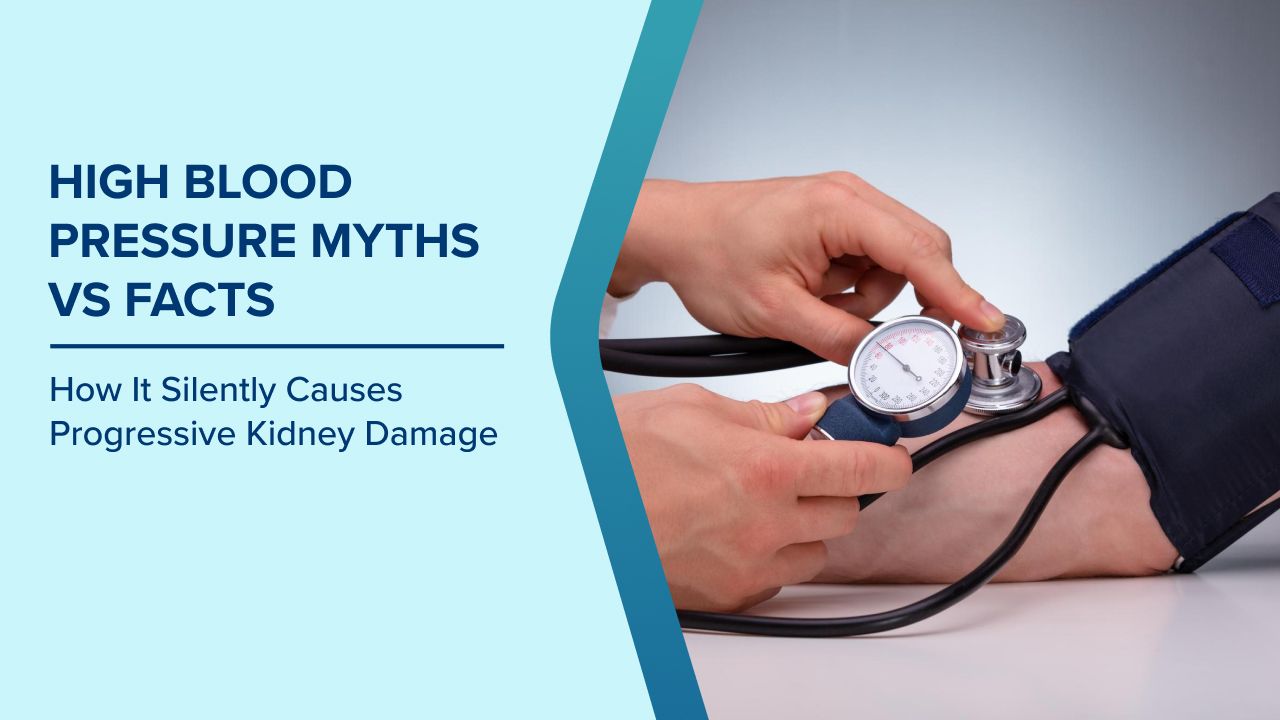
Call Us+91 926 888 0303High Blood Pressure Myths vs Facts: How It Silently Causes Progressive Kidney Damage
By Dr Blessy Sehgal in Nephrology
Jan 30 , 2026
5

High blood pressure is often discussed as a heart problem, but its impact on kidney health remains widely misunderstood. Millions of people live with hypertension, believing their kidneys are safe as long as symptoms are absent. This belief is one of the biggest reasons kidney disease is diagnosed late.
High blood pressure-related kidney damage develops quietly, progresses gradually, and often becomes evident only after significant loss of kidney function. Separating myths from facts is essential because early awareness enables prevention, while misinformation can lead to irreversible damage.
Understanding the Real Connection Between High Blood Pressure and Kidneys
High blood pressure increases the force of blood flowing through the arteries. Over time, this pressure injures delicate blood vessels throughout the body. The kidneys are particularly vulnerable because they rely on a dense network of tiny vessels to continuously filter blood.
When these vessels are damaged, the kidneys lose their ability to filter waste products, regulate fluid balance, and maintain electrolyte balance. This process is slow, painless, and often unnoticed.
Myth 1: Kidney Damage Happens Only in Severe or Emergency Blood Pressure Levels
Fact: Long-term mild or moderate hypertension can be equally damaging
Many people assume kidney damage only occurs when blood pressure readings are dangerously high. In reality, persistent readings that are only mildly elevated can quietly damage kidney vessels over the years.
The kidneys respond to constant pressure by narrowing blood vessels, reducing blood flow, and gradually scarring filtering units. This is why people with slightly high but untreated blood pressure are often surprised by kidney disease later in life.
Myth 2: You Will Always Feel Symptoms When Kidneys Are Affected
Fact: Early kidney damage causes no noticeable symptoms
One of the most dangerous misconceptions is that kidney disease causes early warning signs. In truth, kidneys can lose significant function before any symptoms appear.
Swelling, fatigue, nausea, or changes in urination usually occur only in advanced stages. This silent progression explains why routine blood and urine testing is essential for people with high blood pressure.
Myth 3: Normal Blood Pressure Now Means the Kidneys Are Safe
Fact: Past uncontrolled blood pressure can leave permanent kidney injury
Lowering blood pressure helps prevent further damage, but it does not always reverse scarring that has already formed. Kidney tissue has limited regenerative capacity.
This means damage accumulated during years of poor control may continue to affect kidney function even after blood pressure improves. Early control remains the strongest protective factor.
Myth 4: Kidney Damage From Hypertension Only Affects Older Adults
Fact: Younger adults face a rising risk due to lifestyle factors
High blood pressure is increasingly diagnosed in younger adults due to stress, obesity, poor diet, lack of exercise, and sleep deprivation. When hypertension begins early, kidneys remain exposed to damaging pressure for decades.
This increases the lifetime risk of chronic kidney disease, even if symptoms never appear until middle age.
Myth 5: Blood Pressure Medications Damage the Kidneys
Fact: Most prescribed medications protect kidney function
Many patients stop or avoid blood pressure medication, fearing kidney harm. In reality, medications such as ACE inhibitors and ARBs are specifically used to protect kidney blood vessels.
Doctors monitor kidney function and potassium levels to ensure safety. Stopping medication without guidance increases kidney risk far more than taking it.
Myth 6: Kidney Damage Is Inevitable Once Hypertension Starts
Fact: Early control can prevent or slow kidney disease
High blood pressure does not guarantee kidney damage. Many people maintain healthy kidney function for life with proper blood pressure management.
The key lies in early diagnosis, consistent treatment, and lifestyle adjustments. Delay, not hypertension itself, causes most kidney complications.
Myth 7: Normal Creatinine Means Kidneys Are Healthy
Fact: Protein in urine often appears before creatinine rises
Blood creatinine may remain normal even when early kidney damage is present. One of the earliest signs of hypertensive kidney disease is protein leakage in urine.
Urine testing often detects kidney stress years before blood tests change. Relying only on creatinine can miss early disease.
Myth 8: Kidney Damage Progresses Slowly in Everyone
Fact: Progression speed varies widely between individuals
Some people experience very slow kidney decline over decades, while others progress rapidly. Factors that accelerate damage include uncontrolled blood pressure, diabetes, smoking, obesity, and genetic predisposition.
This unpredictability makes regular monitoring essential.
What Hypertensive Nephropathy Really Means
Hypertensive nephropathy refers to kidney damage caused by long-standing high blood pressure. As blood vessels narrow and stiffen, kidney filters lose oxygen and nutrients, leading to scarring and reduced filtration capacity.
Over time, this condition can progress to chronic kidney disease and kidney failure if untreated.
Chronic Kidney Disease Stages Linked to Hypertension
- Early stages show protein in urine with preserved function
- Moderate stages show rising creatinine and reduced filtration
- Advanced stages lead to fluid overload and electrolyte imbalance
- Final stage results in kidney failure requiring dialysis or transplant
Early detection can slow progression at any stage.
Diagnosis: How Kidney Damage Is Detected Early
- Blood tests for creatinine and kidney function
- Urine tests for protein leakage
- Long-term blood pressure monitoring
- Imaging when structural issues are suspected
Routine screening allows intervention before irreversible damage occurs.
Conclusion
High blood pressure-related kidney damage is driven more by misunderstanding than inevitability. Myths delay action, while facts empower prevention. Early blood pressure control, routine kidney screening, and informed decision making protect kidney health and preserve quality of life.
Frequently Asked Questions
Can kidney damage from high blood pressure be detected early?
Yes, urine and blood tests often reveal early changes long before symptoms appear.
How often should kidney tests be done in hypertension?
Most people need annual testing, with more frequent checks if risk factors exist.
Can kidney damage be reversed?
Early functional changes may improve, but scarring is usually permanent.
Does drinking more water protect the kidneys from hypertension?
Hydration helps overall health, but does not replace blood pressure control.
When should a kidney specialist be consulted?
Referral is advised when protein in urine increases, kidney function declines, or blood pressure remains difficult to control.
Written and Verified by:

Related Blogs

Dr. Puneet Arora In Nephrology
Nov 11 , 2020 | 2 min read

Nov 11 , 2020 | 9 min read
Blogs by Doctor

Silent Kidney Disease: Symptoms & Risk Factors
Dr Blessy Sehgal In Nephrology
Jun 08 , 2015 | 3 min read
Most read Blogs


Related Blogs
Dr. Puneet Arora In Nephrology
Nov 11 , 2020 | 2 min read
Nov 11 , 2020 | 9 min read
Blogs by Doctor
Silent Kidney Disease: Symptoms & Risk Factors
Dr Blessy Sehgal In Nephrology
Jun 08 , 2015 | 3 min read
Most read Blogs