 WhatsApp Us (24/7)
 +91 926 888 0303 (24/7)


To Book an Appointment
Call Us+91 926 888 0303Fatty Liver To Liver Failure: How It Progresses & When To Act
By Dr. Ajitabh Srivastava in Liver Transplant and Biliary Sciences
Dec 15 , 2025 | 7 min read

The liver is one of the body’s most resilient organs, quietly carrying out hundreds of functions that keep you healthy. It filters toxins, regulates nutrients, supports immunity, and keeps your metabolism in balance. Yet this vital organ can slowly become damaged without producing noticeable symptoms. Many people discover changes in their liver only when complications begin to appear. A simple fatty liver may seem harmless at first, but over time, it can trigger a series of changes that lead to serious conditions.
Understanding how fatty liver progresses to liver failure is crucial. The journey from mild fat accumulation to irreversible liver damage does not happen overnight. It is the result of years of silent stress on liver cells. Recognising when to take action can change the course of your health and prevent long-term complications.
What Happens in the Liver When Fat Begins to Accumulate
Fatty liver begins when liver cells start storing more fat than they can process. The liver normally handles a small amount of fat, but problems arise when these fat deposits increase. While this early phase does not necessarily cause damage, it sets the stage for more serious issues.
If the accumulation continues, liver cells become stressed. This stress gradually interferes with normal functioning, leading to irritation and vulnerability. Over time, these changes weaken the liver's natural ability to repair itself.
The key concern is not the presence of fat alone but how long the liver has been struggling to manage it. When fat overload persists, the liver shifts from a mild problem to a condition that needs urgent attention.
How Fatty Liver Starts Progressing to Inflammation
When the liver becomes overwhelmed, it triggers a defensive response. The immune system steps in, attempting to repair the irritated tissues. This leads to inflammation inside the liver. Unlike mild fat accumulation, inflammation indicates that liver cells are being harmed.
Inflammation does not develop suddenly. It is the result of continuous strain. People often assume they would feel something when there is inflammation, but the liver rarely causes pain unless it becomes severely enlarged.
One of the most concerning aspects is that inflammation can continue silently for years. Without timely action, this stage becomes the turning point where future damage becomes more likely.
Scar Tissue Begins to Form: The Early Steps of Fibrosis
The liver has a remarkable ability to heal itself. When cells are injured, new ones are formed. However, when injury keeps happening, the healing process becomes imperfect. Instead of regenerating healthy tissue, the liver begins producing scar tissue.
Scar tissue forms as a protective response, but it interrupts the smooth functioning of liver cells. This stage is known as fibrosis. It is neither fully reversible nor completely irreversible. With early action, fibrosis can improve, but it becomes more difficult to treat as the scarring spreads.
Fibrosis develops gradually. It may start in small pockets, but over time, the patches can grow, affecting how blood flows through the organ. Once blood flow is interrupted, more complications follow.
When Scar Tissue Takes Over: Understanding Cirrhosis
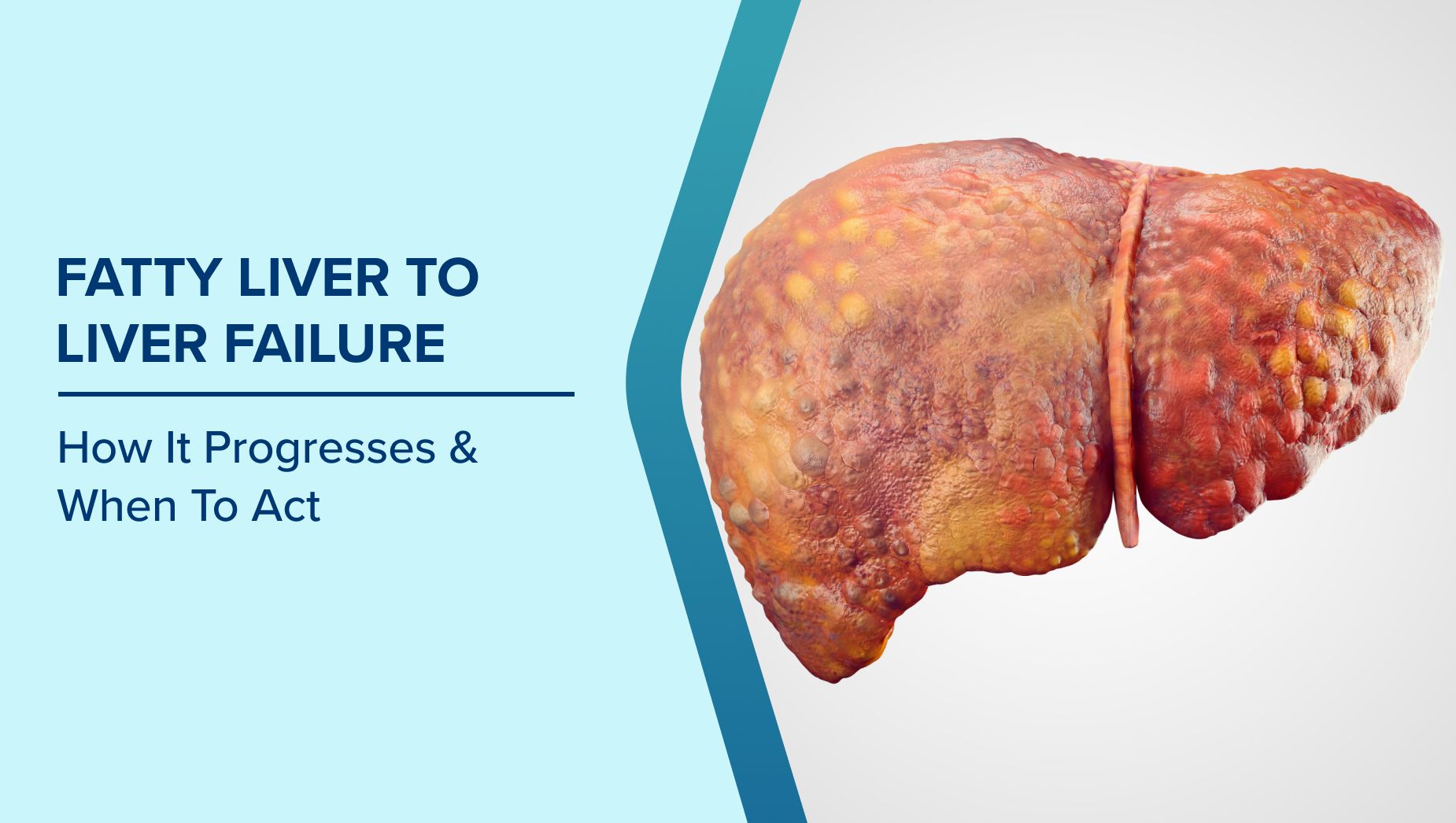
Cirrhosis is a stage where scar tissue becomes widespread and starts replacing healthy liver cells. At this point, the architecture of the liver changes significantly. The organ becomes harder, less flexible, and unable to perform its normal functions efficiently.
Unlike the early stages of liver damage, cirrhosis can cause noticeable symptoms. People may experience swelling in the legs, changes in skin colour, a feeling of extreme tiredness, or digestive discomfort. However, even these signs can be subtle at first.
Cirrhosis does not develop from a single episode of injury. It represents years of ongoing liver stress. Once cirrhosis sets in, the liver cannot fully return to normal. The goal then becomes preventing further deterioration and managing complications.
How Cirrhosis Advances to Liver Failure
When the remaining healthy liver cells can no longer function effectively, the liver enters failure. Liver failure is a serious condition where the organ loses its ability to filter toxins, regulate chemicals, and support vital bodily processes.
There are two types of liver failure. One develops slowly over many years; the other progresses rapidly. In the context of fatty liver, the slow form is more common. It shows that the liver has reached a point where it can no longer compensate for the damaged areas.
Signs of liver failure may include confusion, extreme fatigue, swelling, vomiting, or bleeding tendencies. At this stage, urgent medical intervention becomes necessary, as the condition could become life-threatening.
Why Some People Progress Faster Than Others
The journey from fatty liver to failure is different for each person. For some individuals, progression may take decades. For others, it can accelerate quickly. The speed of progression often depends on several factors that influence liver health over time.
Eating habits, alcohol intake, body weight, long-term medications, hormonal imbalances, and metabolic conditions can all affect how fast liver damage develops. Additionally, genetics can make some people more prone to faster deterioration.
Another major factor is how early someone takes action. Those who address fatty liver in the initial stages have a far better chance of preventing advanced complications. People who ignore early changes may reach severe stages without realising it.
Hidden Signs That the Liver Is Struggling
Although early fatty liver is usually silent, there are subtle signs that may suggest the liver is under pressure. These signs may not point directly to liver disease, but could indicate a need for a closer look.
These may include changes in energy levels, sensitivity to fatty foods, slow digestion, or bloating. Some people may notice their clothes feeling tighter around the waist due to a slight enlargement of the liver. Others may observe dull discomfort on the right side of the abdomen.
While these signs do not confirm liver damage, they should encourage someone to monitor their health more closely. Ignoring early hints might allow the condition to progress unnoticed.
How Everyday Choices Influence Liver Progression
Lifestyle habits have a major influence on liver health. Small decisions made daily can either support the liver or push it towards further damage. While many people know that alcohol affects the liver, other habits can also contribute.
Irregular meal timings, frequent intake of heavy or processed foods, lack of hydration, high sugar consumption, and long periods of sitting can silently strain the liver. The liver works continuously, and choices that increase its workload accelerate progression.
On the other hand, certain habits can support natural healing. Eating balanced meals, staying active, maintaining hydration, managing sleep, and avoiding unnecessary medications can help reduce stress on the liver.
When You Should Start Worrying and Take Action
Not every person with fatty liver will progress to failure, but it is important to know when action is necessary. The right time to take steps is not when symptoms appear, but much earlier.
You should consider acting immediately if you experience:
- Unexplained tiredness that persists
- Discomfort in the upper right abdomen
- Sudden changes in digestion
- Swelling in the legs or abdomen
- Yellowish tint on the skin or eyes
- Easy bruising or bleeding
- Mental fog or reduced alertness
How to Support a Damaged Liver Before It Declines Further
Once the liver shows signs of stress, supporting it becomes essential. The aim is to reduce the load on the liver and give it time to repair whatever it can.
Making gradual changes to eating habits, increasing water intake, engaging in regular physical activity, and reducing exposure to toxins can make a meaningful difference. These small steps lighten the liver’s workload.
It is also important to avoid unnecessary supplements or herbal products that claim to boost liver health. Many of these products can actually do more harm than good. Keeping healthcare guidance at the centre of your decisions is the safest approach.
Conclusion
Fatty liver can be reversed in its early stages, but ignoring its progression can lead to serious and irreversible damage. The journey from fat accumulation to liver failure happens slowly and quietly, which makes early awareness and timely action essential. Understanding how the liver deteriorates helps you recognise when it is time to seek help and make changes that support long-term health.
FAQs
Can liver damage progress even if I feel completely healthy?
Yes, many people with advancing liver issues feel normal for years. The liver does not produce noticeable symptoms until significant damage has occurred.
Is it possible for liver damage to worsen even without alcohol intake?
Absolutely, alcohol is only one factor. Metabolic conditions, lifestyle habits, and certain medications can all influence progression.
Does liver enlargement mean the condition is severe?
Not always. The liver may enlarge in early or intermediate stages. However, persistent enlargement should be checked to understand the underlying cause.
Can stress affect the liver’s ability to function well?
Stress influences hormones and metabolic processes, which can indirectly strain the liver. It does not cause damage alone but may accelerate progression when combined with other factors.
How often should someone with early fatty liver get checked?
Regular evaluation is advised, but the exact frequency should be personalised based on individual health status and the guidance of a healthcare professional.
Written and Verified by:

Related Blogs

Prof (Dr.) Subhash Gupta In Liver Transplant and Biliary Sciences
Nov 07 , 2020 | 2 min read

Dr. Nivedita Pandey In Gastroenterology, Hepatology & Endoscopy , Liver Transplant and Biliary Sciences
Nov 07 , 2020 | 2 min read
Blogs by Doctor


Liver Health: Simple Habits to Avoid Toxins Daily
Dr. Ajitabh Srivastava In Liver Transplant and Biliary Sciences
Nov 20 , 2024 | 6 min read
Most read Blogs


Related Blogs
Prof (Dr.) Subhash Gupta In Liver Transplant and Biliary Sciences
Nov 07 , 2020 | 2 min read
Dr. Nivedita Pandey In Gastroenterology, Hepatology & Endoscopy , Liver Transplant and Biliary Sciences
Nov 07 , 2020 | 2 min read
Blogs by Doctor
Liver Health: Simple Habits to Avoid Toxins Daily
Dr. Ajitabh Srivastava In Liver Transplant and Biliary Sciences
Nov 20 , 2024 | 6 min read
Most read Blogs