 WhatsApp Us (24/7)
 +91 926 888 0303 (24/7)


To Book an Appointment
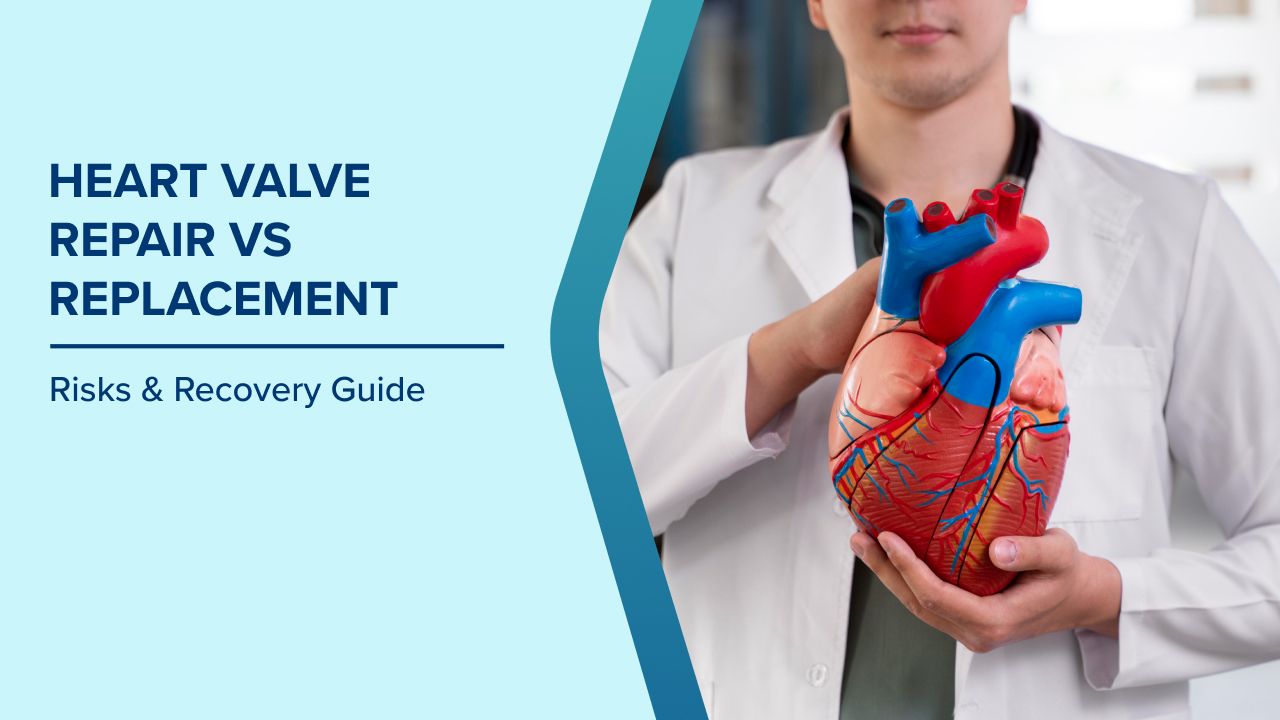
Call Us+91 926 888 0303Heart Valve Repair vs Replacement: Risks & Recovery Guide
By Dr Nilesh Agrawal in Cardiac Surgery (CTVS)
Mar 09 , 2026

Heart valve surgery is performed to repair or replace a damaged heart valve that is not functioning properly. A heart has four valves:
- Mitral valve: Between left atrium and left ventricle
- Aortic valve: From left ventricle to aorta
- Tricuspid valve: Between right atrium and right ventricle
- Pulmonary valve: From right ventricle to lungs
These valves ensure one-way blood flow.
When a valve becomes:
- Narrow (Stenosis): It does not open properly
- Leaky (Regurgitation): It does not close tightly
The heart works harder, which can lead to:
- Breathlessness
- Fatigue
- Leg swelling
- Chest discomfort
- Heart failure
Surgery restores normal blood flow and protects heart function.
What Causes Heart Valve Disease?
Common causes include:
- Age-related degeneration
- Rheumatic heart disease
- Infection (Endocarditis)
- Congenital valve defects
- Calcification
- Previous heart attack
An echocardiogram (heart ultrasound) is the main test used to diagnose valve disease.
When Is Heart Valve Surgery Needed?
Not all valve problems require immediate surgery. Surgery is recommended when:
- Symptoms become severe
- Heart pumping function reduces
- The heart enlarges
- Severe stenosis or regurgitation is confirmed
- Signs of heart failure appear
In selected patients, early surgery before advanced symptoms develop improves long-term outcomes.
Heart Valve Repair vs Replacement: Which Is Better?
The choice depends on:
- Type of valve involved
- Severity of damage
- Patient’s age
- Lifestyle
- Other medical conditions
Both procedures are safe and effective when performed in experienced cardiac centres.
What Is Heart Valve Repair?
Heart valve repair preserves your natural valve.
- It is most commonly performed for:
- Mitral valve regurgitation
- Selected tricuspid valve problems
Advantages of Valve Repair
- Preserves natural tissue
- Better long-term heart function
- Lower infection risk
- Usually no lifelong blood thinners
- Excellent long-term survival in selected patients
Whenever feasible, repair is preferred.
What Is Heart Valve Replacement?
Replacement is necessary when the valve is too damaged to repair. Common situations include:
- Severe calcification
- Advanced aortic stenosis
- Failed prior repair
- Extensive infection damage
The diseased valve is removed and replaced with a prosthetic valve.
Replacement can be performed through:
- Traditional open-heart surgery
- Minimally invasive surgery
- Transcatheter techniques (in selected cases)
Mechanical vs Biological Valve: What Should You Choose?
If replacement is required, patients choose between two types of valves.
What Is a Mechanical Valve?
- Made from synthetic durable material
- Requires lifelong anticoagulation (blood thinners)
- Usually preferred in younger patients
Who Is It Suitable For?
Patients who want a durable solution and are comfortable with long-term anticoagulation monitoring.
What Is a Biological (Tissue) Valve?
- Made from animal tissue (cow or pig)
- Typically lasts 10–20 years
- Usually does not require lifelong anticoagulation
- Often preferred in older patients
Who Is It Suitable For?
Patients who want to avoid lifelong blood thinners.
What Are the Risks of Heart Valve Surgery?
Modern valve surgery is safe in experienced centres. However, potential risks include:
- Bleeding
- Infection
- Stroke
- Heart rhythm disturbances
- Blood clots
- Anaesthesia-related complications
Risk depends on:
- Age
- Diabetes or kidney disease
- Overall heart function
- Type of procedure
A detailed pre-surgical evaluation helps minimise complications.
How Long Is Recovery After Heart Valve Surgery?
- Recovery depends on the type of surgery
- ICU stay: 1–2 days
- Hospital stay: 5–7 days after open surgery
- Shorter after minimally invasive procedures
When Can You Resume Normal Activities?
- Light activity: 2–4 weeks
- Driving: 4–6 weeks
- Return to work: 8–10 weeks (depending on job type)
- Full recovery may take several months
Cardiac rehabilitation significantly improves recovery and long-term outcomes.
What Is Life Like After Valve Surgery?
Most patients experience:
- Relief from breathlessness
- Better exercise tolerance
- Improved quality of life
Long-term care includes:
- Regular echocardiograms
- Medication adherence
- Blood pressure control
- Cholesterol management
- Healthy diet
- Avoiding smoking
Patients with mechanical valves require regular anticoagulation monitoring. With proper follow-up, most patients return to normal, active lives.
Conclusion
Heart valve surgery is not something to fear. In many cases, it restores quality of life, improves longevity, and prevents serious complications. The key is timely diagnosis, personalised decision-making, and treatment in an experienced cardiac centre.
Frequently Asked Questions
Is heart valve surgery very painful?
Pain is well controlled with medications. Minimally invasive procedures cause less discomfort. Most patients improve steadily within weeks.
Can valve surgery improve heart failure?
If heart failure is primarily caused by valve disease, surgery can significantly improve symptoms and heart function.
Is valve surgery safe in elderly patients?
Yes. Modern minimally invasive and transcatheter techniques have improved safety in older patients.
What happens if valve disease is left untreated?
Untreated severe valve disease can lead to:
- Progressive heart failure
- Stroke
- Arrhythmias
- Reduced life expectancy
Timely evaluation and treatment prevent complications.
Written and Verified by:

Related Blogs

Dr. Ganesh Kumar Mani In Cardiac Sciences , Cardiac Surgery (CTVS)
Apr 25 , 2016 | 3 min read

Dr. Kewal Krishan In Cardiac Sciences , Cardiac Surgery (CTVS)
May 02 , 2016 | 4 min read
Blogs by Doctor

Most read Blogs


Related Blogs
Dr. Ganesh Kumar Mani In Cardiac Sciences , Cardiac Surgery (CTVS)
Apr 25 , 2016 | 3 min read
Dr. Kewal Krishan In Cardiac Sciences , Cardiac Surgery (CTVS)
May 02 , 2016 | 4 min read
Blogs by Doctor
Most read Blogs