 WhatsApp Us (24/7)
 +91 926 888 0303 (24/7)


To Book an Appointment
Call Us+91 926 888 0303Blood in Vomit: Causes, Warning Signs, Diagnosis, and Treatment
By Dr. Monica Mahajan in Internal Medicine
Apr 08 , 2026
4

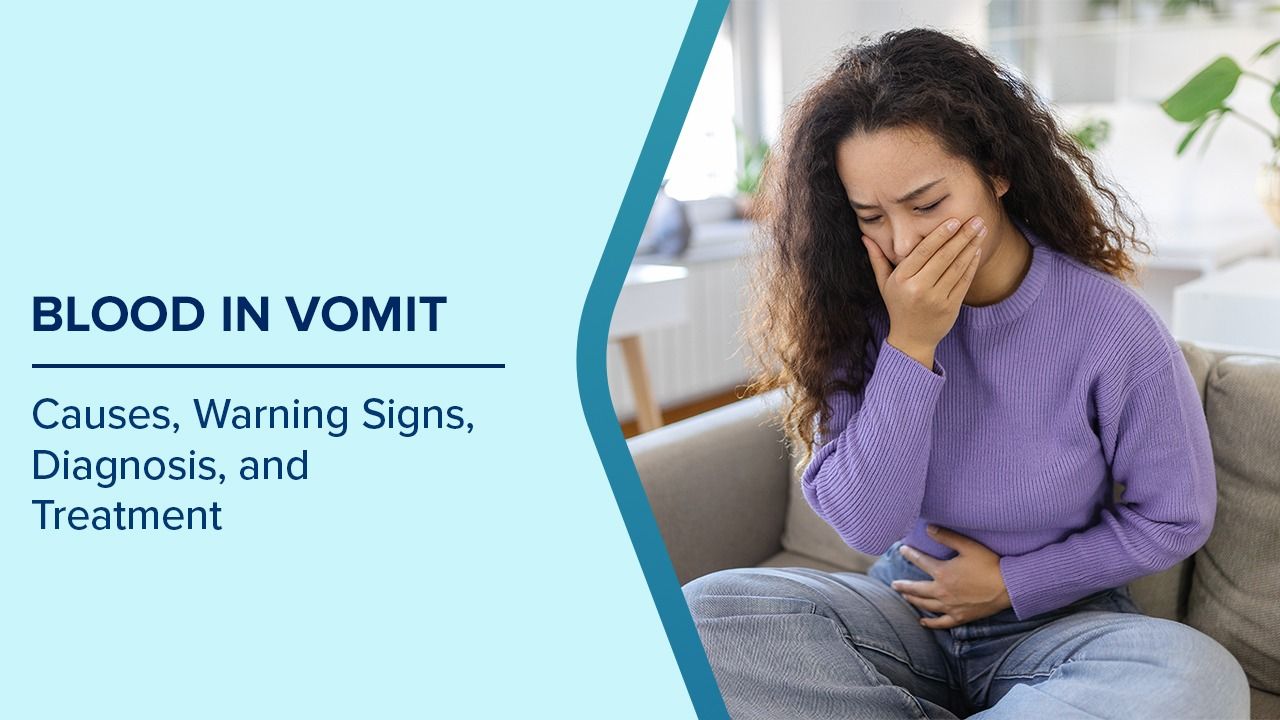
Seeing blood in vomit can be alarming. In medical terms, this is called haematemesis. It is never considered normal and often points to bleeding somewhere in the upper digestive tract, such as the food pipe, stomach, or the first part of the small intestine. Even a small amount of blood should not be ignored. The colour, quantity, and associated symptoms can offer important clues about the source of bleeding. This blog explains what blood in vomit means, the possible reasons behind it, how doctors diagnose the condition, and the treatment options available.
What Does Blood in Vomit Look Like?
Blood in vomit does not always look the same. Its appearance often depends on where the bleeding is coming from and how long the blood has been in the stomach. It may look like:
- Bright red blood: Fresh, red blood usually suggests active bleeding, often from the food pipe or upper part of the stomach.
- Dark red or maroon blood: This may indicate slightly slower bleeding or blood that has stayed in the stomach for a short time.
- Coffee-ground appearance: Vomit that looks dark brown or black, similar to coffee grounds, usually means the blood has been partially digested by stomach acid.
- Blood mixed with food: In some cases, streaks or clots of blood may be seen along with recently eaten food.
It is also important to tell the difference between vomiting blood and coughing up blood. Vomited blood often comes with nausea and may contain food particles. Blood from the lungs is usually coughed up and may appear frothy. Any form of blood in vomit should be checked by a doctor without delay.
What are the Common Causes of Blood in Vomit?
Blood in vomit usually means there is bleeding somewhere in the upper digestive tract. This includes the food pipe, stomach, or the first part of the small intestine. The cause can range from irritation of the stomach lining to more serious medical conditions.
Stomach-Related Causes
- Gastritis: Inflammation of the stomach lining can lead to bleeding. It may develop due to infection, frequent use of painkillers, alcohol intake, or severe stress on the body.
- Peptic ulcers: Open sores that form in the lining of the stomach or upper small intestine can bleed. Ulcers are a common reason for vomiting blood.
- Stomach infections: Certain infections can damage the stomach lining and cause bleeding.
Oesophageal Causes
- Oesophageal varices: These are enlarged veins in the food pipe, often linked to liver disease. If they rupture, they can cause heavy bleeding.
- Tears in the food pipe: Forceful or repeated vomiting can cause small tears in the lining of the food pipe, leading to bleeding.
- Severe acid reflux: Long-term irritation from stomach acid can damage the lining of the food pipe and result in bleeding.
Liver-Related Causes
- Cirrhosis of the liver: Scarring of the liver can increase pressure in nearby veins, leading to swollen veins in the food pipe that may bleed.
Other Possible Causes
- Swallowing blood: Blood from a nosebleed or bleeding gums may be swallowed and later vomited.
- Certain medicines: Some painkillers and blood-thinning medicines can increase the risk of stomach bleeding.
- Alcohol misuse: Heavy alcohol intake can irritate the stomach lining and increase the risk of bleeding.
What Symptoms May Occur Along With Blood in Vomit?
Blood in vomit is often not the only sign of a problem. Other symptoms may appear depending on the cause and the amount of blood lost. Some symptoms suggest mild irritation, whereas others may point to serious internal bleeding. Common symptoms include:
- Abdominal pain: Burning or sharp pain in the upper abdomen may be linked to ulcers or gastritis.
- Nausea and repeated vomiting: Ongoing vomiting can worsen irritation and increase the risk of tears in the food pipe.
- Black or tarry stools: This can indicate that blood has passed through the digestive tract.
- Dizziness or fainting: Blood loss can reduce blood pressure and affect circulation.
- Weakness and fatigue: Ongoing bleeding may lead to anaemia.
- Rapid heartbeat: The heart may beat faster to compensate for blood loss.
- Pale or clammy skin: These may be warning signs of significant blood loss or shock.
The presence of these symptoms, especially in combination with visible blood, requires urgent medical attention.
How is the Cause Diagnosed?
When a person presents with blood in vomit, the first priority is to assess the severity of bleeding and stabilise vital signs. Once the patient is stable, doctors focus on identifying the source and cause of the bleeding.
- Medical History and Physical Examination: Doctors ask about recent symptoms, abdominal pain, alcohol intake, use of painkillers or blood thinners, and any history of liver disease or ulcers. A physical examination helps check for signs of anaemia, low blood pressure, liver problems, or abdominal tenderness.
- Blood Tests: Blood tests help measure haemoglobin levels to assess blood loss. They also check clotting function, liver function, and signs of infection. These results guide further management.
- Endoscopy: An upper gastrointestinal endoscopy is one of the most important tests. A thin, flexible tube with a camera is passed through the mouth into the food pipe and stomach. This allows direct visualisation of ulcers, tears, varices, or other sources of bleeding. In many cases, treatment can be given during the same procedure to control active bleeding.
- Imaging Tests: If the source is not clear, imaging tests such as ultrasound or CT scan may be advised. These tests help detect liver disease, tumours, or other structural problems.
What are the Treatment Options?
Treatment depends on how severe the bleeding is, where it is coming from, and the patient’s overall health. In most cases, hospital admission is required so that bleeding can be monitored and controlled safely.
Emergency Stabilisation
If there is active or heavy bleeding, stabilising the patient becomes the first priority.
- Intravenous fluids: Fluids are given through a vein to maintain blood pressure and circulation.
- Blood transfusion: This is required if haemoglobin levels are low or there has been significant blood loss.
- Monitoring: Continuous monitoring of pulse, blood pressure, oxygen levels, and urine output helps assess stability.
- Oxygen support: Provided if there are signs of breathing difficulty or shock.
These steps reduce the risk of complications such as severe anaemia or organ damage.
Endoscopic Treatment
Upper gastrointestinal endoscopy plays a central role in treatment. It allows doctors to see the source of bleeding and treat it during the same procedure.
Depending on the cause, the following methods may be used:
- Injection therapy: Medicines are injected directly into or around a bleeding ulcer to stop blood flow.
- Thermal therapy: Heat is applied to seal bleeding vessels.
- Clips or bands: Metal clips can close bleeding vessels, and rubber bands are used to tie off enlarged veins in the food pipe.
Endoscopic treatment is effective in many cases and reduces the need for surgery.
Medications
Medicines are selected according to the underlying cause.
- Acid-suppressing medicines: These reduce stomach acid, promote healing of ulcers, and lower the risk of rebleeding.
- Medicines to reduce portal pressure: In patients with liver disease and oesophageal varices, these help decrease pressure in swollen veins.
- Antibiotics: Often given in cases of variceal bleeding or infection.
- Medicines to control nausea: These reduce strain on the stomach and food pipe.
Treatment may continue for several weeks to ensure complete healing and prevent recurrence.
Radiological Procedures
If endoscopy does not control the bleeding, interventional radiology procedures may be performed. These involve blocking the bleeding vessel using imaging guidance, without open surgery.
Surgery
Surgery is considered if bleeding continues despite other treatments, or if there is a perforated ulcer, tumour, or severe damage. The procedure depends on the cause and location of bleeding.
When Should Immediate Medical Help Be Sought?
Blood in vomit is always a warning sign, but certain situations require urgent emergency care. Delay in treatment can lead to severe blood loss and serious complications. Immediate medical attention is needed if there is:
- A large amount of bright red blood: This may suggest active and heavy bleeding.
- Repeated episodes of vomiting blood: Ongoing bleeding increases the risk of shock and anaemia.
- Black, tarry stools along with vomiting blood: This can indicate significant internal bleeding.
- Severe dizziness or fainting: These may be signs of falling blood pressure.
- Rapid heartbeat or difficulty breathing: The body may be struggling to compensate for blood loss.
- Pale, cold, or clammy skin: These are warning signs of shock.
- A history of liver disease or known ulcers: Bleeding in such cases can become serious very quickly.
Elderly individuals and those with chronic medical conditions are at higher risk of complications. In any of these situations, emergency services should be contacted immediately, as early treatment can be life-saving.
Consult Today
Seeing blood in your vomit can feel frightening, and it is not something you should brush aside or hope will settle on its own. Even if it happens once and stops, your body is signalling that something needs attention. If you or someone close to you notices this symptom, seek medical care without delay. For proper assessment and treatment, book a consultation with a gastroenterologist at Max Hospital. Getting the right care at the right time can protect your health and give you peace of mind.
Frequently Asked Questions
Can blood in vomit stop on its own without treatment?
Bleeding may appear to stop temporarily, but the underlying cause can still be present. Even a single episode requires medical evaluation to rule out ulcers, varices, or other serious conditions.
Is it possible to have internal bleeding without severe pain?
Yes, some causes, such as bleeding ulcers or enlarged veins in the food pipe, may not cause intense pain. The absence of severe discomfort does not mean the condition is mild.
How long does recovery take after treatment?
Recovery depends on the cause and severity. Minor tears may heal within days, whereas ulcers or liver-related bleeding may require weeks of medication and follow-up care.
Can blood in vomit recur after treatment?
Yes, especially if the underlying condition is not fully treated or risk factors such as alcohol use or certain medicines continue. Regular follow-up helps reduce recurrence.
Will dietary changes be required after treatment?
In many cases, temporary dietary adjustments are advised. Soft, non-spicy foods and avoiding alcohol may support healing, particularly in stomach and oesophageal conditions.
Does every case require hospital admission?
Not always. Small, self-limited bleeding with stable vital signs may be managed with close monitoring. However, doctors decide this only after proper evaluation.
Written and Verified by:

Related Blogs


Dr. Vandana Boobna In Internal Medicine
Nov 08 , 2020 | 2 min read
Blogs by Doctor


What is Zika Virus: Causes, Signs, Symptoms, Cure and Preventions
Dr. Monica Mahajan In Internal Medicine
Jun 27 , 2024 | 4 min read
Most read Blogs


Related Blogs
Dr. Vandana Boobna In Internal Medicine
Nov 08 , 2020 | 2 min read
Blogs by Doctor
What is Zika Virus: Causes, Signs, Symptoms, Cure and Preventions
Dr. Monica Mahajan In Internal Medicine
Jun 27 , 2024 | 4 min read
Most read Blogs