 व्हाट्सऐप करें (24/7)
 +91 926 888 0303 (24/7)


एड्रेनोकोर्टिकल कार्सिनोमा में एडजुवेंट थेरेपी: साक्ष्य की समीक्षा और उभरते दृष्टिकोण।
अजिंक्य गुप्ते1. What are the different types of surgeries offered at Max Hospital? 2. What is the cost of a kidney transplant at Max Hospital? 3. What are the qualifications of the surgeons at Max Hospital? 4. What is the success rate of surgeries at Max Hospital? 5. What are the risks and complications associated with surgeries at Max Hospital? 6. What is the recovery process after surgery at Max Hospital? 7. What are the different types of anesthesia used during surgeries at Max Hospital? 8. What are the different types of pain management techniques used after surgery at Max Hospital? 9. What are the different types of rehabilitation programs offered after surgery at Max Hospital? 10. What are the different types of follow-up care provided after surgery at Max Hospital?, कौस्तव तलपात्रा1. What are the different types of surgeries offered at Max Hospital? 2. What is the cost of a kidney transplant at Max Hospital? 3. What are the qualifications of the surgeons at Max Hospital? 4. What is the success rate of surgeries at Max Hospital? 5. What are the risks and complications associated with surgeries at Max Hospital? 6. What is the recovery process after surgery at Max Hospital? 7. What are the different types of anesthesia used during surgeries at Max Hospital? 8. What are the different types of pain management techniques used after surgery at Max Hospital? 9. What are the different types of rehabilitation programs offered after surgery at Max Hospital? 10. What are the different types of follow-up care provided after surgery at Max Hospital?*, हेमंत टोंगाओंकर2
1. What are the different types of surgeries offered at Max Hospital? 2. What is the cost of a kidney transplant at Max Hospital? 3. What are the qualifications of the surgeons at Max Hospital? 4. What is the success rate of surgeries at Max Hospital? 5. What are the risks and complications associated with surgeries at Max Hospital? 6. What is the recovery process after surgery at Max Hospital? 7. What are the different types of anesthesia used during surgeries at Max Hospital? 8. What are the different types of pain management techniques used after surgery at Max Hospital? 9. What are the different types of rehabilitation programs offered after surgery at Max Hospital? 10. What are the different types of follow-up care provided after surgery at Max Hospital?सर्जिकल ऑन्कोलॉजी विभाग, ननावती मैक्स सुपर स्पेशलिटी हॉस्पिटल, मुंबई, महाराष्ट्र।
सार:
एड्रेनोकॉर्टिकल कार्सिनोमा (एसीसी) एक दुर्लभ और आक्रामक कैंसर है, जिसमें पूरी तरह से सर्जरी के बाद भी उच्च पुनरावृत्ति दर होती है। सहायक चिकित्सा की भूमिका विवादास्पद बनी हुई है, क्योंकि संभावित डेटा और रोग की विषमता की कमी है। यह लेख एसीसी में सहायक मिटोटेन और रेडियोथेरेपी की प्रभावकारिता, संकेतों और विकसित होती भूमिका के बारे में वर्तमान साक्ष्यों का संश्लेषण करता है। एक व्यापक साहित्य समीक्षा की गई, जिसमें एसीसी में सहायक मिटोटेन और रेडियोथेरेपी का मूल्यांकन करने वाले पूर्वव्यापी विश्लेषण, बहु-संस्थागत अध्ययन, मेटा-विश्लेषण और हालिया संभावित परीक्षण शामिल हैं। अध्ययनों का विश्लेषण पुनरावृत्ति-मुक्त अस्तित्व (आरएफएस), समग्र अस्तित्व (ओएस), और विषाक्तता परिणामों के लिए किया गया। मिटोटेन, एसीसी के लिए एकमात्र स्वीकृत प्रणालीगत चिकित्सा, मुख्य रूप से उच्च जोखिम वाले रोगियों (यूरोपीय नेटवर्क फॉर द स्टडी ऑफ एड्रेनल ट्यूमर [ईएनएसएटी] स्टेज 3, आर1 रिसेक्शन, की-67 > 10%) में लाभ दिखाता है। एडीयूवीओ परीक्षण में कम से मध्यम जोखिम वाले रोग के लिए आरएफएस या ओएस में कोई महत्वपूर्ण सुधार नहीं दिखाया गया, जो जोखिम-अनुकूल दृष्टिकोण का समर्थन करता है। चल रहे परीक्षण (एकेशिया, एडीयूवीओ-2) उच्च जोखिम वाले समूहों में मिटोटेन के साथ संयोजन कीमोथेरेपी की खोज कर रहे हैं। बढ़ते प्रमाण सहायक रेडियोथेरेपी (आरटी) को स्थानीय नियंत्रण में सुधार करने में समर्थन करते हैं, विशेष रूप से मार्जिन-पॉजिटिव या स्थानीय रूप से उन्नत मामलों में। मेटा-विश्लेषण से स्थानीय पुनरावृत्ति में महत्वपूर्ण कमी (खतरा अनुपात [एचआर] ≈ 0.34) और ओएस में सुधार (एचआर ≈ 0.6) की पुष्टि होती है, जिसमें आधुनिक अनुरूप आरटी अनुकूल विषाक्तता प्रोफाइल प्रदर्शित करता है। उच्च जोखिम वाले रिसेक्टेड एसीसी के लिए परिणामों को अनुकूलित करने में सहायक चिकित्सा महत्वपूर्ण बनी हुई है, वर्तमान डेटा चुनिंदा मिटोटेन उपयोग और उपयुक्त रूप से चुने गए रोगियों में सहायक आरटी का समर्थन करता है। भविष्य के संभावित, जोखिम-वर्गीकृत परीक्षण जो प्रणालीगत और स्थानीय तौर-तरीकों को एकीकृत करते हैं, उपचार प्रतिमानों को परिष्कृत करने और इस दुर्लभ कैंसर में अस्तित्व में सुधार करने के लिए आवश्यक हैं।
मुख्य शब्द:एड्रेनोकोर्टिकल कार्सिनोमा, मिटोटेन, एडजुवेंट रेडियोथेरेपी, रिकरेंस-फ्री सर्वाइवल, ईएनएसएटी, हाई-रिस्क।
पृष्ठभूमि
एड्रेनोकॉर्टिकल कार्सिनोमा (एसीसी) एड्रेनल कॉर्टेक्स का एक दुर्लभ और आक्रामक घातक ट्यूमर है, जिसकी घटना दर लगभग 1-2 मामले प्रति दस लाख आबादी प्रति वर्ष होती है।1-3 यह महिलाओं (55%-65%) में पुरुषों (35%-45%) की तुलना में अधिक आम है और यह विषम नैदानिक व्यवहार प्रदर्शित करता है, जो धीमी वृद्धि से लेकर तेजी से प्रगति तक हो सकता है।4 सौम्य एड्रेनल ट्यूमर के विपरीत - जो सबसे आम मानव नियोप्लाज्म में से हैं, जिनकी 50 वर्ष से अधिक आयु के वयस्कों में 3% से अधिक की व्यापकता है - एसीसी का पूर्वानुमान काफी खराब होता है।5 रिपोर्ट की गई 5-वर्ष की जीवित रहने की दरें रोग के चरण के साथ काफी भिन्न होती हैं: यूरोपीय नेटवर्क फॉर द स्टडी ऑफ एड्रेनल ट्यूमर (ईएनएसएटी) चरण 1 के लिए 65%-82%, चरण 2 के लिए 58%-68%, चरण 3 के लिए 41%-55%, और चरण 4 के रोग के लिए केवल 10%-20%।3,6
स्थानीय और कुछ चुनिंदा स्थानीय रूप से उन्नत मामलों के लिए, पूरी तरह से सर्जिकल एक्सिशन (surgical excision) ही मुख्य उपचार विधि है। पूरी तरह से मैक्रोस्कोपिक रिसेक्शन (macroscopic resection) के बावजूद, एड्रेनल कॉर्टिकल कार्सिनोमा (adrenal cortical carcinoma - ACC) में पुनरावृत्ति की दर चिंताजनक रूप से अधिक है। एड्रेनेलेक्टॉमी (adrenalectomy) के बाद रिपोर्ट की गई दरें 60% से 80% तक हैं, जो इस बीमारी की आक्रामक प्रकृति को दर्शाती हैं। यहां तक कि जब नकारात्मक सर्जिकल मार्जिन (surgical margins) प्राप्त हो जाते हैं, तो भी एक तिहाई पेशेंट्स में स्थानीय पुनरावृत्ति विकसित हो सकती है। पॉजिटिव मार्जिन वाले मामलों में जोखिम काफी अधिक होता है, जहां स्थानीय विफलता की दर लगभग 60% तक पहुंच सकती है।
इससे उन सहायक उपचारों में रुचि बढ़ी है जिनका उद्देश्य बार-बार होने के जोखिम को कम करना और जीवित रहने के परिणामों में सुधार करना है। मिटोटेन, एक एड्रेनोलाइटिक एजेंट, लंबे समय से सहायक उपचार के रूप में उपयोग किया जा रहा है, जिसका समर्थन पूर्वव्यापी विश्लेषण और कुछ संभावित डेटा से मिलता है, हालांकि इसका इष्टतम उपयोग, अवधि और पेशेंट चयन अभी भी बहस का विषय है। इसके अतिरिक्त, रेडियोथेरेपी — जिसे पहले एड्रेनोकोर्टिकल कार्सिनोमा (एसीसी) में सीमित मूल्य वाला माना जाता था — अब कुछ उच्च जोखिम वाले पोस्टऑपरेटिव पेशेंट्स में ध्यान आकर्षित कर रही है, विशेष रूप से उन लोगों में जिनमें मार्जिन पॉजिटिविटी या प्रतिकूल पैथोलॉजिकल विशेषताएं हैं, और उभरते हुए प्रमाण बेहतर स्थानीय नियंत्रण का सुझाव देते हैं।
इस समीक्षा में, हम एसीसी में सहायक चिकित्सा पर वर्तमान प्रमाण और विशेषज्ञ दृष्टिकोणों का सारांश प्रस्तुत करते हैं, उपचार संबंधी निर्णयों को प्रभावित करने वाले प्रमुख पूर्वानुमान कारकों पर चर्चा करते हैं, और विकसित हो रही रणनीतियों की रूपरेखा बताते हैं जिनका उद्देश्य इस चुनौतीपूर्ण कैंसर में पेशेंट्स के परिणामों को बेहतर बनाना है।
रिस्क स्ट्रैटिफिकेशन
कम जोखिम:ईएनएसएटी स्टेज 1 या 2 और की-67 ≤ 10%
सामान्य जोखिमऐसे पेशेंट जिनमें ईएनएसएटी स्टेज 1 या 2 हो और की-67 का स्तर 11% से 30% के बीच हो, या ईएनएसएटी स्टेज 3 हो और की-67 का स्तर 30% से कम हो।
बहुत अधिक जोखिम:निम्नलिखित में से कोई भी:
- की-67 ≥ 30%
- वेना कावा में एक बड़ा ट्यूमर थ्रोम्बस।
- स्टेज 4
- आर1 रिसेक्शन
भविष्यवाणी
ग्रेड, रिसेक्शन स्टेटस, उम्र और लक्षण (जीआरएएस) स्कोर का उपयोग किया जाता है। इस स्कोर का एक संशोधित संस्करण स्टेज (एस-जीआरएएस) को भी शामिल करता है।
स्टेज:
- स्टेज 1, 2 या 3 के लिए, 5 साल में दोबारा होने (रिलेप्स) का जोखिम क्रमशः 18%–47%, 36%–62%, 50%–81% अनुमानित है।
- 5 साल की सर्वाइवल दर स्टेज के अनुसार अलग-अलग होती है, स्टेज 1 के लिए 63%–88% से लेकर स्टेज 2 के लिए 38%–73%, स्टेज 3 के लिए 19%–54% और स्टेज 4 के लिए 0%–21% तक।
- हालिया डेटा से पता चलता है कि नोडल इन्वॉल्वमेंट का प्रतिकूल प्रभाव होता है, जो स्टेज 4 के समान है।
ग्रेड (वेइस स्कोर/की-67):
- उच्च कि-67 स्तर लगातार खराब पूर्वानुमान से जुड़े होते हैं।
- 10% और 20% के थ्रेशहोल्ड स्तरों को कम और उच्च की-67 लेबलिंग इंडेक्स के बीच अंतर करने के लिए माना गया है।
- 6 से अधिक वीस स्कोर को उच्च माना जाता है (वीस स्कोर एक हिस्टोपैथोलॉजिकल स्कोरिंग सिस्टम है जिसका उपयोग एड्रेनोकोर्टिकल ट्यूमर की घातक क्षमता का आकलन करने के लिए किया जाता है)।
रिसेक्शन:पॉजिटिव सर्जिकल मार्जिन (आर1 रिसेक्शन) एसीसी में खराब परिणामों के लिए एक जोखिम कारक है और यह उन पेशेंट्स की तुलना में कम समग्र उत्तरजीविता (ओएस) और पुनरावृत्ति-मुक्त उत्तरजीविता (आरएफएस) से जुड़ा होता है जिनके मार्जिन नेगेटिव होते हैं (आर0 रिसेक्शन)।
उम्र:उम्र एक स्वतंत्र पूर्वानुमान कारक है; आमतौर पर 50 वर्ष से अधिक उम्र के वयस्कों का पूर्वानुमान कम अच्छा होता है।
लक्षण:
- हार्मोनल रूप से सक्रिय स्थिति, खराब पूर्वानुमान का एक कारक है।
- हार्मोनली सक्रिय ट्यूमर के सभी प्रकारों में, ग्लुकोकॉर्टिकॉइड ट्यूमर का पूर्वानुमान सबसे खराब होता है।
वर्तमान प्रमाण
मिटोटैन की भूमिका:
मिटोटेन एक एड्रेनोलाइटिक दवा है, जिसका एड्रेनल कॉर्टिकल सेल्स पर चयनात्मक विषाक्त प्रभाव होता है। आज तक, केवल एक ही दवा को विशेष रूप से एड्रेनल कॉर्टिकल कार्सिनोमा (एसीसी) के ट्रीटमेंट के लिए मंजूरी दी गई है, और वह है मिटोटेन। यह एड्रेनल कॉर्टिकल फंक्शन को सीधे दबाकर और कुछ मामलों में, सेलुलर डिस्ट्रक्शन का कारण बनकर काम करती है। यह कीटनाशक डाइक्लोरोडिफेनिलट्राइक्लोरोएथेन (डीडीटी) का एक व्युत्पन्न है, और वर्तमान में यह एकमात्र दवा है जिसे विशेष रूप से एसीसी के ट्रीटमेंट के लिए मंजूरी दी गई है। इसके फार्माकोलॉजिकल प्रभावों में कॉर्टिकोस्टेरॉइड संश्लेषण का दमन और परिधीय स्टेरॉयड मेटाबॉलिज्म में बदलाव शामिल है, जिसके परिणामस्वरूप 17-हाइड्रॉक्सीकोर्टिकोस्टेरॉइड्स और 17-केटोस्टेरॉइड्स का मूत्र उत्सर्जन बढ़ जाता है।
एड्रेनल कॉर्टिकल कार्सिनोमा (एसीसी) के लिए क्यूरेटिव-इंटेंट सर्जरी के बाद मिटोटेन की भूमिका पर अभी भी बहस जारी है, जिसका मुख्य कारण उच्च-गुणवत्ता वाले प्रॉस्पेक्टिव डेटा की कमी है। उपलब्ध अध्ययनों की व्याख्या अक्सर कार्यप्रणाली संबंधी सीमाओं और पेशेंट चयन पूर्वाग्रहों के कारण जटिल हो जाती है।
संयुक्त राज्य अमेरिका के 13 संस्थानों में एसीसी (ACC) की सर्जरी कराने वाले 207 पेशेंट्स पर एक पूर्वव्यापी विश्लेषण किया गया, जिनमें से 88 को सहायक मिटोटेन (mitotane) दिया गया। इस समूह में, सहायक मिटोटेन का संबंध कम आरएफएस (RFS) और ओएस (OS) से था। हालांकि, कारण स्थापित नहीं किया जा सका, क्योंकि मिटोटेन समूह में पुनरावृत्ति का प्रारंभिक जोखिम अधिक प्रतीत होता था, जो उपचार चयन पूर्वाग्रह को दर्शाता है, जिसके लिए सांख्यिकीय समायोजन के बावजूद पूरी तरह से ध्यान नहीं दिया जा सका।
इटली और जर्मनी में एक मल्टीसेंटर, केस-कंट्रोल अध्ययन किया गया, जिसमें 47 पेशेंट्स पर किए गए ट्रीटमेंट के नतीजों की तुलना की गई, जिन्हें चार इतालवी सेंटरों में ट्रीट किया गया था, जहाँ एडजुवेंट मिटोटेन नियमित रूप से दिया जाता था। इसकी तुलना दो कंट्रोल ग्रुप से की गई: 55 पेशेंट्स अन्य इतालवी सेंटरों से और 75 जर्मन सेंटरों से, जहाँ एडजुवेंट थेरेपी मानक अभ्यास नहीं थी। एक महत्वपूर्ण पद्धतिगत ताकत यह थी कि ट्रीटमेंट का निर्धारण व्यक्तिगत पेशेंट की विशेषताओं के बजाय संस्थागत नीति पर आधारित था, जिससे चयन पूर्वाग्रह को कम किया गया। मिटोटेन ग्रुप और पहले कंट्रोल ग्रुप के बीच बेसलाइन विशेषताओं का मिलान अच्छी तरह से किया गया था, हालांकि दूसरे कंट्रोल ग्रुप में अधिक उम्र के पेशेंट्स और शुरुआती चरण की बीमारी वाले अधिक अनुपात वाले पेशेंट्स शामिल थे। 10 साल से अधिक के औसत फॉलो-अप के साथ, मिटोटेन ग्रुप में औसत आरएफएस (RFS) कंट्रोल ग्रुप 1 (17 महीने) और कंट्रोल ग्रुप 2 (26 महीने) की तुलना में काफी अधिक था (42 महीने)। औसत ओएस (OS) भी कंट्रोल ग्रुप 1 की तुलना में काफी अधिक था (161 बनाम 65 महीने), हालांकि कंट्रोल ग्रुप 2 (92 महीने) की तुलना में अंतर सांख्यिकीय रूप से महत्वपूर्ण नहीं था।
सबसे निर्णायक संभावित प्रमाण एडीयूवीओ ट्रायल (एनसीटी00777244) से प्राप्त होता है, जो एसीसी में सहायक मिटोटेन पर पहला और एकमात्र यादृच्छिक नियंत्रित अध्ययन है। इस बहु-केंद्र, ओपन-लेबल, फेज 3 ट्रायल में पूरी तरह से हटाए गए, कम से मध्यम जोखिम वाले एसीसी (ईएनएसएटी स्टेज 1-3, आर0 रिसेक्शन, की-67 ≤ 10%) वाले पेशेंट्स को शामिल किया गया और उन्हें दो साल के लिए सहायक मिटोटेन या सक्रिय निगरानी के लिए यादृच्छिक रूप से विभाजित किया गया। धीमी भर्ती के कारण, एक दशक में केवल 91 पेशेंट्स को यादृच्छिक रूप से चुना गया (45 मिटोटेन, 46 निगरानी), जिससे ट्रायल में पर्याप्त डेटा नहीं मिल पाया। 48 महीनों के औसत फॉलो-अप पर, 5 साल का आरएफएस मिटोटेन के साथ 79% और निगरानी के साथ 75% था (खतरा अनुपात [एचआर] 0.74, 95% आत्मविश्वास अंतराल [सीआई] 0.30-1.85), जबकि 5 साल का ओएस 95% बनाम 86% था (एचआर 0.46, 95% सीआई 0.08-1.92) - ये अंतर सांख्यिकीय रूप से महत्वपूर्ण नहीं थे। मिटोटेन से उपचारित 16% पेशेंट्स में पुनरावृत्ति हुई, जबकि निगरानी के तहत 24% में। किसी भी उपसमूह में स्पष्ट अंतर लाभ नहीं देखा गया। 95 पेशेंट्स के एक समानांतर संभावित अवलोकन संबंधी समूह में, जिनका प्रबंधन पेशेंट की पसंद के अनुसार किया गया, इन निष्कर्षों की पुष्टि हुई। एडीयूवीओ ट्रायल ने प्रदर्शित किया कि कम ग्रेड, स्थानीयकृत एसीसी वाले और कम से मध्यम पुनरावृत्ति जोखिम वाले पेशेंट्स में, केवल निगरानी के साथ पूर्वानुमान अनुकूल होता है, जिसमें 5 साल का आरएफएस लगभग 75% तक पहुंच जाता है। इस समूह में, परिणामों में मामूली और गैर-महत्वपूर्ण अंतर, मिटोटेन की विषाक्तता के साथ मिलकर, यह सुझाव देते हैं कि नियमित उपयोग उचित नहीं है। हालांकि, इन निष्कर्षों को उच्च जोखिम वाले एसीसी पर लागू नहीं किया जाना चाहिए, जहां सहायक मिटोटेन अभी भी पूर्वव्यापी प्रमाण और विशेषज्ञ सहमति दिशानिर्देशों द्वारा समर्थित है।
हालांकि पिछली समीक्षाओं और एडीयूवीओ ट्रायल ने वर्तमान उपचार विधियों को आकार दिया है, लेकिन चल रहे ट्रायल का उद्देश्य एसीसी के लिए सहायक उपचार रणनीतियों में महत्वपूर्ण कमियों को दूर करना और उन्हें बेहतर बनाना है।
एकेशिया ट्रायल (NCT03723941) एक फेज 2 रैंडमाइज्ड कंट्रोल्ड स्टडी है, जिसमें स्थानीयकृत, रिसेक्टेड एसीसी (ENSAT स्टेज I–III) वाले पेशेंट्स को शामिल किया गया है, और उन्हें रिकरेंस रिस्क के आधार पर अलग-अलग समूहों में बांटा गया है। यह स्टैंडर्ड ट्रीटमेंट – जिसमें ऑब्जर्वेशन या मिटोटेन शामिल हो सकता है – की तुलना एटोपोसाइड, सिस्प्लैटिन और मिटोटेन (ईपी-एम) का उपयोग करके कॉम्बिनेशन थेरेपी से करती है। इसका प्राथमिक एंडपॉइंट रोग-मुक्त सर्वाइवल (डीएफएस) है। एकेशिया यह निर्धारित करने का प्रयास करता है कि क्या शुरुआती सिस्टेमिक थेरेपी स्थानीयकृत रोग में भी लाभ प्रदान कर सकती है, जिससे संभावित रूप से उच्च जोखिम वाले समूहों से परे कॉम्बिनेशन कीमोथेरेपी की भूमिका का विस्तार किया जा सकता है।
एडीयूवीओ-2 ट्रायल (एनसीटी03583710) एक फेज 3, रैंडमाइज्ड, अंतर्राष्ट्रीय रजिस्ट्री अध्ययन है जिसमें उन उच्च जोखिम वाले पेशेंट्स को शामिल किया गया है जिनकी सर्जरी के बाद पूरी तरह से ट्यूमर निकाल दिया गया है—जैसे कि आर0/आर1 रिसेक्शन वाले, की-67 > 10% वाले, या ईएनएसएटी स्टेज 3 की बीमारी वाले। प्रतिभागियों को या तो अकेले मिटोटेन या प्लैटिनम-आधारित कीमोथेरेपी (सिसप्लेटिन और एटोपोसाइड) के साथ मिलाकर मिटोटेन दिया जाता है। प्राथमिक समापन बिंदु आरएफएस है। सबसे अधिक पुनरावृत्ति के जोखिम वाले समूह पर ध्यान केंद्रित करके, एडीयूवीओ-2 से यह जानने में मदद मिलने की उम्मीद है कि क्या मिटोटेन में सिस्टेमिक कीमोथेरेपी मिलाने से मिटोटेन मोनोथेरेपी की तुलना में बेहतर परिणाम मिलते हैं।
ये अध्ययन मिलकर यह स्पष्ट करने में मदद करेंगे कि मिटोटैन मोनोथेरेपी और संयोजन उपचारों में से सबसे अच्छा क्या है, जोखिम के अनुसार रणनीतियों को परिभाषित करने में मदद करेंगे और भविष्य में दिशानिर्देशों की सिफारिशों का मार्गदर्शन करेंगे।
एडजुवेंट मिटोटैन के उपयोग में ध्यान रखने योग्य बातें:
एडजुवेंट सेटिंग में एसीसी में मिटोटेन थेरेपी कई व्यावहारिक चुनौतियों से जुड़ी है, जो इसके उपयोग को प्रभावित करती हैं। कुछ ही कंपनियों द्वारा इसके निर्माण और सीमित वितरण मार्गों के कारण इसकी उपलब्धता सीमित हो सकती है, जिससे उपचार शुरू करने में देरी हो सकती है। इस दवा की चिकित्सीय सीमा संकीर्ण है, इसलिए प्रभावशीलता सुनिश्चित करते हुए विषाक्तता से बचने के लिए नियमित प्लाज्मा स्तर की निगरानी करना आवश्यक है। प्रतिकूल प्रभाव बार-बार होते हैं और अक्सर महत्वपूर्ण होते हैं, जिनमें गैस्ट्रोइंटेस्टाइनल असहिष्णुता, न्यूरोटॉक्सिसिटी, हेपेटोटॉक्सिसिटी, डिसलिपिडेमिया, त्वचा में परिवर्तन और अंतःस्रावी गड़बड़ियां शामिल हैं, जिनके लिए दीर्घकालिक हार्मोन रिप्लेसमेंट की आवश्यकता हो सकती है। इसके लंबे हाफ-लाइफ के परिणामस्वरूप क्रिया की शुरुआत में देरी होती है, चिकित्सीय स्तर प्राप्त करने में कभी-कभी हफ्तों से महीनों का समय लगता है, जो तेजी से बढ़ने वाली बीमारी वाले रोगियों में समस्याग्रस्त हो सकता है। इसके अतिरिक्त, बार-बार प्रयोगशाला निगरानी, सावधानीपूर्वक खुराक समायोजन और बहु-विषयक अनुवर्ती कार्रवाई की आवश्यकता, साथ ही जीवन की गुणवत्ता पर इसके प्रभाव - जैसे थकान और संज्ञानात्मक परिवर्तन - मिटोटेन शुरू करने से पहले रोगी चयन और परामर्श को आवश्यक बनाते हैं।
रेडिएशन थेरेपी की भूमिका:
हालांकि, यह माना जाता रहा है कि एसीसी विकिरण के प्रति अपेक्षाकृत प्रतिरोधी है, लेकिन नए आंकड़ों से इस धारणा पर सवाल उठ रहे हैं।
एमडी एंडरसन कैंसर सेंटर में, हबरा और अन्य ने 1983 और 2011 के बीच एसीसी (एडिनोइड सिस्टिक कार्सिनोमा) से पीड़ित 58 पेशेंट्स का रेट्रोस्पेक्टिवली विश्लेषण किया, जिनमें से 20 को सर्जिकल रिसेक्शन के बाद एडजुवेंट रेडियोथेरेपी (आरटी) दी गई। मुख्य उद्देश्य पोस्टऑपरेटिव आरटी के लोकल रिकरेंस-फ्री सर्वाइवल (एलआरएफएस) पर पड़ने वाले प्रभाव का मूल्यांकन करना था। आरटी समूह के पेशेंट्स में अधिक प्रतिकूल विशेषताएं थीं, जिनमें उच्च स्टेज और पॉजिटिव या क्लोज मार्जिन शामिल थे, जिनकी तुलना उन पेशेंट्स से की गई जिनका केवल सर्जरी से इलाज किया गया था। इन असमानताओं के बावजूद, एडजुवेंट आरटी लोकल रिकरेंस के जोखिम में महत्वपूर्ण कमी (3-वर्ष एलआरएफएस 79% बनाम 45%, पी = 0.03) और समग्र सर्वाइवल (ओएस) में सुधार की गैर-महत्वपूर्ण प्रवृत्ति से जुड़ा था। विषाक्तता आमतौर पर हल्की से मध्यम थी, और कोई अप्रत्याशित देर से होने वाले दुष्प्रभाव नहीं थे। लेखकों ने निष्कर्ष निकाला कि उन पेशेंट्स में पोस्टऑपरेटिव आरटी पर विचार किया जाना चाहिए जिनमें लोकल-रीजनल रिलेप्स का खतरा अधिक है, विशेष रूप से उन लोगों में जिनमें मार्जिन-पॉजिटिव रिसेक्शन हुए हैं।
सबोलच और अन्य लोगों ने 13 संयुक्त राज्य अमेरिका (यू.एस.) के केंद्रों के 360 पेशेंट्स पर एक बहु-संस्थागत, पूर्वव्यापी विश्लेषण किया, जिनमें से 58 को संपूर्ण मैक्रोस्कोपिक रिसेक्शन के बाद सहायक आरटी दिया गया। अध्ययन का उद्देश्य यह निर्धारित करना था कि क्या आरटी स्थानीय नियंत्रण या उत्तरजीविता में सुधार करता है। समूहों के बीच उच्च जोखिम वाले कारकों को संतुलित करने के लिए प्रोपेंसिटी स्कोर मिलान का उपयोग करते हुए, सहायक आरटी ने महत्वपूर्ण रूप से स्थानीय-क्षेत्रीय नियंत्रण (एलसी) (5-वर्ष एलसी 76% बनाम 44%, पी < 0.001) में सुधार किया और रोग-विशिष्ट उत्तरजीविता में सुधार की प्रवृत्ति दिखाई। यह लाभ विशेष रूप से ईएनएसएटी स्टेज 3 रोग या आर1 मार्जिन वाले पेशेंट्स में अधिक स्पष्ट था। तीव्र विषाक्तता मुख्य रूप से ग्रेड 1-2 गैस्ट्रोइंटेस्टाइनल या सामान्य लक्षण थे, और गंभीर देर से होने वाली विषाक्तता दुर्लभ थी, जो आधुनिक अनुरूप तकनीकों को अपनाने को दर्शाती है।
नेल्सन और अन्य लोगों ने 2004-2013 से प्राप्त नेशनल कैंसर डेटा बेस (एनसीडीबी) डेटा का विश्लेषण किया, ताकि सर्जरी के बाद नॉन-मेटास्टैटिक एडेनोइड सिस्टिक कार्सिनोमा (एसीसी) में सहायक रेडियोथेरेपी (आरटी) के प्रभाव का आकलन किया जा सके। पहचाने गए 1,184 पेशेंट्स में से, 171 (14.4%) को सहायक आरटी प्राप्त हुआ। जबकि दोनों समूहों के बीच जनसांख्यिकीय विशेषताएं समान थीं, आरटी प्राप्त करने वाले पेशेंट्स में पॉजिटिव मार्जिन (37.4% बनाम 14.6%; p < 0.001), वैस्कुलर इनवेज़न (14.0% बनाम 5.1%; p = 0.05), और साथ में कीमोथेरेपी (57.3% बनाम 28.8%; p < 0.001) होने की संभावना काफी अधिक थी। मल्टीवेरिएबल विश्लेषण में, पॉजिटिव मार्जिन स्थिति आरटी के उपयोग का एकमात्र स्वतंत्र भविष्यवक्ता थी (ऑड्स रेशियो [ओआर] 3.84, 95% सीआई 1.95-7.56)। समग्र समूह में, आरटी का औसत सर्वाइवल (ओएस) में सुधार से कोई संबंध नहीं था; हालांकि, पॉजिटिव मार्जिन वाले उपसमूह में, कीमोथेरेपी के उपयोग के लिए समायोजन के बाद सहायक आरटी ने मृत्यु के वार्षिक जोखिम को 40% तक कम कर दिया (एचआर 0.60, 95% सीआई 0.40-0.92; p = 0.02)। अन्य पारंपरिक उच्च-जोखिम कारकों के लिए कोई सर्वाइवल लाभ नहीं देखा गया। लेखकों ने निष्कर्ष निकाला कि मार्जिन-पॉजिटिव एसीसी वाले पेशेंट्स के लिए मल्टीडिसिप्लिनरी प्लानिंग में सहायक आरटी पर विचार किया जाना चाहिए, हालांकि संयुक्त राज्य अमेरिका में इसका उपयोग अभी भी सीमित है।
यूनिवर्सिटी ऑफ मिशिगन एंडोक्राइन ऑन्कोलॉजी प्रोग्राम में, घर्ज़ाई और अन्य लोगों ने एड्रेनेलेक्टॉमी के बाद एड्रेनल कॉर्टिकल कार्सिनोमा (एसीसी) के लिए सहायक रेडिएशन थेरेपी (आरटी) के प्रभाव का मूल्यांकन करने के लिए एक रेट्रोस्पेक्टिव, प्रोपेंसिटी-मैच्ड कोहोर्ट अध्ययन किया। 424 पेशेंट्स की स्क्रीनिंग में से, 78 को शामिल किया गया – 39 जिन्हें आरटी मिला और 39 मिलान किए गए कंट्रोल – जिनकी उम्र, ट्यूमर स्टेज, ग्रेड, सर्जिकल मार्जिन स्टेटस और सहायक मिटोटेन के उपयोग के आधार पर मिलान किया गया। आरटी ने ट्यूमर बेड को लक्षित किया, जिसमें क्षेत्रीय लिम्फ नोड्स शामिल थे या नहीं, और इसकी औसत खुराक 55 Gy (45–60 Gy की रेंज) थी। सहायक आरटी, मिलान किए गए कंट्रोल की तुलना में, महत्वपूर्ण रूप से बेहतर एलआरएफएस (p = 0.002), डीएफएस (p = 0.0035) और ओएस (p = 0.0024) से जुड़ा था। लेखकों ने इस बात पर जोर दिया कि आरटी पर एक बहु-विषयक ढांचे के भीतर विचार किया जाना चाहिए, खासकर उन पेशेंट्स के लिए जिनमें उच्च जोखिम वाले पैथोलॉजिकल लक्षण, अपूर्ण रिसेक्शन मार्जिन या बड़े प्राथमिक ट्यूमर होते हैं।
वू और उनके सहयोगियों ने 2015 से 2021 तक स्थानीयकृत एसीसी (ACC) वाले 105 पेशेंट्स पर एक रेट्रोस्पेक्टिव सिंगल-सेंटर अध्ययन किया; 46 पेशेंट्स (43.8%) को सर्जरी के तीन महीने के भीतर एडजुवेंट आरटी (RT) दिया गया, और 59 की केवल सर्जरी की गई। माध्य फॉलो-अप 36.5 महीने था (इंटरक्वाटाइल रेंज [IQR] 19.7–51.8)। ट्यूमर बेड में इंटेंसिटी-मॉड्यूलेटेड तकनीकों के साथ आरटी दिया गया (माध्य खुराक 45.0 Gy, रेंज 30.0–50.4 Gy), और तुलना के लिए पेशेंट्स को मार्जिन स्टेटस और स्टेज के आधार पर मिलाया गया। 3 साल में, आरटी समूह में ओएस (OS) अधिक था (87.9% बनाम 79.5%; लॉग-रैंक पी = 0.039), और माध्य डीएफएस (DFS) 16.5 महीने (कोई आरटी नहीं) से बढ़कर 34.6 महीने (आरटी) हो गया (लॉग-रैंक पी = 0.033)। आरटी के साथ रिकरेंस दर कम थी (50.0% बनाम 78.0%; पी = 0.003), और आरटी समूह में कम मौतें हुईं (5 बनाम 20; पी = 0.006)। मल्टीवेरिएबल कॉक्स मॉडलिंग (ईएनएसएटी (ENSAT) स्टेज और की-67 के लिए समायोजित) में, एडजुवेंट आरटी बेहतर ओएस (समायोजित एचआर 0.293, 95% सीआई 0.107–0.798; पी = 0.016) से स्वतंत्र रूप से जुड़ा रहा, लेकिन समायोजन के बाद डीएफएस के लिए स्वतंत्र लाभ नहीं दिखाया गया (पी = 0.164)। विषाक्तताएँ ज्यादातर हल्की-मध्यम थीं (रेडिएशन थेरेपी ऑन्कोलॉजी ग्रुप [आरटीओजी]/ कॉमन टर्मिनोलॉजी क्राइटेरिया फॉर एडवर्स इवेंट्स [सीटीसीएई]), जिसमें छह ग्रेड-3 घटनाओं का दस्तावेजीकरण किया गया (एक ग्रेड-3 आंत संबंधी घटना और पांच ग्रेड-3 ल्यूकोपेनिया)। उपसमूह विश्लेषणों से पता चला कि ईएनएसएटी (ENSAT) I–II रोग वाले पेशेंट्स में उत्तरजीविता और डीएफएस लाभ विशेष रूप से स्पष्ट था। लेखकों ने निष्कर्ष निकाला कि उनके समूह में एडजुवेंट आरटी बेहतर उत्तरजीविता और लंबे डीएफएस से जुड़ा था और आम तौर पर अच्छी तरह से सहन किया गया।
त्सुबोई और उनके सहयोगियों ने सर्जरी के बाद एड्रेनल कॉर्टिकल कार्सिनोमा (एसीसी) वाले पेशेंट्स में रेडियोथेरेपी (आरटी) की भूमिका को स्पष्ट करने के लिए एक व्यवस्थित समीक्षा और मेटा-विश्लेषण किया। कुल सात पूर्वव्यापी अध्ययनों को शामिल किया गया, जिसमें 1,249 पेशेंट्स थे, जिनमें से 277 को सहायक आरटी प्राप्त हुआ। एकत्रित डेटा में, सहायक आरटी को स्थानीय-क्षेत्रीय रोग-मुक्त अस्तित्व (आरएफएस) (एचआर 0.34, 95% सीआई 0.23-0.51, पी < 0.001) और समग्र अस्तित्व (ओएस) (एचआर 0.60, 95% सीआई 0.45-0.81, पी = 0.001) में महत्वपूर्ण सुधार से जोड़ा गया, जब अकेले सर्जरी की तुलना की गई। समग्र समूह में रोग-मुक्त अस्तित्व (डीएफएस) में लाभ सांख्यिकीय रूप से महत्वपूर्ण नहीं था (एचआर 0.78, 95% सीआई 0.57-1.06, पी = 0.11)। उपसमूह विश्लेषणों से पता चला कि सकारात्मक मार्जिन या उन्नत-चरण की बीमारी वाले पेशेंट्स में ओएस का सबसे अधिक लाभ हुआ। लेखकों ने केवल पूर्वव्यापी डेटा पर निर्भर रहने की सीमाओं को स्वीकार किया, जिसमें संभावित चयन पूर्वाग्रह, आरटी खुराक और तकनीकों में विषमता और समवर्ती/सहायक मिटोटेन के परिवर्तनशील उपयोग शामिल हैं। फिर भी, उन्होंने निष्कर्ष निकाला कि सहायक आरटी चयनित उच्च जोखिम वाले एसीसी पेशेंट्स में सार्थक स्थानीय नियंत्रण और अस्तित्व लाभ प्रदान करता प्रतीत होता है।
एसीसी में सहायक रेडियोथेरेपी के प्रभाव का मूल्यांकन करने वाले प्रमुख अध्ययनों का सारांश तालिका 1 में प्रस्तुत किया गया है।
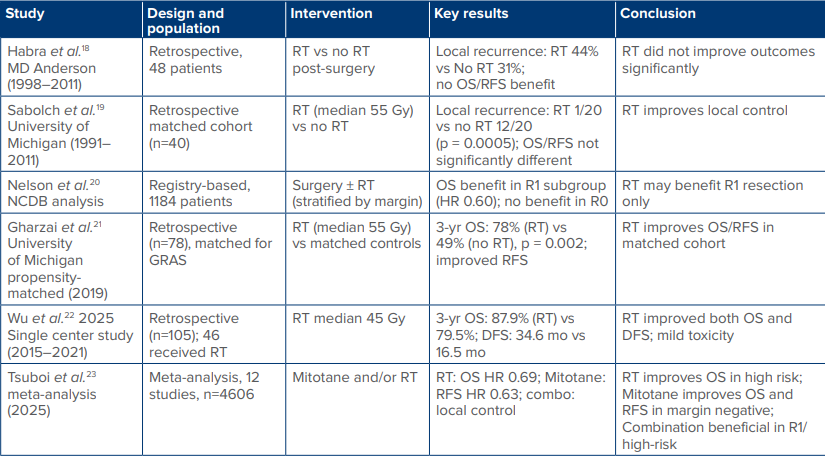
टेबल 1:एड्रेनोकोर्टिकल कार्सिनोमा में सहायक रेडियोथेरेपी की भूमिका के लिए प्रमाण-आधारित जानकारी।
संक्षिप्त रूप:डीएफएस: डिज़ीज़-फ़्री सर्वाइवल; जीआरएएस: ग्रेड, रिसेक्शन स्टेटस, एज, एंड सिम्पटम्स; एचआर: हैज़र्ड रेशियो; मो: मंथ्स; एनसीडीबी: नेशनल कैंसर डेटा बेस; ओएस: ओवरऑल सर्वाइवल; आरएफएस: रिकरेंस-फ़्री सर्वाइवल; आरटी: रेडियोथेरेपी; वाईआर: ईयर।