 WhatsApp Us (24/7)
 +91 926 888 0303 (24/7)


To Book an Appointment
Call Us+91 926 888 0303Ovarian Cancer: Causes, Symptoms, Diagnosis, and Treatment
By Medical Expert Team
Jan 05 , 2026 | 2 min read
1

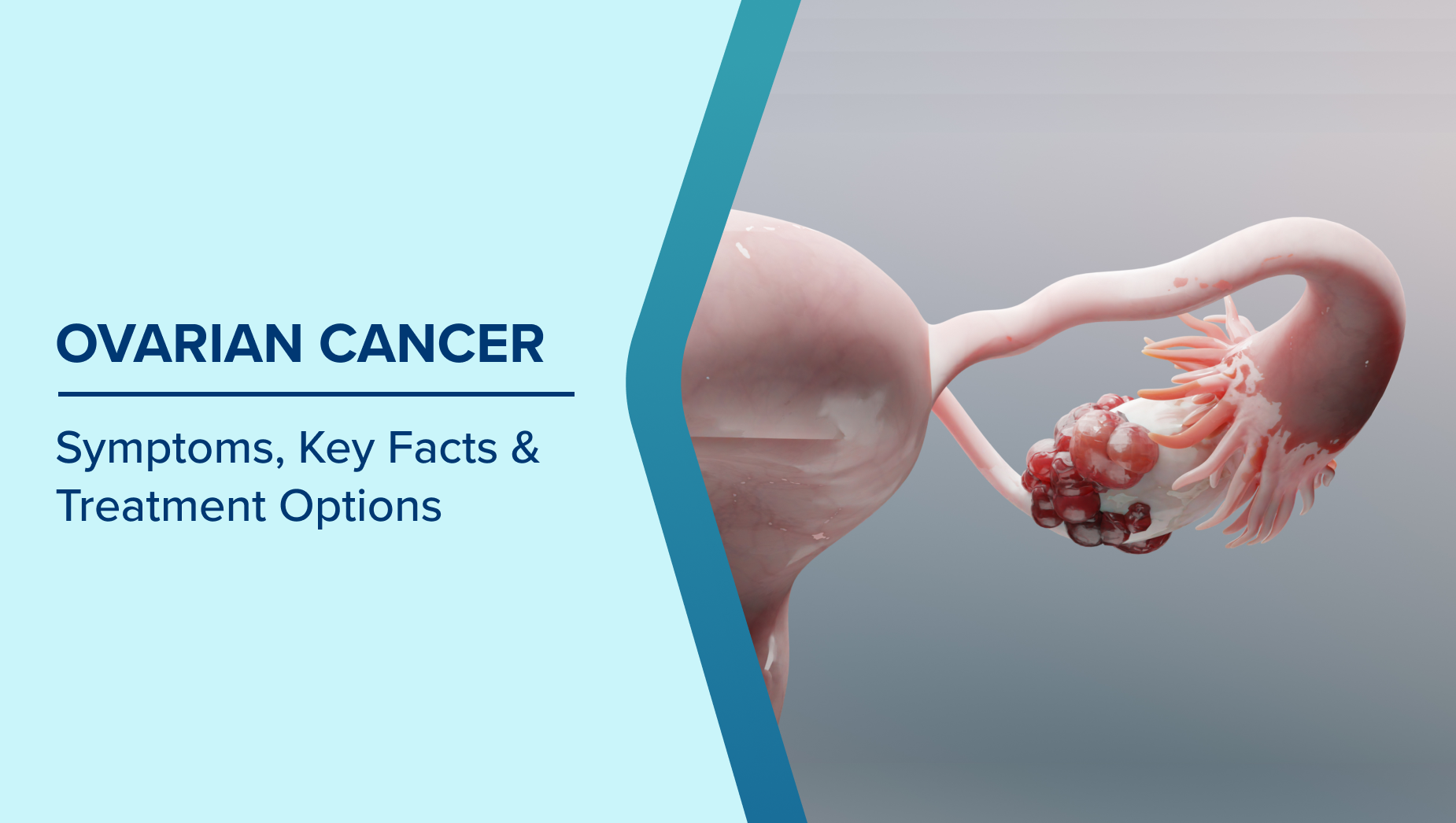
Ovarian cancer develops due to the abnormal growth of cells that form the lining of the ovaries and fallopian tubes. These cells multiply quickly and can invade or destroy healthy body tissue. It is the second most common gynaecological cancer in India after cervical cancer.
The most common type is high-grade serous epithelial ovarian cancer, which usually affects older women.
Key Facts about Ovarian Cancer
- Ovarian cancer generally has a good outlook when detected at an early stage, but the chances of survival reduce significantly once the disease advances.
- Some cases of ovarian cancer are linked to inherited genetic mutations like those in the BRCA genes, while most cases occur sporadically without a family history.
Symptoms of Ovarian Cancer
Ovarian cancer often develops silently, with little to no symptoms in the early stages. As the disease progresses, the tumour may press against surrounding organs or cause fluid build-up in the abdomen (ascites), leading to:
- Abdominal bloating and heaviness
- Early satiety (feeling full quickly after meals)
- Heartburn and discomfort
- Urinary difficulties
- Bowel irregularities
- Menstrual irregularities
- Abdominal lump in certain cases
- Unexplained weight loss and fatigue
Because these symptoms are vague and can mimic other conditions, ovarian cancer often remains undiagnosed until it reaches advanced stages.
Diagnosis
Diagnosis typically includes a combination of clinical examination, radiological assessment (CT scan or MRI), and blood tests for tumour markers.
Any woman with an ultrasound, CT, or MRI report suggestive of a complex ovarian mass, with or without elevated tumour markers (CA125, CEA, CA19.9), should be referred to a gynaecological oncologist for further evaluation.
Treatment Options
Early-Stage Ovarian Cancer
- Surgical staging is the primary treatment, which involves removal of the ovarian mass (frozen section preferred), lymph node dissection, and omentectomy.
- The need for chemotherapy in early stages depends on the histopathological type and the stage of the cancer.
Advanced-Stage Ovarian Cancer
- If the patient is medically fit and the chances of optimal cytoreduction (removing all visible cancer) are high, primary cytoreductive surgery is performed.
- For medically unfit patients, neoadjuvant chemotherapy is given to shrink the tumour before surgery. This may be followed by:
- Interval cytoreduction (surgery performed after initial chemotherapy)
- Heated intraperitoneal chemotherapy (HIPEC) in some cases
- Additional chemotherapy and maintenance therapy, including targeted therapies where appropriate
Conclusion
Ovarian cancer remains one of the challenging diseases due to its subtle early symptoms and high likelihood of late diagnosis. However, with timely recognition, advanced imaging, genetic testing, and evolving treatment approaches, outcomes are improving.
Awareness of symptoms and regular consultations with a gynaecological oncologist for at-risk women can make a significant difference. Early diagnosis not only improves survival rates but also offers women more treatment options and a better quality of life.
Related Blogs

Dr. Kanika Batra Modi In Cancer Care / Oncology
Nov 07 , 2020 | 3 min read

Dr. R.Ranga Rao In Medical Oncology , Cancer Care / Oncology , Thoracic Oncology
Nov 07 , 2020 | 2 min read
Most read Blogs


Related Blogs
Dr. Kanika Batra Modi In Cancer Care / Oncology
Nov 07 , 2020 | 3 min read
Dr. R.Ranga Rao In Medical Oncology , Cancer Care / Oncology , Thoracic Oncology
Nov 07 , 2020 | 2 min read
Most read Blogs