 WhatsApp Us (24/7)
 +91 926 888 0303 (24/7)


To Book an Appointment
Call Us+91 926 888 0303Why Babies Need Balanced Winter Clothing: Risks & Early Signs
By Dr. Rohit Srivastava in Neonatology , Paediatrics (Ped) , Paediatric (Ped) Intensive Care
Jan 09 , 2026

Caring for a baby during winter often brings extra worry, especially for new parents who fear their little one might feel cold. While it is natural to want to keep a baby warm, dressing them in too many layers can do more harm than good. Babies have developing temperature regulation systems, which means their bodies respond very differently to cold and heat compared to adults.
Over-layering increases the chances of overheating, discomfort and several health concerns that many caregivers are not aware of. Understanding how to maintain the right balance can help parents keep their baby safe throughout the season.
Why Babies Need Balanced Winter Clothing
Babies lose heat faster than adults, but they also warm up quickly when dressed excessively. Their skin is thin, their sweat glands are still developing, and their nervous system is not fully mature. When covered in multiple layers, their body may struggle to release heat, which can cause a rise in body temperature. This can lead to restlessness, dehydration and difficulty sleeping. A balance between warmth and breathability is crucial for winter baby care.
Risks Associated With Over-Layering in Winter
Parents often assume that bundling up protects their baby from illness, but too much clothing exposes babies to other avoidable risks. Some of these problems may appear small in the beginning and then gradually escalate. Here are the most important concerns to be aware of.
Overheating and Irritability
Extra clothing traps heat around the baby’s body. Babies cannot express discomfort clearly, so overheating often goes unnoticed. It can cause fussiness, flushed skin, warm neck, excessive crying and refusal to feed. If not corrected early, it may lead to dehydration or serious heat build-up.
Increased Sweating and Skin Irritation
When a baby sweats under heavy clothing, moisture gets trapped against the skin. This can cause friction, redness, rashes and discomfort in skin folds. Prolonged dampness makes the skin more prone to irritation and bacterial growth.
Difficulty in Movement
Too many layers restrict the natural movement of the legs, arms and torso. Babies need free movement for muscle development, rolling practice and improved coordination. Over-layering limits this and may delay certain motor skills temporarily.
Unsafe Sleep Conditions
Covering a sleeping baby in thick blankets and padded layers increases the risk of overheating during sleep. Babies sleep deeply when warm, so caregivers may not notice their rising body temperature. Thick bedding also increases suffocation risk if it shifts over the face.
Masked Illness Symptoms
Heavy clothing can hide early signs of fever. By the time the fever is detected, the baby may already be uncomfortable or dehydrated. Light and breathable layers allow parents to recognise changes quickly.
How to Identify Early Signs of Overheating in Babies
These early indicators help you adjust clothing before discomfort progresses.
- Warm or sweaty neck
- Flushed cheeks
- Fast breathing
- Restlessness during sleep
- Sticky skin
- Refusal to feed
- Lethargy
Checking the neck and back gently is the most reliable way to assess warmth. Hands and feet often remain cooler and should not be used for temperature judgment.
How to Dress Babies Safely in Winter Without Over-Layering
Parents often rely on multiple layers out of fear, but safe winter dressing is simpler than it seems. The goal is to keep the baby warm, not hot. Here are practical ways to maintain comfort while preventing overheating.
Use the One Layer More Guideline
A helpful rule is to dress the baby in one additional layer compared to what an adult would comfortably wear at the same room temperature. This ensures adequate warmth without trapping unnecessary heat.
Choose Breathable Fabrics
Cotton, soft wool blends and fleece work well in winter because they hold warmth while allowing airflow. Avoid materials that trap moisture. Inner layers should always be lightweight and comfortable on the skin.
Focus on Layer Quality, Not Quantity
Instead of multiple thin or thick layers, combine one comfortable inner layer with a warm top layer. If needed, add a hat or socks, especially for newborns who lose heat through the head and extremities.
Remove Outdoor Layers Indoors
Babies often feel warm inside the car, lift or closed rooms. Always remove extra jackets or blankets once you enter a heated space. Babies heat up quickly in confined areas.
Adjust Layers During Sleep
For sleep, choose a sleep suit or wearable blanket. Avoid loose blankets. The room should be slightly cool, not warm. The aim is to reduce the baby’s risk of overheating while maintaining comfort throughout the night.
The Role of Room Temperature in Baby Comfort
Dressing alone cannot protect a baby if the indoor environment is too warm or too cold. Maintaining a stable room temperature helps reduce the need for extra clothing.
- The ideal indoor temperature is usually comfortable for an adult in light winter wear.
- Keep the room well ventilated.
- Avoid placing the baby near heaters, direct hot air or drafts.
- Use a room thermometer if needed.
Balanced temperature prevents excessive layering and keeps the baby comfortable throughout the day and night.
Winter Outings: Safe Clothing Practices
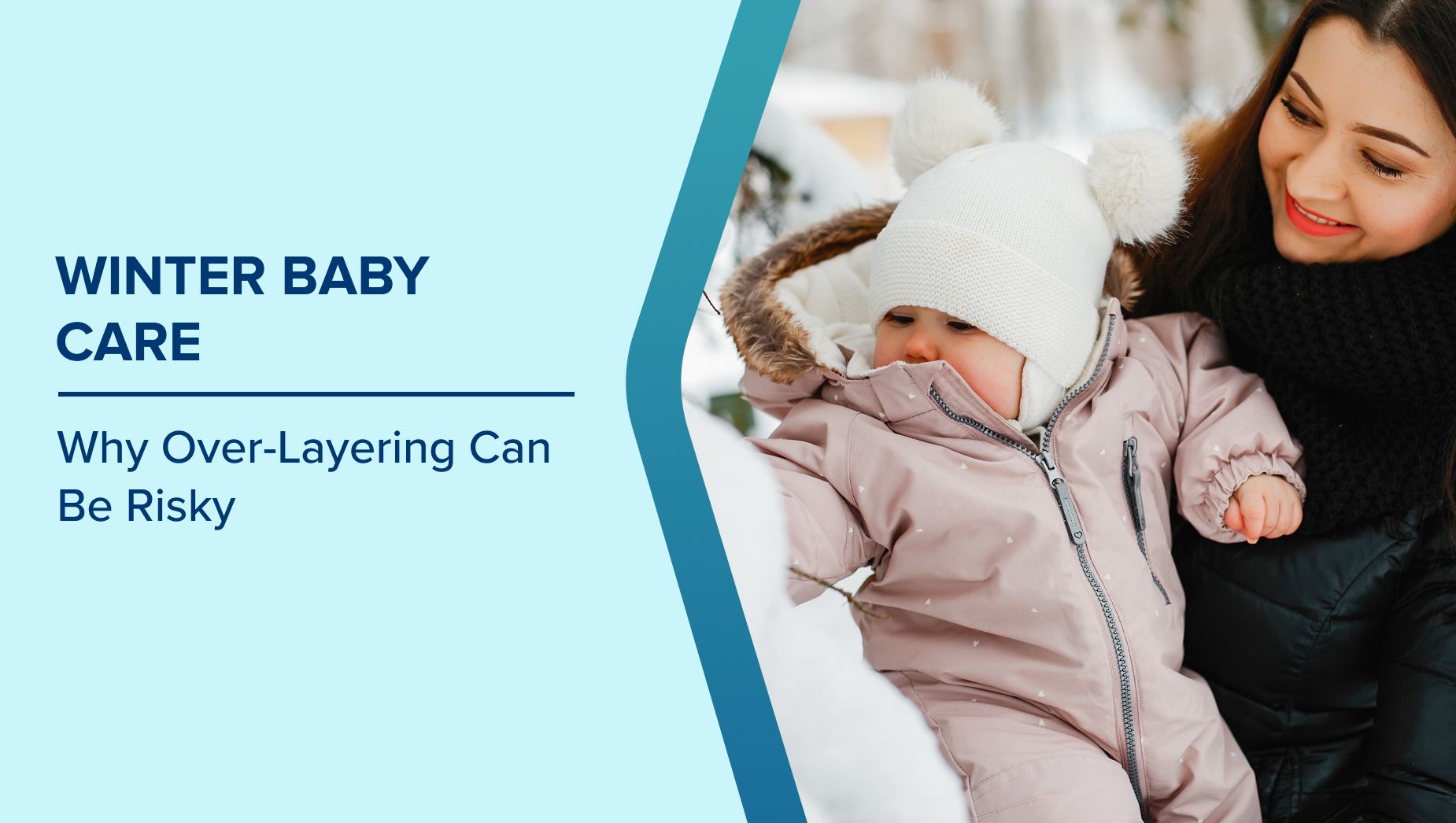
- Use a warm jacket or snowsuit, but remove it inside cars or buildings.
- Cover the head and ears with a soft cap.
- Apply mittens and socks if needed.
- Ensure the face is always visible and not covered by scarves or fabric.
- Avoid wrapping thick blankets tightly around the baby.
How Over-Layering Affects Newborns More Than Older Babies
Newborns are particularly sensitive because their bodies cannot regulate heat efficiently. They warm up faster and cool down faster. Their skin is delicate, and sweating can cause irritation quickly. Even a single extra layer beyond what is needed can make a newborn uncomfortable. This is why choosing the right fabric and checking its warmth often is essential.
Safe Winter Sleep Practices
Sleep routines change during winter because parents worry about nighttime cold. Following simple guidelines helps you maintain safety without adding unnecessary layers.
- Use a fitted sleep suit instead of multiple blankets.
- Keep the crib free from loose bedding.
- Ensure the room is comfortably cool.
- Avoid sleeping caps indoors, as they trap heat.
- Check the baby’s neck for warmth before adding layers.
Safe sleep is one of the most important parts of winter baby care.
Conclusion
Winter care for babies is all about balance. While keeping them warm is important, dressing them in excessive layers can cause overheating, discomfort and avoidable risks. Understanding the right way to layer clothing, adjusting indoors and outdoors, and maintaining the correct room temperature helps parents protect their baby without overwhelming them. Gentle fabrics, breathable layers and regular warmth checks can keep your little one safe, happy and comfortable throughout the season.
FAQs
Can I use a room heater for my baby?
Yes, but keep the room comfortably warm rather than hot. Always maintain ventilation and avoid placing the heater too close to the baby.
How can I check if my baby needs an extra layer?
Check the neck or back. If these areas feel cool, you may add a layer. If they feel warm or sweaty, remove one.
Is it safe to swaddle a baby in winter?
Yes, as long as the swaddle is breathable and not too thick. Ensure the baby is not layered heavily under the swaddle.
Do babies need socks indoors during winter?
If the room is cool, socks can help. If the room temperature is comfortable, light socks or bare feet may be enough.
Should newborns wear caps indoors?
A cap may be used right after a bath or during cold drafts, but prolonged indoor use can trap heat and cause sweating.
Written and Verified by:

Related Blogs


Most read Blogs


Related Blogs
Most read Blogs