 WhatsApp Us (24/7)
 +91 926 888 0303 (24/7)


To Book an Appointment
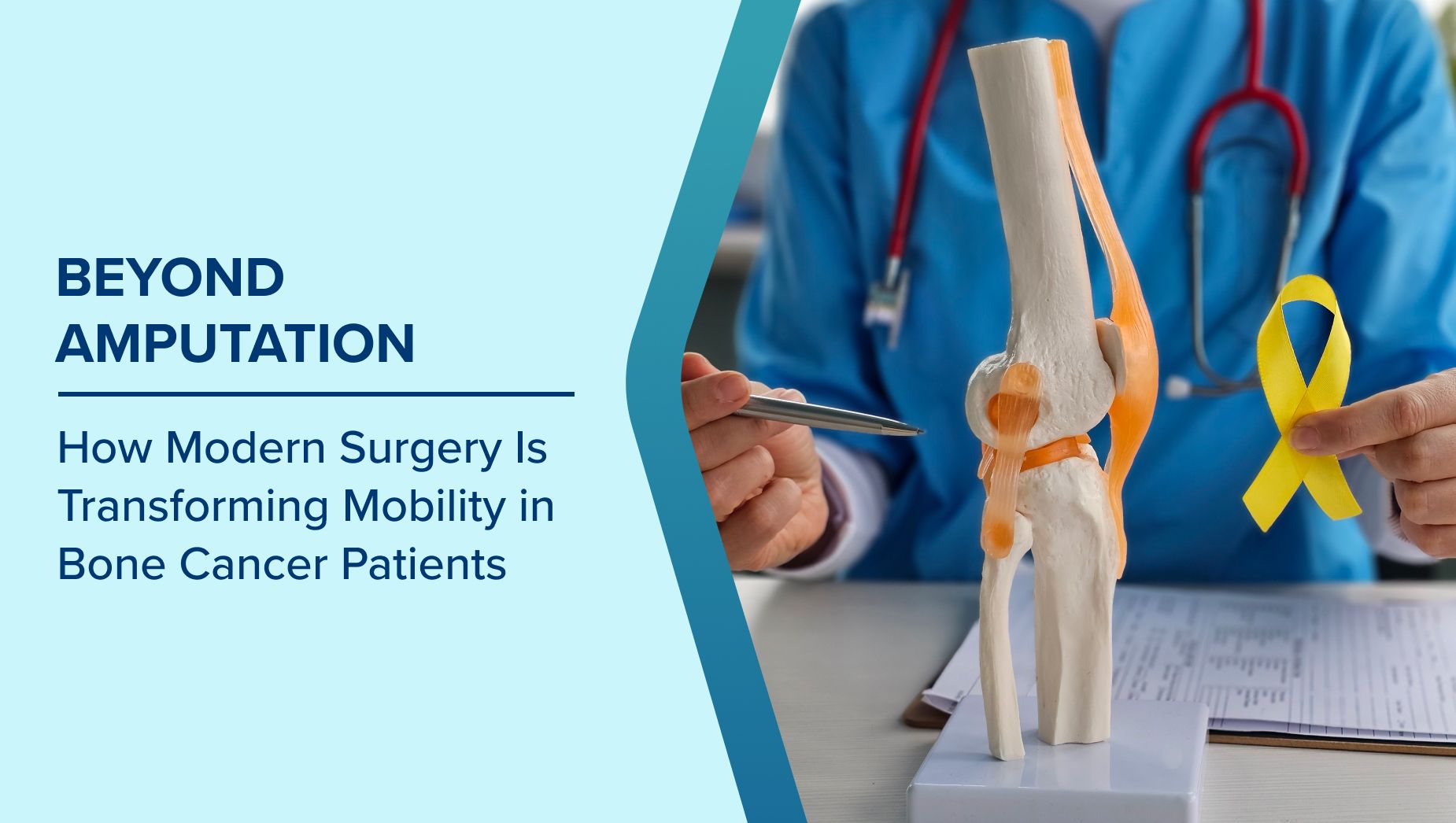
Call Us+91 926 888 0303Beyond Amputation: How Modern Surgery Is Transforming Mobility in Bone Cancer Patients
By Dr. Vivek Verma in Paediatric (Ped) Oncology , Surgical Oncology , Cancer Care / Oncology , Musculoskeletal Surgical Oncology
Jan 05 , 2026 | 2 min read

A few decades ago, a diagnosis of bone cancer or soft tissue cancer almost always pointed in one direction: amputation. Removing the limb was considered the safest option to eliminate the tumour and prevent the cancer from spreading further. While this approach saved countless lives, it also resulted in permanent loss of mobility, independence, and confidence.
Today, the field of orthopaedic oncology has reshaped this outlook. With major advances in imaging, surgical techniques, and reconstruction, many patients can now undergo procedures that remove the tumour yet preserve the limb. The goal is no longer just survival, but survival with function, dignity, and a more active life.
What Is Limb-Sparing Surgery
Limb-sparing surgery, also known as limb-salvage surgery, aims to remove the cancerous tumour along with a small margin of healthy tissue, while keeping the rest of the limb structurally intact. Once the tumour is removed, surgeons rebuild the affected area using a prosthetic implant, a bone graft, or a combination of both.
This approach is used for bone cancers like osteosarcoma and ewing sarcoma, as well as several types of soft tissue sarcoma. For many patients, it provides an opportunity to overcome cancer without losing their limb.
How Advances in Medicine Make Limb Preservation Possible
Modern limb-sparing surgery is the result of several major advancements in cancer care and surgical engineering:
High-Precision Imaging
MRI and CT scans allow surgeons to map the tumour’s exact location. This makes it possible to protect nearby nerves, blood vessels, and other vital structures during surgery.
Improved Cancer Treatments
Chemotherapy and radiotherapy often shrink tumours before surgery. This increases the chances of complete tumour removal while keeping the limb intact.
Refined Surgical Techniques
Today’s tools and technologies allow surgeons to remove only the diseased tissue while preserving as much healthy bone, muscle, and skin as possible. This precision is key to maintaining limb function.
Rebuilding Function After Tumour Removal
Once the tumour is removed, reconstruction ensures that the limb is both preserved and functional. Depending on the patient’s condition, surgeons may use:
- Prosthetic implants to replace bones or joints. Children may receive expandable implants that grow with them.
- Bone grafts, either from the patient’s own body or from a donor.
- Soft tissue reconstruction, which restores the movement and support provided by muscles, tendons, and skin.
Recovery is an essential part of the process. Physiotherapy helps patients regain strength, flexibility, and coordination. With consistent rehabilitation, many individuals return to school, work, sports, and daily activities.
Who Benefits Most from Limb-Sparing Surgery
Children often benefit significantly from limb-sparing surgery because it allows for continued growth, emotional development, and participation in normal daily routines. Adults also gain from maintaining mobility, independence, and the psychological reassurance of keeping their limb. Preserving physical function contributes greatly to mental well-being during and after cancer treatment.
When Amputation Is Still Necessary
While limb-sparing surgery has become the preferred approach, it is not suitable for every case. If the tumour involves major nerves, blood vessels, or an extensive area of tissue, amputation may still be the safest and most effective option.
Even in such situations, modern prosthetics and rehabilitation techniques provide patients with excellent mobility and function. Many individuals lead active, fulfilling lives with the help of advanced artificial limbs.
A New Era of Hope in Cancer Treatment
The transition from routine amputation to limb preservation marks a major milestone in cancer care. While the primary goal remains saving lives, preserving mobility, function, and dignity is now just as important. For many patients, modern surgery offers a remarkable possibility: to walk out of treatment with both life and limb intact. It represents healing not just of the body, but also of hope, confidence, and independence.
Written and Verified by:

Related Blogs

Dr. Ramandeep Singh Arora (Paed Onco) In Paediatric (Ped) Oncology , Cancer Care / Oncology
Oct 25 , 2016 | 2 min read

Dr. Ramandeep Singh Arora (Paed Onco) In Paediatric (Ped) Oncology , Cancer Care / Oncology
Sep 04 , 2017 | 3 min read
Blogs by Doctor


Most read Blogs


Related Blogs
Dr. Ramandeep Singh Arora (Paed Onco) In Paediatric (Ped) Oncology , Cancer Care / Oncology
Oct 25 , 2016 | 2 min read
Dr. Ramandeep Singh Arora (Paed Onco) In Paediatric (Ped) Oncology , Cancer Care / Oncology
Sep 04 , 2017 | 3 min read
Blogs by Doctor
Most read Blogs