 WhatsApp Us (24/7)
 +91 926 888 0303 (24/7)


To Book an Appointment
Call Us+91 926 888 0303What is VATS in Lung Cancer: Causes and Symptoms
By Dr. Shashank Chaudhary in Surgical Oncology
Jan 28 , 2026

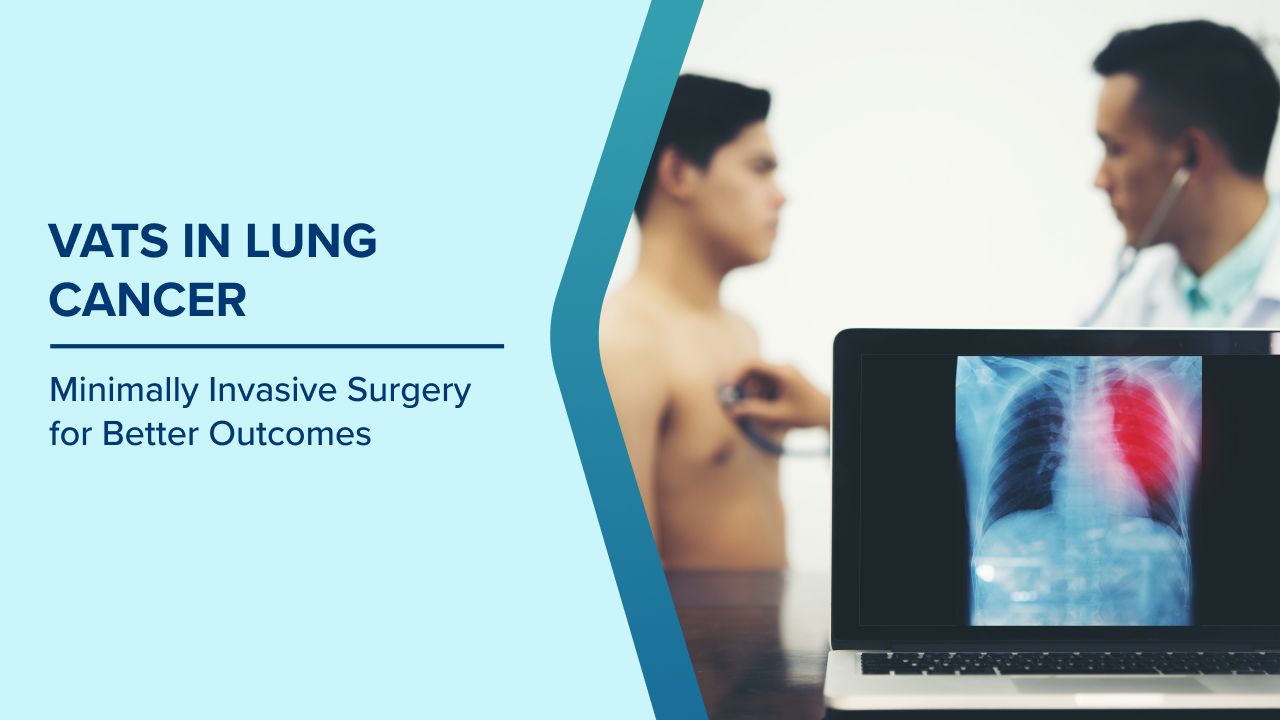
Video Assisted Thoracoscopic Surgery (VATS) is a minimally invasive surgical procedure used to diagnose and treat lung cancer. Unlike traditional open chest surgery, VATS uses small incisions, a camera, and specialised instruments to remove tumours or lung segments safely.
Lung cancer remains one of the leading causes of cancer deaths worldwide. Early detection and precise surgical interventions, such as VATS, are crucial for improving survival and quality of life. VATS allows surgeons to operate with better visualisation, minimal tissue damage, and faster recovery, making it an increasingly preferred option for patients eligible for lung surgery.
What Is VATS in Lung Cancer?
VATS is a type of thoracoscopic surgery performed through small incisions, offering a less invasive alternative to open thoracotomy. Key points about VATS:
- Small incisions: Usually 3–4 cuts between the ribs, each 1–3 cm
- Camera guidance: A tiny thoracoscope provides a magnified view of the lungs
- Specialised instruments: Surgeons remove tumours and sample lymph nodes precisely
- Applications:
- Lung biopsies
- Early-stage lung cancer lobectomy
- Removal of small lung tumours
- Staging and evaluation of chest malignancies
VATS preserves chest wall integrity and reduces postoperative discomfort, allowing patients to resume normal activities sooner than traditional surgery.
Causes and Risk Factors for Lung Cancer
Understanding lung cancer risk factors helps explain why surgical intervention like VATS is often necessary. Major causes and risk factors:
- Long-term cigarette smoking
- Secondhand smoke exposure
- Air pollution and industrial dust exposure
- Radon gas in homes
- Chronic lung diseases, e.g., pulmonary fibrosis
- Family history of lung cancer
- Prior exposure to radiation or carcinogenic chemicals
Even non-smokers can develop lung cancer, highlighting the importance of early screening and intervention.
Symptoms and Early Warning Signs of Lung Cancer
Early lung cancer symptoms are subtle and often mistaken for common respiratory issues. Common early warning signs:
- Persistent cough or change in cough pattern
- Chest discomfort or pain
- Shortness of breath or wheezing
- Unexplained fatigue
- Unintentional weight loss
- Coughing up blood (hemoptysis)
Diagnosis and Medical Tests Before VATS
Before undergoing VATS, a thorough evaluation ensures safety and suitability for minimally invasive surgery. Tests and assessments include:
Imaging
- Chest X-ray
- CT scan for tumour localisation
- PET scan to check for metastasis
Endoscopic evaluation
- Bronchoscopy for airway assessment
- Needle biopsy for tissue diagnosis
Functional tests
- Pulmonary function tests
- Cardiac evaluation to assess anaesthesia risk
Laboratory tests
- Complete blood count
- Renal and liver function tests
Early diagnosis and comprehensive evaluation increase the likelihood of successful VATS outcomes.
How VATS Surgery Is Performed
Understanding the surgical steps helps patients feel prepared. Surgical procedure include:
- General anaesthesia is administered
- Small chest incisions are made between ribs
- A thoracoscope is inserted to provide a magnified view
- The tumour or affected lung segment is carefully removed
- Lymph nodes may be sampled or excised for staging
- Incisions are closed with minimal scarring, and chest tubes are temporarily placed
Surgery duration: Typically 2–4 hours, depending on tumour size and complexity.
Benefits of VATS in Lung Cancer Surgery
VATS offers multiple advantages over traditional open surgery. Patient benefits include:
- Reduced post-operative pain and discomfort
- Smaller, less visible scars
- Shorter hospital stay, often 3–5 days
- Lower risk of infections or complications
- Faster recovery and return to normal activities
- Earlier resumption of breathing exercises
- Reduced use of opioids and pain medications
For suitable patients, VATS can provide outcomes comparable to open thoracotomy with less trauma.
Risks and Complications of VATS
While minimally invasive, VATS surgery carries some risks. Possible complications are:
- Bleeding during or after surgery
- Infection at incision sites or in the lungs
- Air leak from the lung post-surgery
- Reaction to anesthesia
- Conversion to open thoracotomy if necessary
Careful patient selection and experienced surgical teams help minimize these risks.
Recovery After VATS for Lung Cancer
Recovery is generally smoother and faster than open surgery. Typical recovery milestones:
- Hospital stay: 3–5 days
- Chest tube removal: 2–4 days
- Pain management with oral medications
- Breathing exercises to prevent complications
- Return to light activity: 2–3 weeks
- Return to work or normal routine: 4–6 weeks
Early mobility and pulmonary rehabilitation improve overall recovery and long-term lung function.
Long-Term Outlook After VATS
Life after surgery focuses on healing, monitoring, and maintaining health. Post-surgery care tips include:
- Follow-up imaging to monitor recurrence
- Regular pulmonary function assessment
- Lifestyle modifications: quitting smoking, balanced diet, exercise
- Participation in pulmonary rehabilitation programs
- Emotional and psychological support for coping with cancer
Early-stage lung cancer patients treated with VATS can achieve excellent quality of life and long-term outcomes.
Prevention Tips for Lung Cancer
While VATS treats existing cancer, prevention remains key to reducing future risk. Prevention strategies include:
- Avoid smoking and secondhand smoke
- Minimise exposure to occupational dust and pollutants
- Test homes for radon gas
- Participate in regular screening for high-risk individuals
- Maintain a healthy lifestyle with exercise and balanced nutrition
Early detection through screening increases the likelihood of eligibility for minimally invasive procedures like VATS.
Complications If Lung Cancer Is Left Untreated
Untreated lung cancer can progress rapidly. Potential complications include:
- Spread to distant organs (brain, liver, bones)
- Severe breathing difficulties
- Chronic infections
- Persistent pain
- Significantly reduced life expectancy
Timely intervention, including VATS when appropriate, helps prevent these severe outcomes.
Conclusion
VATS in lung cancer represents a significant advancement in surgical care, combining effective cancer treatment with minimal invasiveness and faster recovery. Patients diagnosed early and assessed for surgical eligibility can benefit from reduced pain, shorter hospital stay, and excellent long-term outcomes. Early detection, timely consultation, and awareness of symptoms remain critical. If you notice persistent respiratory changes, an unexplained cough, or other warning signs, consult a qualified thoracic specialist to determine whether VATS is a suitable option.
Frequently Asked Questions
Is VATS safer than traditional open lung surgery?
Yes, VATS typically results in less pain, smaller scars, lower infection risk, and faster recovery while providing similar cancer control outcomes in eligible patients.
Can all lung cancer patients undergo VATS?
Not all patients are candidates. Advanced tumours, poor lung function, or extensive disease may require alternative approaches. Individual assessment is necessary.
How long does recovery take after VATS?
Most patients resume light activity within 2–3 weeks, with full recovery taking 6–8 weeks, depending on age, health, and surgery complexity.
Is VATS effective in curing lung cancer?
For early-stage lung cancer, complete tumour removal via VATS can be curative. Long-term outcomes depend on cancer stage, tumour type, and follow-up care.
When should someone see a doctor for lung cancer symptoms?
Persistent cough, unexplained weight loss, chest pain, shortness of breath, or coughing up blood should prompt immediate medical evaluation for early detection.
Written and Verified by:

Dr. Shashank Chaudhary Exp: 14 Yr
Surgical Oncology, Gastro Intestinal & Hepatopancreatobiliary Surgical Oncology, Musculoskeletal Oncology, Cancer Care / Oncology, Uro-Oncology, Breast Cancer, Thoracic Oncology, Gynecologic Oncology, Head & Neck Oncology, Gastrointestinal & Hepatobiliary Oncology, Robotic Surgery
Meet the doctorRelated Blogs

Dr. S. VEDA PADMA PRIYA In Surgical Oncology , Cancer Care / Oncology
May 16 , 2016 | 2 min read

Dr. Kanika Batra Modi In Surgical Oncology , Cancer Care / Oncology
May 26 , 2016 | 4 min read
Blogs by Doctor

Prevention of Cancer: What You Can Do to Stay Protected
Dr. Shashank Chaudhary In Surgical Oncology , Cancer Care / Oncology , Robotic Surgery
May 05 , 2025 | 2 min read

Oesophageal Cancer: Causes, Symptoms, and Treatment Options
Dr. Shashank Chaudhary In Surgical Oncology
Sep 08 , 2025 | 20 min read
Most read Blogs


Related Blogs
Dr. S. VEDA PADMA PRIYA In Surgical Oncology , Cancer Care / Oncology
May 16 , 2016 | 2 min read
Dr. Kanika Batra Modi In Surgical Oncology , Cancer Care / Oncology
May 26 , 2016 | 4 min read
Blogs by Doctor
Prevention of Cancer: What You Can Do to Stay Protected
Dr. Shashank Chaudhary In Surgical Oncology , Cancer Care / Oncology , Robotic Surgery
May 05 , 2025 | 2 min read
Oesophageal Cancer: Causes, Symptoms, and Treatment Options
Dr. Shashank Chaudhary In Surgical Oncology
Sep 08 , 2025 | 20 min read
Most read Blogs