 WhatsApp Us (24/7)
 +91 926 888 0303 (24/7)


To Book an Appointment
Call Us+91 926 888 0303What is Minimally Invasive CABG: Faster Recovery & Less Pain
By Dr. Vijay Kohli in Cardiac Surgery (CTVS)
Sep 30 , 2025 | 4 min read

Heart disease continues to be one of the major health issues globally, and for numerous patients, coronary artery bypass grafting (CABG) serves as an essential treatment option. Traditionally, CABG involved large chest incisions and lengthy recovery periods, which could be daunting for patients.
Today, minimally invasive CABG offers an advanced alternative, providing the same life-saving benefits with less pain, faster recovery, and improved patient comfort. Understanding this procedure and its advantages can help patients make informed decisions about their heart health.
What is Minimally Invasive CABG?
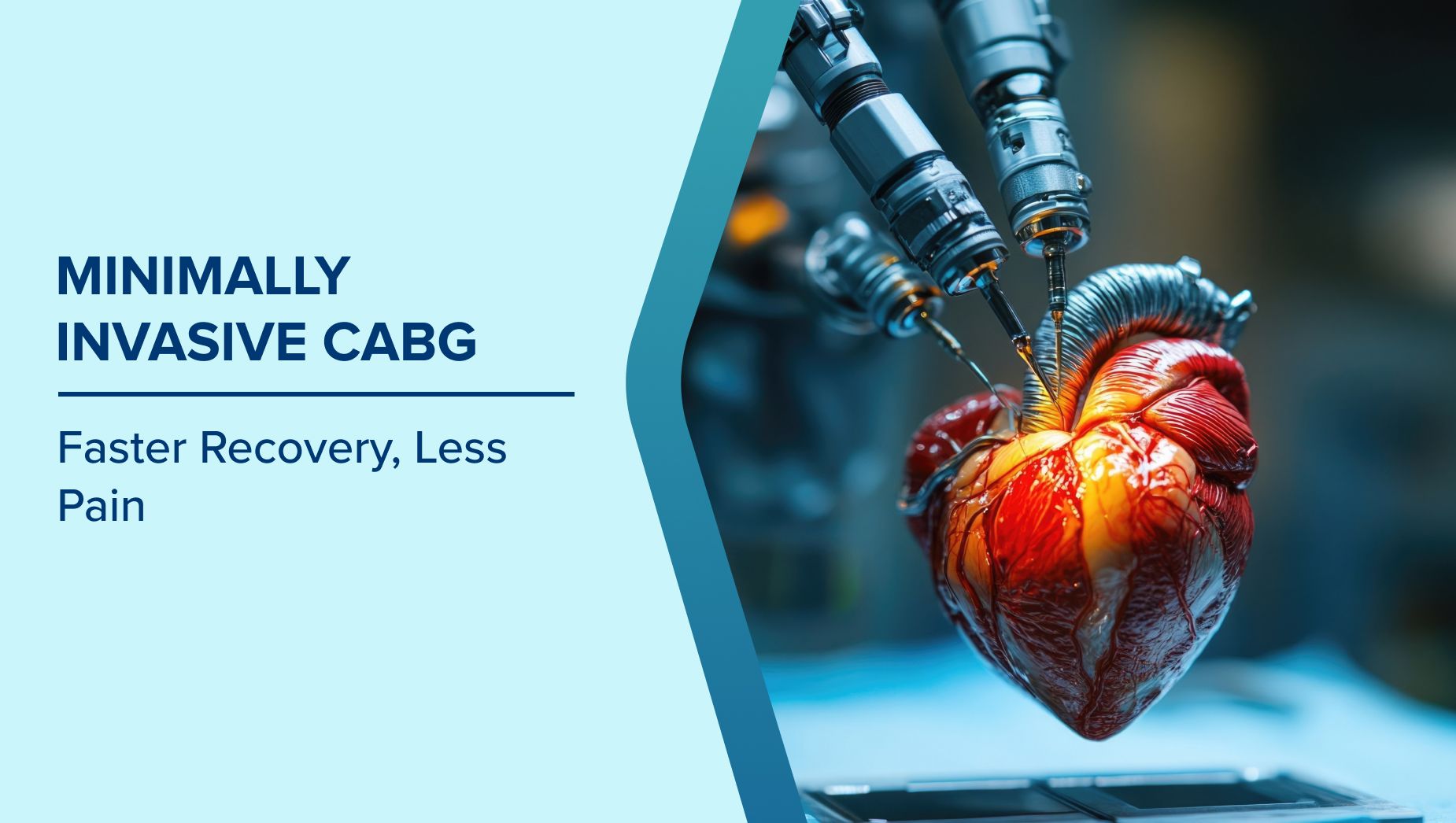
Minimally invasive CABG is a type of heart surgery that bypasses blocked coronary arteries through small incisions rather than a full sternotomy (splitting the chest). Using specialised instruments and sometimes robotic assistance, surgeons can access the heart, attach grafts, and restore blood flow with minimal disruption to surrounding tissue.
Unlike traditional CABG, this technique avoids large scars, reduces trauma to the chest, and allows patients to regain mobility more quickly. Patients often experience fewer complications and a shorter hospital stay, making it an appealing option for suitable candidates.
Advantages Over Traditional CABG
Less Pain and Scarring
Small incisions mean reduced post-operative pain. Patients often require fewer pain medications and experience quicker comfort in daily activities. Scarring is minimal and less noticeable, enhancing both physical and emotional recovery.
Faster Recovery
Recovery times are significantly shorter with minimally invasive procedures. Many patients return to normal routines, including light work and daily chores, sooner than those who undergo traditional CABG.
Reduced Hospital Stay
With fewer complications and less surgical trauma, hospitalisation is often limited to a few days. Shorter stays reduce the risk of hospital-acquired infections and allow patients to recover in the comfort of their homes.
Lower Risk of Infection and Complications
Smaller incisions and reduced tissue disruption lower the risk of infections, bleeding, and other surgical complications, thereby improving overall patient safety.
Quicker Return to Physical Activity
Early mobility supports cardiovascular health and overall well-being. Patients can begin light exercises and rehabilitation sooner, which aids in faster long-term recovery.
The Surgical Process of CABG
Minimally invasive CABG typically involves:
- Small chest incisions: Rather than opening the entire chest, surgeons make one or more small cuts between the ribs.
- Specialised instruments: Precision tools allow surgeons to navigate the heart with minimal tissue disruption.
- Grafting procedure: Healthy blood vessels from other parts of the body are used to bypass blocked coronary arteries.
- Robotic assistance (optional): Some centres use robotic technology for enhanced accuracy and reduced trauma.
Throughout the procedure, patient comfort and safety are prioritised, with modern anaesthesia and monitoring ensuring a smooth surgical experience.
Post-Operative Care and Rehabilitation
Recovery after minimally invasive CABG involves a combination of medical follow-up and lifestyle adjustments:
- Hospital care: Patients are monitored for vital signs, wound healing, and heart function.
- Pain management: Pain is typically mild and controlled with medication.
- Physical rehabilitation: Gradual exercises help restore mobility and strengthen the heart.
- Dietary guidance: Heart-healthy nutrition supports recovery and long-term cardiovascular wellness.
- Follow-up visits: Regular check-ups ensure grafts are functioning properly and detect any early signs of complications.
These steps collectively enhance recovery, improve heart function, and support overall well-being.
Who Can Benefit from Minimally Invasive CABG?
Minimally invasive CABG is suitable for patients with:
- Blocked coronary arteries that require bypass.
- Stable heart function without severe complications.
- No extensive prior heart surgeries that would complicate small incision access.
While age alone is not a barrier, careful evaluation of overall health, comorbidities, and heart condition is essential to determine eligibility. Elderly patients and those with controlled chronic conditions can often safely undergo this procedure.
Potential Risks and Considerations
As with any surgery, minimally invasive CABG carries some risks, though they are generally lower than those of traditional CABG. Potential considerations include:
- Bleeding or bruising at incision sites.
- Temporary irregular heart rhythms.
- Rare infection or reaction to anaesthesia.
A thorough consultation with a cardiac surgeon helps patients understand risks, benefits, and personalised care plans.
Conclusion
Minimally invasive CABG represents a significant advancement in cardiac care. By combining life-saving surgery with reduced pain, faster recovery, and smaller scars, it offers patients an improved path to heart health.
Those eligible should discuss this option with their cardiac specialist to determine the best treatment approach. With careful planning, follow-up care, and healthy lifestyle adjustments, patients can enjoy a smoother recovery and better long-term outcomes.
Frequently Asked Questions
How soon can I resume normal work after minimally invasive CABG?
Many patients return to light work within a few weeks, but full physical activity may take longer depending on recovery.
Are there any dietary restrictions after minimally invasive heart surgery?
A heart-healthy diet low in saturated fats, sugar, and sodium supports recovery and long-term cardiovascular health.
Can minimally invasive CABG be performed on older adults?
Yes, age alone is not a barrier, though overall health and heart function are carefully evaluated.
Is minimally invasive CABG suitable for all types of coronary blockages?
It is suitable for many, but complex or multiple blockages may require traditional surgery or a hybrid approach.
How soon can I start light exercise after surgery?
Patients typically begin gentle movement and rehabilitation within a few days under medical supervision.
Will I have noticeable scars after minimally invasive CABG?
Scars are generally small and less visible compared with traditional open-heart surgery.
Does minimally invasive CABG reduce the need for long-term medication?
While surgery improves blood flow, ongoing medications may still be necessary to manage heart health and prevent future blockages.
Can this procedure be combined with other cardiac treatments?
Yes, it can sometimes be part of a combined approach, such as simultaneous valve repair, depending on individual health needs.
Written and Verified by:

Related Blogs

Dr. Ganesh Kumar Mani In Cardiac Sciences , Cardiac Surgery (CTVS)
Apr 25 , 2016 | 3 min read

Dr. Kewal Krishan In Cardiac Sciences , Cardiac Surgery (CTVS)
May 02 , 2016 | 4 min read
Blogs by Doctor

SAD and Heart Health: Causes, Effects, and Management Tips
Dr. Vijay Kohli In Cardiac Surgery (CTVS)
Jan 10 , 2025 | 6 min read

Hydration & Heart Health: Importance of Hydration for Cardiovascular Health
Dr. Vijay Kohli In Cardiac Surgery (CTVS) , Cardiac Surgery
Jan 13 , 2025 | 7 min read
Most read Blogs


Related Blogs
Dr. Ganesh Kumar Mani In Cardiac Sciences , Cardiac Surgery (CTVS)
Apr 25 , 2016 | 3 min read
Dr. Kewal Krishan In Cardiac Sciences , Cardiac Surgery (CTVS)
May 02 , 2016 | 4 min read
Blogs by Doctor
SAD and Heart Health: Causes, Effects, and Management Tips
Dr. Vijay Kohli In Cardiac Surgery (CTVS)
Jan 10 , 2025 | 6 min read
Hydration & Heart Health: Importance of Hydration for Cardiovascular Health
Dr. Vijay Kohli In Cardiac Surgery (CTVS) , Cardiac Surgery
Jan 13 , 2025 | 7 min read
Most read Blogs