 WhatsApp Us (24/7)
 +91 926 888 0303 (24/7)


To Book an Appointment
Call Us+91 926 888 0303What is Good Posture and Bad Posture? Common Spine Issues and Preventive Tips
By Dr. Puneet Girdhar in Spine Surgery , Robotic Surgery
Jan 05 , 2026 | 4 min read

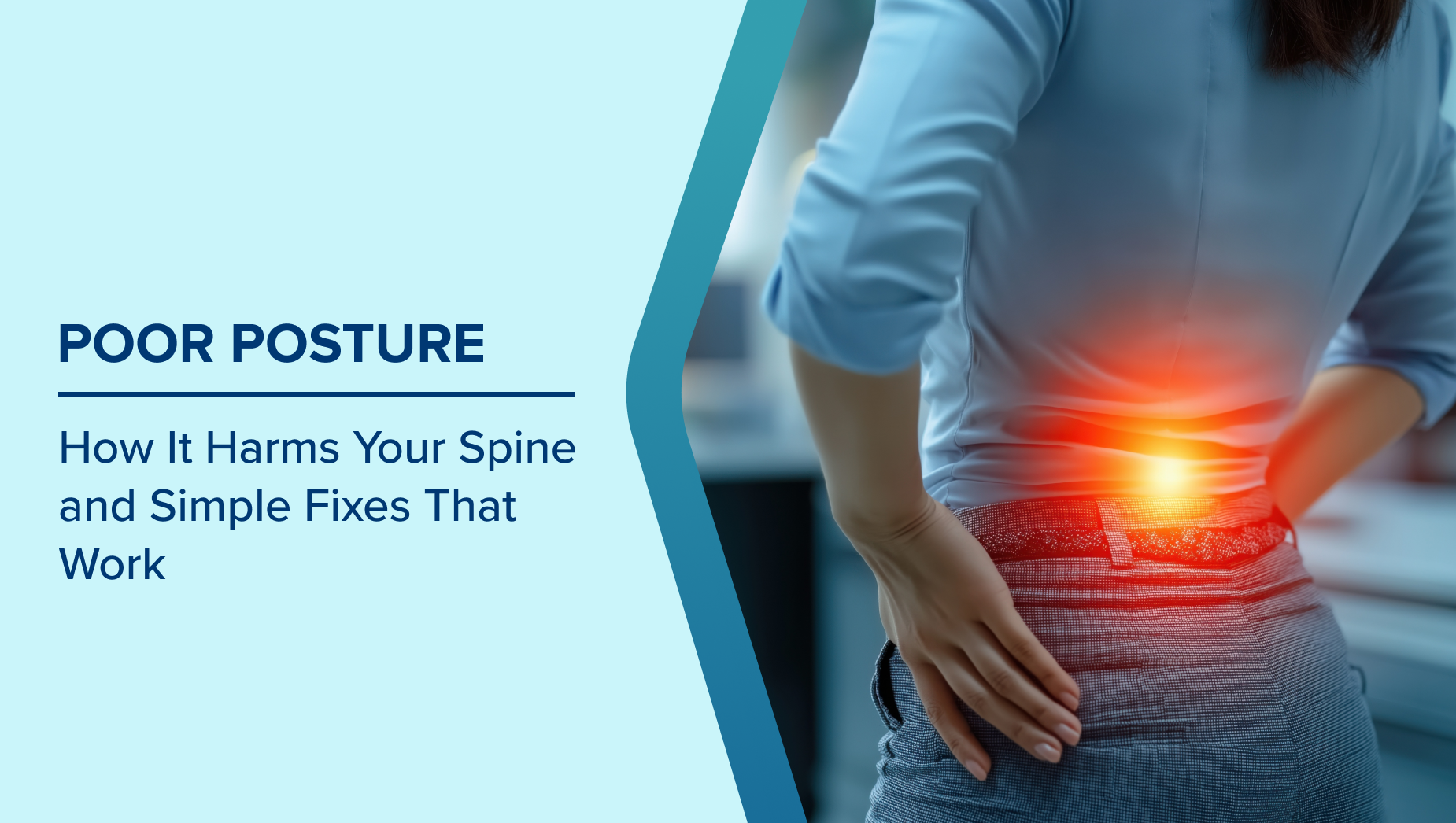
Have you ever caught yourself slouching while scrolling on your phone or hunching over your desk for hours? It may seem harmless at the moment, but poor posture can quietly create serious issues for your spine over time. Whether you're working from home, spending hours on your laptop, or simply standing incorrectly, your posture plays a major role in your spinal health.
What is Poor Posture?
Poor posture means your body is not aligned properly while sitting, standing, or moving. It often happens when your muscles and joints are either too tight or too weak to support the natural curves of your spine.
Some common examples of poor posture include:
- Slouching while sitting
- Hunching your shoulders forward
- Craning your neck toward a screen
- Standing with most of your weight on one leg
These positions may feel comfortable short-term, but they strain the muscles and ligaments supporting your spine, leading to long-term problems.
How Poor Posture Impacts Your Spine
The spine has three natural curves: at the neck (cervical), upper back (thoracic), and lower back (lumbar). Good posture keeps these curves in balance. But when you sit or stand incorrectly for long periods, you disrupt this alignment.
Here’s what happens:
- Your neck and shoulder muscles become tense from leaning forward.
- Your lower back curve flattens, causing the spine to lose its natural “S” shape.
- Pressure builds up on the spinal discs, increasing the risk of herniation.
- Over time, muscles on one side of your body can become overused while others weaken.
The effects of poor posture on the spine are not just physical—they can impact your energy, sleep quality, and even your mood.
Common Signs of Posture-Related Spine Issues
Is your posture affecting your spine? Watch for these warning signs:
- Frequent back, neck, or shoulder pain
- Stiffness when you wake up or after long periods of sitting
- A slouched or rounded upper back (sometimes called “tech neck” or “text neck”)
- Headaches that start at the base of your skull
- Uneven shoulders or hips
- Numbness or tingling in the arms or legs (from nerve compression)
These signs may develop gradually, so paying attention and acting early is important.
Long-Term Consequences of Bad Posture
Ignoring poor posture can lead to more serious health problems. Over time, misalignment can damage spinal discs and nerves, potentially leading to:
- Chronic back and neck pain
- Degenerative disc disease
- Sciatica (pain radiating down the legs)
- Postural kyphosis (a humped upper back)
- Reduced lung capacity and poor circulation
- Limited range of motion
It can even affect how you walk and balance, increasing the risk of falls as you age. That’s why focusing on spinal health and posture is key at every stage of life.
Practical Ways to Improve Your Posture
Posture can be corrected with awareness and simple changes in daily habits. Here are some easy adjustments that work:
While Sitting
- Sit with your feet flat on the floor.
- Keep your knees at hip level or slightly below.
- Use a chair that supports your lower back, or place a small cushion behind you.
- Keep your screen at eye level to avoid leaning forward.
- Take a break every 30–45 minutes to stretch or walk.
While Standing
- Distribute your weight evenly on both feet.
- Keep your shoulders relaxed and your head aligned with your spine.
- Avoid locking your knees or leaning to one side.
While Sleeping
- Choose a firm mattress and a pillow that supports your neck’s natural curve.
- Sleep on your back or side, not on your stomach.
- If you sleep on your side, place a pillow between your knees to support spinal alignment.
While Working
- Use a standing desk, or switch between sitting and standing.
- Position your monitor at eye level and keyboard close enough to avoid reaching.
- Keep your elbows at a 90-degree angle and your wrists straight.
While Exercising
- Strengthen your core muscles (abs and lower back) with planks, bridges, and other stabilising exercises.
- Include mobility and flexibility workouts like yoga or stretching.
- Focus on form and alignment during all physical activities.
These posture correction tips may seem small, but when practised consistently, they make a big difference in spinal health.
Preventive Tips for Maintaining Good Posture
Once you improve your posture, the next step is to maintain it. Here are a few preventive strategies:
- Set reminders on your phone to check your posture throughout the day.
- Adjust your workstation to support proper alignment.
- Stay active—prolonged sitting weakens posture-supporting muscles.
- Practice deep breathing exercises to open up the chest and reduce slouching.
- Visit a physiotherapist or chiropractor for posture assessment and personalized guidance.
- Good posture is a lifelong habit, and the earlier you start, the easier it is to maintain.
Conclusion
Poor posture may start as a minor habit, but over time, it can lead to serious spine problems. From chronic pain to limited mobility, the effects are real. But the solution doesn’t have to be complicated. By becoming more aware of how you sit, stand, sleep, and move—and making a few practical adjustments—you can protect your spine and improve your overall well-being. Your body will thank you for it.
Frequently Asked Questions
Can poor posture cause breathing problems?
Yes, slouching can compress your lungs and reduce oxygen intake. Standing or sitting upright allows for better lung expansion and easier breathing.
Is it too late to fix bad posture in adulthood?
While it may take longer, adults can definitely improve their posture with exercises, ergonomic changes, and consistent effort.
Do posture corrector belts really help?
Posture belts can offer temporary support but should not replace strengthening exercises. Relying on them too much may weaken your muscles.
How long does it take to correct bad posture?
It depends on the severity, but noticeable improvements can often be seen in a few weeks with regular effort and consistency.
Can poor posture affect digestion?
Yes, slouching can compress abdominal organs and slow digestion. Good posture helps keep everything aligned and functioning properly.
Written and Verified by:

Related Blogs

Prof. (Dr). V.K.Jain In Neurosciences , Spine Surgery
Nov 07 , 2020 | 5 min read
Dr. Amit Gupta In Spine Surgery , Neurology
Nov 07 , 2020 | 2 min read
Blogs by Doctor

What is Kyphoplasty: Risk, Benefits, and Recovery Tips
Dr. Puneet Girdhar In Spine Surgery , Robotic Surgery
Aug 04 , 2025 | 4 min read
Most read Blogs


Related Blogs
Prof. (Dr). V.K.Jain In Neurosciences , Spine Surgery
Nov 07 , 2020 | 5 min read
Dr. Amit Gupta In Spine Surgery , Neurology
Nov 07 , 2020 | 2 min read
Blogs by Doctor
What is Kyphoplasty: Risk, Benefits, and Recovery Tips
Dr. Puneet Girdhar In Spine Surgery , Robotic Surgery
Aug 04 , 2025 | 4 min read
Most read Blogs