 WhatsApp Us (24/7)
 +91 926 888 0303 (24/7)


To Book an Appointment
Call Us+91 926 888 0303Slipped Disc Warning Signs: Risk & Symptoms
By Dr Jitesh Manghwani in Spine Surgery
Jan 09 , 2026

Back pain has gradually become one of the most common health complaints across age groups. Long working hours, prolonged screen exposure, sedentary habits, and reduced physical activity have made discomfort feel like a routine part of life. Many people learn to live with recurring pain, assuming it is temporary or insignificant. However, not all back pain is harmless. In certain cases, it may indicate a slipped disc, an underlying spinal condition that requires timely attention.
What makes slipped disc conditions challenging is that symptoms often develop slowly. There is rarely a dramatic onset. Pain may appear intermittently, settle temporarily, and then return. During this period, nerve compression may continue silently. Delayed recognition can allow symptoms to worsen, prolong recovery, and increase functional limitations. Understanding early warning signs and acting promptly can significantly improve outcomes and help avoid invasive treatments.
Why Slipped Disc Symptoms Often Go Unnoticed in Daily Life
Slipped disc symptoms are commonly ignored because early signs feel manageable. Many people continue working, travelling, and exercising despite discomfort, believing it will resolve on its own. In reality, the spine often sends subtle signals long before severe pain develops.
Common reasons symptoms are overlooked include:
- Pain that feels mild and improves temporarily with rest or posture changes
- Symptoms that fluctuate, creating a false sense of recovery
- Discomfort attributed to stress, fatigue, long commutes, or poor sleep
- Lack of understanding about nerve-related pain patterns
- Reliance on painkillers without identifying the root cause
This pattern of temporary relief followed by recurrence is a hallmark of disc-related problems. Early evaluation during this phase allows conservative treatment to work more effectively.
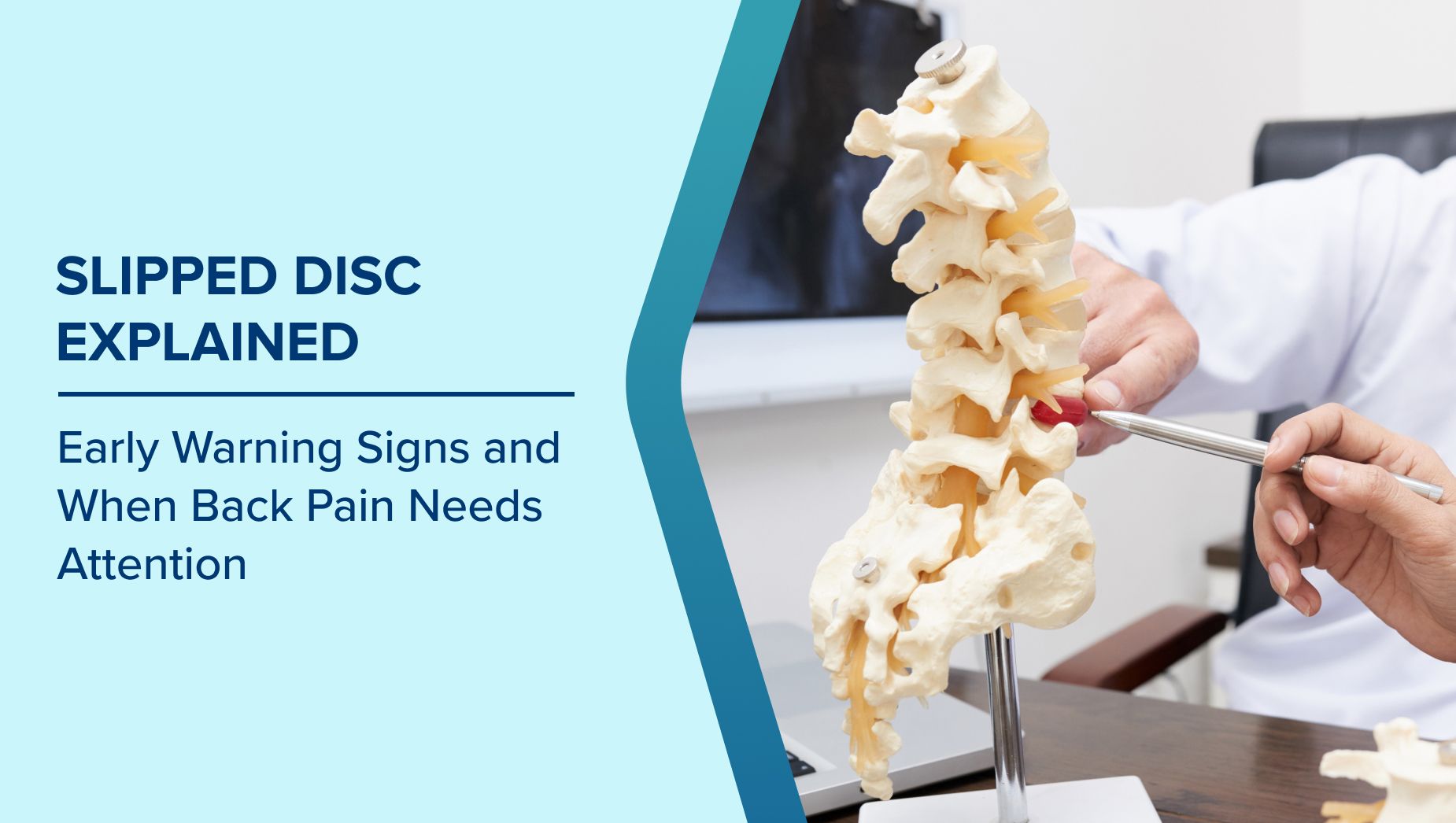
What Happens Inside the Spine During a Slipped Disc
The spine is made up of vertebrae stacked one above the other, separated by intervertebral discs. These discs act as shock absorbers and allow smooth movement during bending, twisting, and lifting.
Each disc has two main components:
- A soft, gel-like inner core that absorbs pressure
- A tough outer ring that holds the disc in place
When the outer layer weakens due to degeneration, strain, or repetitive stress, the inner core may bulge outward. This bulge can press on nearby spinal nerves. Importantly, the disc does not slip out of place. The pain arises from nerve irritation or compression, not disc movement itself.
The severity of symptoms depends on the degree of nerve involvement rather than the size of the disc bulge alone.
Difference Between Normal Back Pain and Nerve-Related Pain
Not all back pain has the same cause. Distinguishing between muscular pain and nerve-related pain helps determine when medical evaluation is necessary.
Muscle-related back pain usually presents as:
- Localised pain that stays near the affected area
- Dull, aching, or tight sensations
- Improvement with rest, massage, or gentle movement
- Absence of tingling, numbness, or weakness
Slipped disc–related pain often shows different features:
- Pain radiating from the spine to arms, legs, or buttocks
- Sharp, burning, or electric-like sensations
- Worsening with sitting, bending, coughing, or sneezing
- Tingling, numbness, or weakness in the limbs
Pain that travels away from the spine is a strong indicator of nerve involvement and should not be ignored.
Early Warning Signs of Slipped Disc People Commonly Dismiss
Early disc-related symptoms are often mistaken for routine back strain. Warning signs may include:
- Recurrent stiffness in the back or neck that keeps returning
- Pain after prolonged sitting or standing
- Discomfort while bending, twisting, or lifting light objects
- Pain that disturbs sleep or worsens at night
- Temporary relief followed by frequent flare-ups
These early signs are crucial opportunities for conservative care. Addressing them early can prevent progression and reduce the need for aggressive treatment.
Slipped Disc Symptoms in the Lower Back and Legs
The lower back bears most of the body’s weight, making it particularly vulnerable to disc problems. Common symptoms include:
- Lower back pain spreading to one buttock and down the leg
- Shooting or burning pain during walking or standing
- Tingling or numbness in the foot or toes
- Weakness causing difficulty climbing stairs or rising from a chair
- Pain worsening during coughing, sneezing, or sudden movements
These symptoms indicate irritation of the sciatic nerve and often respond well to early, guided conservative treatment.
Slipped Disc Symptoms in the Neck and Arms
Neck-related disc problems are increasingly common due to prolonged screen use and poor posture. Typical symptoms include:
- Neck pain radiating to shoulders, arms, or hands
- Tingling or numbness in fingers during routine activities
- Reduced grip strength affecting daily tasks
- Arm pain aggravated by head or neck movement
- Persistent stiffness limiting neck rotation
Ignoring neck-related symptoms may affect hand function and daily independence over time.
Symptoms That Appear Away From the Spine
Not all slipped disc symptoms are felt directly in the back or neck. Nerve compression can cause:
- Reduced sensation or numbness in hands or feet
- Burning, crawling, or pins-and-needles sensations
- Muscle weakness without visible swelling or injury
- Loss of coordination or balance during walking
These symptoms reflect nerve dysfunction and require medical evaluation even if back pain is minimal.
How Posture and Modern Habits Quietly Worsen Disc Problems
Modern lifestyles place continuous stress on spinal discs, often without immediate pain. Common contributing habits include:
- Long hours of sitting without lumbar support
- Constant mobile phone use with the neck bent forward
- Poor workstation ergonomics
- Carrying heavy bags on one shoulder repeatedly
- Sleeping on mattresses that lack proper spinal support
Over time, these factors increase disc pressure and accelerate degeneration.
How Ignored Slipped Disc Symptoms Affect Daily Life
As nerve compression progresses, daily functioning becomes increasingly difficult. People may experience:
- Difficulty sleeping due to persistent pain
- Reduced tolerance for sitting, standing, or walking
- Decline in work efficiency and concentration
- Fatigue and irritability from chronic discomfort
- Fear of movement due to pain anticipation
This gradual impact often affects both physical and emotional well-being.
When Back Pain Becomes a Medical Concern
Medical evaluation is recommended when:
- Pain spreads to arms or legs
- Numbness or weakness increases over time
- Symptoms persist despite rest and medication
- Walking, balance, or coordination becomes difficult
Early assessment allows timely, non-surgical intervention.
Emergency Symptoms That Require Immediate Attention
Some symptoms indicate severe nerve compression and require urgent care:
- Sudden loss of bladder or bowel control
- Rapid weakness in arms or legs
- Numbness around the groin or inner thighs
- Severe pain that does not improve with rest
Long-Term Risks of Untreated Disc Prolapse
Ignoring disc-related symptoms can lead to:
- Chronic nerve pain that becomes difficult to manage
- Permanent weakness or loss of sensation
- Reduced mobility affecting independence
- Dependence on long-term pain medication
- Emotional distress and reduced quality of life
Why Early Diagnosis Improves Recovery
Timely diagnosis allows targeted conservative treatment focused on recovery rather than intervention. Benefits include:
- Faster pain relief
- Better nerve healing
- Reduced likelihood of surgery
- Shorter rehabilitation duration
- Improved long-term spine health
Conclusion
Slipped disc symptoms rarely resolve on their own when nerves are involved. Pain that radiates, tingles, or causes weakness is not normal back pain. Early awareness, timely diagnosis, and structured conservative care can prevent long-term complications and restore quality of life.
Listening to early signals from the body and seeking guidance at the right time makes a meaningful difference in recovery.
Frequently Asked Questions
Can a slipped disc heal without surgery?
Many cases improve with rest, guided exercises, and lifestyle changes when diagnosed early.
Does weight gain worsen slipped disc symptoms?
Excess weight increases spinal pressure and may worsen nerve compression.
Can exercise make a slipped disc worse?
Incorrect or unsupervised exercises may worsen symptoms, while guided movement supports recovery.
Is sitting worse than standing for slipped disc pain?
Prolonged sitting often increases disc pressure and nerve-related discomfort.
Can stress increase slipped disc pain?
Stress causes muscle tension, which can intensify pain around affected spinal nerves.
Written and Verified by:

Related Blogs

Prof. (Dr). V.K.Jain In Neurosciences , Spine Surgery
Nov 07 , 2020 | 5 min read
Dr. Amit Gupta In Spine Surgery , Neurology
Nov 07 , 2020 | 2 min read
Blogs by Doctor
Back Pain in Youth: Poor Posture, Sedentary Lifestyle & Tech Spine
Dr Jitesh Manghwani In Spine Surgery
Aug 13 , 2025 | 2 min read
Spinal Cord Injury Day 2025: Awareness, Prevention and Pathways to Recovery
Dr Jitesh Manghwani In Spine Surgery
Sep 03 , 2025 | 1 min read
Most read Blogs


Related Blogs
Prof. (Dr). V.K.Jain In Neurosciences , Spine Surgery
Nov 07 , 2020 | 5 min read
Dr. Amit Gupta In Spine Surgery , Neurology
Nov 07 , 2020 | 2 min read
Blogs by Doctor
Back Pain in Youth: Poor Posture, Sedentary Lifestyle & Tech Spine
Dr Jitesh Manghwani In Spine Surgery
Aug 13 , 2025 | 2 min read
Spinal Cord Injury Day 2025: Awareness, Prevention and Pathways to Recovery
Dr Jitesh Manghwani In Spine Surgery
Sep 03 , 2025 | 1 min read
Most read Blogs