 WhatsApp Us (24/7)
 +91 926 888 0303 (24/7)



To Book an Appointment
Call Us+91 926 888 0303Robot Cancer Surgery Myths & Facts: Benefits & Risks
By Dr. Abhinav Deshpande in Surgical Oncology , Cancer Care / Oncology , Robotic Surgery
Mar 18 , 2026
1

Robotic surgery is becoming more common in cancer treatment, but there’s a lot of confusion about what it actually is and what it can do. Many people wonder whether a robot will perform their surgery alone or whether it really works better than traditional surgery. The truth is that robotic surgery is simply a tool that helps surgeons do their job better. A skilled surgeon controls the robot’s arms from a console, the robot doesn’t make decisions on its own. This advanced technology offers real benefits, such as smaller incisions, less pain, and faster recovery for many cancer patients. However, it’s not right for every type of cancer or every patient. Understanding the facts helps make informed decisions about cancer treatment with the surgical team.
What Is Robotic Surgery?
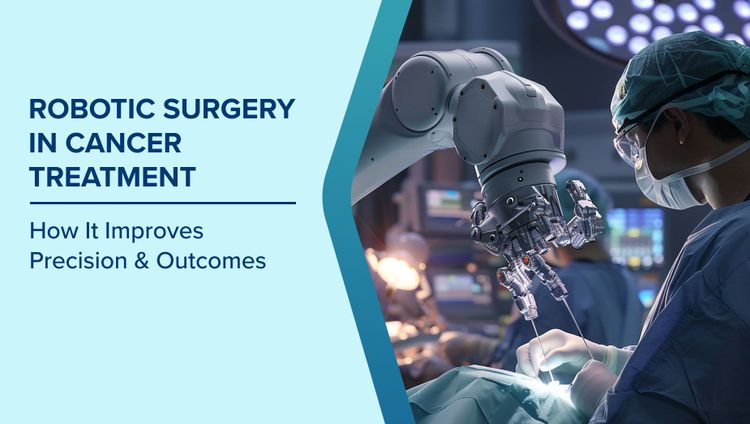
In robotic surgery, the surgeon sits at a console, a computer workstation, and controls robotic arms that hold surgical instruments. They view a magnified, high-definition 3D image of the surgical site. This enables precise movements with smaller incisions, reduced blood loss, and quicker recovery for patients.
The robotic arms are extremely precise and steady. They can make small, careful movements that even the best surgeon’s hands might struggle with. The arms don’t shake or drift. They also filter out any tremor from the surgeon’s hands, making movements smoother and more accurate.
Most robotic cancer surgeries use smaller incisions (about 1-2 inches) rather than a single large incision. This is called minimally invasive surgery. Smaller cuts mean less tissue damage, less bleeding, less pain afterwards, and faster healing. The patient can go home sooner and get back to their lives quicker.
Myth 1: The Robot Operates Alone
The Myth: Many people believe that a robot performs surgery on its own, without a surgeon present. This idea comes from science fiction movies where robots make their own decisions.
The Fact: This is completely false. A robot cannot perform surgery on its own. A highly trained surgical team is always present in the operating room, including the surgeon, nurses, and an anesthesiologist. The surgeon controls every single move the robot makes. If something goes wrong, the surgeon can stop the procedure instantly.
Myth 2: Robotic Surgery Is Faster
The Myth: People often assume that because robots are high-tech, they must be quicker. The idea is that robotic precision means less time in the operating room.
The Fact: This is mostly false. The actual surgery time is often the same or even longer than traditional open surgery. Setting up the robot and positioning the patient takes extra time. However, what matters more is what happens after surgery. Recovery from robotic surgery is significantly faster due to smaller incisions and less tissue damage.
The patient might spend one or two fewer days in the hospital. They will have less pain and need fewer pain medications. They can return to normal activities sooner. This faster recovery is a real benefit, even if the surgery itself takes about the same time as open surgery. So while the operation isn’t faster, getting back to life is.
Myth 3: Robotic Surgery Works Better for All Cancers
The Myth: Since robotic surgery is advanced technology, many people believe it should be used for every cancer type and every patient. The thinking is that newer technology is always better.
The Fact: This is false. Robotic surgery is excellent for some cancers but not necessary for others. It works particularly well for cancers in tight spaces, like prostate cancer, gynecologic cancers, and some colorectal cancers. For these cancers, the precision helps remove the tumour while protecting nearby healthy tissue.
However, for some cancers or some patients, traditional open surgery might be as good or even better. The surgeon will recommend the best approach for the patient’s specific situation. Just because a hospital has a robot doesn’t mean every patient should use it. The goal is choosing the best surgery for the cancer type, stage, and health, not choosing the fanciest technology.
Myth 4: Robotic Surgery Is Always Better Than Open Surgery
The Myth: Many people assume that the latest surgical technology is automatically superior to traditional methods. This leads them to think robotic surgery is the best choice for everyone.
The Fact: This is not always true. The best surgery depends on many factors. For some patients and some cancers, open surgery (with a larger single incision) is actually the better choice. An experienced cancer surgeon trained in both techniques can help understand which is right for the patient.
What matters most is that the surgeon has experience with the cancer type and can successfully remove the tumour while keeping the patient safe. Whether they use a robot or traditional tools is less important than their skill and experience. A surgeon with 20 years of experience doing open surgery will have better outcomes than someone just learning robotic techniques.
Myth 5: A Robot Can Make a Surgical Mistake
The Myth: Some people worry that robotic surgery is risky because robots are machines and machines can malfunction or make errors. This concern stems from the idea that technology is unpredictable.
The Fact: A robot cannot make a mistake on its own because it cannot think or make decisions independently. The robot follows the surgeon’s commands exactly. If the surgeon makes a movement, the robot copies it. If the surgeon removes their hand from the controls, the robot stops immediately.
There’s also a safety protocol called the clutch that allows the surgeon to pause the robot at any time. This means the surgeon is always in complete control and can make adjustments as needed during surgery. The robot is a tool, as safe as the surgeon using it. A skilled surgeon using a robot well will get excellent results. An inexperienced surgeon using a robot poorly may have problems. It’s the surgeon’s skill that matters.
Benefits One Can Actually Expect
When robotic surgery is appropriate for the cancer, here are the real benefits one can expect:
- Smaller Cuts: Usually 3-4 cuts of 1-2 inches instead of one 6-8 inch cut
- Less Blood Loss: Smaller incisions mean less bleeding during surgery
- Less Pain: Less tissue damage means significantly less post-operative pain
- Smaller Scars: Those tiny incisions leave barely visible scars
- Faster Healing: Typically recover in days instead of weeks
- Less Time in Hospital: Often go home in 1-2 days instead of 3-5 days
- Fewer Medications: Need less pain medicine due to less pain
- Faster Return to Normal: Can resume activities much sooner
What Cancers Can Benefit from Robotic Surgery?
Robotic surgery has proven benefits for certain cancers:
- Head & Neck Cancer
- Thyroid
- Lung
- Breast
- Esophageal Cancer
- Gallbladder & Bile Duct cancer
- Stomach (Gastric) cancer
- Colorectal
- Prostate Cancer: Robotic surgery is an excellent option for prostate cancer removal
- Uterine and Ovarian Cancer: Good option for gynecologic cancers
- Kidney Cancer: Can be used for partial or complete kidney removal
- Colorectal Cancer: Can be used for colon cancer surgery
- Lung Cancer: Growing use for certain lung cancer surgeries
- Bladder Cancer: Can be used for bladder removal surgery
Robotic Surgery vs Open Surgery: Direct Comparison
Open Surgery
- One large incision (6-8 inches)
- Surgeon operates directly
- More tissue damage
- 3-5 days in hospital
- More pain after surgery
- Longer recovery (2-4 weeks)
- More visible scars
Robotic Surgery
- Multiple small cuts (1-2 inches each)
- Surgeon controls robot arms
- Less tissue damage
- 1-2 days in hospital
- Less pain after surgery
- Faster recovery (5-7 days)
- Barely visible scars
Potential Risks and Complications
While robotic surgery is generally safe, all surgery carries some risks. These include:
- Infection
- Bleeding
- Blood clots
- Anesthesia complications
- Organ or nerve damage
- Equipment issues (very rare)
Conclusion
Robotic cancer surgery is a valuable tool that offers real benefits like smaller cuts, less pain, and faster recovery when used appropriately. However, it’s not a miracle cure and isn’t right for every cancer or every patient. What matters most is having an experienced surgeon who understands the cancer and recommends the best surgical approach for their specific situation. Ask questions, get information, and work with their surgical team to make the best decision for the cancer treatment. The robot is just a tool, the surgeon’s skill and experience are what matter most.
Frequently Asked Questions
1. Is robotic surgery safe?
Yes, robotic surgery is safe when performed by experienced surgeons in appropriate cases. Like all surgeries, there are some risks. These risks are actually often lower than open surgery because of smaller incisions and less tissue damage. Talk to the surgeon about specific risks for the situation and their experience with this cancer type.
2. Can the robot make independent decisions or mistakes?
No, the robot cannot make decisions or mistakes independently. It follows the surgeon’s every command precisely. If the surgeon makes a movement, the robot copies it exactly. If the surgeon removes their hand, the robot stops. The surgeon is always in complete control of every action.
3. Do all surgeons know how to use the robot?
No, surgeons require special training and certification to use robotic surgery equipment. They attend detailed training courses and practice extensively before performing procedures on patients. Some surgeons have much more experience than others. Always ask the surgeon how much training they have had and how many procedures they have completed.
4. How do I choose between robotic and open surgery?
Work with the surgeon. Ask if robotic surgery is appropriate for the cancer type and the specific situation. If both options are suitable, ask about the pros and cons of each. Consider the surgeon’s experience with each method. The most important factor is not which technique is used, but whether the surgeon has the skill and experience to remove the cancer successfully while keeping the patient safe.
Written and Verified by:

Related Blogs

Dr. S. VEDA PADMA PRIYA In Surgical Oncology , Cancer Care / Oncology
May 16 , 2016 | 2 min read

Dr. Kanika Batra Modi In Surgical Oncology , Cancer Care / Oncology
May 26 , 2016 | 4 min read
Blogs by Doctor
Robotic Surgery in Cancer Care: Precision, Control and Faster Recovery
Dr. Abhinav Deshpande In Surgical Oncology , Cancer Care / Oncology , Robotic Surgery
Dec 18 , 2025 | 5 min read

Most read Blogs


Related Blogs
Dr. S. VEDA PADMA PRIYA In Surgical Oncology , Cancer Care / Oncology
May 16 , 2016 | 2 min read
Dr. Kanika Batra Modi In Surgical Oncology , Cancer Care / Oncology
May 26 , 2016 | 4 min read
Blogs by Doctor
Robotic Surgery in Cancer Care: Precision, Control and Faster Recovery
Dr. Abhinav Deshpande In Surgical Oncology , Cancer Care / Oncology , Robotic Surgery
Dec 18 , 2025 | 5 min read
Most read Blogs