 WhatsApp Us (24/7)
 +91 926 888 0303 (24/7)


To Book an Appointment
Call Us+91 926 888 0303Spine Health: Avoid the Risks of Prolonged Sitting
By Medical Expert Team
Jul 08 , 2025 | 4 min read

If you’re working a 9-to-5 desk job or binge-watching shows after a long day, you’re not alone. Most of us sit for hours without thinking twice. But here’s the truth: sitting for long periods can do more harm than you might expect, especially to your spine. In fact, many health experts now say “sitting is the new smoking” when it comes to long-term spinal health.
How Sitting Affects Your Spine
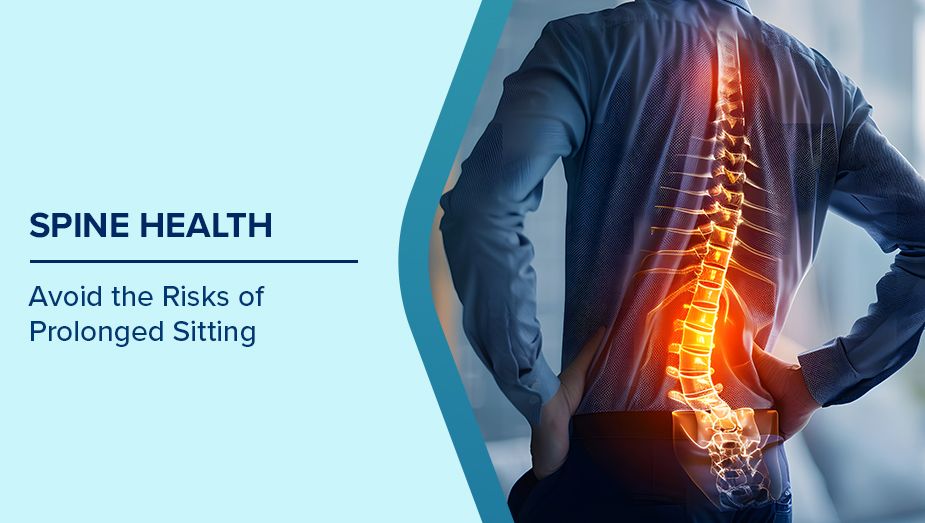
Your spine is built to support movement, not stillness. When you sit for hours, especially with poor posture, pressure builds up in the lower back and compresses the discs between your vertebrae.
Here’s what happens when you sit too long:
- Muscles tighten, especially in the hips and lower back.
- Spinal discs shrink, which can lead to herniation or disc bulges.
- Circulation slows down, reducing oxygen flow to muscles and joints.
- Neck and shoulders tense up, especially if you’re hunched over a screen.
Over time, this can result in chronic back pain, poor posture, and even nerve-related problems like sciatica.
The Real Risks of a Sedentary Lifestyle
A sedentary lifestyle doesn’t just hurt your spine. It affects your overall health, too.
Here are some serious risks:
- Chronic back and neck pain
- Poor posture and spinal misalignment
- Obesity and reduced metabolism
- Increased risk of type 2 diabetes and heart disease
- Weakened core and glute muscles
Many people in urban desk jobs spend over 8 hours sitting each day. Add the commute and screen time at home, and that number easily goes up. The more you sit, the harder it becomes for your spine to stay strong and supported.
Office Ergonomics: Your First Line of Defense
Setting up your workspace properly can make a big difference. Here are some office ergonomics tips to support your spine:
- Adjust your chair height so that your feet are flat on the floor and your knees are level with your hips.
- Sit all the way back in the chair with your back supported.
- Keep the monitor at eye level to avoid neck strain.
- Use a footrest if your feet don’t touch the ground.
- Place your keyboard and mouse close enough to prevent reaching or slouching.
These small adjustments can reduce spinal pressure and support better posture during long work hours.
Posture Correction Tips You Can Start Today
Even with a good chair, maintaining good posture is essential. Here’s how you can fix it:
- Sit upright, shoulders relaxed, and chest open.
- Keep your spine in a neutral position, not curved or overly straight.
- Avoid crossing your legs, which can twist your spine.
- Get up every 30 minutes to stretch or walk.
- Use a lumbar cushion to support the lower back.
Practising these posture correction tips consistently can ease tension and prevent spinal damage.
Reduce Sitting Time: Move More, Sit Less
Reducing the number of hours you sit daily is key to preventing long-term spinal issues. Here’s how to do it:
- Stand while taking phone calls
- Walk during lunch breaks
- Use a standing desk or convertible desk
- Set movement reminders on your phone or watch
- Stretch every hour, especially your back, hamstrings, and hips
Try the 20-8-2 rule: Sit for 20 minutes, stand for 8 minutes, move for 2 minutes. This simple rhythm can make a big difference in your spine health.
Exercises for a Healthy Spine
Your spine needs strong muscles for support. Focus on these low-impact exercises:
- Pelvic tilts to ease lower back stiffness
- Cat-cow stretches to improve spine flexibility
- Glute bridges to activate the core and glutes
- Child’s pose for gentle spine decompression
- Planks to build core strength
Doing these exercises 3–4 times a week can help keep your spine strong and maintain better posture alignment.
Small Changes, Big Results
You don’t need a complete lifestyle overhaul. Even a few adjustments to your daily routine can help protect your spine and reduce back pain associated with sitting.
Start with:
- Rearranging your desk setup
- Setting a timer to stand every 30 minutes
- Practicing simple stretches at your desk
Your spine will thank you.
Conclusion
Your spine carries you through life, quite literally. If sitting is the new smoking, then it’s time we treat long sitting hours like the health threat they are.
Take action today. Fix your posture, move more, and create a spine-friendly workspace. These aren’t just tips, they’re investments in your long-term well-being. Your back supports you every day. It’s time to return the favour.
Frequently Asked Questions
Can sitting for long hours cause permanent damage to the spine?
Yes, if done consistently without movement or proper posture. Over time, spinal discs can degenerate, leading to chronic pain, nerve compression, or conditions like herniated discs.
Is standing all day better than sitting?
Not exactly. Standing for long hours can also cause strain on your legs and lower back. The key is balance, alternating between sitting, standing, and moving throughout the day.
What’s the best chair for spine health?
An ergonomic chair with adjustable height, lumbar support, and a cushioned seat is ideal. Make sure it promotes a neutral spine position and supports your back fully.
How soon can I see improvements after changing my sitting habits?
Many people notice a reduction in back pain and an improvement in posture within a few weeks of making small changes, such as stretching, using ergonomic furniture, and reducing sitting time.
Are there spine-friendly exercises for office workers?
Yes, desk stretches like shoulder rolls, seated twists, and neck tilts can be done in just a few minutes. They improve flexibility, relieve tension, and promote better spinal alignment.
Related Blogs

Prof. (Dr). V.K.Jain In Neurosciences , Spine Surgery
Nov 07 , 2020 | 5 min read
Dr. Amit Gupta In Spine Surgery , Neurology
Nov 07 , 2020 | 2 min read
Blogs by Doctor

Ankylosing Spondylitis (AS): Symptoms, Causes, and More
Dr. Saurabh Verma In Spine Surgery
Nov 05 , 2024 | 7 min read

Monsoon Aches: Causes, Management, and Prevention
Dr. Saurabh Verma In Spine Surgery
Aug 20 , 2025 | 3 min read
Most read Blogs


Related Blogs
Prof. (Dr). V.K.Jain In Neurosciences , Spine Surgery
Nov 07 , 2020 | 5 min read
Dr. Amit Gupta In Spine Surgery , Neurology
Nov 07 , 2020 | 2 min read
Blogs by Doctor
Ankylosing Spondylitis (AS): Symptoms, Causes, and More
Dr. Saurabh Verma In Spine Surgery
Nov 05 , 2024 | 7 min read
Monsoon Aches: Causes, Management, and Prevention
Dr. Saurabh Verma In Spine Surgery
Aug 20 , 2025 | 3 min read
Most read Blogs