 WhatsApp Us (24/7)
 +91 926 888 0303 (24/7)


To Book an Appointment
Call Us+91 926 888 0303Right Lower Abdominal Pain: Signs of Appendicitis & Recovery
By Dr Rajeev Mohan Seth in General Surgery
Jun 01 , 2026

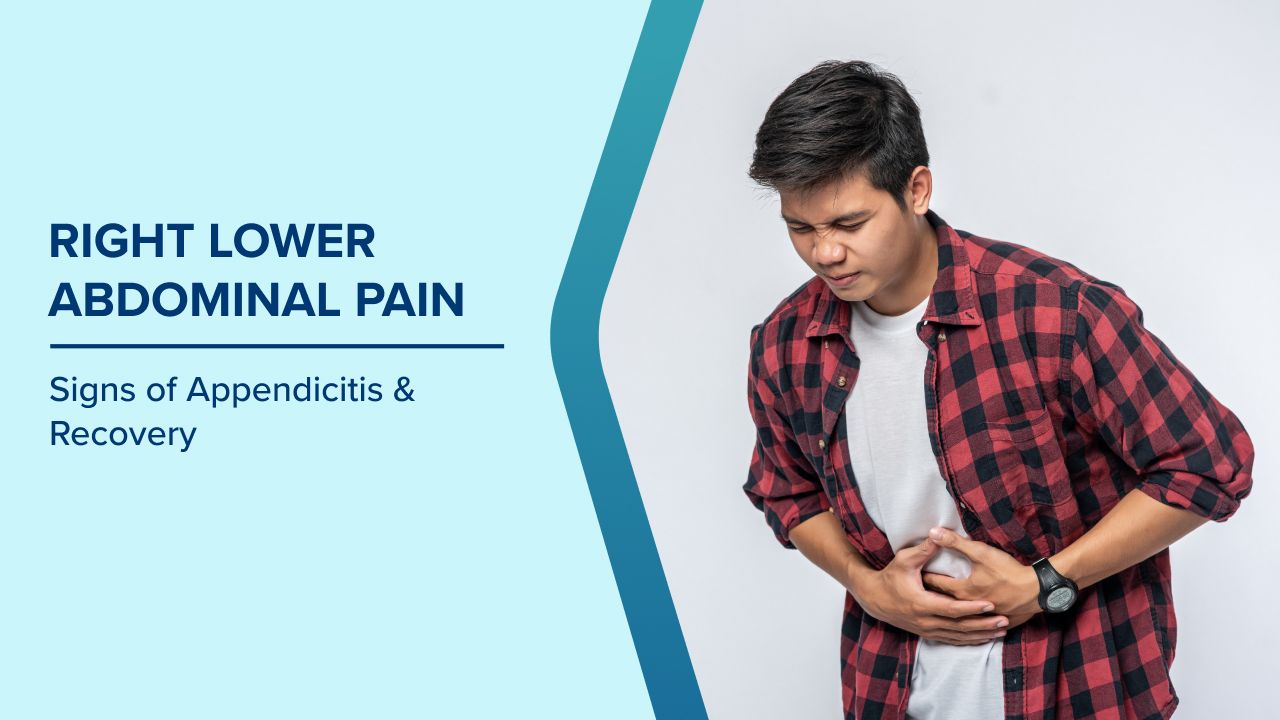
Sudden pain in the lower right side of the abdomen can be unsettling. While there are several possible causes, one of the most important conditions to rule out is Appendicitis, a surgical emergency that requires timely diagnosis and treatment.
At Max Hospital, Gurugram, our specialists often evaluate patients with acute abdominal pain, where early recognition plays a key role in preventing complications.
What Is Appendicitis?
Appendicitis is the inflammation of the appendix, a small, finger-shaped pouch attached to the large intestine. It typically occurs when the appendix becomes blocked due to stool, infection, or swelling of lymphatic tissue.
Once blocked, bacteria multiply rapidly, leading to swelling, infection, and potentially rupture if not treated promptly.
Why Does Right Lower Abdominal Pain Matter?
Pain in the right lower abdomen is one of the most characteristic signs of appendicitis. In many cases, the discomfort:
- Starts near the belly button
- Gradually shifts to the lower right abdomen
- Becomes sharper and more constant over time
- Worsens with movement, coughing, or walking
This pattern is a key warning sign that should not be ignored.
Common Symptoms You Should Watch For
Appendicitis often presents with a combination of symptoms, including:
- Sudden or worsening right lower abdominal pain
- Loss of appetite
- Nausea or vomiting
- Mild fever
- Abdominal bloating
- Difficulty passing gas or stool
- Pain that intensifies with movement
Not all patients experience every symptom, especially children, elderly individuals, and pregnant women.
When to Seek Emergency Care
You should seek immediate medical attention if:
- Abdominal pain persists for several hours
- Pain becomes localised to the lower right abdomen
- Fever develops along with nausea or vomiting
- The pain is severe and worsening
Delaying treatment can be dangerous, as an inflamed appendix may rupture within 48–72 hours, leading to serious infection in the abdomen.
How Appendicitis Is Diagnosed?
At Max Hospital, diagnosis is based on a combination of clinical evaluation and investigations, including:
- Detailed physical examination
- Blood tests to detect infection
- Urine tests to rule out other conditions
- Imaging tests such as an ultrasound or a CT scan
This systematic approach helps confirm the diagnosis quickly and accurately.
Treatment Options
The standard treatment for appendicitis is surgical removal of the appendix, known as an appendectomy. It can be performed in two ways:
Laparoscopic Appendectomy
- Minimally invasive
- Smaller incisions
- Faster recovery
- Less post-operative pain
Open Appendectomy
- Used in complicated or ruptured cases
- Larger incision
- Longer recovery period
In selected early cases, antibiotics may be used, but surgery remains the most definitive treatment.
Recovery After Surgery
Recovery is based on the severity of the condition and procedure type:
- Laparoscopic surgery: 1–2 weeks
- Open surgery: 2–4 weeks or more
- Complicated or ruptured cases: may require a longer hospital stay and antibiotics
Patients are suggested to avoid lifting heavy objects and gradually return to normal activities.
Final Thoughts
Sudden right lower abdominal pain should never be ignored. While it may be caused by minor digestive issues, it can also be a sign of Appendicitis, a condition that can become serious if untreated.
At Max Hospital, Gurugram, our experienced gastroenterology and surgical teams provide prompt diagnosis and advanced minimally invasive treatment to ensure safe recovery and better outcomes.
Written and Verified by:

Related Blogs

Medical Expert Team
Oct 20 , 2015 | 1 min read
Dr. Vishwas Sharma In General Surgery
Apr 23 , 2015 | 1 min read
Blogs by Doctor

Lump or Swelling: Signs, Risk, Cause & Treatment
Dr Rajeev Mohan Seth In General Surgery
Nov 16 , 2020 | 7 min read
Most read Blogs


Related Blogs
Medical Expert Team
Oct 20 , 2015 | 1 min read
Dr. Vishwas Sharma In General Surgery
Apr 23 , 2015 | 1 min read
Blogs by Doctor
Lump or Swelling: Signs, Risk, Cause & Treatment
Dr Rajeev Mohan Seth In General Surgery
Nov 16 , 2020 | 7 min read
Most read Blogs