 WhatsApp Us (24/7)
 +91 926 888 0303 (24/7)


To Book an Appointment
Call Us+91 926 888 0303Pollution and Young Minds: Effects on Brain Function and Learning
By Dr. Vivek Nangia in Pulmonology
Dec 15 , 2025 | 1 min read

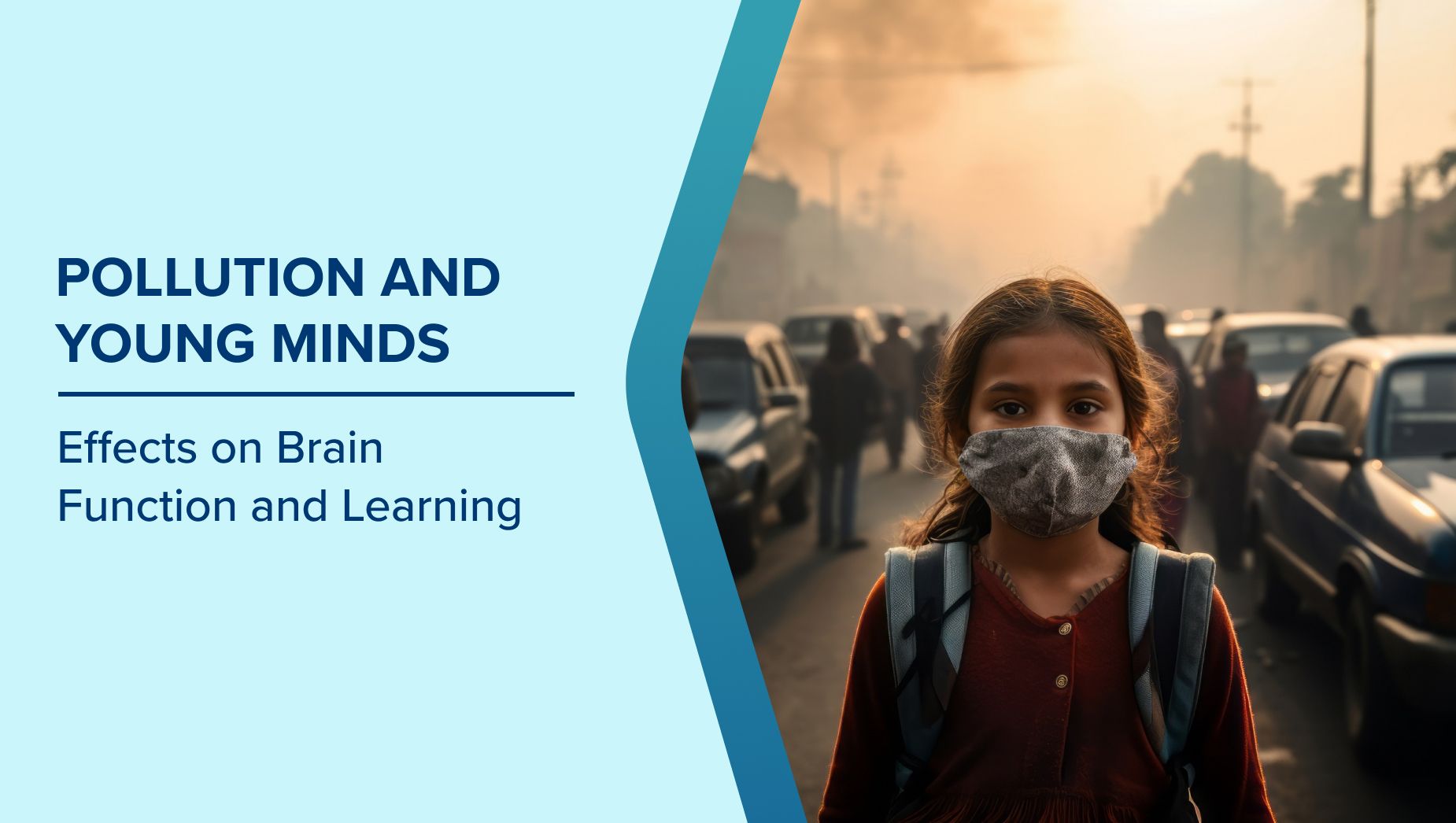
Air pollution doesn’t just affect organs like the lungs, heart, and kidneys, it also has a significant impact on the brain. In adults, it is already known to be associated with stroke and the development of dementia. However, recent evidence indicates that children are affected as well, particularly in neurocognitive development, behaviour, and overall brain growth.
This is primarily due to PM2.5 particles, ultrafine particles, and toxic gases, which can enter the bloodstream directly. Once in the bloodstream, they trigger an inflammatory cascade that spreads throughout the body, eventually reaching the brain.
When pollutants reach the brain, they can lead to multiple issues, including:
Read More: Impact of Air Pollution on Human Health: Risks, Consequences, and Solutions
- Behavioural problems: Children may develop ADHD, anxiety, irritability, and mood disturbances.
- Cognitive impairments: Slower cognitive development, reduced attention span, difficulty focusing, and impaired memory.
- Academic challenges: Poor concentration can result in learning difficulties and lower academic performance.
- Sleep disturbances: Air pollution disrupts sleep, leading to poor nighttime sleep and, in turn, irritability, agitation, emotional instability, impulsiveness, and mood swings during the day.
Long-term exposure also increases the risk of neurodevelopmental disorders such as autism, as well as neurodegenerative conditions later in life. Children are particularly vulnerable because their brains and bodies are still growing.
Written and Verified by:

Related Blogs

Medical Expert Team
Jun 06 , 2015 | 2 min read

Blogs by Doctor

Air Pollution, Diwali And COVID 19 – A Deadly Combination ?
Dr. Vivek Nangia In Pulmonology
Nov 09 , 2021 | 3 min read

COPD (Chronic Obstructive Pulmonary Disease)
Dr. Vivek Nangia In Pulmonology
Nov 17 , 2021 | 1 min read
Most read Blogs


Related Blogs
Medical Expert Team
Jun 06 , 2015 | 2 min read
Blogs by Doctor
Air Pollution, Diwali And COVID 19 – A Deadly Combination ?
Dr. Vivek Nangia In Pulmonology
Nov 09 , 2021 | 3 min read
COPD (Chronic Obstructive Pulmonary Disease)
Dr. Vivek Nangia In Pulmonology
Nov 17 , 2021 | 1 min read
Most read Blogs