 WhatsApp Us (24/7)
 +91 926 888 0303 (24/7)


To Book an Appointment
Call Us+91 926 888 0303Mammogram vs Ultrasound: Advantages and Limitations
By Dr. Shivangi Sundram in Surgical Oncology , Cancer Care / Oncology
Feb 04 , 2026

Maintaining breast health is crucial, and imaging tests play a central role in detecting changes early. Two commonly used methods are mammograms and ultrasounds. While both provide valuable information, they differ in terms of technology, purpose, and suitability for different situations. Knowing these differences helps women make better and more informed choices about breast screening and care.
What You Need to Know About Mammograms
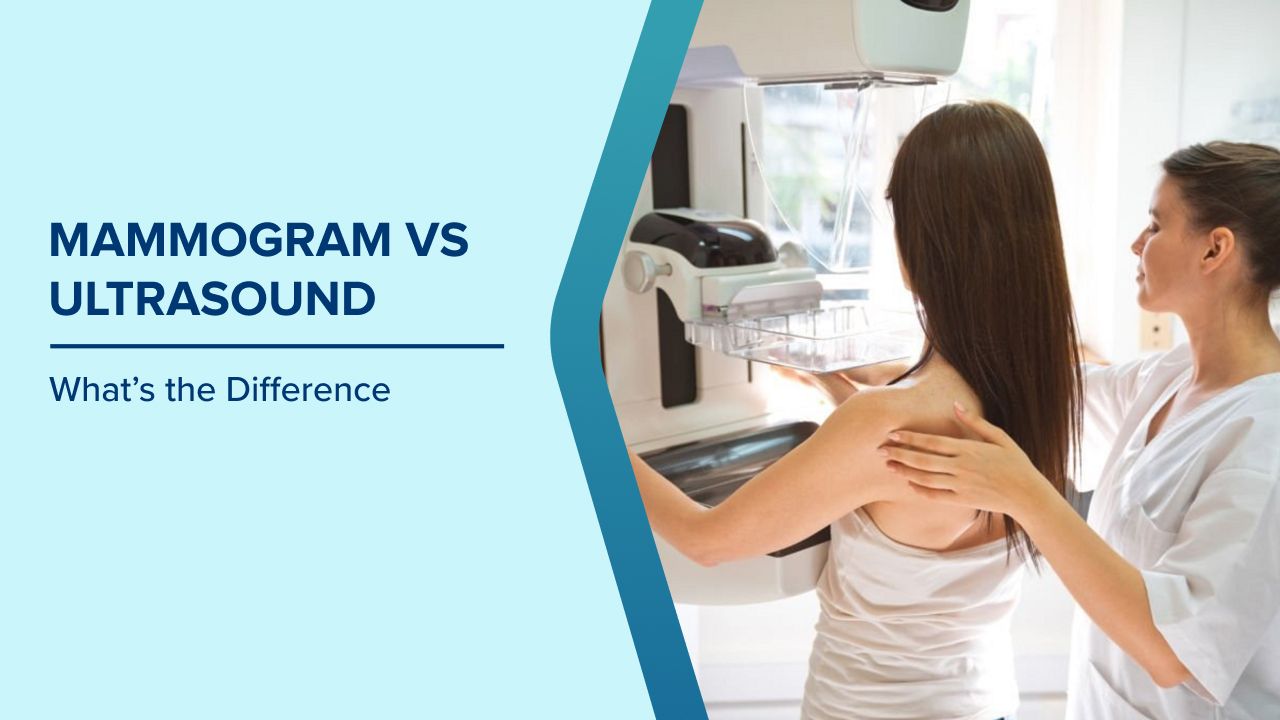
A mammogram is a specialised X-ray of the breast that captures detailed images of breast tissue. It is primarily used for routine screening and early detection of abnormalities that may not be felt during a physical examination.
How Mammograms Work
- The breast is placed between two plates that gently compress it.
- Low-dose X-rays pass through the tissue to create detailed images.
- Radiologists review these images to identify abnormal tissue changes or early signs of breast cancer.
Advantages of Mammograms
- Detects small growths and microcalcifications that cannot be felt.
- Useful as a routine screening tool for women over 40 or high-risk individuals.
- Helps in early identification of breast cancer, often before symptoms appear.
Considerations and Limitations
- Compression may cause temporary discomfort.
- Less effective in women with dense breast tissue.
- Cannot always distinguish between fluid-filled cysts and solid masses.
Understanding Breast Ultrasound
Breast ultrasound uses high-frequency sound waves to produce images of breast tissue. Unlike mammograms, it involves no radiation, making it a safe choice for younger women or pregnant individuals.
How Ultrasound Works
- A gel is applied to the skin to allow sound waves to travel efficiently.
- A handheld device called a transducer moves over the breast, producing real-time images.
- Images help assess the nature of breast lumps or abnormalities.
Advantages of Ultrasound
- Differentiates between solid masses and cysts.
- Effective for women with dense breast tissue.
- Provides real-time imaging for targeted evaluation.
- Identifies suspicious axillary lymph nodes.
- Safe during pregnancy or lactation.
Considerations and Limitations
- Not suitable as a primary screening tool for all women.
- May not detect very small microcalcifications.
- Image quality depends on technician skill.
Key Differences in Purpose and Use
While both mammograms and ultrasounds provide breast imaging, their roles are distinct.
Mammograms:
- Best for routine screening in women over 40.
- Detect early signs of cancer, including microcalcifications.
- Identify areas requiring further evaluation.
Ultrasounds:
- Used for diagnostic follow-up and as an adjunct to mammograms.
- Differentiate cysts from solid masses.
- Useful for dense breast tissue or younger women.
- Guide biopsies using real-time imaging.
When to Choose a Mammogram
Mammograms are recommended as a primary screening tool, especially for:
- Women aged 40 and above.
- Individuals with a family history of breast cancer.
- Follow-up after abnormal physical exams.
When Ultrasound is More Suitable
- Dense breast tissue.
- Women under 40 years of age.
- Palpable lumps not clear on mammograms.
- Pregnancy or lactation.
- Guiding biopsies or interventions.
Preparing for Your Imaging Tests
For Mammograms
- Avoid deodorants or lotions on the day of the test.
- Schedule after menstruation if breasts are tender.
- Wear a two-piece outfit.
For Ultrasounds
- No special preparation required.
- Inform the technician if pregnant or breastfeeding.
- Gel may feel cool but is harmless.
Conclusion
Both mammograms and ultrasounds are essential tools in breast care. Mammograms are ideal for routine screening and early detection, while ultrasounds clarify findings and guide procedures. Understanding their differences helps women make informed decisions and maintain long-term breast health.
Frequently Asked Questions
Can mammograms detect cysts?
Mammograms may detect abnormalities, but ultrasound is more effective at distinguishing cysts from solid masses.
Is repeated mammography safe?
Yes, mammograms use low-dose radiation and are safe when done as recommended.
Can ultrasound replace mammography?
No. Ultrasound complements mammography but does not replace it.
Written and Verified by:

Related Blogs

Dr. S. VEDA PADMA PRIYA In Surgical Oncology , Cancer Care / Oncology
May 16 , 2016 | 2 min read

Dr. Kanika Batra Modi In Surgical Oncology , Cancer Care / Oncology
May 26 , 2016 | 4 min read
Blogs by Doctor

Breast Cancer Risk: Diet, Exercise & Lifestyle Tips for Prevention
Dr. Shivangi Sundram In Surgical Oncology , Cancer Care / Oncology
Oct 22 , 2025 | 4 min read

Most read Blogs


Related Blogs
Dr. S. VEDA PADMA PRIYA In Surgical Oncology , Cancer Care / Oncology
May 16 , 2016 | 2 min read
Dr. Kanika Batra Modi In Surgical Oncology , Cancer Care / Oncology
May 26 , 2016 | 4 min read
Blogs by Doctor
Breast Cancer Risk: Diet, Exercise & Lifestyle Tips for Prevention
Dr. Shivangi Sundram In Surgical Oncology , Cancer Care / Oncology
Oct 22 , 2025 | 4 min read
Most read Blogs