 WhatsApp Us (24/7)
 +91 926 888 0303 (24/7)


To Book an Appointment
Call Us+91 926 888 0303Kidney Transplant vs Dialysis: Causes and Treatment
By Dr. Anil Prasad Bhatt in Nephrology
Apr 30 , 2026

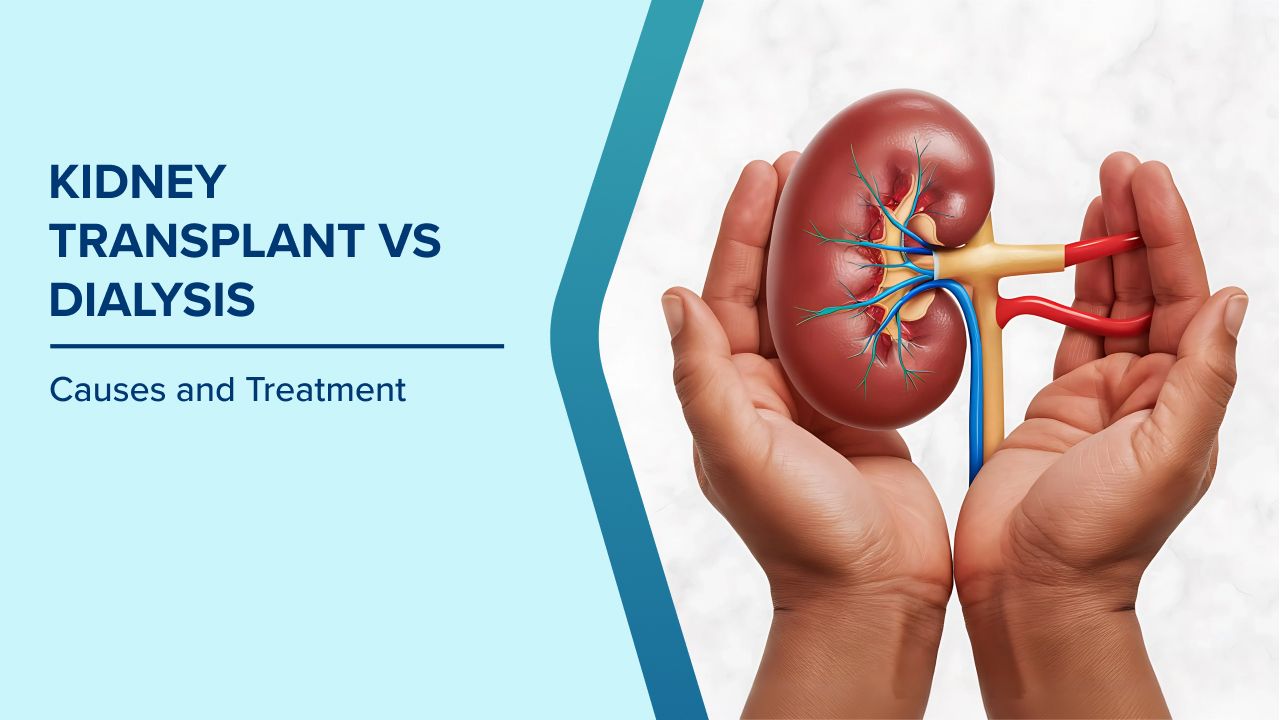
When kidney function declines to an advanced stage, treatment decisions become more than just clinical choices. They involve careful evaluation, long-term planning, and a clear understanding of what the body can safely handle. While both dialysis and kidney transplant are established treatment options, the decision is not one-size-fits-all.
Doctors do not simply recommend one option over the other. Instead, they assess multiple medical and personal factors to determine which approach aligns best with an individual’s health condition and future needs.
Why a Personalised Approach Matters
No two patients with kidney disease have the same medical profile. Even if two individuals are diagnosed at the same stage, their overall health, underlying causes, and risk factors can differ significantly.
Choosing between dialysis and transplant requires:
- A detailed understanding of the patient’s current health
- Anticipation of future complications
- Consideration of how the body may respond to treatment
This is why doctors follow a structured assessment rather than making a quick recommendation.
The Role of Overall Health Assessment
One of the first steps is evaluating the patient’s general health status. This goes beyond kidney function alone.
Doctors assess:
- Heart health and cardiovascular stability
- Lung function and breathing capacity
- Liver function and metabolic balance
- Presence of infections or chronic conditions
A kidney transplant involves major surgery. If the body is not strong enough to tolerate it, dialysis may be considered a safer initial option.
On the other hand, if a patient is medically stable, transplant may be explored as a long-term solution.
Understanding the Cause of Kidney Failure
The underlying reason for kidney failure plays a key role in treatment planning.
Doctors carefully identify:
- Whether the condition is stable or progressive
- If the cause is reversible or permanent
- The likelihood of recurrence after treatment
For example:
- Some conditions may continue to affect a transplanted kidney
- Others may remain controlled after transplant
This evaluation helps doctors predict how effective each treatment option will be over time.
Read More: [block]3[/block]
Age Is Considered, But Not in Isolation
Age alone does not determine eligibility for a transplant or dialysis. However, it is still an important factor when combined with overall health.
Doctors consider:
- Biological age rather than just numerical age
- Physical fitness and functional independence
- Ability to recover from surgery
A younger patient with multiple health issues may not be a transplant candidate, while an older but otherwise healthy individual may still be considered suitable.
The Importance of Comorbid Conditions
Many patients with kidney disease also have other health conditions. These can influence both treatment safety and outcomes.
Common conditions evaluated include:
- Diabetes
- High blood pressure
- Heart disease
- Obesity
Doctors assess how well these conditions are controlled. Poorly managed comorbidities can increase surgical risks or affect recovery.
In such cases, dialysis may be recommended initially while efforts are made to stabilise overall health.
Evaluating Surgical Fitness for Transplant
A kidney transplant is a complex surgical procedure. Before recommending it, doctors conduct a thorough pre-transplant evaluation.
This may include:
- Cardiac testing to assess heart function
- Imaging to evaluate blood vessels
- Screening for infections
- Assessment of the immune system response
The goal is to ensure that the patient can safely undergo surgery and recover without major complications.
If surgical risks are too high, dialysis becomes the safer alternative.
Immunological Compatibility and Donor Availability
Transplant success depends on compatibility between donor and recipient. Doctors assess:
- Blood group matching
- Tissue compatibility
- Risk of rejection
In addition, donor availability plays a practical role. Even if a patient is medically fit, the absence of a suitable donor may delay transplantation.
During this period, dialysis may be used as a bridging treatment.
Psychological Readiness and Treatment Commitment
Treatment decisions are not purely physical. Mental and emotional readiness also matter.
Doctors evaluate:
- Ability to follow long-term medical instructions
- Understanding of treatment responsibilities
- Emotional preparedness for surgery or ongoing therapy
A transplant requires strict adherence to lifelong medication. Missing doses can lead to serious complications.
If there are concerns about adherence, doctors may recommend dialysis until the patient is better prepared.
Lifestyle Stability and Support System
Another important factor is the patient’s environment and support system.
Doctors consider:
- Availability of family or caregiver support
- Ability to attend regular follow-ups
- Access to medical facilities
A strong support system is especially important after a transplant, where monitoring and care are essential.
In situations where consistent support is lacking, dialysis may be a more manageable option initially.
Timing of Treatment Decision
Doctors also determine the right timing for each treatment.
Key considerations include:
- Stage of kidney disease progression
- Presence of symptoms affecting daily health
- Urgency of intervention
Some patients may start with dialysis and later transition to transplant once they become eligible. Others may be prepared for transplant earlier, depending on their condition.
The decision is dynamic and may change over time.
Balancing Risks and Long-Term Outcomes
Rather than focusing on immediate benefits alone, doctors look at long-term sustainability.
They weigh:
- Potential complications
- Likelihood of treatment success
- Impact on overall health over time
This balance helps in choosing a treatment that is not only effective now but also suitable for the future.
Read More: [block]4[/block]
The Role of Patient Preferences in Decision-Making
While medical evaluation is central, patient preferences are also considered.
Doctors discuss:
- Concerns and expectations
- Personal priorities
- Comfort with each treatment approach
Shared decision-making ensures that the chosen treatment aligns with both medical advice and individual goals.
When the Decision Needs to Be Revisited
It is important to understand that treatment decisions are not always final.
Doctors may reassess the situation if:
- Health status improves or declines
- New complications arise
- A suitable donor becomes available
This flexibility allows treatment to adapt to changing health conditions.
Conclusion
Choosing between dialysis and a kidney transplant is a carefully guided process, not a fixed decision. Doctors evaluate multiple factors, including overall health, underlying conditions, surgical fitness, and personal readiness, before recommending a treatment path.
The goal is not just to manage kidney failure, but to choose an approach that is safe, sustainable, and suited to the individual’s long-term well-being.
Understanding how this decision is made can help patients feel more informed, involved, and confident as they navigate their treatment journey.
Frequently Asked Questions
1. Can a patient move from dialysis to transplant later?
Yes, many patients begin with dialysis and transition to transplant once they meet eligibility criteria or a donor becomes available.
2. How long does the evaluation process for a transplant usually take?
The evaluation can take several weeks to months, depending on the tests required and the patient’s health condition.
3. Is it possible to be unsuitable for both dialysis and transplant?
In rare cases with severe health complications, treatment options may be limited. Doctors then focus on supportive care and symptom management.
4. Do all patients with kidney failure get considered for transplant?
Not always. Eligibility depends on multiple medical and non-medical factors assessed during evaluation.
5. Can lifestyle changes improve eligibility for a transplant?
Yes, improving overall health, controlling chronic conditions, and maintaining fitness can enhance eligibility over time.
Written and Verified by:

Related Blogs

Dr. Puneet Arora In Nephrology
Nov 11 , 2020 | 2 min read

Nov 11 , 2020 | 9 min read
Blogs by Doctor

Hydration and Kidney Health: Myths, Facts & Tips to Stay Hydrated
Dr. Anil Prasad Bhatt In Nephrology , Kidney Transplant
Mar 13 , 2025 | 5 min read

Most read Blogs


Related Blogs
Dr. Puneet Arora In Nephrology
Nov 11 , 2020 | 2 min read
Nov 11 , 2020 | 9 min read
Blogs by Doctor
Hydration and Kidney Health: Myths, Facts & Tips to Stay Hydrated
Dr. Anil Prasad Bhatt In Nephrology , Kidney Transplant
Mar 13 , 2025 | 5 min read
Most read Blogs