 WhatsApp Us (24/7)
 +91 926 888 0303 (24/7)


To Book an Appointment
Call Us+91 926 888 0303HPB Surgery vs Liver Transplant: Importance, Signs & Conditions
By Dr. Waliullah Siddiqui in Liver Transplant and Biliary Sciences , Gastrointestinal & Hepatobiliary Oncology , Gastrointestinal Surgery , Gastro Intestinal & Hepatopancreatobiliary Surgical Oncology , Robotic Surgery
May 08 , 2026

Liver, pancreas, and biliary diseases often begin quietly, with symptoms that may seem mild or easy to ignore. However, as these conditions progress, they can significantly affect overall health and may require specialised surgical care. Understanding when a condition needs HPB (Hepato-Pancreato-Biliary) surgery and when it may progress to a liver transplant is essential for timely treatment.
Early recognition of warning signs allows for better planning, improved outcomes, and, in many cases, the possibility of avoiding more complex interventions.
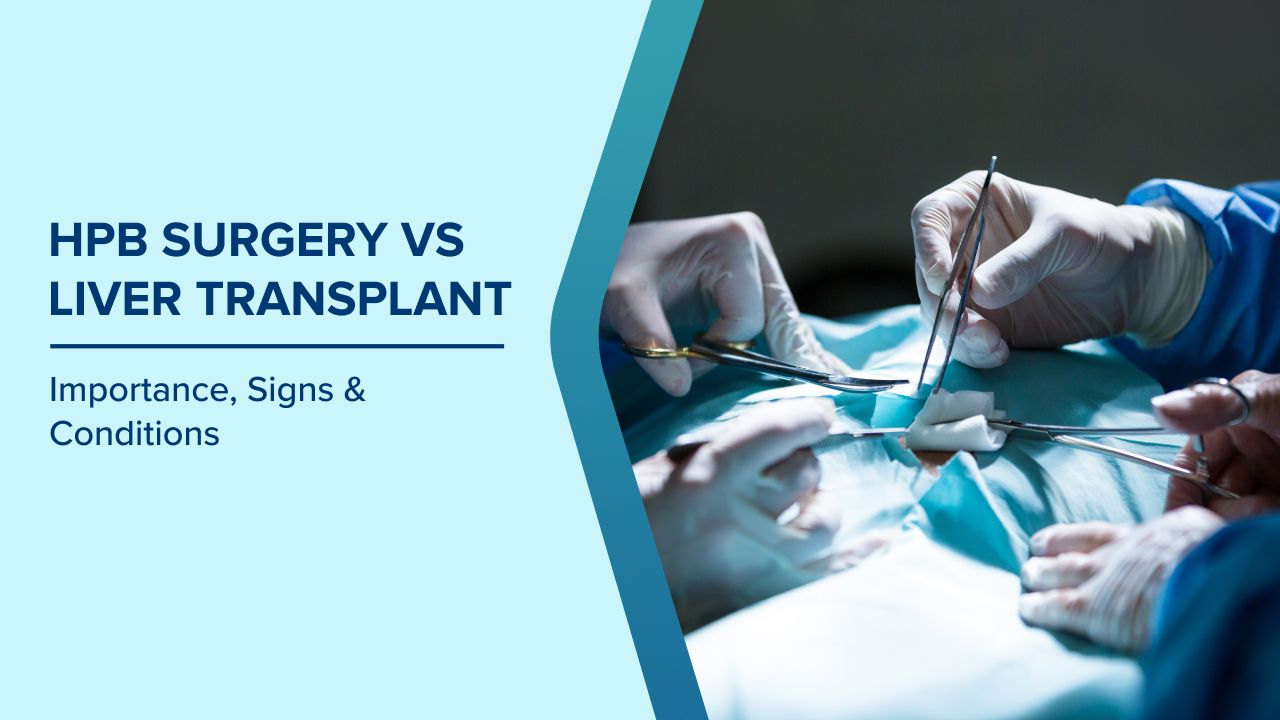
What Is HPB Surgery, and How Is It Different from Liver Transplant?
HPB surgery focuses on treating diseases of the:
- Liver
- Pancreas
- Gallbladder and bile ducts
These procedures may involve removing tumours, treating blockages, repairing structures, or managing infections. In many cases, HPB surgery helps preserve the organ and restore its function.
A liver transplant, on the other hand, is considered when the liver is no longer able to function adequately despite treatment. It involves replacing the damaged liver with a healthy donor liver.
In simple terms:
- HPB surgery aims to treat and preserve
- Liver transplant is performed when function cannot be restored
Conditions That May Require HPB Surgery
HPB surgery is often recommended for conditions that affect the liver, pancreas, or biliary system's structure or function.
Common conditions include:
- Liver tumours (benign or cancerous)
- Pancreatic tumours or cysts
- Gallstones causing complications
- Bile duct obstruction or strictures
- Chronic pancreatitis
- Liver cysts or abscesses
These conditions are usually identified through imaging and clinical evaluation. Early-stage diseases are often manageable with surgery before they progress further.
Key Signs That You May Need HPB Surgery
Recognising symptoms early can help prevent complications and avoid disease progression.
Persistent Abdominal Pain
Pain in the upper abdomen, especially if it is ongoing or worsening, may indicate liver, pancreas, or biliary disease.
Jaundice (Yellowing of Skin and Eyes)
Jaundice is often linked to bile duct obstruction or liver dysfunction and requires prompt evaluation.
Unexplained Weight Loss
Sudden or unexplained weight loss may be associated with pancreatic or liver conditions, including tumours.
Digestive Issues
Symptoms like bloating, nausea, poor appetite, or difficulty digesting fatty foods can point to biliary or pancreatic problems.
Recurrent Infections or Fever
Frequent infections, especially related to the liver or bile ducts, may require surgical intervention.
Fatigue and Weakness
Chronic liver conditions can lead to persistent tiredness and reduced energy levels.
If these symptoms persist, further investigation is important to determine whether HPB surgery is needed.
When Does the Condition Progress to a Liver Transplant?
Not all liver conditions require a transplant. However, when liver damage becomes severe and irreversible, transplantation may be the only effective treatment.
Signs That May Indicate the Need for a Liver Transplant
Advanced Liver Disease (Cirrhosis)
Cirrhosis involves scarring of the liver, which gradually affects its ability to function.
Persistent Jaundice
Ongoing yellowing that does not improve with treatment may signal worsening liver failure.
Fluid Accumulation (Ascites)
Swelling in the abdomen due to fluid build-up is a sign of advanced liver dysfunction.
Recurrent Internal Bleeding
Bleeding from enlarged veins in the digestive tract (varices) can occur in severe liver disease.
Confusion or Memory Changes
This may indicate hepatic encephalopathy, a condition caused by toxin build-up due to poor liver function.
Liver Failure
When the liver cannot perform essential functions such as detoxification, protein production, and metabolism, transplantation becomes necessary.
How Doctors Decide Between HPB Surgery and Liver Transplant
The choice between HPB surgery and liver transplant depends on multiple factors:
Extent of Disease
If the disease is localised (such as a tumour or blockage), HPB surgery may be sufficient.
If the disease is widespread or involves severe liver damage, a transplant may be required.
Liver Function
Preserved liver function supports surgical treatment.
Poor liver function may limit surgical options and favour transplantation.
Overall Health
A patient’s age, general health, and presence of other medical conditions influence treatment decisions.
Response to Previous Treatment
If medications or earlier procedures are no longer effective, advanced options like a transplant may be considered.
A multidisciplinary team typically evaluates these factors to determine the most appropriate treatment plan.
Importance of Early Diagnosis and Timely Intervention
Early detection plays an essential role in improving outcomes.
- Conditions treated early may only require HPB surgery
- Delayed diagnosis can lead to irreversible liver damage
- Timely intervention can prevent complications and improve survival rates
Regular health check-ups, especially for individuals with known liver or pancreatic conditions, can help identify issues before they progress.
Can HPB Surgery Prevent the Need for a Liver Transplant?
In many cases, yes.
Treating conditions such as early-stage liver tumours, bile duct obstruction, and localised infections can help preserve liver function and reduce the risk of progression to liver failure.
However, this depends on:
- The stage at which the condition is diagnosed
- The effectiveness of treatment
- The patient’s overall health
This is why early evaluation is essential.
Life After Treatment: What to Expect
After HPB Surgery
- Gradual recovery over weeks
- Improvement in symptoms
- Regular follow-ups to monitor healing
After Liver Transplant
- Lifelong follow-up care
- Use of medications to prevent organ rejection
- Gradual return to daily activities
- Improved quality of life in most patients
Both treatment paths aim to restore health and improve long-term outcomes.
When Should You Consult a Specialist?
You should seek medical advice if you experience:
- Persistent abdominal discomfort
- Yellowing of skin or eyes
- Unexplained weight loss
- Ongoing digestive issues
- Swelling in the abdomen
- Unusual fatigue or weakness
Early consultation with a specialist can help determine whether HPB surgery or further evaluation for transplant is needed.
Conclusion
HPB surgery and liver transplantation are essential components of modern treatment for complex liver, pancreatic, and biliary diseases. While HPB surgery focuses on treating and preserving organ function, liver transplant becomes necessary when the liver is no longer able to perform its vital roles.
Recognising early warning signs and seeking timely medical care can significantly improve treatment outcomes. With the right approach, many conditions can be managed effectively before they progress to advanced stages.
If you notice persistent or concerning symptoms, consulting a specialist is the first step towards appropriate diagnosis and care. Early action can lead to better health, fewer complications, and improved quality of life.
Frequently Asked Questions
1. Can all liver diseases be treated with HPB surgery?
No, only certain conditions can be managed with surgery. Advanced or irreversible liver damage may require a transplant.
2. Is a liver transplant always the last option?
Yes, it is usually considered when other treatments, including surgery and medication, are no longer effective.
3. How long does recovery take after HPB surgery?
Recovery varies based on the procedure, but generally takes a few weeks to a few months.
4. Can liver disease progress without symptoms?
Yes, many liver conditions develop silently, which is why regular check-ups are important.
5. Is a liver transplant safe?
Liver transplant is a well-established procedure with good outcomes when performed in appropriate candidates, followed by proper post-operative care.
Written and Verified by:

Related Blogs

Prof (Dr.) Subhash Gupta In Liver Transplant and Biliary Sciences
Nov 07 , 2020 | 2 min read

Dr. Nivedita Pandey In Gastroenterology, Hepatology & Endoscopy , Liver Transplant and Biliary Sciences
Nov 07 , 2020 | 2 min read
Blogs by Doctor

Post-Liver Transplant Diet: Foods and Nutrition Tips for Faster Healing
Dr. Waliullah Siddiqui In Liver Transplant and Biliary Sciences , Gastrointestinal & Hepatobiliary Oncology , Gastrointestinal Surgery , Gastro Intestinal & Hepatopancreatobiliary Surgical Oncology , Robotic Surgery
Oct 14 , 2025 | 4 min read
Most read Blogs


Related Blogs
Prof (Dr.) Subhash Gupta In Liver Transplant and Biliary Sciences
Nov 07 , 2020 | 2 min read
Dr. Nivedita Pandey In Gastroenterology, Hepatology & Endoscopy , Liver Transplant and Biliary Sciences
Nov 07 , 2020 | 2 min read
Blogs by Doctor
Post-Liver Transplant Diet: Foods and Nutrition Tips for Faster Healing
Dr. Waliullah Siddiqui In Liver Transplant and Biliary Sciences , Gastrointestinal & Hepatobiliary Oncology , Gastrointestinal Surgery , Gastro Intestinal & Hepatopancreatobiliary Surgical Oncology , Robotic Surgery
Oct 14 , 2025 | 4 min read
Most read Blogs