 WhatsApp Us (24/7)
 +91 926 888 0303 (24/7)


To Book an Appointment
Call Us+91 926 888 0303Post-Liver Transplant Diet: Foods and Nutrition Tips for Faster Healing
By Dr. Waliullah Siddiqui in Liver Transplant and Biliary Sciences , Gastrointestinal & Hepatobiliary Oncology , Gastrointestinal Surgery , Gastro Intestinal & Hepatopancreatobiliary Surgical Oncology , Robotic Surgery
Jan 05 , 2026 | 4 min read

A liver transplant is a life-saving surgery that gives patients a second chance at health. While surgery is the first step, recovery depends largely on how well you care for your body afterwards. Among the most important factors is nutrition. The right diet after a liver transplant supports healing, reduces the risk of infections, strengthens the immune system, and helps your new liver function properly.
Importance of Diet After Liver Transplant
After a transplant, the body undergoes major changes. Strong medicines, such as immunosuppressants, are prescribed to prevent organ rejection. These medicines affect metabolism, increase appetite, and sometimes raise blood sugar or cholesterol levels. A healthy diet plays a crucial role in:
- Supporting faster healing of surgical wounds
- Protecting the liver from further damage
- Managing weight, blood sugar, and cholesterol
- Boosting immunity to fight infections
- Reducing the side effects of long-term medicines
Eating the right foods after liver transplant surgery is not just about recovery, but about building long-term health.
Key Nutrition Goals After Surgery
Your diet after liver transplant should be designed around specific nutrition goals:
- Protein for healing: Adequate protein helps repair tissues and build strength.
- Vitamins and minerals: Nutrients such as vitamin D, calcium, zinc, and iron are vital for immunity and bone health.
- Low sodium intake: Helps control blood pressure and prevents fluid retention.
- Balanced carbohydrates: Important for maintaining blood sugar, especially since medicines may increase diabetes risk.
- Healthy fats: Focus on unsaturated fats from nuts, seeds, fish, and olive oil.
- Safe food handling: Reduces infection risk, since the immune system is weaker after transplant.
Foods to Eat for Faster Recovery
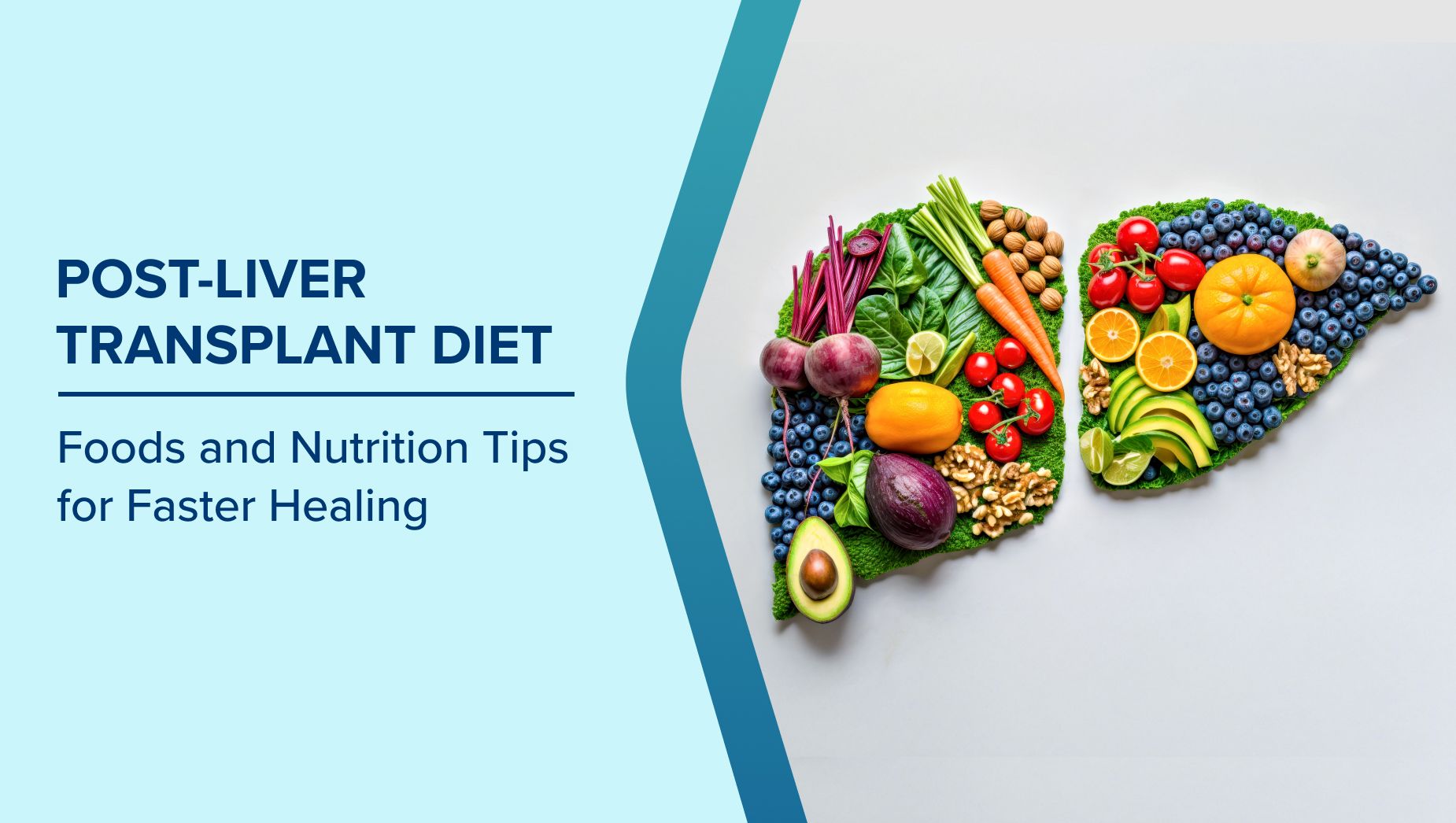
Including the right foods in your post-liver transplant diet chart will speed up recovery and improve overall health.
Protein-rich foods
- Lean chicken, turkey, fish, and eggs
- Low-fat dairy products like yoghurt, paneer, and milk
- Plant-based proteins such as beans, lentils, chickpeas, and soy products
Fresh fruits and vegetables
- Leafy greens like spinach, kale, and fenugreek
- Vitamin C-rich fruits such as oranges, guava, kiwi, and strawberries
- Antioxidant-rich vegetables like carrots, bell peppers, and broccoli
Whole grains
- Brown rice, oats, whole wheat bread, and quinoa provide energy and fibre for digestion.
Healthy fats
- Olive oil, flaxseeds, walnuts, and avocados support heart and liver health.
Probiotics
- Yoghurt and buttermilk improve gut health and immunity.
Foods to Avoid After Liver Transplant
Certain foods can harm recovery or interfere with medicines. Avoid these for safer healing:
- Raw or undercooked meat, fish, or eggs: High infection risk.
- Unpasteurised milk or dairy: May contain harmful bacteria.
- High-salt foods: Pickles, packaged snacks, instant soups, and processed meats.
- Fried and oily foods: Increase cholesterol and strain the liver.
- Excess sugar: Cakes, sweets, and sugary drinks raise blood sugar.
- Grapefruit and pomelo: Can interfere with transplant medicines.
- Alcohol: Strictly prohibited, as it damages the new liver.
Hydration and Lifestyle Tips
- Drink 8–10 glasses of clean, safe water daily.
- Avoid street food or unhygienic meals.
- Maintain a healthy weight to reduce strain on the new liver.
- Exercise lightly, such as walking or yoga, once your doctor allows.
- Avoid smoking and alcohol completely.
Role of Supplements After Liver Transplant
Sometimes, doctors recommend supplements to support recovery, as medicines may reduce the absorption of key nutrients. Common supplements include:
- Calcium and Vitamin D for bone strength
- Iron for preventing anaemia
- Multivitamins to fill nutritional gaps
- Omega-3 fatty acids for heart and liver health
Never take supplements without consulting your doctor, as some may interfere with medicines.
Long-Term Diet and Recovery Support
Healthy eating after a liver transplant should become a lifestyle, not just a short-term recovery plan. Over the long run:
- Stick to a balanced, nutrient-rich diet.
- Limit fast food and processed meals.
- Regularly monitor blood sugar, cholesterol, and weight.
- Keep in touch with your transplant team for diet updates.
Conclusion
The best diet after a liver transplant is one that supports healing, strengthens immunity, and protects long-term liver health. By focusing on protein, vitamins, whole grains, fresh fruits, and vegetables while avoiding processed and unsafe foods, recovery becomes faster and smoother.
A well-planned liver transplant recovery diet, combined with hydration, supplements as needed, and lifestyle modifications, ensures a better quality of life for patients and provides peace of mind for caregivers.
Frequently Asked Questions
Can I eat outside food after a liver transplant?
It is best to avoid restaurant or street food during the first year, as food hygiene is crucial. Outside food may expose you to bacteria or infections that your body is not strong enough to fight.
How soon can I return to a normal diet?
Most patients can slowly return to a normal, balanced diet within 3–6 months after transplant. However, restrictions like avoiding alcohol and unsafe foods remain lifelong.
Is coffee safe after a liver transplant?
Yes, moderate coffee intake is generally safe, but it's best to limit excessive caffeine consumption. Excessive coffee consumption may interact with certain medications or lead to dehydration.
Do I need to avoid all fats after a liver transplant?
No, healthy fats such as olive oil, avocados, nuts, and seeds are important for recovery. Only trans fats and foods that are deep-fried should be avoided.
Can I follow a vegetarian diet after a liver transplant?
Yes, a well-planned vegetarian diet can meet nutritional needs. Include protein-rich foods such as lentils, beans, tofu, and low-fat dairy products. Your dietitian can help balance meals.
Written and Verified by:

Related Blogs

Prof (Dr.) Subhash Gupta In Liver Transplant and Biliary Sciences
Nov 07 , 2020 | 2 min read

Dr. Nivedita Pandey In Gastroenterology, Hepatology & Endoscopy , Liver Transplant and Biliary Sciences
Nov 07 , 2020 | 2 min read
Blogs by Doctor
Most read Blogs


Related Blogs
Prof (Dr.) Subhash Gupta In Liver Transplant and Biliary Sciences
Nov 07 , 2020 | 2 min read
Dr. Nivedita Pandey In Gastroenterology, Hepatology & Endoscopy , Liver Transplant and Biliary Sciences
Nov 07 , 2020 | 2 min read
Blogs by Doctor
Most read Blogs