 WhatsApp Us (24/7)
 +91 926 888 0303 (24/7)


To Book an Appointment
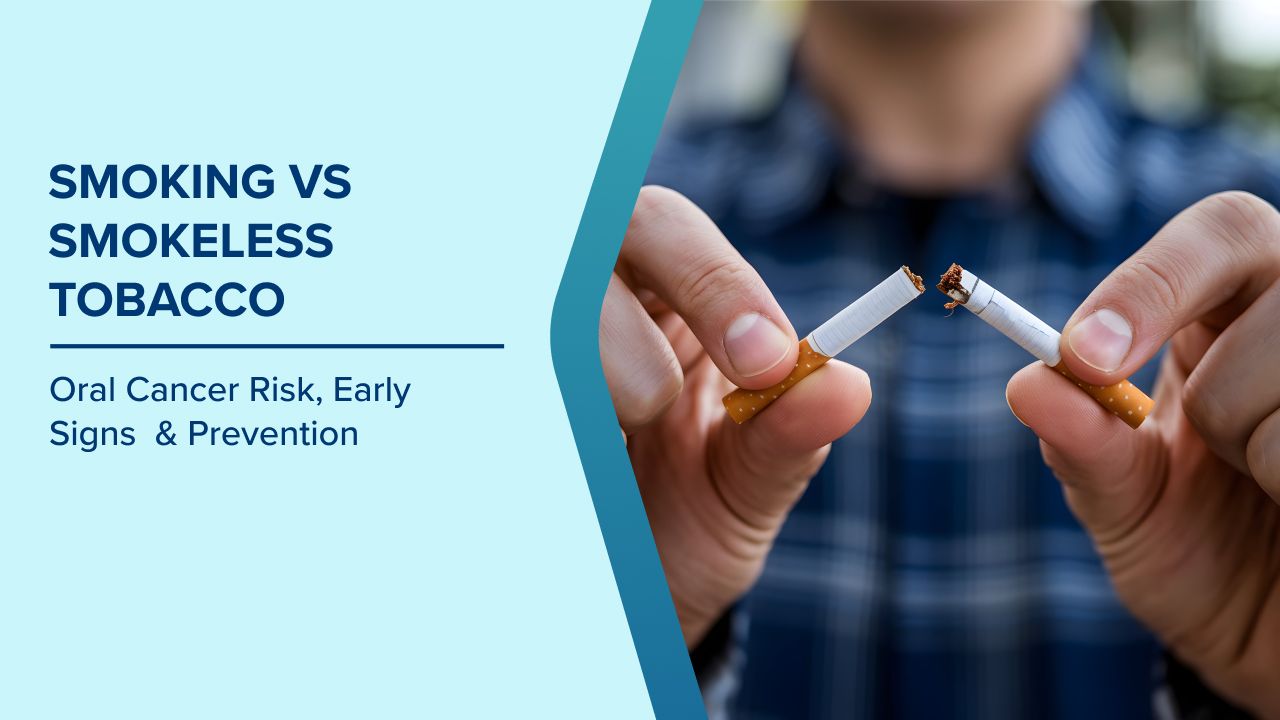
Call Us+91 926 888 0303Smoking vs Smokeless Tobacco: Oral Cancer Risk, Early Signs & Prevention
By Dr Anadi Pachaury in Surgical Oncology , Cancer Care / Oncology , Breast Cancer , Gynecologic Oncology , Head & Neck Oncology , Gastro Intestinal & Hepatopancreatobiliary Surgical Oncology , Robotic Surgery
Jun 11 , 2026

Tobacco use, both smoking and smokeless forms, is one of the leading causes of increased oral cancer risk worldwide. Harmful chemicals in tobacco products directly damage the cells of the mouth, leading to long-term changes that can develop into cancer. Many people ignore early symptoms, allowing the disease to progress unnoticed. Understanding the link between smoking and oral cancer, recognising warning signs, and adopting preventive measures are essential steps toward protecting oral health and reducing the burden of this serious condition.
What Is Oral Cancer?
Oral cancer is a type of cancer that develops in the tissues of the mouth. It can affect:
- Lips
- Tongue
- Gums
- Inner cheeks
- Roof and floor of the mouth
It is a serious condition that can spread quickly if left undetected. Early diagnosis significantly improves treatment outcomes and survival rates.
How Tobacco Use Increases Oral Cancer Risk
Tobacco use plays a direct role in the development of oral cancer. The risk increases with both smoking and the use of smokeless tobacco.
- Harmful Chemicals in Tobacco: Tobacco contains multiple carcinogens, chemicals known to cause cancer. These substances damage healthy cells in the mouth and interfere with normal cell repair mechanisms.
- Direct Contact with Oral Tissues: Smokeless tobacco and chewing tobacco remain in prolonged contact with the gums and inner cheeks. This continuous exposure irritates tissues and increases the likelihood of abnormal cell growth.
- DNA Damage and Cell Changes: Over time, repeated exposure to tobacco leads to DNA mutations. These mutations can cause uncontrolled cell growth, eventually resulting in cancer.
Smoking vs Smokeless Tobacco: Which Is More Harmful?
Both forms of tobacco significantly increase the risk of oral cancer, though the mechanism differs.
- Smoking exposes the entire oral cavity and respiratory tract to harmful chemicals through inhaled smoke
- Smokeless tobacco delivers carcinogens directly to specific areas in the mouth through prolonged contact
- Combined use of both forms greatly increases overall cancer risk
There is no safe form of tobacco use, each carries serious health risks.
Early Warning Signs of Oral Cancer
Recognising early signs of oral cancer is critical for timely diagnosis and treatment.
Common Symptoms
- Non-healing ulcers or sores in the mouth
- White or red patches on the gums, tongue, or cheeks
- Lumps, thickening, or rough areas in the mouth
- Difficulty chewing or swallowing
- Persistent pain or discomfort
- Loose teeth without a clear cause
Any of these symptoms lasting more than two weeks should be evaluated by a healthcare professional.
Read More: Oral Cancer Risk: Key Causes, Habits & Prevention
Who Is at Higher Risk?
Certain factors increase the likelihood of developing oral cancer:
- Long-term tobacco use (smoking or smokeless forms)
- Excessive alcohol consumption
- Poor oral hygiene
- Infection with human papillomavirus (HPV)
- Prolonged sun exposure (for lip cancer)
The combination of tobacco and alcohol further increases the risk significantly.
Why Oral Cancer Often Goes Undetected Early
Oral cancer is frequently diagnosed late due to subtle early symptoms.
- Early stages are often painless
- Symptoms may be mistaken for minor mouth issues
- Lack of regular dental checkups delays detection
- People tend to ignore persistent changes
This delay can allow the disease to progress to more advanced stages.
How Oral Cancer Is Diagnosed
Early diagnosis involves a combination of clinical evaluation and diagnostic tests.
- Clinical examination of the mouth and throat
- Biopsy to confirm cancerous cells
- Imaging tests, such as CT or MRI scans, to assess the spread
Routine dental visits play a crucial role in early detection.
Prevention: How to Reduce Your Risk
Preventing oral cancer largely involves reducing exposure to risk factors.
Key Prevention Strategies
- Quit all forms of tobacco use
- Avoid smoking and exposure to secondhand smoke
- Limit alcohol consumption
- Maintain good oral hygiene
- Schedule regular dental checkups
- Eat a balanced diet rich in fruits and vegetables
Taking these steps can significantly lower the risk of developing oral cancer.
When to See a Doctor or Dentist
It is important to seek medical advice if you notice:
- Symptoms lasting more than two weeks
- Visible changes in the mouth or tongue
- Persistent pain or difficulty swallowing
- Unexplained lumps or patches
Early evaluation ensures timely diagnosis and appropriate treatment.
Importance of Early Detection
Detecting oral cancer early greatly improves outcomes.
- Higher chances of successful treatment
- Reduced need for aggressive therapies
- Better quality of life after treatment
- Improved survival rates
Regular screenings and awareness of symptoms are key to early diagnosis.
Conclusion
Tobacco use, whether through smoking or smokeless forms, is a major contributor to oral cancer risk. The harmful chemicals in tobacco products cause long-term damage to oral tissues, leading to serious health consequences. Recognising early warning signs and seeking timely medical care can significantly improve outcomes. Quitting tobacco and adopting preventive measures are the most effective ways to reduce risk. Increasing awareness and prioritising regular oral health checkups can help detect problems early and protect overall well-being.
Frequently Asked Questions
Can oral cancer develop without pain?
Yes, early-stage oral cancer is often painless, which is why it may go unnoticed until symptoms become more severe.
How long does it take for tobacco to cause oral cancer?
The risk increases with long-term use, but damage begins early. Years of exposure significantly raise the likelihood of cancer development.
Is quitting tobacco enough to reduce risk?
Yes, quitting tobacco reduces the risk over time, although former users may still have a higher risk compared to those who never used it.
Are young people at risk of oral cancer?
While more common in older adults, younger individuals can also develop oral cancer, especially with tobacco use or HPV infection.
Can oral cancer be cured if detected early?
Yes, early detection greatly improves the chances of successful treatment and recovery.
Does occasional tobacco use increase cancer risk?
Even occasional use exposes tissues to harmful chemicals and can increase risk over time.
Written and Verified by:

Related Blogs

Dr. S. VEDA PADMA PRIYA In Surgical Oncology , Cancer Care / Oncology
May 16 , 2016 | 2 min read

Dr. Kanika Batra Modi In Surgical Oncology , Cancer Care / Oncology
May 26 , 2016 | 4 min read
Blogs by Doctor
Gastrointestinal Cancers: Types, Early Signs, Screening & Treatment
Dr Anadi Pachaury In Cancer Care / Oncology , Breast Cancer , Head & Neck Oncology , Robotic Surgery
Oct 25 , 2021 | 2 min read
Link Between Obesity and Breast Cancer: Understanding the Risks and Taking Action
Dr Anadi Pachaury In Cancer Care / Oncology , Breast Cancer
Oct 22 , 2025 | 4 min read
Most read Blogs


Related Blogs
Dr. S. VEDA PADMA PRIYA In Surgical Oncology , Cancer Care / Oncology
May 16 , 2016 | 2 min read
Dr. Kanika Batra Modi In Surgical Oncology , Cancer Care / Oncology
May 26 , 2016 | 4 min read
Blogs by Doctor
Gastrointestinal Cancers: Types, Early Signs, Screening & Treatment
Dr Anadi Pachaury In Cancer Care / Oncology , Breast Cancer , Head & Neck Oncology , Robotic Surgery
Oct 25 , 2021 | 2 min read
Link Between Obesity and Breast Cancer: Understanding the Risks and Taking Action
Dr Anadi Pachaury In Cancer Care / Oncology , Breast Cancer
Oct 22 , 2025 | 4 min read
Most read Blogs