 WhatsApp Us (24/7)
 +91 926 888 0303 (24/7)


To Book an Appointment
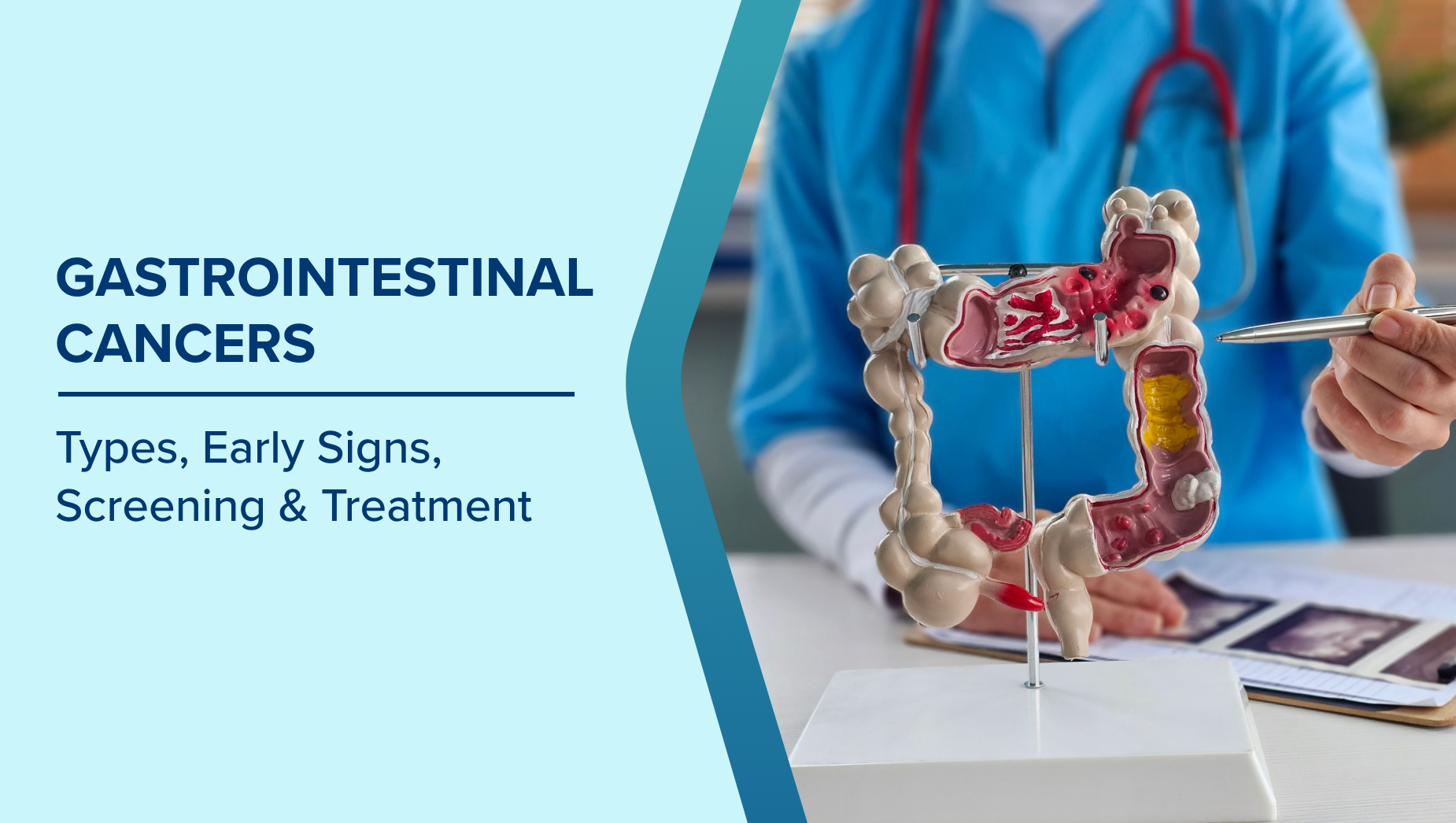
Call Us+91 926 888 0303Gastrointestinal Cancers: Types, Early Signs, Screening & Treatment
By Dr Anadi Pachaury in Cancer Care / Oncology , Breast Cancer , Head & Neck Oncology , Robotic Surgery
Jan 06 , 2026 | 2 min read

Gastrointestinal cancers, also known as GI cancers, can affect the digestive system, from the oesophagus to the rectum. When found at an early stage, many digestive cancers are treatable and even curable. Raising awareness of gastrointestinal cancer types, early signs of gastrointestinal cancer, and GI cancer screening can truly save lives.
What Are the Main Gastrointestinal Cancer Types?
GI cancers include a range of conditions, each with its own characteristics:
Esophageal Cancer
- Can cause difficulty swallowing, chest discomfort, and unintended weight loss.
- Early diagnosis can lead to minimally invasive treatments.
Stomach (Gastric) Cancer
- Symptoms are often vague, indigestion, mild abdominal pain, or bloating.
- Persistent digestive changes warrant evaluation.
Colorectal Cancer
- One of the most common digestive cancers.
- Watch for blood in stool, persistent constipation, or diarrhoea.
Liver, Pancreatic, and Bile Duct Cancers
- Less common, but serious.
- Look out for jaundice, upper abdominal pain, and unexplained fatigue.
Spotting Early Signs of Gastrointestinal Cancer
Early detection depends on awareness. Some of the key early signals include:
- Persistent heartburn or acid reflux
- Unintentional weight loss
- Blood in bowel movements or black stools
- Ongoing bloating or stomach pain
- Difficulty swallowing or constant indigestion
- Jaundice or new-onset itchy skin
How GI Cancer Screening Works
Early detection is most effective with proactive GI cancer screening. Here are common methods:
- Endoscopy: A thin tube with a camera examines the oesophagus, stomach, and upper gut.
- Colonoscopy: Offers a clear view of the colon and can remove polyps on the spot.
- Stool Tests: Check for hidden blood or genetic markers in stool samples.
- Imaging: CT scans, MRIs, and ultrasounds help spot early tumours in the liver or pancreas.
How Treatment for GI Cancers Has Evolved
Advances in treatment options for GI cancers now include:
- Surgery: From minimally invasive approaches to organ-saving techniques
- Chemotherapy and Radiation: Refined dosing that targets cancer more accurately
- Targeted Therapies: Medications aimed at specific cancer markers
- Immunotherapy: Boosts the body's own defenses against cancer
- Supportive Care: Nutritional guidance and gut health support during treatment
Take Action: When You Should See a Doctor
- Symptoms like blood in stool or unexplained fatigue remain for two weeks or more
- You have a family history of digestive cancers
- You are above 45 and have never had a colonoscopy
- Gut symptoms consistently interfere with your life
Conclusion
Understanding GI cancers and recognising early signs of gastrointestinal cancer can help you act before serious problems develop. A healthy gut, regular screenings, and openness with your doctor are key. If anything feels off, don't wait. Early intervention often leads to complete recovery. Make your gut health a top priority today.
Frequently Asked Questions
Can everyday heartburn lead to gastrointestinal cancer?
Severe acid reflux can cause damage to the oesophagus over time. Follow-up care and treatment may prevent more serious issues.
How often should I have a colonoscopy?
Typically, every 10 years starting at age 45–50. If you have a family history, follow your doctor's schedule.
Does a healthy diet truly reduce cancer risk?
Yes, diets high in fibre, fruits and vegetables support a strong gut and reduce inflammation linked to cancer.
Can GI cancer cause mood changes?
Long-lasting digestive symptoms can affect sleep and mood. Managing symptoms early helps emotional well-being.
Is immunotherapy used for GI cancers?
Yes, immunotherapy is now effective for some digestive cancers and is offered at major specialised centres.
Written and Verified by:

Related Blogs

Dr. Kanika Batra Modi In Cancer Care / Oncology
Nov 07 , 2020 | 3 min read

Dr. R.Ranga Rao In Medical Oncology , Cancer Care / Oncology , Thoracic Oncology
Nov 07 , 2020 | 2 min read
Blogs by Doctor

Link Between Obesity and Breast Cancer: Understanding the Risks and Taking Action
Dr Anadi Pachaury In Cancer Care / Oncology , Breast Cancer
Oct 22 , 2025 | 4 min read

Most read Blogs


Related Blogs
Dr. Kanika Batra Modi In Cancer Care / Oncology
Nov 07 , 2020 | 3 min read
Dr. R.Ranga Rao In Medical Oncology , Cancer Care / Oncology , Thoracic Oncology
Nov 07 , 2020 | 2 min read
Blogs by Doctor
Link Between Obesity and Breast Cancer: Understanding the Risks and Taking Action
Dr Anadi Pachaury In Cancer Care / Oncology , Breast Cancer
Oct 22 , 2025 | 4 min read
Most read Blogs