 WhatsApp Us (24/7)
 +91 926 888 0303 (24/7)


To Book an Appointment
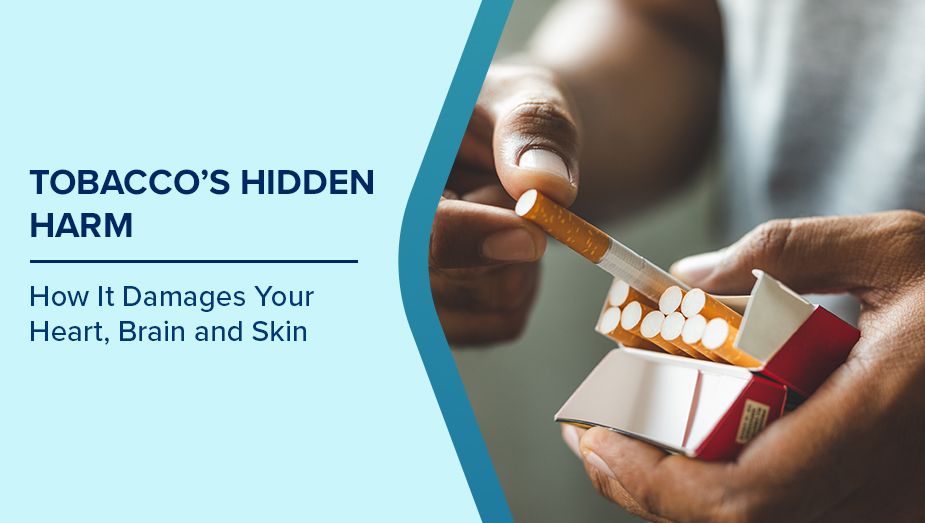
Call Us+91 926 888 0303Tobacco’s Hidden Harm: How It Damages Your Heart, Brain and Skin
By Dr. Vivek Nangia in Pulmonology
Jul 09 , 2025 | 4 min read
3

When we think about smoking or chewing tobacco, the first image that usually comes to mind is damaged lungs. While it's true that tobacco use is a major cause of lung disease, the damage doesn't stop there. Tobacco quietly harms nearly every organ in your body. From your heart to your skin, the effects of smoking go far beyond your lungs.
Tobacco and the Heart
One of the most dangerous consequences of tobacco use is its effect on the heart. Smoking causes your blood vessels to narrow, making it harder for your heart to pump blood. This increases your risk of heart attack, stroke and high blood pressure. Nicotine, the addictive substance in tobacco, also raises your heart rate and puts extra stress on your cardiovascular system. Even young smokers are at risk, and the longer you smoke, the greater the damage to your heart and blood vessels.
Oral Health
Tobacco harms your mouth in more ways than one. It stains your teeth, causes bad breath, and damages your gums. However, the most serious threat is oral cancer from smoking or chewing tobacco. Smokers are far more likely to develop cancers of the mouth, tongue, lips, and throat.
In addition to cancer, tobacco users often suffer from gum disease and tooth loss. Smoking reduces blood flow to your gums, which means your mouth heals more slowly and is more prone to infection.
Reproductive Health and Fertility
Tobacco doesn't spare your reproductive system. In men, smoking can lead to lower sperm counts, erectile dysfunction, and reduced fertility. In women, it may cause irregular periods, early menopause, and higher risks during pregnancy, such as miscarriage, premature birth, or low birth weight in babies.
Whether you are planning a family or already have one, understanding how tobacco affects the body can help you make informed choices for yourself and your loved ones.
Effects of Smoking on the Brain
Nicotine may give you a temporary buzz or feeling of relaxation, but the long-term impact on your brain is far from positive. Smoking alters the way your brain handles emotions and stress. Over time, this can lead to mood swings, anxiety, and depression.
Worse still, tobacco increases your risk of stroke by reducing oxygen flow to the brain. It can also speed up age-related brain shrinkage and impair memory. The effects of smoking beyond the lungs truly extend to your mental and cognitive health.
Digestive Problems Caused by Tobacco
Most people don't connect smoking with digestive issues, but tobacco can cause serious damage to your gut. It increases your risk of stomach ulcers and slows down digestion. Tobacco weakens the muscles that control the digestive tract, which can lead to acid reflux and heartburn. Long-term use also increases the risk of cancers in the stomach, oesophagus, and pancreas.
Tobacco's Impact on Skin and Aging
Smoking doesn't just damage what's inside your body—it affects how you look on the outside too. Smokers often develop wrinkles earlier due to reduced blood flow to the skin. Their skin may appear dry, dull, and uneven in tone.
The toxic chemicals in tobacco break down collagen and elastin, which are the proteins that keep your skin firm and youthful. This is one of the many hidden dangers of tobacco use that people often overlook.
Bones and Muscles
Tobacco weakens your bones and increases your risk of osteoporosis, especially in women. It makes it harder for your body to absorb calcium, a key mineral for bone strength. Smokers are more prone to fractures and slower healing after injuries.
Your muscles also take a hit. With less oxygen in the bloodstream due to smoking, muscle performance and recovery time are reduced. This is why smokers may feel more tired during physical activity.
Conclusion
Tobacco is not just a lung problem. It's a full-body threat. From your heart to your brain, your mouth to your bones, the damage caused by tobacco use is widespread and serious.
Quitting tobacco can improve your health at any age. Many of the harmful effects start to reverse just weeks after quitting. Your body has an amazing ability to heal when given the chance.
Understanding the effects of smoking beyond the lungs may be the motivation you need to break free from tobacco. It's never too late to take that first step.
Frequently Asked Questions
1. How long does it take for the body to recover after quitting tobacco?
Recovery starts within 20 minutes. Your heart rate drops, and within a few days, oxygen levels in your blood improve. Over weeks and months, lung function, circulation, and immune health begin to return to normal. Complete recovery varies depending on how long you used tobacco, but improvements continue for years.
2. What is secondhand smoke and how harmful is it?
Secondhand smoke is the smoke non-smokers breathe in when near someone who is smoking. It contains over 7,000 harmful chemicals. It can cause respiratory problems, heart disease, and even cancer in people who have never smoked themselves.
3. Are "light" or "mild" cigarettes safer?
No, these types of cigarettes still contain harmful chemicals and nicotine. The idea that "light" cigarettes are less dangerous is a myth. They carry the same risks as regular cigarettes.
4. Can tobacco use be addictive after just a few tries?
Yes, nicotine is highly addictive, and even occasional use can lead to dependence. Some people become addicted after just a handful of cigarettes or pouches of chewing tobacco.
5. Are there natural ways to overcome tobacco cravings?
Yes, drinking water, chewing sugar-free gum, practising deep breathing, staying busy, and exercising can help manage cravings. Support groups and counselling also play an important role in quitting tobacco successfully.
Written and Verified by:

Related Blogs

Medical Expert Team
Jun 06 , 2015 | 2 min read

Blogs by Doctor

Air Pollution, Diwali And COVID 19 – A Deadly Combination ?
Dr. Vivek Nangia In Pulmonology
Nov 09 , 2021 | 3 min read

COPD (Chronic Obstructive Pulmonary Disease)
Dr. Vivek Nangia In Pulmonology
Nov 17 , 2021 | 1 min read
Most read Blogs


Related Blogs
Medical Expert Team
Jun 06 , 2015 | 2 min read
Blogs by Doctor
Air Pollution, Diwali And COVID 19 – A Deadly Combination ?
Dr. Vivek Nangia In Pulmonology
Nov 09 , 2021 | 3 min read
COPD (Chronic Obstructive Pulmonary Disease)
Dr. Vivek Nangia In Pulmonology
Nov 17 , 2021 | 1 min read
Most read Blogs