 WhatsApp Us (24/7)
 +91 926 888 0303 (24/7)


To Book an Appointment
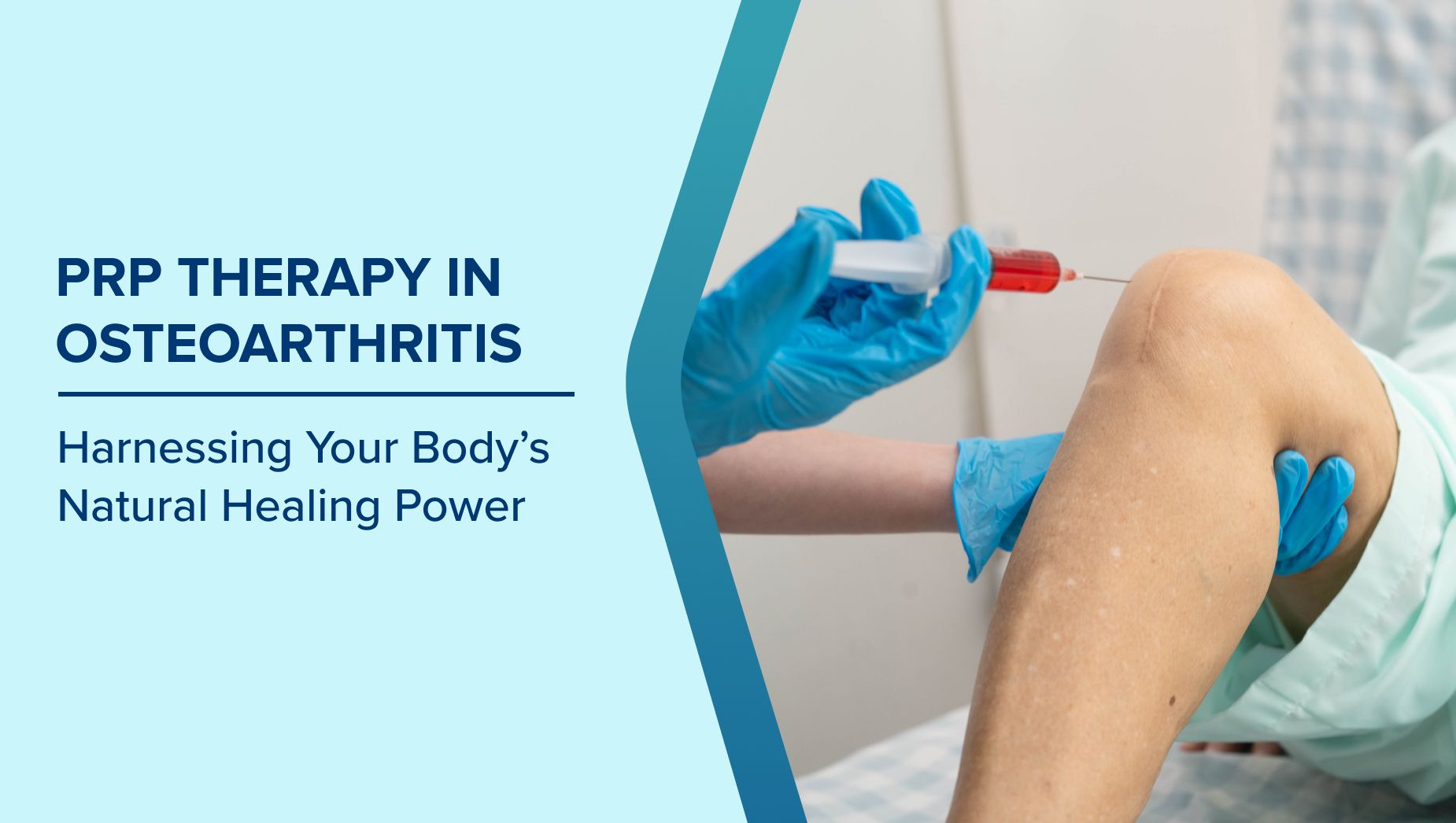
Call Us+91 926 888 0303Platelet-Rich Plasma (PRP) Therapy in Osteoarthritis: Harnessing Your Body’s Natural Healing Power
By Dr Saipriya Tewari in Pain Management
Oct 22 , 2025 | 2 min read

Osteoarthritis (OA) is a significant cause of joint pain and stiffness, often affecting the knees, hips, and shoulders. It happens due to the gradual wear and tear of the cartilage, the smooth tissue that cushions your joints. Traditional treatments like pain medications, physiotherapy, and steroid injections can offer temporary relief, but they do not address the underlying cause of degeneration.
This is where Platelet-Rich Plasma (PRP) therapy is changing the landscape of osteoarthritis care, by promoting healing rather than just masking pain.
What Is PRP Therapy?
PRP therapy uses the healing power of one's own blood. A small sample of blood is collected and treated to separate and concentrate the platelets, which contain essential growth factors and proteins that support healing. The resulting platelet-rich plasma is then injected into the affected joint under sterile and often ultrasound-guided conditions.
These growth factors help to:
- Reduce inflammation inside the joint
- Stimulate cartilage repair and regeneration
- Improve joint lubrication and movement
How Does PRP Help in Osteoarthritis?
In osteoarthritis, the cartilage becomes thin and rough, leading to pain, swelling, and restricted mobility. PRP therapy targets the root problem by:
- Promoting regeneration of cartilage and soft tissue
- Reducing pain and swelling through natural anti-inflammatory effects
- Enhancing joint lubrication and function
- Slowing disease progression and possibly delaying the need for surgery
Patients often notice gradual improvement in pain, stiffness, and mobility over several weeks following the injections.
Who Can Benefit from PRP Therapy?
PRP therapy works best in early to moderate stages of osteoarthritis, when some cartilage is still present. It may be ideal for people who:
- Have knee, hip, shoulder, or ankle osteoarthritis
- Want to reduce dependence on painkillers or steroid injections
- Are not yet ready or suitable for joint replacement
- Prefer a natural, minimally invasive treatment option
Procedure and Recovery
PRP therapy is performed as an outpatient procedure and usually takes 3–4 hours:
- Blood is drawn from your arm.
- It is processed in a centrifuge to separate and concentrate platelets.
- The PRP is injected precisely into the affected joint, often under ultrasound guidance.
Mild soreness may occur for a few days. Patients are advised to avoid strenuous activity for a short period and to follow physiotherapy exercises to enhance recovery.
Advantages of PRP Therapy
- Minimally invasive and natural
- Uses your own blood, no risk of allergy or rejection
- Addresses the cause, not just symptoms
- May delay or prevent the need for joint replacement
What Does the Evidence Say?
PRP injections can reduce pain and improve joint function in osteoarthritis patients, often with better and longer-lasting results compared to hyaluronic acid or steroid injections. Results vary depending on the severity of arthritis and individual response, but many patients experience relief lasting 6–12 months or more.
Conclusion
PRP therapy offers a promising, science-backed approach to managing osteoarthritis by utilising your body’s natural healing potential. It’s a safe, minimally invasive option that can help reduce pain, improve mobility, and potentially slow down joint degeneration.
If you suffer from chronic joint pain and are looking for alternatives beyond routine medications or surgery, consult a pain specialist to see if PRP therapy is right for you.
Written and Verified by:
Related Blogs

Dr. Amod Manocha In Pain Management
Oct 27 , 2020 | 1 min read

Dr. Manish Marda In Pain Management
Jun 30 , 2017 | 20 min read
Blogs by Doctor

Chronic and Cancer Pain: Myths Busted!
Dr Saipriya Tewari In Pain Management , Palliative Care
Oct 22 , 2025 | 2 min read

Cancer Pain: Five Proven Ways for Effective Relief
Dr Saipriya Tewari In Pain Management , Palliative Care
Oct 22 , 2025 | 5 min read
Most read Blogs


Related Blogs
Dr. Amod Manocha In Pain Management
Oct 27 , 2020 | 1 min read
Dr. Manish Marda In Pain Management
Jun 30 , 2017 | 20 min read
Blogs by Doctor
Chronic and Cancer Pain: Myths Busted!
Dr Saipriya Tewari In Pain Management , Palliative Care
Oct 22 , 2025 | 2 min read
Cancer Pain: Five Proven Ways for Effective Relief
Dr Saipriya Tewari In Pain Management , Palliative Care
Oct 22 , 2025 | 5 min read
Most read Blogs