 WhatsApp Us (24/7)
 +91 926 888 0303 (24/7)


To Book an Appointment
Call Us+91 926 888 0303Hiatal Hernia Explained: Types, Symptoms and Treatment
By Dr. Atul Wadhwa in General Surgery
Jan 06 , 2026 | 14 min read
9

A hiatal hernia occurs when a part of the stomach slips through the opening in the diaphragm (called the hiatus) and moves into the chest, affecting digestion and sometimes causing other symptoms such as heartburn, chest discomfort or a feeling of food getting stuck. That said, many people do not experience any symptoms, and even those who do often ignore them or mistakenly attribute them to other issues. As leaving the condition unaddressed for too long may lead to further complications, it’s important to know what to look out for and the way forward. In this blog, we’ll look at the causes of hiatal hernia, the symptoms you should be aware of, and treatment options. But first, let’s understand the condition.
What is Hiatal Hernia?
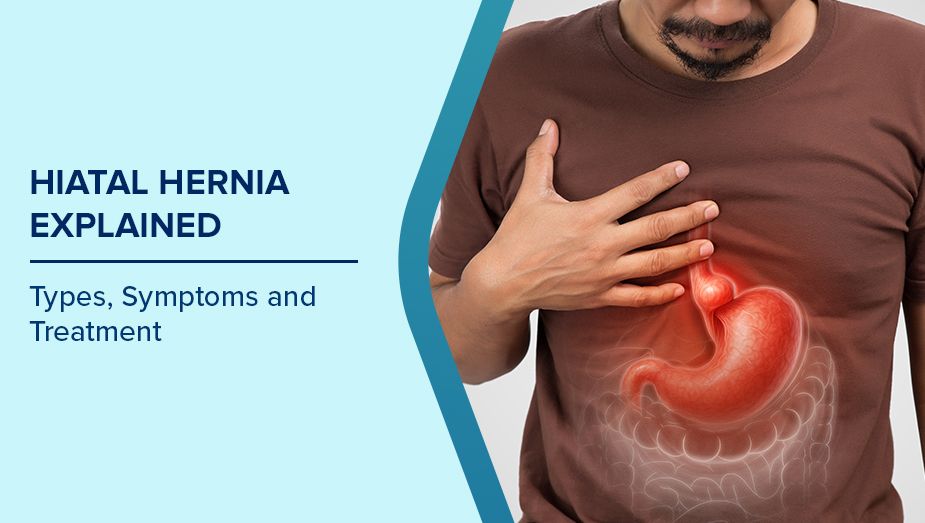
A hiatal hernia occurs when a part of the stomach moves up into the chest through an opening in the diaphragm called the hiatus. This is the same opening that the food pipe (oesophagus) passes through on its way to the stomach. Normally, the stomach stays entirely below the diaphragm, but when the hiatus becomes weak or enlarged, it allows the stomach to slide upwards.
Unlike a diaphragmatic hernia, which involves other abdominal organs moving into the chest through a separate defect in the diaphragm, a hiatal hernia specifically involves the stomach moving up through the oesophageal opening.
Although it might not always need treatment, a hiatal hernia can become more uncomfortable or lead to complications if left unmanaged.
What are the Types of Hiatal Hernia?
Hiatal hernias are divided into four types, depending on how the stomach and nearby organs move through the opening in the diaphragm.
Type I: Sliding Hiatal Hernia
This is the most common type. In a sliding hiatal hernia, the lower end of the oesophagus and the upper part of the stomach slide up into the chest through the hiatus. The movement can shift up and down, often causing symptoms like heartburn or acid reflux. Many cases are mild and may not need treatment unless symptoms become frequent.
Type II: Pure Para-oesophageal Hernia
In this type, part of the stomach pushes through the hiatus and sits next to the oesophagus, but the lower oesophageal sphincter stays in place. This type may not cause reflux but can lead to other problems, such as pressure in the chest or difficulty swallowing.
Type III: Mixed Hernia (Sliding and Para-oesophageal)
This is a combination of both sliding and para-oesophageal features. Both the stomach and the junction between the oesophagus and stomach move into the chest. It tends to cause more noticeable symptoms and carries a higher risk of complications if left untreated.
Type IV: Complex Hernia
This is the most severe form. Along with the stomach, other abdominal organs such as the colon, small bowel or spleen also push through the diaphragm into the chest. Type IV hernias are rare but require prompt medical attention due to the high risk of serious complications.
What Causes a Hiatal Hernia?
A hiatal hernia occurs when the upper part of the stomach moves through an opening in the diaphragm called the hiatus. This happens when the muscles around the hiatus weaken or the pressure within the abdomen increases. In many cases, more than one factor contributes to its development over time. Below are the most common causes.
Age-Related Muscle Weakness
As people grow older, the muscles and connective tissues throughout the body tend to lose strength and elasticity. The diaphragm is no exception. Weakening of the diaphragm and the tissues around the hiatus can make it easier for part of the stomach to slide into the chest. Most hiatal hernias are found in adults over the age of 50, making age a major contributing factor.
Increased Abdominal Pressure
Pressure inside the abdomen can build up for many reasons. This pressure pushes upward against the diaphragm, and over time, it can widen the hiatus or stretch the surrounding muscles. Some common activities and conditions that increase abdominal pressure include:
- Straining during bowel movements, often due to constipation
- Chronic coughing, especially from lung conditions like asthma or bronchitis
- Vomiting repeatedly over a long period
- Heavy lifting, particularly without proper support or technique
- Wearing tight clothing that compresses the abdomen
This ongoing strain makes it easier for the stomach to move upward into the chest cavity.
Obesity and Pregnancy
Carrying extra body weight, especially around the abdomen, increases the pressure on the diaphragm. Obesity is one of the leading risk factors for developing a hiatal hernia. Pregnancy can have a similar effect. As the uterus grows, it pushes up against the stomach and diaphragm, making it more likely for the stomach to shift into the chest, especially in later stages of pregnancy.
Congenital (From Birth) Causes
In some cases, a person may be born with a larger-than-normal opening in the diaphragm. This condition does not always cause symptoms early in life, but it can make the person more likely to develop a hiatal hernia as they grow older. A naturally weak or underdeveloped diaphragm can also contribute to the problem.
Previous Injury or Surgery
Past injuries to the chest or upper abdomen can damage the diaphragm or weaken the muscle around the hiatus. Similarly, surgeries involving the oesophagus, stomach or diaphragm may leave the area less stable. This can make the tissues more likely to stretch or tear over time, creating space for the stomach to move through.
Most hiatal hernias develop gradually over time, rather than suddenly. In most cases, they form gradually due to a combination of muscle weakness and repeated pressure over the years. Being aware of these causes may help in recognising the risks and taking steps to reduce them.
What are the Common Symptoms?
A hiatal hernia does not always cause symptoms, especially in mild cases. Many people discover they have it only during tests done for other reasons. However, when symptoms do appear, they are often linked to how the stomach moves into the chest and affects digestion. The most common symptoms include:
- Heartburn: A burning feeling in the chest caused by stomach acid moving up into the oesophagus.
- Chest discomfort or pain: This can feel like pressure or tightness and is sometimes mistaken for heart problems.
- Regurgitation: A sour or bitter fluid may rise into the throat or mouth, especially after eating or lying down.
- Difficulty swallowing: Food may feel like it is getting stuck or moving slowly through the oesophagus.
- Bloating or feeling full quickly: The stomach may not empty properly, leading to discomfort even after small meals.
- Shortness of breath: In some cases, the hernia can press against the lungs and affect breathing.
- Frequent burping or hiccups: These may be linked to trapped air or irritation in the upper digestive tract.
Symptoms often become worse after large meals, bending over, or lying flat. Not everyone experiences all of these signs, and the severity can vary.
How is a Hiatal Hernia Diagnosed?
Diagnosing a hiatal hernia usually starts with a review of symptoms, such as frequent heartburn, chest discomfort, or difficulty swallowing. To confirm the diagnosis and assess its extent, further tests are often needed.
Barium Swallow (Upper Gastrointestinal Series)
This test involves drinking a special liquid that contains barium. The barium coats the inside of the oesophagus and stomach, making them show up clearly on an X-ray. As the liquid moves through the digestive tract, images are taken to check if any part of the stomach is bulging through the diaphragm. This test can also show changes in the shape of the stomach and oesophagus, and help detect other issues such as narrowing or ulcers.
Upper GI Endoscopy
An upper GI endoscopy or EGD (esophagogastroduodenoscopy) uses a thin, flexible tube with a small camera at the end to view the inside of the oesophagus, stomach, and the upper part of the small intestine. The tube is passed through the mouth and gently guided down the throat. This test allows the doctor to check for inflammation, irritation, or signs of acid damage, and may also reveal a hernia not seen on an X-ray. In some cases, a small sample of tissue may be taken for further testing.
Oesophageal Manometry
Oesophageal manometry is used to measure how well the muscles of the oesophagus are working. A thin tube is passed through the nose and into the oesophagus to record the pressure and movement of the muscles during swallowing. Although this test does not show the hernia itself, it provides useful information if symptoms include swallowing difficulty or chest pain that does not seem related to reflux.
Other Tests (if needed)
In some cases, a 24-hour pH test may be done to measure how often acid enters the oesophagus and how long it stays there. This helps confirm the link between symptoms and acid reflux, especially when deciding on treatment options.
These diagnostic tests are important not only for confirming a hiatal hernia but also for understanding how it affects the upper digestive system. The results help guide the choice of treatment and determine whether lifestyle changes, medicines, or surgery may be needed.
What are the Treatment Options?
Treatment for a hiatal hernia depends on the size of the hernia, the type, and how much it affects daily life. In many cases, especially when the hernia is small and symptoms are mild, no immediate procedure is needed. The focus is often on easing symptoms and preventing complications through non-surgical methods.
Lifestyle Changes
Adjusting daily habits can often reduce discomfort and help manage symptoms effectively. These changes may include:
- Eating smaller, more frequent meals to avoid pressure on the stomach
- Staying upright for some time after eating, rather than lying down
- Sleeping with the head slightly raised to help prevent acid from rising
- Avoiding foods and drinks that trigger symptoms, such as spicy or acidic items
- Wearing loose clothing to reduce pressure on the abdomen
- Reaching and maintaining a healthy weight to ease strain on the diaphragm
These steps are usually recommended first and can make a noticeable difference in day-to-day comfort.
Medications
If lifestyle changes are not enough, the doctor may suggest medicines that help manage symptoms such as heartburn or acid reflux. These medicines work by reducing acid levels in the stomach or by protecting the lining of the oesophagus. The aim is to control symptoms and prevent damage, not to treat the hernia itself. Medication may be used short-term or long-term, depending on how the condition responds.
Surgical Treatment
Surgery is usually considered when symptoms continue despite non-surgical treatment or when the hernia causes complications, such as the stomach becoming trapped or twisted. The most common procedure involves tightening the opening in the diaphragm and adjusting the position of the stomach to prevent it from moving into the chest.
Traditionally, this has been done through laparoscopic or keyhole surgery, which involves a few small incisions rather than a large cut. Using a camera and long, thin instruments, the surgeon can operate with less tissue damage, leading to shorter recovery times and less post-operative discomfort.
An advanced form of this is robot-assisted surgery, which also uses small incisions but involves a robotic system controlled by the surgeon from a console. The robotic arms offer greater precision, flexibility, and control, especially in delicate or complex repairs. The system provides a magnified, high-definition 3D view of the surgical area, allowing for more accurate movements than what is possible with traditional laparoscopic instruments. This may be especially helpful in patients with large or paraesophageal hernias, or those requiring redo surgeries.
More complex hernias, particularly those involving other organs, may require a more detailed surgical repair. The decision to operate depends on several factors, including the type of hernia, symptom severity, and the person’s overall health.
What are the Complications of Hiatal Hernia?
Many people with a hiatal hernia do not face serious issues, especially when the hernia is small and symptoms are mild. However, if the condition is left untreated or the hernia becomes larger over time, several complications may develop. These include:
Persistent Acid Reflux (Gastro-Oesophageal Reflux)
A common issue linked with hiatal hernia is acid reflux. The stomach contains acid that helps break down food, but when part of the stomach moves into the chest, the muscle that usually keeps this acid from rising (the lower oesophageal sphincter) may not function properly. This allows acid to flow back into the oesophagus, causing heartburn, sour taste, and a burning sensation in the chest. Reflux may become more frequent after meals, when lying down, or when bending forward.
Oesophagitis (Inflammation of the Oesophagus)
When acid reflux continues for long periods, the lining of the oesophagus can become inflamed. This condition is called oesophagitis. It may cause pain during swallowing, discomfort behind the breastbone, or a feeling of food being stuck in the chest. If left untreated, the inflammation may worsen, leading to sores or ulcers in the oesophagus, which can bleed and cause further problems.
Narrowing of the Oesophagus (Stricture Formation)
Ongoing irritation from acid exposure may lead to the development of scar tissue. Over time, this can cause narrowing of the oesophagus—a condition known as a stricture. This makes it more difficult for food and drink to pass through, leading to symptoms such as frequent choking, coughing while eating, or needing to chew food for longer than usual.
Iron-Deficiency Anaemia
Chronic irritation or small ulcers in the stomach or oesophagus may cause slow, unnoticed bleeding. Although the bleeding is not always visible, it can gradually lower iron levels in the body. Over time, this may result in iron-deficiency anaemia, which can cause tiredness, shortness of breath, pale skin, and general weakness. In some cases, anaemia is the first sign that points to a problem in the upper digestive tract.
Strangulation or Obstruction
In more advanced cases, especially with larger or para-oesophageal hernias, a part of the stomach may become trapped in the chest. This can block the passage of food or restrict blood flow to the stomach, leading to strangulation. Symptoms may include sudden chest pain, nausea, vomiting, or difficulty swallowing. This condition is rare but serious and requires emergency surgery to prevent damage to the stomach tissue.
Consult Today
Discomfort from heartburn, chest pressure, or difficulty swallowing can slowly begin to affect meals, sleep, and overall well-being. Often, these signs are brushed aside or mistaken for minor digestive issues, when in fact, they may point to something serious. For those unsure about their symptoms or finding little relief through home measures, speaking to someone who understands this condition thoroughly can make all the difference. At Max Hospital, gastroenterology specialists offer thoughtful guidance and practical solutions based on a clear understanding of the condition. If you're experiencing discomfort or symptoms linked to a hiatal hernia, book a consultation with our gastroenterology specialists at Max Hospital. Get clarity, expert guidance, and a personalised care plan.
Frequently Asked Questions
Can a hiatal hernia go away on its own?
No, a hiatal hernia does not disappear without treatment. In many cases, especially if small, it may not cause major symptoms and can remain stable for years. However, it does not heal on its own, and over time, the hernia can grow larger or lead to more frequent discomfort if left unmonitored.
Is it safe to exercise with a hiatal hernia?
Exercise is generally safe and even encouraged, but it depends on the type of activity. Gentle activities like walking, swimming or yoga may help with digestion and maintaining a healthy weight. On the other hand, exercises that involve heavy lifting, bending, or intense core work can increase pressure in the abdomen and make symptoms worse. It is best to speak with a doctor before starting or changing any workout routine.
Can certain sleeping positions reduce symptoms?
Yes, positioning plays a role in symptom relief. Lying flat may allow stomach acid to rise into the oesophagus, especially during the night. Sleeping with the head and chest slightly elevated, such as by using an incline or wedge pillow, can help keep acid down. Sleeping on the left side may also improve digestion and reduce reflux in some people.
Do certain foods make hiatal hernia symptoms worse?
Yes, some foods are more likely to trigger symptoms, especially heartburn and acid reflux. Spicy dishes, fatty or fried foods, chocolate, caffeine, and citrus fruits can irritate the stomach and oesophagus. Eating large meals or lying down soon after eating can also worsen discomfort. Making small changes, such as eating slowly, avoiding trigger foods, and staying upright after meals, often helps reduce symptoms. Keeping a food diary may help in identifying which foods cause the most trouble.
How often should a hiatal hernia be monitored?
Monitoring depends on how severe the hernia is and how well symptoms are managed. If symptoms are mild and controlled through lifestyle changes, routine check-ups may not be frequent. However, if symptoms return or worsen, follow-up appointments are important. Any signs of complications such as difficulty swallowing or anaemia should be reviewed without delay.
Can stress make hiatal hernia symptoms worse?
Stress itself does not cause a hiatal hernia, but it can worsen existing symptoms. During stressful periods, people may eat quickly, skip meals, or choose foods that are harder to digest. Stress can also increase the production of stomach acid, which contributes to reflux. Relaxation techniques and balanced routines often help ease this impact.
Is hiatal hernia linked to other digestive conditions?
Yes, it is often linked with acid reflux or gastro-oesophageal reflux disease (GORD). These conditions share similar symptoms, such as heartburn and regurgitation. In some cases, people may also experience gastritis or inflammation in the upper digestive tract. A proper diagnosis is important to manage all related conditions effectively.
Written and Verified by:

Related Blogs

Medical Expert Team
Oct 20 , 2015 | 1 min read
Dr. Vishwas Sharma In General Surgery
Apr 23 , 2015 | 1 min read
Blogs by Doctor

Most read Blogs


Related Blogs
Medical Expert Team
Oct 20 , 2015 | 1 min read
Dr. Vishwas Sharma In General Surgery
Apr 23 , 2015 | 1 min read
Blogs by Doctor
Most read Blogs