 WhatsApp Us (24/7)
 +91 926 888 0303 (24/7)


To Book an Appointment
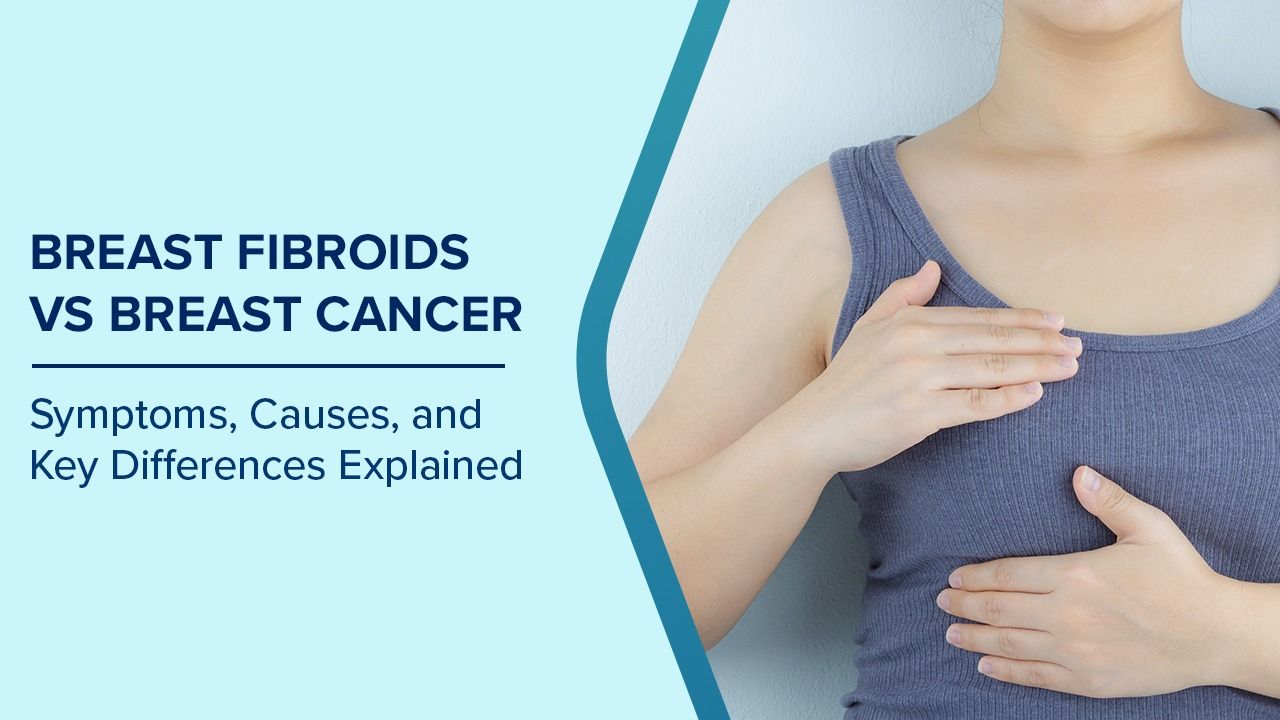
Call Us+91 926 888 0303Breast Fibroids vs Breast Cancer: Symptoms, Causes, and Key Differences Explained
By Dr Kanika Sharma in Surgical Oncology
Mar 26 , 2026
1

A lump in the breast can be worrying and is often the first sign that prompts many women to think about breast cancer. In several cases, however, the lump may turn out to be a breast fibroid, also known as a fibroadenoma, which is a non-cancerous growth in the breast tissue. Since both conditions can appear as a lump, it can be difficult to tell the difference without proper medical evaluation. Knowing how these two conditions differ can help women recognise warning signs and seek timely medical advice. This blog explains what breast Fibroadenomas and breast cancer are, their common symptoms, possible causes, and the key differences between them.
What are Breast Fibroadenomas?
Breast Fibroadenomas, also called fibroadenomas, are non-cancerous lumps that develop in the breast tissue. They form when glandular tissue and connective tissue in the breast grow together and create a solid mass. These lumps are one of the most common benign breast conditions, especially in young women, and are usually detected during a breast self-exam or routine medical check-up.
A fibroadenoma usually feels firm, smooth, and round or oval in shape. It can often move easily under the skin when touched, which is why it is sometimes described as a “breast mouse.” In most cases, these lumps are painless and grow slowly. Their size may remain the same for years or change slightly with hormonal shifts during the menstrual cycle, pregnancy, or use of hormonal medication.
What Symptoms are Seen in Breast Fibroadenomas?
Breast Fibroadenomas, often present as noticeable lumps in the breast. These lumps are usually harmless and may not cause any discomfort, which is why they are sometimes discovered during a routine self-examination or medical check-up. The symptoms can vary slightly from person to person but tend to have certain common features.
- Smooth, well-defined lump: The lump usually has clear borders and feels round or oval in shape. It often feels different from the surrounding breast tissue and is easy to identify during a breast exam.
- Firm or rubbery texture: Fibroadenomas tend to feel firm but slightly elastic when pressed. They are not hard like many cancerous lumps and usually maintain a consistent texture.
- Moves easily under the skin: One of the most noticeable features is that the lump can move slightly when touched or pressed. This mobility is often a key sign that helps distinguish it from other types of breast lumps.
- Usually painless: Most breast Fibroadenomas do not cause pain. However, some women may notice mild tenderness or sensitivity in the area, especially during hormonal changes such as the menstrual cycle.
- Slow growth or stable size: Many fibroadenomas remain the same size for a long time. In some cases, they may gradually grow larger, particularly in younger women.
- Size changes linked to hormonal changes: The lump may become slightly larger or feel more noticeable during certain hormonal phases, such as before menstruation, during pregnancy, or with hormone-based medications.
What Causes Breast Fibroadenomas?
Breast Fibroadenomas, also known as fibroadenomas, develop when glandular and connective tissues in the breast grow more than usual and form a solid lump. The exact cause is not always clear, but several factors are believed to play a role. Some common factors associated with the development of breast Fibroadenomas include:
- Hormonal changes: Oestrogen is thought to influence the growth of fibroadenomas. These lumps are more commonly seen during the reproductive years when hormone levels are higher.
- Age and reproductive stage: Breast Fibroadenomas are most frequently diagnosed in women between the ages of 15 and 35. They are less common after menopause, when hormone levels decline.
- Hormonal fluctuations: Changes in hormone levels during the menstrual cycle, pregnancy, or with the use of hormonal medications may affect the size of an existing fibroadenoma.
- Family tendency: A family history of benign breast conditions may increase the likelihood of developing fibroadenomas in some women.
Even though breast Fibroadenomas are non-cancerous, their presence can sometimes cause concern due to the similarity in how breast lumps may feel. For this reason, any new lump in the breast should always be examined by a doctor to confirm the diagnosis.
What is Breast Cancer?
Breast cancer is a condition in which cells in the breast begin to grow in an abnormal and uncontrolled manner. These cells can form a lump or mass in the breast and may gradually invade nearby tissues. In some cases, the cancer cells can also spread to other parts of the body through the blood or lymphatic system.
The disease usually begins in the ducts that carry milk to the nipple or in the lobules that produce milk. Over time, the abnormal cells multiply and form a tumour. Not every breast lump is cancerous, but any persistent lump or unusual change in the breast should be examined by a doctor.
What Symptoms May Indicate Breast Cancer?
Breast cancer can present with different signs, and the symptoms may vary from person to person. In many cases, the first noticeable sign is a lump in the breast. Common symptoms that may indicate breast cancer include:
- Hard lump in the breast: The lump often feels firm and may have irregular edges. Unlike benign lumps, it usually does not move easily under the skin.
- Change in breast size or shape: One breast may appear larger, swollen, or differently shaped compared to the other.
- Skin changes on the breast: The skin may appear dimpled, puckered, thickened, or resemble the texture of an orange peel.
- Nipple changes: The nipple may turn inward, become flattened, or show unusual changes in appearance.
- Nipple discharge: Fluid coming from the nipple, especially if it is bloody or occurs without squeezing, may be a warning sign.
- Persistent breast or underarm pain: Pain is not always present in breast cancer, but ongoing discomfort in the breast or armpit area should not be ignored.
- Swelling or lump in the underarm: Cancer can sometimes spread to nearby lymph nodes, leading to swelling or a lump in the armpit.
What Causes Breast Cancer?
Breast cancer develops when cells in the breast begin to grow and divide in an uncontrolled manner. Over time, these abnormal cells can form a tumour and may spread to nearby tissues or other parts of the body. The exact cause behind this abnormal cell growth is not always clear, but several risk factors are known to increase the chances of developing breast cancer.
Some of the common factors linked to breast cancer include:
- Increasing age: The risk of breast cancer rises with age, and most cases are diagnosed in women over 40.
- Family history of breast cancer: Having a close relative, such as a mother, sister, or daughter, diagnosed with breast cancer may increase the risk.
- Genetic mutations: Certain inherited gene changes, such as BRCA mutations, can significantly raise the likelihood of developing breast cancer.
- Hormonal factors: Long-term exposure to oestrogen due to early menstruation, late menopause, or hormone-related medications may contribute to increased risk.
- Previous breast conditions: A personal history of certain non-cancerous breast conditions may increase the chances of developing breast cancer later.
- Lifestyle factors: Lack of physical activity, excess body weight after menopause, and regular alcohol consumption are associated with a higher risk of breast cancer.
Having one or more of these risk factors does not mean a person will definitely develop breast cancer. However, recognising these factors and staying alert to breast changes can support early detection and timely medical evaluation.
Breast Fibroadenomas vs Breast Cancer: Key Differences
| Feature | Breast Fibroadenomas (Fibroadenomas) | Breast Cancer |
| Nature of the lump: | Non-cancerous growth made of glandular and connective breast tissue. | Cancerous growth caused by uncontrolled division of abnormal cells. |
| Lump texture: | Usually smooth, firm, or rubbery to touch. | Often hard with an irregular surface. |
| Movement under the skin: | Lump typically moves easily when pressed. | Lump usually feels fixed and does not move easily. |
| Shape and borders: | Generally round or oval with clear, well-defined edges. | Often irregular in shape with uneven or poorly defined borders. |
| Pain: | Usually painless, though mild tenderness may occur during hormonal changes. | Pain may or may not be present. |
| Growth pattern: | Often grows slowly or remains stable in size. | May increase in size over time if not treated. |
| Effect on breast skin or nipple: | Typically does not cause changes in the skin or nipple. | May cause skin dimpling, nipple inversion, or unusual nipple discharge. |
| Health risk: | Benign condition and usually not life-threatening. | Serious condition that can spread to other parts of the body if untreated. |
When Should Someone See a Doctor for a Breast Lump?
It is important to seek medical advice if a breast lump is noticed, even if it does not cause pain. Many breast lumps turn out to be non-cancerous, but a proper examination is necessary to confirm the cause. A doctor should be consulted in the following situations:
- A new lump in the breast: Any newly noticed lump should be examined, especially if it persists after the menstrual cycle.
- Increase in lump size: A lump that gradually becomes larger or feels different over time requires medical attention.
- Changes in breast shape or size: Unusual swelling, distortion, or visible difference between the breasts should be evaluated.
- Skin changes on the breast: Dimpling, redness, thickening of the skin, or a texture similar to an orange peel should not be ignored.
- Nipple changes: Inward turning of the nipple, crusting, or unusual discharge from the nipple may need medical assessment.
- Persistent breast or underarm discomfort: Ongoing pain, tenderness, or swelling in the breast or armpit area should be checked.
- Lump in the underarm: Swelling or a lump in the armpit may indicate enlarged lymph nodes and should be assessed by a doctor.
If any of these signs are noticed, consulting a doctor at the earliest helps determine the cause and ensures appropriate care.
Consult Today
Breast lumps can bring a lot of worry, but the most important step is not to ignore them. Some lumps turn out to be harmless conditions such as fibroadenomas, yet others may need closer medical attention. The key message is simple: any unusual change in the breast deserves a proper check. If a lump, persistent pain, or any unusual breast change has been noticed, consider consulting a breast specialist or surgical oncologist at Max Hospital for a detailed evaluation and guidance on the next steps. Early consultation brings clarity and ensures the right care at the right time.
Frequently Asked Questions
Can breast Fibroadenomas turn into breast cancer over time?
Breast Fibroadenomas, also called fibroadenomas, are benign growths and in most cases do not turn into cancer. However, any breast lump should still be monitored and evaluated by a doctor to confirm the diagnosis and ensure that no other condition is present.
Can breast Fibroadenomas go away on their own?
Some fibroadenomas may shrink or remain stable over time without treatment. This is more common in younger women. Doctors may recommend regular monitoring to track any changes in the lump.
How are breast lumps examined during a medical visit?
A doctor usually begins with a physical breast examination to assess the lump’s size, texture, and movement. Imaging tests such as ultrasound or mammography may then be suggested to understand the nature of the lump more clearly.
Are breast Fibroadenomas common in younger women?
Yes, fibroadenomas are one of the most common benign breast conditions seen in younger women, especially those in their teens and twenties. They are often detected during routine self-examination or clinical check-ups.
Can men develop breast cancer?
Yes, although it is much less common, men can also develop breast cancer. Symptoms may include a lump in the chest area, changes in the nipple, or discharge. Any unusual change should be examined by a doctor.
Is regular breast screening necessary if there are no symptoms?
Regular screening can help detect breast changes at an early stage, even before symptoms appear. Doctors may recommend screening tests based on age, family history, and individual risk factors.
Written and Verified by:

Related Blogs

Dr. S. VEDA PADMA PRIYA In Surgical Oncology , Cancer Care / Oncology
May 16 , 2016 | 2 min read

Dr. Kanika Batra Modi In Surgical Oncology , Cancer Care / Oncology
May 26 , 2016 | 4 min read
Most read Blogs


Related Blogs
Dr. S. VEDA PADMA PRIYA In Surgical Oncology , Cancer Care / Oncology
May 16 , 2016 | 2 min read
Dr. Kanika Batra Modi In Surgical Oncology , Cancer Care / Oncology
May 26 , 2016 | 4 min read
Most read Blogs