 WhatsApp Us (24/7)
 +91 926 888 0303 (24/7)


To Book an Appointment
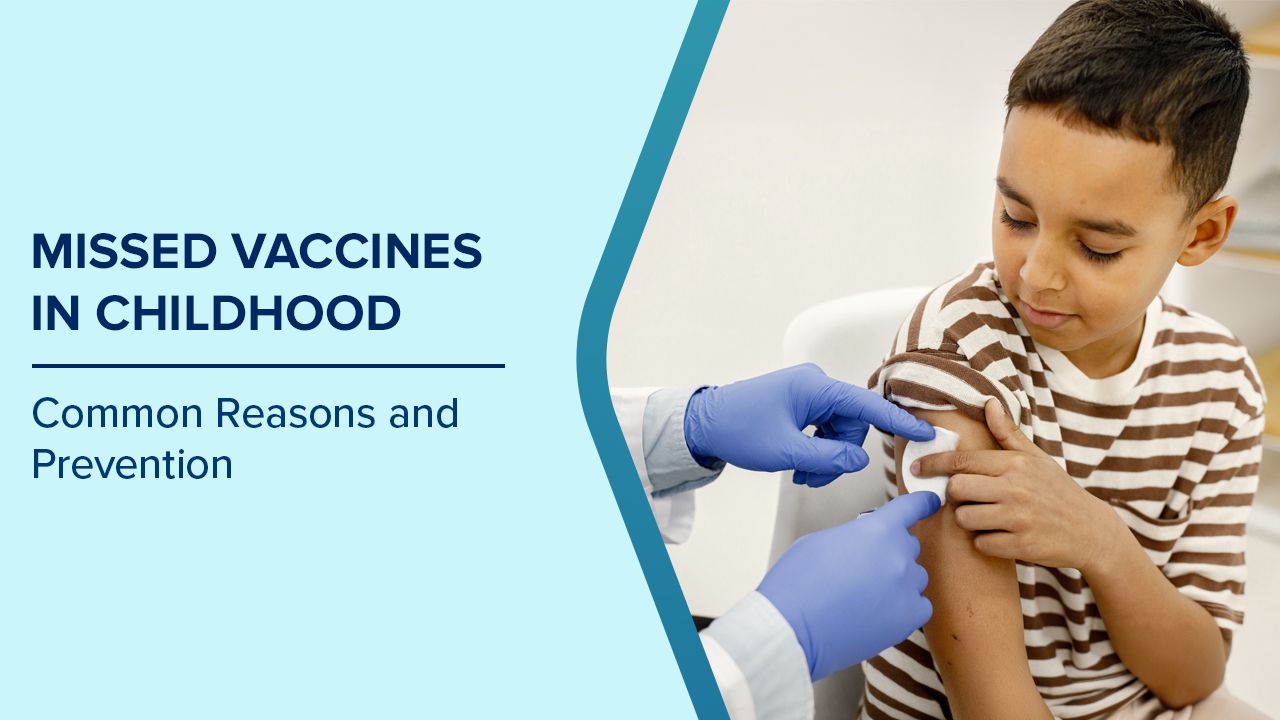
Call Us+91 926 888 0303Missed Vaccines in Childhood: Common Reasons and Prevention
By Dr. Astha Agrawal in Neonatology , Paediatrics (Ped) , Paediatric (Ped) Intensive Care , Child Development Clinic
May 04 , 2026
1

Vaccination plays an important role in protecting children from serious infectious diseases. However, in real life, delays can happen. Missed appointments, illness, travel, or lack of awareness may lead to gaps in a child’s immunisation schedule. This often leaves parents concerned about whether their child is still protected and what steps to take next.
The reassuring fact is that in most cases, missed vaccines do not mean missed protection forever. With the right guidance, children can safely continue and complete their vaccination schedule through a structured catch-up approach.
Why Childhood Vaccination Schedules Matter
Vaccines are carefully timed to protect children when they are most vulnerable to infections. Early childhood is a period when the immune system is still developing, making timely vaccination essential.
Each vaccine dose is designed to:
● Build immunity step by step
● Provide protection before the exposure risk increases
● Strengthen long-term immune response
When doses are delayed, it does not erase previous protection, but it may leave gaps where the child is more susceptible to certain infections.
What Happens If a Vaccine Is Missed
Missing a scheduled vaccine dose is more common than many parents realise. The key point to understand is that most vaccination schedules do not need to be restarted.
Instead:
● The schedule can usually continue from where it stopped
● Previous doses remain effective
● Doctors adjust the remaining doses based on age and timing
This approach is known as a catch-up vaccination schedule and is widely used in paediatric care.
Can Children Catch Up on Missed Vaccines
Yes, children can catch up on missed vaccines in most situations. Healthcare providers follow established catch-up schedules that ensure safe and effective immunisation.
Catch-up vaccination focuses on:
● Completing essential vaccines as early as possible
● Maintaining safe intervals between doses
● Avoiding unnecessary repetition of doses
Even if a child has missed multiple vaccines, it is still possible to rebuild protection through a planned approach.
How Catch-Up Vaccination Works
Catch-up schedules are tailored to each child. There is no one-size-fits-all plan, as recommendations depend on age, previous doses, and overall health.
Doctors typically consider:
● The child’s current age
● Which vaccines have already been given
● The time gap since the last dose
● Risk of exposure to certain infections
Based on this, a revised schedule is created to safely complete pending vaccinations.
General Principles of Catch-Up Vaccination
● Do not restart the entire schedule
● Maintain minimum intervals between doses
● Prioritise essential and high-risk vaccines
● Combine vaccines where appropriate to reduce visits
This structured method ensures protection without overloading the child’s system.
Common Reasons for Missed Vaccines
Understanding why vaccines are missed can help prevent future delays.
Some common reasons include:
● Minor illnesses at the time of vaccination
● Travel or relocation
● Lack of awareness about schedules
● Concerns about side effects
● Missed reminders or busy routines
In most cases, these delays are manageable and can be corrected with timely follow-up.
Which Vaccines Are Most Important to Catch Up
While all vaccines play a role, some are especially important due to the severity of the diseases they prevent.
These typically include:
● Vaccines against measles, mumps, and rubella
● Diphtheria, tetanus, and pertussis
● Polio
● Hepatitis B
● Haemophilus influenzae type b (Hib)
Delays in these vaccines may increase the risk of infection, making catch-up particularly important.
Is It Safe to Take Multiple Vaccines Together
A common concern among parents is whether multiple vaccines can be given at the same visit during catch-up.
In most cases, it is safe and recommended.
Benefits of combined vaccination visits:
● Faster completion of the schedule
● Fewer clinic visits
● Reduced risk of further delays
● Timely protection against multiple diseases
The immune system can handle multiple vaccines effectively, and this approach is routinely used in paediatric practice.
Age and Catch-Up Vaccination
Catch-up vaccination is possible across different age groups, but the schedule may vary.
Infants and Toddlers
Catch-up is usually straightforward, as most vaccines are still age-appropriate.
School-Age Children
Some vaccines may be adjusted based on age, but protection can still be completed.
Adolescents
Additional vaccines may be recommended along with missed childhood doses, depending on health needs.
The earlier the catch-up begins, the easier it is to align with the standard schedule.
When Should You Delay Catch-Up Vaccination
While most children can proceed with vaccination, there are a few situations where a temporary delay may be advised.
These include:
● Moderate to severe illness
● Ongoing high fever
● Certain medical conditions requiring evaluation
Mild illnesses, such as a cold or low-grade fever, usually do not require postponing vaccination.
Role of Parents in Catch-Up Vaccination
Parents play a crucial role in ensuring children receive complete immunisation.
Helpful steps include:
● Keeping a record of previous vaccinations
● Consulting a paediatrician for a revised schedule
● Setting reminders for upcoming doses
● Addressing concerns early rather than delaying
Taking proactive steps can help close vaccination gaps efficiently.
Common Concerns About Catch-Up Vaccination
Parents often worry about whether delayed vaccines will be less effective or cause problems.
Important points to remember:
● Delayed vaccines still provide strong protection
● There is no need to restart most vaccines
● Catch-up schedules are medically approved and safe
● Side effects are similar to routine vaccinations
Understanding these facts can reduce anxiety and encourage timely action.
How to Stay on Track After Catch-Up
Once the catch-up schedule begins, consistency is important.
To stay on track:
● Follow the revised schedule carefully
● Do not skip follow-up doses
● Attend all appointments
● Keep communication open with your doctor
Completing the schedule ensures long-term protection and peace of mind.
Why Catch-Up Vaccination Should Not Be Delayed Further
Delaying vaccination further can extend the period during which a child remains unprotected.
Potential risks include:
● Increased exposure to preventable diseases
● Higher chance of outbreaks in community settings
● Complications from infections that could have been prevented
Timely catch-up helps reduce these risks significantly.
Conclusion
Missing a vaccine dose can be concerning, but it is rarely a permanent setback. With proper medical guidance, children can safely catch up and regain protection against serious infections.
The key lies in acting early, following a structured plan, and staying consistent with follow-up doses. Vaccination is not just about individual protection but also about safeguarding the wider community.
By addressing missed vaccines without delay, parents can ensure their child’s health remains protected now and in the future.
Frequently Asked Questions
1. Can a child receive catch-up vaccines after a long gap of several years?
Yes, even after a long gap, most vaccines can be continued without restarting the entire schedule. A doctor will adjust the doses based on the child’s current age.
2. Are there any vaccines that cannot be given after a certain age?
Some vaccines have upper age limits, while others can still be given later with modified schedules. A healthcare provider can guide what is still appropriate.
3. Will catch-up vaccination affect school admission requirements?
Many schools require updated vaccination records. Catch-up vaccination can help meet these requirements if doses were previously missed.
4. Is it necessary to repeat a dose if vaccination records are lost?
If records are unavailable, doctors may recommend repeating certain vaccines to ensure protection, as it is generally safe to do so.
5. Can delayed vaccination affect travel plans for children?
Some countries require specific vaccinations for entry. Catch-up vaccination can help meet these requirements before travel.
6. Do catch-up vaccines cause stronger side effects than regular doses?
No, side effects are usually similar to routine vaccination and are typically mild and temporary.
Written and Verified by:

Related Blogs


Blogs by Doctor

World Down Syndrome Day 2026: Challenges & Awareness
Dr. Astha Agrawal In Neonatology , Paediatrics (Ped) , Child Development Clinic
Mar 19 , 2025 | 3 min read
Essential Newborn Care: From Delivery Room to Home
Dr. Astha Agrawal In Neonatology , Paediatrics (Ped) , Child Development Clinic
Nov 11 , 2025 | 6 min read
Most read Blogs


Related Blogs
Blogs by Doctor
World Down Syndrome Day 2026: Challenges & Awareness
Dr. Astha Agrawal In Neonatology , Paediatrics (Ped) , Child Development Clinic
Mar 19 , 2025 | 3 min read
Essential Newborn Care: From Delivery Room to Home
Dr. Astha Agrawal In Neonatology , Paediatrics (Ped) , Child Development Clinic
Nov 11 , 2025 | 6 min read
Most read Blogs