 WhatsApp Us (24/7)
 +91 926 888 0303 (24/7)


To Book an Appointment
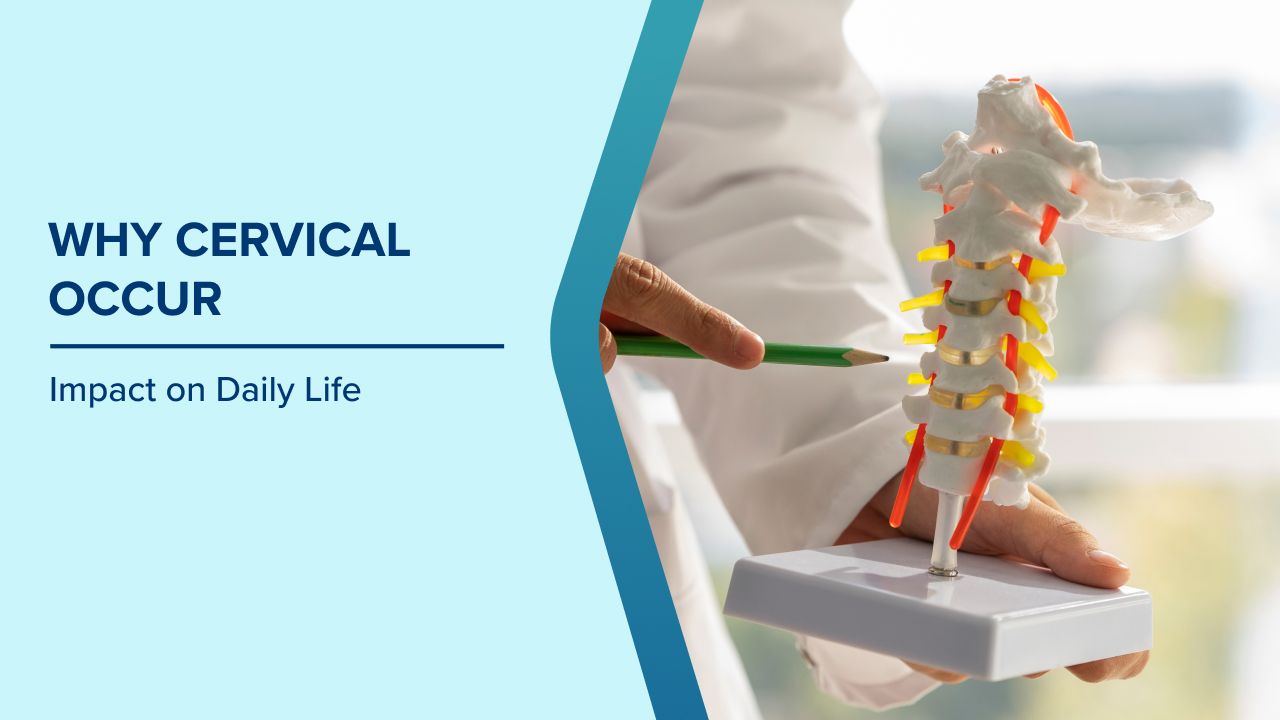
Call Us+91 926 888 0303Why Cervical and Lumbar Degeneration Occur: Impact on Daily Life
By Dr. Paresh Bang in Spine Surgery
Mar 10 , 2026

Degenerative changes in the spine are commonly discussed as isolated problems, either in the neck or in the lower back. However, many patients are surprised to learn that structural wear and tear can occur in more than one region at the same time. When both the cervical spine and the lumbar spine show degenerative changes, the condition is often described as multi-level spine degeneration.
This is not simply “more of the same problem.” When degeneration affects multiple spinal regions, the way symptoms appear, progress, and respond to treatment can differ significantly from single-region disease. Understanding this broader pattern is essential for accurate diagnosis, realistic expectations, and long-term spine health planning.
Understanding the Spine as a Functional Chain
The human spine is not a collection of separate segments. It functions as one continuous kinetic chain. The cervical spine supports the head and allows rotation and flexion. The thoracic region stabilises the rib cage. The lumbar spine bears body weight and absorbs mechanical stress from movement.
When one region becomes stiff, unstable, or painful, adjacent regions often compensate. Over time, this compensation increases mechanical load elsewhere in the spine. For example:
- Reduced lumbar flexibility may increase strain on the neck during daily activities
- Chronic forward head posture may alter overall spinal alignment and load the lower back
- Loss of normal spinal curves can shift the body’s centre of gravity
In multi-level degeneration, these compensatory patterns become more pronounced, creating a complex clinical picture.
Why Degeneration Occurs in Both Cervical and Lumbar Regions
Several factors contribute to simultaneous degeneration in both areas:
Systemic Age-Related Changes
Intervertebral discs gradually lose hydration and elasticity with age. This process does not occur in only one region. Although symptoms may begin in the lower back, imaging often reveals parallel changes in the neck.
Long-Term Postural Stress
Prolonged sitting, screen use, and driving habits place strain on both the cervical and lumbar spine. Years of sustained mechanical stress can accelerate degeneration at multiple levels.
Genetic Predisposition
Some individuals have a hereditary tendency toward earlier disc degeneration, ligament thickening, or joint arthritis across the spine.
Occupational Demands
Repetitive bending, lifting, vibration exposure, or static desk work can affect both upper and lower spinal segments over time.
Sagittal Imbalance
Loss of normal spinal alignment, especially forward trunk inclination, increases compensatory strain throughout the spine. When alignment shifts globally, degeneration may develop in more than one region.
How Multi-Level Degeneration Differs from Isolated Disease
When degeneration affects only the cervical or lumbar spine, symptoms tend to follow a predictable regional pattern. In a multi-level disease, clinical presentation can overlap or become less straightforward.
Combined Symptom Patterns
Patients may experience:
- Neck stiffness, along with chronic lower back discomfort
- Arm symptoms such as tingling or weakness alongside leg pain
- Headaches combined with difficulty standing for long periods
- Balance disturbances with simultaneous lower limb fatigue
These overlapping features can make diagnosis more complex. It becomes essential to determine whether symptoms arise primarily from cervical nerve root compression, lumbar nerve involvement, or central spinal cord irritation.
The Concept of Double Crush Phenomenon
In some cases, nerve tissue may be compressed at more than one location along its pathway. This is sometimes referred to as a “double crush” pattern. For instance, a cervical nerve root may be mildly compressed in the neck, while lumbar nerve irritation coexists in the lower back.
Although each compression may be moderate on its own, combined irritation can amplify symptoms. Patients may report persistent limb discomfort that does not respond fully to treatment targeting only one region.
This highlights the importance of comprehensive evaluation rather than focusing solely on the most painful area.
Imaging Findings: Interpreting Multi-Region Degeneration
Modern MRI scans frequently reveal degenerative changes in both cervical and lumbar areas, especially in individuals over 40. These may include:
- Disc height reduction
- Disc bulging
- Facet joint arthropathy
- Ligament thickening
- Mild spinal canal narrowing
However, structural changes on imaging do not always correlate with symptom severity. Some individuals with multi-level degeneration remain functionally active with minimal discomfort.
Clinical correlation is crucial. Treatment decisions are based on neurological examination, functional limitation, and progression of symptoms rather than imaging alone.
Impact on Daily Function and Quality of Life
Multi-level degeneration can influence several aspects of daily life:
Reduced Endurance
Simultaneous cervical and lumbar discomfort may limit tolerance for prolonged sitting, standing, or driving.
Movement Hesitation
Fear of aggravating pain can lead to guarded movement patterns, reducing overall mobility.
Sleep Disruption
Neck stiffness combined with lower back discomfort can make it difficult to find a comfortable sleeping position.
Balance and Coordination Concerns
If cervical spinal cord involvement occurs, subtle balance instability may develop. When combined with lumbar stiffness, walking confidence may decline.
Recognising these patterns early allows proactive management.
Diagnostic Approach in Multi-Level Degeneration
Evaluation typically includes:
- Detailed clinical history
- Neurological examination of both upper and lower limbs
- Assessment of reflexes, strength, and sensation
- Evaluation of posture and global spinal alignment
- Targeted imaging of symptomatic regions
In selected cases, electrophysiological studies may help distinguish cervical from lumbar nerve involvement.
The goal is not only to identify degeneration but also to determine which region is clinically dominant.
Conservative Management Strategies
Most individuals with multi-level spine degeneration respond well to structured conservative care.
Whole-Spine Rehabilitation
Rather than isolating exercises for one region, rehabilitation focuses on:
- Core stability
- Cervical stabilisation
- Postural retraining
- Flexibility enhancement
- Functional movement correction
A coordinated physiotherapy plan addresses the spine as a single biomechanical unit.
Activity Modification
Avoiding prolonged static postures, incorporating regular movement breaks, and optimising workstation ergonomics are essential for both regions.
Pain Management
Short-term use of anti-inflammatory medication, supervised exercise, and targeted physiotherapy remains the foundation of treatment.
Weight and Bone Health
Maintaining a healthy body weight reduces lumbar stress, while adequate calcium and vitamin D support overall spinal integrity.
When Is Surgical Intervention Considered?
Surgery is not automatically required in multi-level degeneration. It is typically considered only when:
- Progressive neurological deficit is present
- Severe nerve compression causes functional decline
- Spinal cord involvement produces myelopathic symptoms
- Conservative therapy fails over an adequate period
In complex cases, surgeons prioritise the region causing the most significant neurological compromise. It is uncommon for both cervical and lumbar areas to require simultaneous surgery unless symptoms are severe and clearly defined.
Minimally invasive spine surgery techniques have improved recovery times, but careful case selection remains critical.
Long-Term Outlook
Multi-level spine degeneration does not necessarily mean disability. Many individuals lead active, independent lives with structured care and regular monitoring.
Key long-term principles include:
- Maintaining consistent physical activity
- Monitoring posture and alignment
- Addressing symptoms early
- Avoiding prolonged inactivity
- Seeking periodic specialist evaluation when symptoms evolve
The progression of degeneration varies widely. Some patients experience stable symptoms for years without major deterioration.
Psychological Considerations
Receiving a diagnosis of degeneration in both the neck and lower back can be alarming. It is important to remember that degeneration is a structural process, not a catastrophic event.
Education reduces fear. Understanding that symptoms can be managed and that surgery is not inevitable provides reassurance. A proactive approach centred on function rather than imaging findings leads to better outcomes.
Conclusion
Multi-level spine degeneration reflects a broader pattern of structural change involving both the cervical and lumbar spine. While this may sound concerning, it does not automatically predict severe disability or surgical necessity.
Accurate diagnosis, whole-spine rehabilitation, lifestyle modification, and regular monitoring allow most individuals to maintain mobility and quality of life. Viewing the spine as a connected system rather than isolated regions is the key to effective management.
Early attention to posture, strength, and functional movement provides the best defence against progression. When managed thoughtfully, multi-level degeneration can remain a controlled condition rather than a limiting one.
Frequently Asked Questions
Can multi-level spine degeneration qualify as a disability?
Only if neurological impairment significantly limits functional capacity despite appropriate medical management and rehabilitation.
Does weather change affect symptoms in multi-region degeneration?
Some individuals report sensitivity to temperature shifts, though scientific evidence remains inconclusive.
Can spinal injections be used in both cervical and lumbar regions?
Yes, injections may be performed selectively depending on symptom dominance and diagnostic confirmation.
Is long-distance travel safe with multi-level degeneration?
It is generally safe with posture support, movement breaks, and proper lumbar and cervical cushioning.
Are regenerative therapies effective for multi-level degeneration?
Current regenerative treatments remain experimental, with limited long-term evidence supporting routine use.
Written and Verified by:

Related Blogs

Prof. (Dr). V.K.Jain In Neurosciences , Spine Surgery
Nov 07 , 2020 | 5 min read
Dr. Amit Gupta In Spine Surgery , Neurology
Nov 07 , 2020 | 2 min read
Blogs by Doctor
Most read Blogs


Related Blogs
Prof. (Dr). V.K.Jain In Neurosciences , Spine Surgery
Nov 07 , 2020 | 5 min read
Dr. Amit Gupta In Spine Surgery , Neurology
Nov 07 , 2020 | 2 min read
Blogs by Doctor
Most read Blogs