 WhatsApp Us (24/7)
 +91 926 888 0303 (24/7)


To Book an Appointment
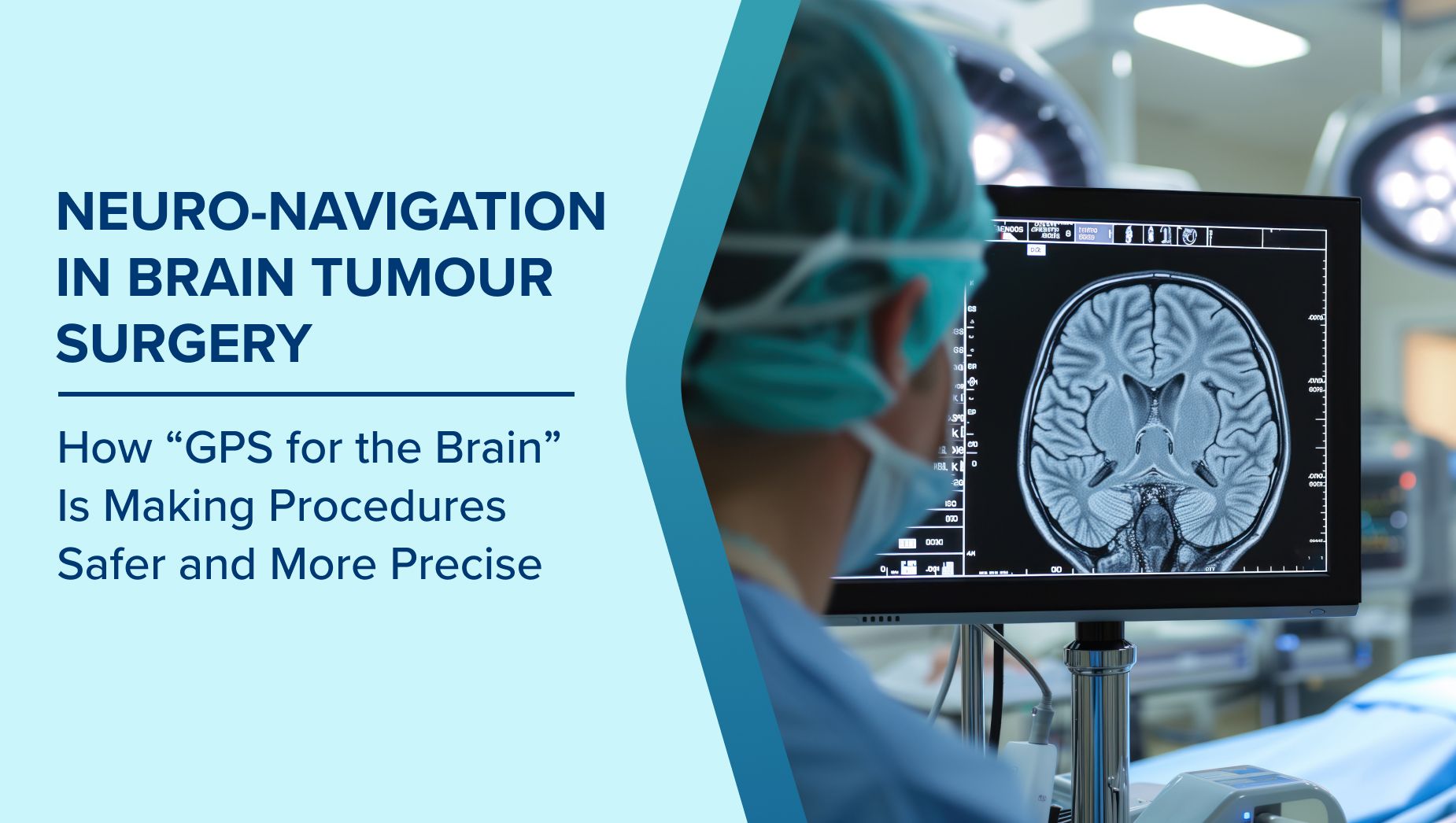
Call Us+91 926 888 0303Neuro-Navigation in Brain Tumour Surgery: How “GPS for the Brain” Is Making Procedures Safer and More Precise
By Dr. Hrishikesh Chakrabartty in Neurosurgery , Neurosciences , Spine Surgery
Nov 24 , 2025 | 2 min read

Brain tumour surgery has always been considered one of the most delicate procedures in medicine. The brain controls everything we do, which is why even the slightest error can affect speech, movement, memory, or vision. Fortunately, modern neurosurgery has evolved with remarkable advancements that make operations safer than ever before. One of the most impactful innovations is neuro-navigation, a technology often compared to a GPS system for the human brain.
This breakthrough is helping surgeons operate with incredible accuracy while improving outcomes for patients.
What Is Neuro-Navigation?
Neuro-navigation is a computer-guided system that helps neurosurgeons plan and perform brain surgery with far greater precision. It works similarly to how GPS maps guide drivers on the safest route to their destination.
Before surgery, imaging tools such as MRI and CT scans are used to create a detailed 3D map of the patient’s brain. This map shows:
- The exact size and position of the tumour
- Surrounding blood vessels
- Critical brain regions that need protection
During surgery, this digital map guides the surgeon in real time, helping them move through the brain safely and accurately.
How Neuro-Navigation Helps Surgeons
This technology acts like a trusted guide throughout the operation. It enables surgeons to:
- Identify the precise location of the tumour before making any incision
- Select the safest path that avoids healthy brain tissue
- Track surgical instruments with real-time accuracy
- Understand exactly where the tumour begins and ends
By improving visibility and planning, neuro-navigation helps reduce risk and improve the success of the procedure.
Why Neuro-Navigation Improves Patient Safety
One of the biggest challenges in brain surgery is ensuring that healthy brain regions remain untouched. Neuro-navigation makes this possible by giving surgeons constant real-time awareness of the brain’s internal structures.
This leads to:
- Lower chances of damaging areas responsible for speech, memory, or movement
- Better tumour removal, especially when the tumour borders delicate regions
- Fewer surgical complications
- More confidence for both surgeon and patient
Most importantly, the enhanced accuracy increases the ability to remove the tumour completely, which is vital for long-term recovery and reducing recurrence.
Reduced Surgical Risks and Faster Recovery
Patients undergoing neuro-navigation-assisted surgery often benefit from:
- Shorter surgery duration
- Less bleeding during the procedure
- Reduced trauma to surrounding tissues
- Faster healing and quicker return to daily activities
- Better preservation of neurological functions
Because the surgery is more controlled and precise, many patients experience smoother outcomes and a more comfortable recovery period.
Who Benefits the Most?
Neuro-navigation is especially helpful for patients with tumours that are:
- Deep-seated
- Located near critical brain areas
- Hard to reach using traditional methods
- Surrounded by important blood vessels
Although not every brain surgery requires neuro-navigation, it has become a preferred option for complex cases where accuracy is essential.
Conclusion
Neuro-navigation has transformed the field of neurosurgery by giving surgeons an advanced, GPS-like tool for navigating the brain. With its ability to guide precise tumour removal while protecting vital structures, it offers patients safer surgeries and better outcomes.
For those facing brain tumour surgery, neuro-navigation provides reassurance and the possibility of a smoother recovery with fewer risks.
Written and Verified by:
Related Blogs

Dr. Sanjeev Kumar Gupta In Neurosurgery , Neurosciences
Jun 30 , 2016 | 2 min read

Dr. Sonal Gupta In Neurosurgery , Neurosciences
Jul 20 , 2016 | 2 min read
Most read Blogs


Related Blogs
Dr. Sanjeev Kumar Gupta In Neurosurgery , Neurosciences
Jun 30 , 2016 | 2 min read
Dr. Sonal Gupta In Neurosurgery , Neurosciences
Jul 20 , 2016 | 2 min read
Most read Blogs