 WhatsApp Us (24/7)
 +91 926 888 0303 (24/7)


To Book an Appointment
Call Us+91 926 888 0303Heat Rash (Prickly Heat) 101: Causes, Treatment, and Prevention
By Dr. Rommel Tickoo in Internal Medicine
Jun 18 , 2026

Heat rash, also known as prickly heat, is one of those skin conditions that sneaks up on you right when the weather gets unbearable. One moment you're going about your day, and the next, there's this irritating, prickly sensation spreading across your skin, usually right where your clothes sit tightest or where the sweat just won't dry. It's incredibly common, affects people of all ages, from newborns to adults, and tends to flare up most during hot and humid weather or after intense physical activity. The good news is that it's mostly harmless and very manageable once you understand what's actually going on. This guide covers everything you need to know about heat rash, what causes it, how to spot it, and most importantly, how to treat and prevent it before the next heatwave hits.
What is Heat Rash (Prickly Heat)?
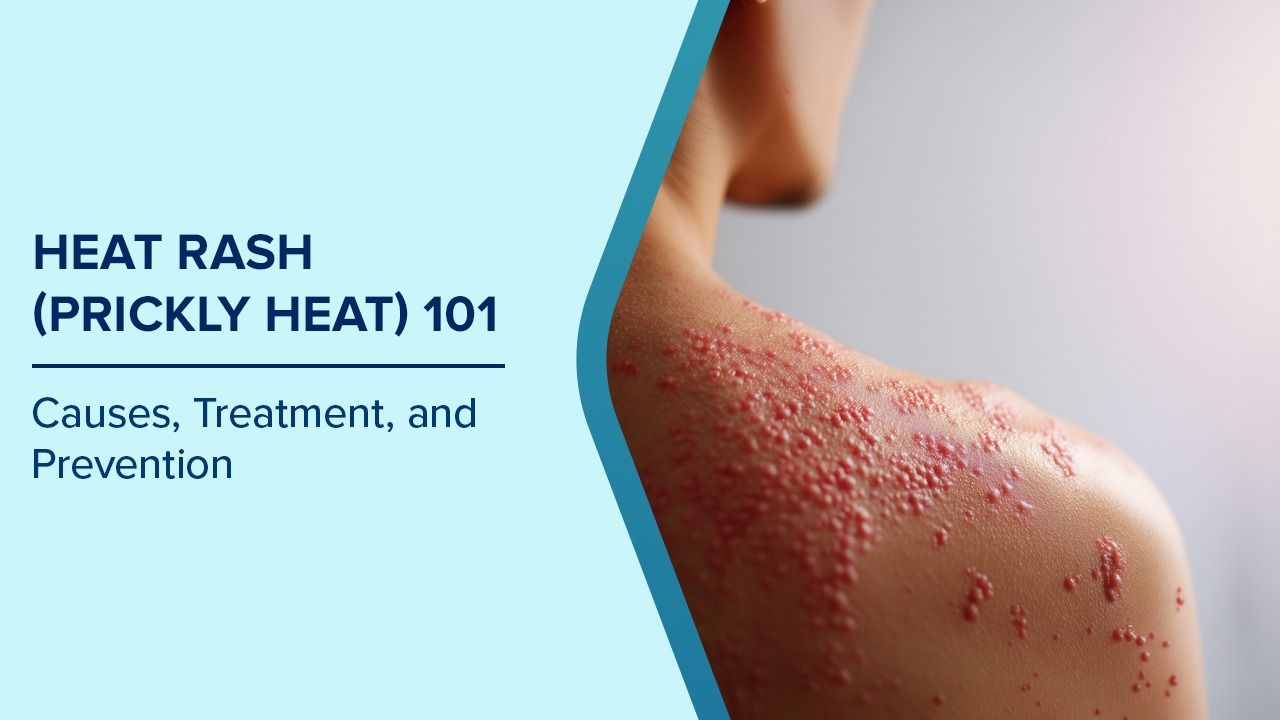
Heat rash, medically known as miliaria, happens when sweat ducts get blocked and sweat can't make it to the surface. Instead of evaporating, it gets trapped beneath the skin, causing irritation, inflammation, and that signature prickling or stinging sensation that gives prickly heat its name. The result is a rash that can range from tiny, clear blisters to red, itchy bumps depending on how deep the blockage sits within the skin layers.
It's worth knowing that heat rash isn't a sign of anything serious. It doesn't mean the skin is infected or that something is fundamentally wrong. It simply means the sweat glands are overwhelmed or obstructed, usually because of prolonged heat, humidity, tight clothing, or heavy creams and ointments that seal the skin. Children get it more often than adults because their sweat ducts are narrower and still developing, but adults are far from immune, particularly those who live in hot climates.
Read More: Winter Rash: Causes, Prevention and Treatment
Types of Heat Rash
Heat rash can appear in different forms depending on how deeply the sweat ducts are blocked and how irritated the skin becomes. Here are the main types of heat rash and how they differ from one another:
Miliaria Crystallina
This is the mildest form of heat rash and usually appears as tiny, clear fluid-filled blisters on the surface of the skin. The bumps are generally painless and do not cause much itching, but they can burst easily.
Miliaria Rubra
Often called classic prickly heat, this is the most common type. It causes red bumps, itching, and a prickling or stinging sensation. It usually develops in areas where sweat gets trapped under clothing or within skin folds.
Miliaria Profunda
This less common type occurs when sweat leaks deeper into the skin. It can lead to larger, flesh-coloured bumps and may make the skin feel rough or raised. It is more likely to occur in people who experience repeated episodes of heat rash.
Miliaria Pustulosa
This type develops when the affected areas become inflamed or infected. The bumps may fill with pus and appear more irritated or painful than other forms of heat rash. Medical attention may sometimes be needed if infection is suspected.
Areas Commonly Affected by Heat Rash
Heat rash usually develops in body areas where sweat gets trapped easily and airflow is limited. The most commonly affected areas include:
- Neck And Chest: Sweat buildup and tight clothing can easily irritate the skin in these areas.
- Underarms: Constant moisture and friction make the underarms highly prone to prickly heat.
- Back And Abdomen: Excess sweating under clothing can trigger rashes on the back and stomach.
- Groin Area: Heat, friction, and trapped moisture often cause irritation in the groin region.
- Elbows And Skin Folds: Skin folds tend to trap sweat and heat, increasing the risk of rashes.
- Face And Scalp In Babies: Babies commonly develop heat rash in these areas because they overheat more easily.
What Does Heat Rash Look And Feel Like?
Heat rash can look different from person to person, but it usually appears after excessive sweating or prolonged exposure to hot and humid weather. Here are the most common heat rash symptoms people experience:
- Small Red Bumps: Tiny red or pink bumps often appear in clusters on sweaty areas of the body.
- Itching: The affected skin may feel itchy and irritated, especially in areas where clothing rubs against the skin.
- Prickling Sensation: Many people experience a stinging or prickly feeling, which is why it is commonly called prickly heat.
- Mild Swelling: Some areas of the skin may look slightly swollen or inflamed.
- Warm Or Sensitive Skin: The rash can make the skin feel tender, warm, or uncomfortable to touch.
- Tiny Fluid-Filled Blisters: In milder forms of heat rash, small clear blisters may develop on the surface of the skin.
What Causes Heat Rash?
Heat rash develops when sweat gets trapped beneath the skin instead of evaporating properly. This usually happens in hot, humid, or sweaty conditions that block the sweat ducts. Here are some of the most common causes of heat rash:
Hot Weather
High temperatures naturally make the body sweat more in order to cool itself down. When sweating becomes excessive, the sweat ducts can get blocked, causing sweat to remain trapped under the skin and trigger irritation.
Humid Conditions
Humidity makes it harder for sweat to evaporate from the skin surface. As moisture stays trapped for longer periods, the chances of developing heat rash increase significantly, especially in tropical or poorly ventilated environments.
Excessive Sweating
Activities that cause heavy sweating, such as exercise, outdoor labour, or prolonged physical activity, can contribute to blocked sweat glands. The longer sweat remains on the skin, the more irritation it may cause.
Tight Or Non-Breathable Clothing
Clothing made from synthetic or tight-fitting materials can trap heat and sweat against the skin. Friction caused by tight clothing can further irritate the affected areas and worsen the rash.
Overheating
Overheating due to heavy blankets, overdressing, or staying in enclosed warm spaces can increase sweat production. Babies are particularly vulnerable because they can overheat more quickly than adults.
Friction In Skin Folds
Areas where the skin rubs together, such as the underarms, groin, neck, or under the breasts, tend to trap more sweat and moisture. Constant friction in these areas can block sweat ducts and lead to irritation.
Prolonged Bed Rest
People who remain in bed for long periods, especially during fever or illness, may develop heat rash because sweat becomes trapped between the skin and bedding with limited airflow.
Heavy Skincare Products
Thick creams, oily lotions, and heavy cosmetic products can clog pores and sweat ducts, making it harder for sweat to escape naturally through the skin.
Sensitive Skin
Some individuals naturally have more sensitive skin that reacts easily to heat, sweat, and friction. This can make them more prone to recurring episodes of prickly heat.
Who is Most at Risk?
Certain people are more likely to develop heat rash because of higher sweat production, prolonged heat exposure, or increased skin sensitivity. The condition is especially common in the following groups:
- Babies and Infants: Their sweat glands are not fully developed, which makes sweat trapping more common.
- People Living In Humid Climates: Constant exposure to heat and moisture increases the risk of blocked sweat ducts.
- Athletes: Intense workouts and heavy sweating can easily trigger prickly heat.
- Outdoor Workers: Long hours spent in hot environments often lead to excessive sweating and skin irritation.
- People With Excessive Sweating: Individuals who sweat more than usual may experience recurring episodes of heat rash.
- Individuals Wearing Tight Clothing: Tight or synthetic fabrics can trap sweat and reduce airflow to the skin.
- Bedridden Patients: Limited movement and continuous skin contact with bedding may cause sweat buildup.
- People With Sensitive Skin: Skin that reacts easily to heat and friction may be more prone to irritation.
How is a Heat Rash Treated?
The good news is that heat rash usually resolves on its own once the skin gets a chance to cool down and breathe. That said, there's quite a bit one can do to speed up recovery and ease the discomfort in the meantime. Treatment generally falls into two categories, things that can be done at home and cases where a doctor's input is needed.
The First Step: Cool the Skin Down
Before anything else, the priority is getting out of the heat. Move to a cooler, well-ventilated space, remove tight or synthetic clothing, and let the skin breathe. This alone can make a significant difference, especially in mild cases. Cool (not ice cold) water compresses applied to the affected area can help bring down the inflammation and soothe the prickling sensation fairly quickly.
Home Care Tips That Actually Help
Most cases of heat rash respond well to simple home care. A few things that tend to work:
- Calamine Lotion: A classic for good reason. It soothes itching and has a mild cooling effect on irritated skin.
- Aloe Vera Gel: Preferably the pure kind, it helps reduce redness and calm the skin without clogging pores.
- Cool Baths or Showers: Without harsh soaps, these give the skin relief and help clear blocked ducts over time.
- Loose, Breathable Clothing: Cotton or moisture-wicking fabrics reduce friction and allow sweat to evaporate properly.
- Keeping the Affected Area Dry: Patting the skin dry after bathing rather than rubbing, and avoiding heavy moisturisers or oily products in the area, can prevent the rash from worsening.
Air conditioning or a fan isn't just comfort during recovery, it's part of the treatment. Reducing sweating gives blocked ducts the chance to clear.
Medical Treatment: When to Go Beyond Home Remedies
In cases where the rash is extensive, deeply inflamed, or simply not improving after a few days, a doctor may recommend:
- Topical Corticosteroids: Used to bring down inflammation and reduce itching in more stubborn cases.
- Topical or Oral Antibiotics: Recommended if there are signs of a secondary bacterial infection, which can happen when the rash is scratched repeatedly.
- Anhydrous Lanolin: Sometimes suggested to prevent further duct blockage, particularly in recurring or more severe presentations.
It's important not to self-prescribe steroid creams without medical guidance, as prolonged use can thin the skin and cause other complications.
How Can Heat Rash be Prevented?
Preventing heat rash mainly involves keeping the skin cool, dry, and free from excessive sweat buildup. A few simple daily habits can significantly reduce the chances of developing prickly heat, especially during hot and humid weather:
- Wear Breathable Clothing: Choose loose-fitting cotton clothes that allow proper airflow and help absorb sweat.
- Avoid Overheating: Stay in cool environments whenever possible and avoid prolonged exposure to extreme heat.
- Keep The Skin Dry: Change sweaty clothes quickly and gently dry areas where moisture tends to collect.
- Take Cool Showers: Cool baths or showers can help lower body temperature and reduce excessive sweating.
- Use Lightweight Skincare Products: Avoid thick creams and oily lotions that may block sweat ducts.
- Stay Hydrated: Drinking enough water helps regulate body temperature and supports healthy sweating.
- Limit Outdoor Activities During Peak Heat: Try to avoid strenuous activity during the hottest part of the day.
- Use Fans Or Air Conditioning: Proper ventilation helps sweat evaporate more effectively.
- Avoid Tight Clothing: Tight outfits can trap heat, increase friction, and worsen skin irritation.
- Keep Babies Cool: Dress infants in lightweight clothing and avoid excessive layering in warm weather.
- Maintain Good Hygiene: Regular cleansing helps remove sweat, dirt, and oil that may clog pores.
Consult Today
Heat rash is uncomfortable, but it's rarely something to lose sleep over. With a little awareness of what triggers it and some basic care, most cases clear up within days. The real win is in prevention, staying cool, choosing the right fabrics, and keeping skin dry goes a long way. That said, if the rash persists or keeps coming back, it's always worth getting a professional opinion. Book a consultation with a dermatologist or general physician at Max Hospital and get the right advice for your skin.
Frequently Asked Questions
Can heat rash spread from one person to another?
No, heat rash is not contagious. It develops due to blocked sweat ducts and cannot spread through physical contact.
How long does heat rash usually last?
Mild heat rash often improves within a few days once the skin is kept cool and dry. More severe cases may take longer to heal.
Can heat rash leave marks or scars?
Most cases of heat rash heal without leaving scars. However, excessive scratching or skin infection may sometimes cause temporary marks or pigmentation.
Is heat rash more common during summer?
Yes, heat rash is far more common during hot and humid weather because increased sweating raises the chances of blocked sweat ducts.
Can air conditioning help with heat rash?
Yes, cooler indoor temperatures and proper ventilation can reduce sweating and help the rash heal faster.
Does heat rash get worse at night?
It can feel worse at night if the room is warm, humid, or poorly ventilated, especially when sweat continues to build up during sleep.
Can adults get heat rash too?
Yes, although it is common in babies, adults can also develop heat rash, especially during exercise, outdoor work, or hot weather conditions.
Is it safe to exercise with heat rash?
It is generally better to avoid intense physical activity until the rash improves, as sweating and friction may worsen irritation.
Can stress increase the chances of heat rash?
Stress itself may not directly cause heat rash, but it can increase body temperature and sweating in some individuals, which may contribute to flare-ups.
Does heat rash always itch?
Not always. Some people mainly experience tiny bumps or a prickling sensation, while others may develop significant itching or irritation.
Written and Verified by:

Related Blogs


Dr. Vandana Boobna In Internal Medicine
Nov 08 , 2020 | 2 min read
Blogs by Doctor


Dengue Fever: Risk Factors, Variants, Vaccine & Latest Trends
Dr. Rommel Tickoo In Internal Medicine
Aug 25 , 2024 | 2 min read
Most read Blogs


Related Blogs
Dr. Vandana Boobna In Internal Medicine
Nov 08 , 2020 | 2 min read
Blogs by Doctor
Dengue Fever: Risk Factors, Variants, Vaccine & Latest Trends
Dr. Rommel Tickoo In Internal Medicine
Aug 25 , 2024 | 2 min read
Most read Blogs