 WhatsApp Us (24/7)
 +91 926 888 0303 (24/7)


To Book an Appointment
Call Us+91 926 888 0303Types of Kidney Tumours: Understanding Benign and Malignant
By Dr. Amit Goel in Urology , Kidney Transplant , Uro-Oncology , Robotic Surgery
Nov 03 , 2025 | 4 min read

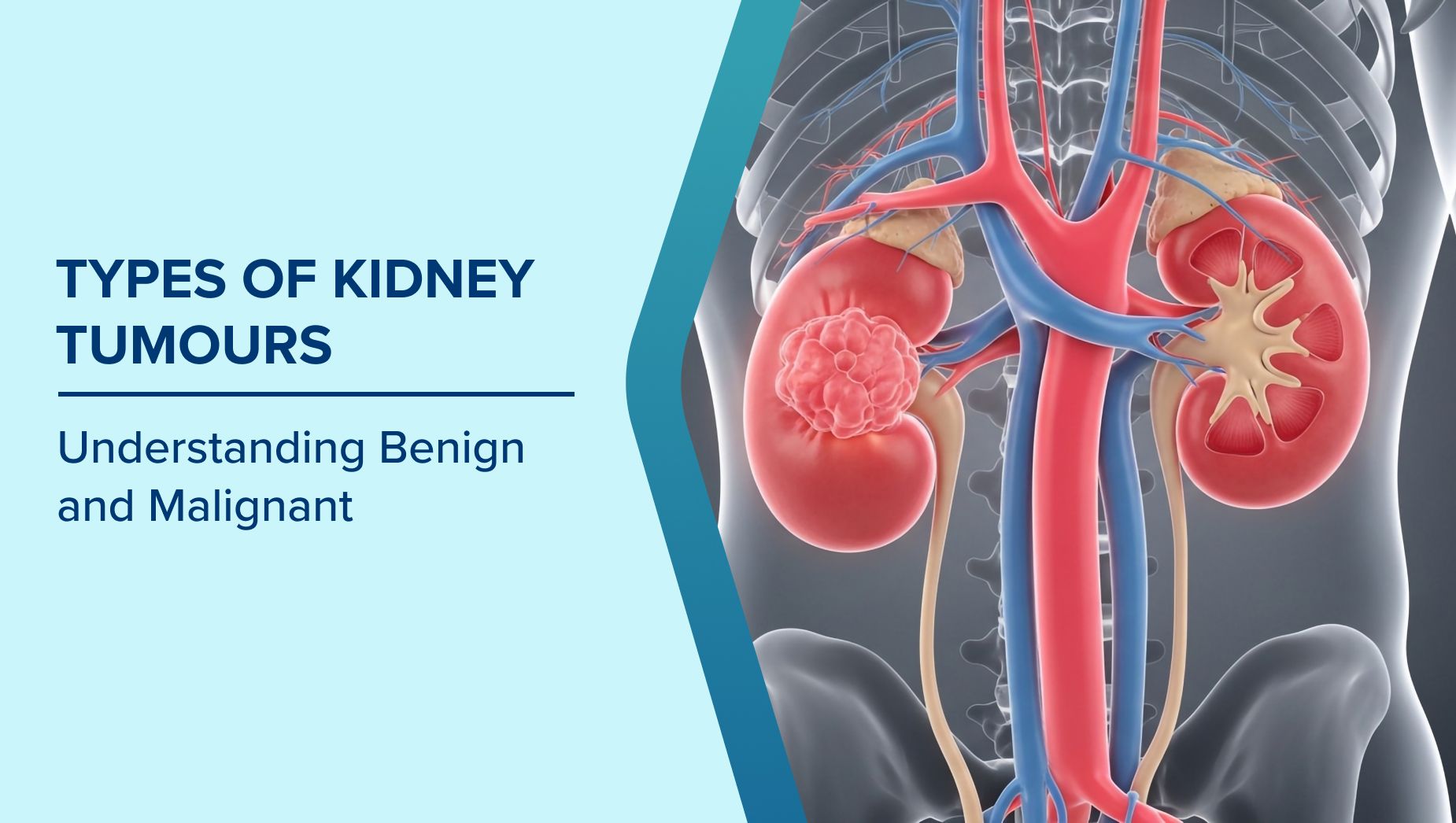
Kidney tumours are abnormal growths that develop in the kidneys. While they can be concerning, not all kidney tumours are cancerous. Understanding the types of kidney tumours, their potential risks, and the treatments available is vital for protecting kidney health. Timely recognition and intervention can lead to better outcomes and empower patients to choose the right care.
What Are Kidney Tumours?
A kidney tumour is a mass that forms in the tissue of one or both kidneys. Tumours can be benign, meaning non-cancerous, or malignant, meaning cancerous and capable of spreading to other parts of the body. Tumours vary in size, location, and growth rate, which affects the treatment approach and prognosis.
How Kidney Tumours Form
Kidney tumours arise when normal kidney cells begin to grow uncontrollably. This can happen due to a combination of genetic factors, environmental influences, and underlying medical conditions. Tumours may remain small and harmless for years, or they may grow rapidly, potentially impacting kidney function and overall health.
Benign Kidney Tumours
Benign kidney tumours are non-cancerous growths that typically do not spread beyond the kidney. Although they are generally less dangerous than malignant tumours, they may still cause symptoms if they grow large or affect kidney function.
Angiomyolipoma
Angiomyolipoma is the most common benign kidney tumour. It is composed of blood vessels, muscle, and fat. Small angiomyolipomas often do not cause symptoms and are discovered incidentally during imaging tests. Larger growths may lead to pain, bleeding, or kidney damage if left untreated.
Oncocytoma
Oncocytomas are benign tumours that arise from the cells of the kidney’s tubules. They are usually well-defined and slow-growing. While they rarely turn cancerous, their appearance on imaging scans can resemble malignant tumours, making an accurate diagnosis important.
Other Rare Benign Growths
Other less common benign tumours include fibromas, leiomyomas, and metanephric adenomas. Though rare, these growths can sometimes affect kidney function or cause discomfort.
Malignant Kidney Tumours
Malignant kidney tumours are cancerous and require prompt medical attention. They have the potential to invade surrounding tissue and spread to other organs.
Renal Cell Carcinoma (RCC)
Renal Cell Carcinoma (RCC) is the most prevalent form of kidney cancer in adults. It originates in the lining of the kidney’s small tubes. RCC has several subtypes:
- Clear cell RCC: Characterised by pale cells, this is the most common subtype.
- Papillary RCC: Develops from tubular cells and often appears as multiple growths in the kidney.
- Chromophobe RCC: A rarer form with distinct cellular features.
Transitional Cell Carcinoma
This type of cancer arises from the lining of the renal pelvis, where urine collects before entering the ureter. It behaves differently from RCC and often requires a distinct treatment approach.
Wilms’ Tumour
Wilms’ tumour primarily affects children and develops in the kidney tissue. Early detection is crucial for effective treatment and preserving kidney function.
Key Differences Between Benign and Malignant Kidney Tumours
Understanding the differences between benign and malignant kidney tumours helps guide management:
- Growth rate: Benign tumours grow slowly, while malignant tumours may grow quickly.
- Spread: Malignant tumours can invade surrounding tissues and metastasise; benign tumours generally do not.
- Treatment approach: Benign tumours may only require monitoring, while malignant tumours often need surgery or additional therapies.
- Symptoms: Malignant tumours are more likely to cause noticeable symptoms such as blood in urine, persistent pain, or fatigue.
Diagnosis and Evaluation
Diagnosing kidney tumours typically involves a combination of clinical assessment and imaging:
- Ultrasound: Provides an initial view of the kidney and identifies abnormal masses.
- CT or MRI scans: Offer detailed images to assess tumour size, location, and structure.
- Biopsy: In some cases, a tissue sample is collected to determine whether a tumour is benign or malignant.
Accurate diagnosis ensures that the most appropriate treatment plan is selected and helps prevent unnecessary interventions.
Treatment Options for Kidney Tumours
Treatment varies depending on the tumour type, size, and impact on kidney function.
Benign Tumours
- Observation: Small, asymptomatic tumours may be monitored with regular imaging.
- Minimally invasive surgery: Large or symptomatic tumours can be removed using laparoscopic or robotic techniques.
- Symptom management: Pain or discomfort may be managed with medication or lifestyle adjustments.
Malignant Tumours
- Surgery: Partial or complete removal of the affected kidney may be necessary.
- Targeted therapies: Specific medications may attack cancer cells without harming healthy tissue.
- Immunotherapy: Treatments that enhance the body’s immune response to cancer cells.
- Follow-up care: Regular imaging and clinical evaluations help detect recurrence early.
Living with and Beyond a Kidney Tumour
Patients diagnosed with kidney tumours may face emotional, physical, and lifestyle challenges. Maintaining kidney health involves:
- Regular check-ups
- Managing blood pressure and other coexisting conditions
- Staying physically active and following a balanced diet
- Seeking support from healthcare professionals, family, and patient groups
Prevention and Kidney Health Tips
While some kidney tumours cannot be entirely prevented, adopting healthy habits supports overall kidney function:
- Stay hydrated and maintain a balanced diet
- Avoid smoking and limit alcohol intake
- Monitor blood pressure and blood sugar levels
- Seek prompt medical attention for unusual urinary symptoms
- Maintain a healthy weight and active lifestyle
FAQs
Can benign kidney tumours become cancerous?
Most benign kidney tumours remain non-cancerous, though rare cases may warrant close monitoring.
How are small kidney tumours monitored?
Doctors often recommend regular imaging tests to track the size and detect any changes over time.
Do all kidney tumours cause symptoms?
Not always; many tumours are discovered incidentally during scans for other reasons.
Are kidney tumours hereditary?
Some kidney cancers have a genetic component, but most tumours occur without a family history.
Can lifestyle changes reduce the risk of kidney tumours?
Maintaining kidney-friendly habits supports overall renal health, though it may not prevent all tumours.
Is partial kidney removal safe for malignant tumours?
Yes, partial nephrectomy can effectively remove cancer while preserving kidney function when appropriate.
Can kidney tumours affect both kidneys?
While most tumours occur in one kidney, multiple growths or tumours in both kidneys can happen in rare cases.
Written and Verified by:

Related Blogs

Dr. Anant Kumar In Urology , Kidney Transplant , Uro-Oncology
Nov 08 , 2020 | 8 min read

Dr. Shailendra Kumar Goel In Urology , Kidney Transplant , Uro-Oncology
Nov 08 , 2020 | 4 min read
Blogs by Doctor

Prostate Cancer Myths and Facts - Types, Symptoms, Risk Factors & Treatment Options
Jan 08 , 2024 | 6 min read

Kidney Transplant: A Hope for End-Stage Renal Disease (ESRD)
Dr. Amit Goel In Kidney Transplant
Jan 09 , 2024 | 4 min read
Most read Blogs


Related Blogs
Dr. Anant Kumar In Urology , Kidney Transplant , Uro-Oncology
Nov 08 , 2020 | 8 min read
Dr. Shailendra Kumar Goel In Urology , Kidney Transplant , Uro-Oncology
Nov 08 , 2020 | 4 min read
Blogs by Doctor
Prostate Cancer Myths and Facts - Types, Symptoms, Risk Factors & Treatment Options
Jan 08 , 2024 | 6 min read
Kidney Transplant: A Hope for End-Stage Renal Disease (ESRD)
Dr. Amit Goel In Kidney Transplant
Jan 09 , 2024 | 4 min read
Most read Blogs