 WhatsApp Us (24/7)
 +91 926 888 0303 (24/7)


To Book an Appointment
Call Us+91 926 888 0303Living vs Deceased Donor Kidney Transplant: Types & Key Advantages
By Dr. Amit Goel in Urology , Kidney Transplant , Uro-Oncology , Robotic Surgery
Dec 18 , 2025 | 3 min read
1

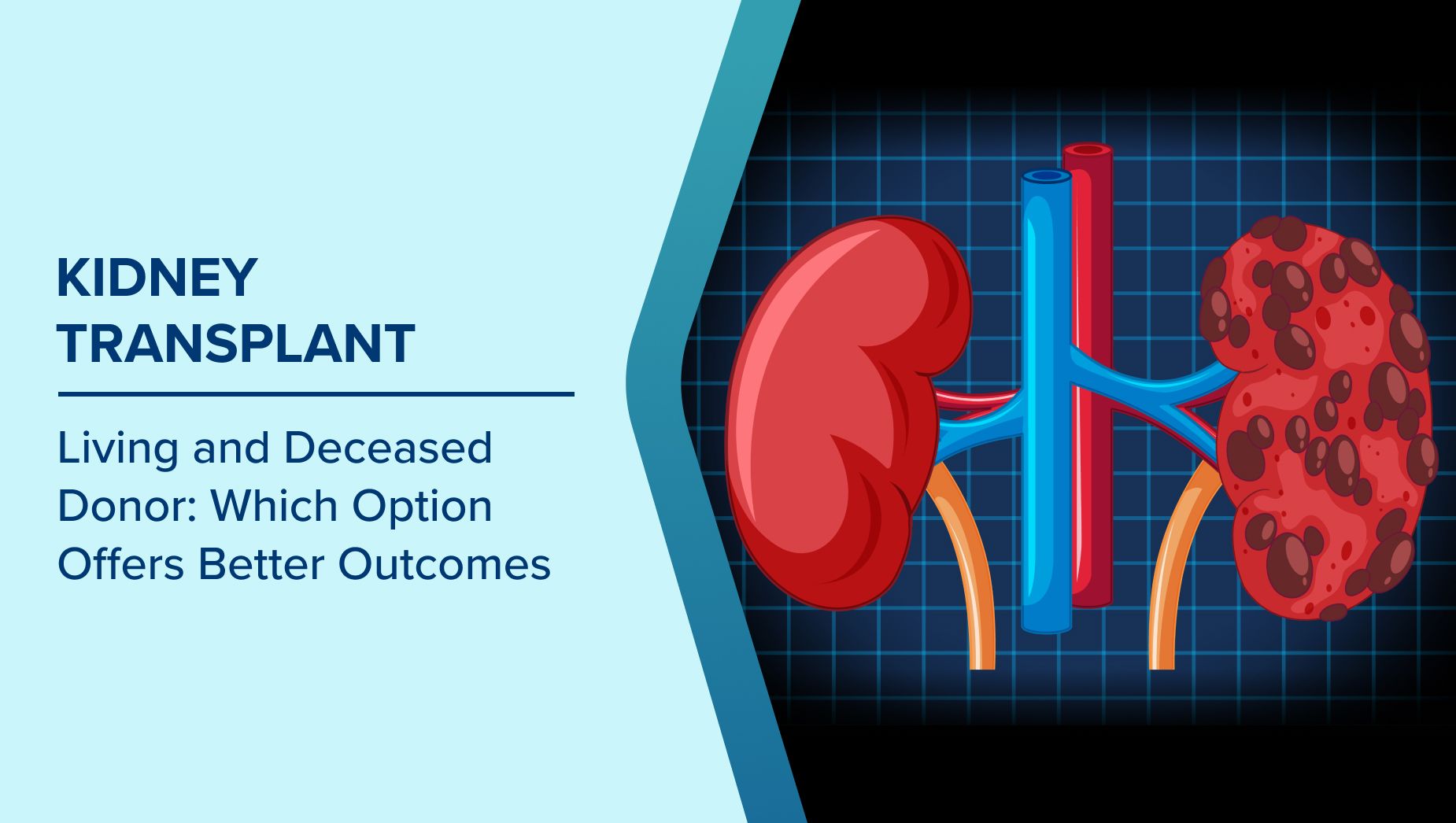
Kidney transplant remains the most effective long-term treatment for patients with end-stage renal disease (ESRD). It not only improves life expectancy but also restores energy, independence, and overall quality of life. When considering a kidney transplant, patients often face the critical choice between living donor and deceased donor transplantation. While both options save lives, understanding their differences and newer advancements, such as ABO-incompatible kidney transplants, can help patients make informed decisions.
Types of Donor Kidney Transplants
- Living Donor Kidney Transplant: A healthy person donates one kidney, usually a relative, spouse, or well-wisher. Because humans can function normally with one kidney, living donation is considered safe when properly evaluated.
- Deceased Donor Kidney Transplant: A kidney is donated after death by an individual whose family has consented to organ donation. Allocation occurs through national registries based on urgency, compatibility, and waiting time.
Which Is Better? Key Comparisons
Success Rates and Longevity
Living donor kidneys show higher success rates and longer survival:
- Living donor: Generally lasts 15–20 years
- Deceased donor: Typically lasts 8–12 years
Because living kidneys are removed in a controlled surgical environment, they experience minimal damage and start functioning faster post-transplant.
Waiting Time
- Living donor transplant: No waiting list; surgery can be scheduled.
- Deceased donor transplant: Patients often wait 3–5 years or more due to organ shortages.
For many, prolonged waiting may worsen kidney health while on dialysis.
Kidney Function After Surgery
Living donor kidneys usually start working immediately.
Deceased donor kidneys may take time to “wake up,” sometimes requiring temporary dialysis.
Donor Safety
Kidney donation is safe for healthy donors. All donors undergo rigorous screening to ensure minimal risk. They usually return to normal life within a few weeks.
Compatibility
Traditionally, a donor must have a matching blood group with the recipient. Earlier, a mismatch meant a living donor could not be used due to the high risk of rejection.
But advancements have changed this significantly.
ABO-Incompatible Kidney Transplant (ABOi KTP): A Game-Changer
In many families, a loved one is willing to donate but has a blood group that does not match. Rather than waiting for years for a deceased donor, ABO-incompatible transplantation has become a successful and widely used option.
How ABO-Incompatible KTP Works
Through specialised medical protocols, the recipient’s immune system is prepared to accept a kidney from a donor with a different blood group.
This involves:
- Removing harmful antibodies using plasmapheresis or immunoadsorption
- Giving targeted immunosuppressive medications
- Monitoring antibody levels closely before and after surgery
Success Rates
When performed at experienced centres, ABO-incompatible kidney transplants show outcomes comparable to standard living donor transplants.
Patients avoid long waiting times, and the donor-recipient pair benefits from a planned, timely surgery.
When Is It Recommended?
ABO KTP is ideal when:
- A living donor is available, but blood groups don’t match
- Paired kidney exchange is not feasible
- The patient cannot afford to wait years for a deceased donor
- Early transplant is medically important due to declining health
- ABO-incompatible programs have significantly increased access to living donor transplantation in India
When a Deceased Donor Kidney Is the Right Option
A deceased donor transplant remains essential when:
- No living donor is available
- The patient prefers to wait
- Medical conditions make living donation unsuitable
Despite longer wait times, deceased donor kidneys save thousands of lives each year.
Key Advantages of Kidney Transplant Over Dialysis
A successful kidney transplant, whether matched, ABO-incompatible, or deceased donor, offers several life-changing benefits:
- Freedom from Dialysis
- Mobility to Travel
- No Fluid Overload Issues
- Freedom to Drink Adequate Fluids
- Limited Dietary Restrictions
- No Need for Repeated Blood Transfusions
Conclusion
Living donor kidney transplants, whether blood group–matched or ABO-incompatible, offer faster access, better outcomes, and longer kidney life compared to deceased donor transplants.
However, the right choice depends on the patient’s health, availability of a donor, compatibility options, and guidance from the transplant team.
Modern advances, such as ABO-incompatible KTP, have enabled more patients to receive timely transplants without waiting years, giving them a healthier and more independent life.
Written and Verified by:

Related Blogs

Dr. Anant Kumar In Urology , Kidney Transplant , Uro-Oncology
Nov 08 , 2020 | 8 min read

Dr. Shailendra Kumar Goel In Urology , Kidney Transplant , Uro-Oncology
Nov 08 , 2020 | 4 min read
Blogs by Doctor

Prostate Cancer Myths and Facts - Types, Symptoms, Risk Factors & Treatment Options
Jan 08 , 2024 | 6 min read

Kidney Transplant: A Hope for End-Stage Renal Disease (ESRD)
Dr. Amit Goel In Kidney Transplant
Jan 09 , 2024 | 4 min read
Most read Blogs


Related Blogs
Dr. Anant Kumar In Urology , Kidney Transplant , Uro-Oncology
Nov 08 , 2020 | 8 min read
Dr. Shailendra Kumar Goel In Urology , Kidney Transplant , Uro-Oncology
Nov 08 , 2020 | 4 min read
Blogs by Doctor
Prostate Cancer Myths and Facts - Types, Symptoms, Risk Factors & Treatment Options
Jan 08 , 2024 | 6 min read
Kidney Transplant: A Hope for End-Stage Renal Disease (ESRD)
Dr. Amit Goel In Kidney Transplant
Jan 09 , 2024 | 4 min read
Most read Blogs