 WhatsApp Us (24/7)
 +91 926 888 0303 (24/7)


To Book an Appointment
Call Us+91 926 888 0303Appendicities: Early Signs, Symptoms, and When to Seek Help
By Dr. Ashish Gautam in General Surgery
Jun 24 , 2026
6

Appendicitis is one of the most common medical emergencies worldwide, that affects people of all ages. It occurs when the appendix, a small finger-shaped pouch attached to the large intestine, becomes inflamed and infected. The challenge with appendicitis is that its symptoms can be subtle at first, often mistaken for a stomach bug, indigestion, or gas pain. Many people wait too long before seeking medical help, which increases the risk of the appendix rupturing, leading to a life-threatening infection. To help potentially avoid that scenario, this blog will walk you through the early signs of appendicitis, the classic symptoms to watch for, and the red flags that mean you need emergency care right away. Let’s start with the basics.
What is Appendicitis?
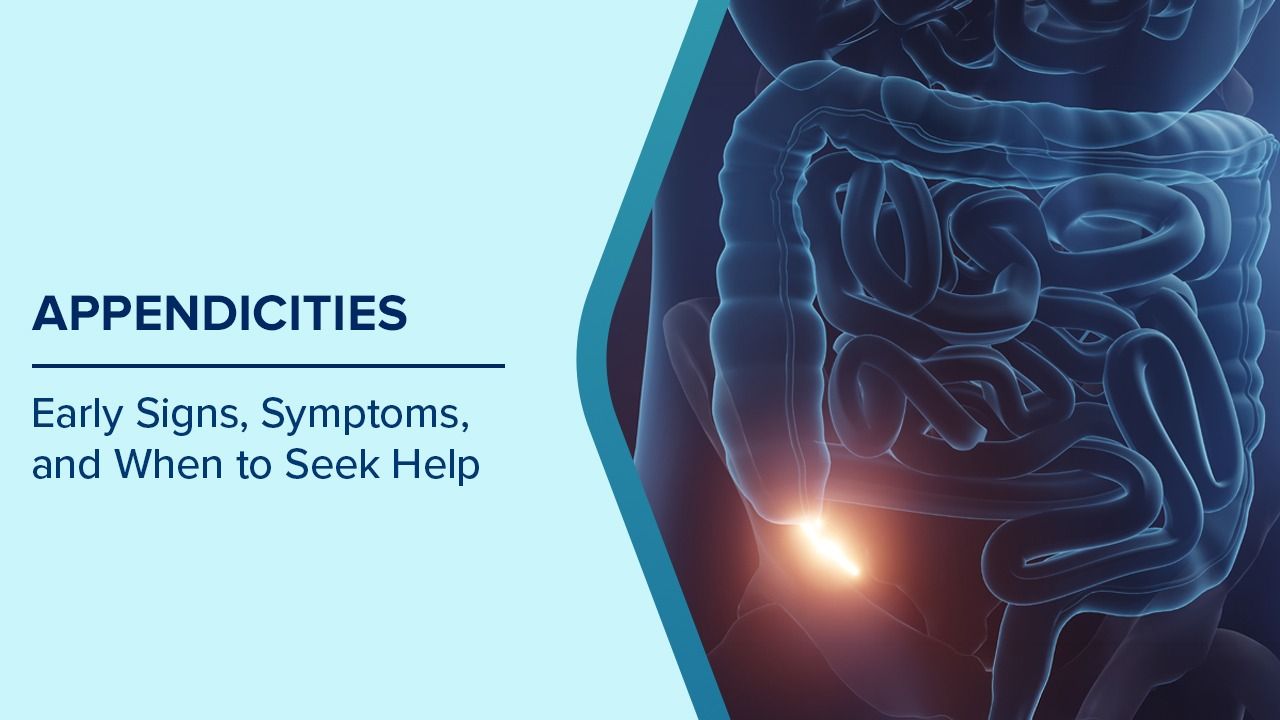
Appendicitis is the inflammation and infection of the appendix, a small, tube-shaped organ attached to the lower right side of your large intestine. The appendix is about 3 to 4 inches long and resembles a thin pouch.
Appendicitis develops when the inside of the appendix becomes blocked, usually by hardened stool, mucus, a foreign object, or in rare cases, a tumor. This blockage creates an environment where bacteria can multiply rapidly. As bacteria grow, the appendix becomes swollen and filled with pus, causing inflammation and infection.
If left untreated, the pressure inside the appendix continues to build. This can cut off blood supply to the appendix tissue, causing it to die. Eventually, the appendix may burst or perforate, spilling infectious material into the abdominal cavity. This leads to peritonitis, a serious and potentially life-threatening infection of the abdominal lining.
What are the Types of Appendicitis?
There are two main types of appendicitis:
Acute Appendicitis
Acute appendicitis is the most common form, developing suddenly over 24 to 48 hours. Symptoms appear rapidly and intensify quickly, starting with vague abdominal discomfort that progresses to severe, localised pain in the lower right abdomen. This type requires immediate medical attention and typically needs surgical intervention within hours to prevent the appendix from rupturing. Acute appendicitis accounts for the majority of appendicitis cases and is considered a true medical emergency.
Chronic Appendicitis
Chronic appendicitis is a rare form where mild inflammation of the appendix persists over weeks, months, or even years. Symptoms come and go, often causing intermittent abdominal pain that may resolve on its own before returning. Because the symptoms are less severe and inconsistent, chronic appendicitis is often difficult to diagnose and may be mistaken for other digestive issues. Some medical experts debate whether true chronic appendicitis exists, but documented cases show that some patients experience recurring inflammation that eventually requires surgical removal.
What Causes Appendicitis?
Appendicitis develops when the appendix becomes inflamed, often due to a blockage that prevents it from draining normally. This blockage allows bacteria inside the appendix to multiply rapidly, leading to swelling, pain, and infection. The main causes include:
Faecal Matter and Hard Stool
The most common cause of appendicitis is a blockage by hardened stool, also called a faecolith or appendicolith. When a small, hard piece of stool becomes lodged in the narrow opening where the appendix connects to the large intestine, it traps bacteria inside. This creates an ideal environment for infection to develop, causing the appendix to swell and become inflamed.
Enlarged Lymphoid Tissue
The appendix contains lymphatic tissue that's part of your immune system. During infections, particularly gastrointestinal or respiratory infections, this lymphoid tissue can become swollen and enlarged. When the tissue swells significantly, it can block the appendix opening, leading to appendicitis. This is particularly common in children and young adults, whose lymphatic systems are more reactive to infections.
Foreign Objects and Parasites
In rare cases, foreign objects accidentally swallowed can travel through the digestive system and become lodged in the appendix. These might include small seeds, fruit pips, or other indigestible materials. Additionally, intestinal parasites such as pinworms can occasionally block the appendix, though this is more common in certain regions where parasitic infections are prevalent.
Abdominal Trauma or Injury
Physical trauma to the abdomen from accidents, falls, or blunt force can sometimes trigger appendicitis. The injury may cause inflammation or swelling that leads to blockage, or it might directly damage the appendix tissue, making it more susceptible to infection.
Tumours and Growths
Though uncommon, benign or malignant tumours in or near the appendix can cause obstruction. Carcinoid tumours, a type of slow-growing cancer, are the most frequently found tumours in the appendix. Any growth that narrows or blocks the appendix opening can lead to the same inflammatory process seen in other forms of appendicitis.
Digestive Tract Infections
Gastrointestinal infections caused by bacteria, viruses, or other pathogens can sometimes spread to the appendix or cause inflammation that affects it. Infections that cause significant diarrhoea or changes in bowel movements may also contribute to blockages or irritation of the appendix.
Thickened Mucus
The appendix naturally produces mucus, but sometimes this mucus becomes unusually thick or is produced in excessive amounts. When mucus accumulates and thickens, it can create a plug that blocks the appendix, particularly if the opening is already narrow.
Unknown or Idiopathic Causes
In many cases, doctors cannot identify a specific cause for appendicitis. The blockage may result from a combination of minor factors, or the inflammation may develop without an obvious trigger. These idiopathic cases are still treated the same way as those with identifiable causes.
What are the Early Signs of Appendicitis?
The early signs of appendicitis can be subtle and easily mistaken for other common ailments. These include:
- Vague abdominal discomfort - A dull, generalised ache around the belly button or upper abdomen that's difficult to pinpoint exactly. This discomfort may come and go initially but tends to persist and gradually intensify.
- Loss of appetite - A sudden lack of interest in food, even your favourite meals, is one of the earliest indicators. You may feel full quickly or find the thought of eating unappealing.
- Mild nausea - Feeling queasy or unsettled in your stomach without necessarily vomiting. This nausea often accompanies the vague abdominal discomfort and loss of appetite.
- General malaise - Feeling unwell, tired, or "off" without being able to identify exactly what's wrong. You might feel similar to how you do at the start of a flu or viral illness.
- Low-grade fever - A slight elevation in body temperature, usually under 100.4°F (38°C ) in the early stages. You may feel slightly warm or notice mild chills.
- Bloating or gas - A feeling of abdominal fullness, bloating, or trapped wind that doesn't improve with passing gas or having a bowel movement.
- Constipation or difficulty passing stools - Changes in bowel habits, particularly difficulty having a bowel movement or feeling like you need to go but can't.
What are the Symptoms Associated with Appendicitis?
As appendicitis progresses beyond the early warning signs, more distinct and severe symptoms develop. These classic symptoms are what most people associate with appendicitis and indicate that the condition is advancing and requires urgent medical attention.
- Migrating abdominal pain - Pain that starts around the belly button and shifts to the lower right side of the abdomen over several hours.
- Severe, sharp pain in the lower right abdomen - Intense, constant pain that worsens with movement, coughing, or sneezing.
- Rebound tenderness - Pain that intensifies when pressure on the lower right abdomen is suddenly released.
- Nausea and vomiting - Persistent nausea followed by vomiting that doesn't provide relief, typically occurring after pain begins.
- Fever - Temperature elevation ranging from 38°C to 39°C, with higher fevers potentially indicating rupture.
- Changes in bowel movements - Either constipation and inability to pass gas, or diarrhoea.
- Abdominal swelling and rigidity - Visible swelling and involuntary muscle stiffness, particularly on the right side.
- Painful urination - Burning or discomfort when urinating if the appendix is near the bladder.
- Complete loss of appetite - Total aversion to food with increased nausea at the thought of eating.
- Pain that worsens with movement - Any physical activity or deep breathing significantly increases discomfort.
Not everyone experiences all these symptoms, and they may appear in different orders. The combination of several symptoms together, particularly migrating pain to the lower right abdomen, is characteristic of appendicitis.
How is Appendicitis Diagnosed?
Diagnosing appendicitis usually involves a combination of physical examination, medical history, and tests to confirm inflammation.
Physical Examination
A doctor will carefully examine the abdomen, focusing on the lower right side where appendicitis pain usually occurs. They may press on different areas to check for tenderness, rigidity, or rebound pain. This helps assess the likelihood of inflammation in the appendix.
Medical History
Doctors ask detailed questions about the onset, duration, and pattern of pain. They also consider accompanying symptoms such as nausea, vomiting, loss of appetite, fever, or changes in bowel habits. Understanding these patterns helps differentiate appendicitis from other abdominal conditions.
Blood Tests
Blood tests are used to check for signs of infection or inflammation. A high white blood cell (WBC) count often indicates that the body is fighting an infection, which supports the suspicion of appendicitis. Other markers, such as C-reactive protein (CRP), may also be elevated in cases of inflammation.
Urine Tests
Urine analysis is performed to rule out urinary tract infections or kidney stones, both of which can produce abdominal pain similar to appendicitis. A normal urine test helps narrow down the diagnosis to appendicitis.
Imaging Tests
- Ultrasound: This safe and non-invasive test uses sound waves to produce images of the appendix. Ultrasound is particularly helpful in children and pregnant women, as it avoids radiation exposure. It can detect swelling, fluid accumulation, or abscess formation
- CT Scan (Computed Tomography): A CT scan provides highly detailed cross-sectional images of the abdomen, helping doctors confirm inflammation or blockage in the appendix. It is considered the most accurate imaging method for diagnosing appendicitis, especially in adults.
- MRI (Magnetic Resonance Imaging):MRI is occasionally used when CT scans are not recommended, such as during pregnancy. It offers detailed images without radiation and can detect inflammation or complications effectively.
By combining these examinations and tests, doctors can make an accurate diagnosis and determine the severity of appendicitis. Prompt diagnosis ensures timely treatment, reducing the risk of complications like rupture or widespread infection in the abdomen.
How is Appendicitis Treated?
Treatment for appendicitis depends on how severe the inflammation is and whether the appendix has ruptured.
Surgical Removal (Appendectomy)
Surgery is the most common and effective treatment for appendicitis. The appendix is removed to stop the infection and prevent rupture. There are three main surgical approaches:
- Robotic Appendectomy: This method uses a robotic surgical system, controlled by the surgeon, to remove the appendix through a few small incisions. It is generally offered for select cases and is similar to laparoscopic surgery in terms of incision size and approach. Recovery time and scarring are usually comparable to laparoscopic surgery.
- Laparoscopic Surgery: This minimally invasive method uses several small incisions and a camera to guide the removal of the appendix. It usually results in quicker recovery, less postoperative pain, and smaller scars. Patients often go home within a day or two if there are no complications.
- Open Surgery: In this method, a larger incision is made in the lower right abdomen. Open surgery may be necessary if the appendix has ruptured, if there is widespread infection, or if the patient has had previous abdominal surgeries. Recovery may take longer, and a short hospital stay is typically required.
Antibiotic Treatment
For some patients, particularly those with mild appendicitis or when surgery poses higher risks, antibiotics may be used to control infection and inflammation. Antibiotics can sometimes prevent the need for immediate surgery, but the appendix may become inflamed again in the future. Careful monitoring is essential during this approach, and doctors often schedule follow-up imaging or check-ups.
Treatment for Ruptured Appendix
If the appendix has burst, emergency treatment is necessary. A ruptured appendix can lead to peritonitis, a serious infection of the abdominal cavity. Treatment usually involves:
- Emergency Surgery: Removal of the ruptured appendix is performed immediately to stop the spread of infection.
- Abscess Drainage: If an abscess has formed around the appendix, it may need to be drained using a catheter before or during surgery.
- Intensive Antibiotics: Strong intravenous antibiotics are given to fight the infection and prevent further complications.
When to Seek Medical Help?
Knowing when to seek medical attention for suspected appendicitis can be lifesaving. Because appendicitis can progress rapidly and lead to serious complications if untreated, it's crucial to act quickly when warning signs appear.
- Severe abdominal pain in the lower right side - If you develop intense, persistent pain in the lower right abdomen that doesn't go away, seek emergency care immediately, especially if the pain is getting worse.
- Pain that migrates from the belly button to the lower right - This characteristic pattern of moving pain is a strong indicator of appendicitis and warrants immediate medical evaluation.
- Inability to stand upright due to pain - If the abdominal pain is so severe that you cannot stand up straight or must walk hunched over, go to the emergency department.
- Fever combined with abdominal pain - A fever along with persistent abdominal pain, particularly in the lower right side, requires urgent assessment.
- Persistent vomiting with abdominal pain - If you're unable to keep food or liquids down and experiencing abdominal pain, seek medical help promptly.
- Abdominal rigidity or severe tenderness - A hard, board-like abdomen or extreme tenderness when touching the lower right side indicates serious inflammation requiring immediate attention.
- Sudden relief of pain followed by worsening symptoms - If severe pain suddenly stops and then you feel worse overall with high fever or widespread abdominal pain, this may indicate rupture. Seek emergency care immediately.
- Signs of dehydration - If vomiting prevents you from staying hydrated, or you notice decreased urination, dry mouth, or dizziness, medical intervention is needed.
- Symptoms lasting more than a few hours - Even if symptoms seem mild, persistent abdominal discomfort lasting several hours, especially with loss of appetite and nausea, should be evaluated by a doctor.
- Uncertainty about your symptoms - When in doubt, it's always better to be cautious. If something feels seriously wrong or you're worried about your symptoms, trust your instincts and seek medical advice.
If you suspect appendicitis, go directly to the nearest accident and emergency department or call emergency services. It's far better to have a false alarm than to risk a ruptured appendix.
Consult Today
Appendicitis is a serious condition that can progress quickly, and recognising the symptoms early is vital for preventing complications. If you notice any signs of appendicitis, consult a gastrointestinal or general surgery specialist at Max Hospital without delay. The specialist can accurately diagnose the condition and guide you through the most suitable treatment, ensuring safe and effective recovery. And always remember, when it comes to your health, timely action makes all the difference.
Frequently Asked Questions
How common is appendicitis?
Appendicitis is a fairly common condition worldwide, especially among children, teenagers, and young adults. Millions of people experience it each year, making it one of the most frequent causes of emergency abdominal surgery.
Which other health issues can mimic appendicitis?
Several conditions can cause similar abdominal pain, including gastrointestinal infections, urinary tract infections, kidney stones, ovarian cysts, or ectopic pregnancy. Proper medical evaluation is necessary to distinguish appendicitis from these conditions
Who is more likely to develop appendicitis?
Appendicitis can affect anyone, but it is most commonly seen in people between 10 and 30 years of age. Certain factors, such as family history or previous digestive issues, may slightly increase the risk.
Can diet or food cause appendicitis?
While diet alone does not directly cause appendicitis, certain factors like low-fibre diets may contribute to the formation of hardened stool that can block the appendix. However, appendicitis is primarily caused by blockages or infections, not specific foods.
At what age does appendicitis usually occur?
Appendicitis can occur at any age, but it is most frequently seen in children, teenagers, and young adults, typically between the ages of 10 and 30.
What is silent appendicitis?
Silent appendicitis refers to cases where the usual symptoms, such as sharp abdominal pain or fever, are mild or absent. This makes it harder to diagnose, and medical evaluation is essential to detect it before complications arise.
How long does it take for appendicitis symptoms to appear?
Symptoms usually develop over several hours to a couple of days. In some cases, they may start as mild discomfort near the belly button before moving to the lower right abdomen.
Can appendicitis resolve on its own without treatment?
Spontaneous resolution of appendicitis is rare. Without treatment, the condition can worsen and lead to serious complications, so medical evaluation is always recommended.
Are there long-term effects after appendicitis treatment?
Most people recover fully after treatment, whether through surgery or antibiotics. With proper care, long-term complications are uncommon.
Written and Verified by:

Related Blogs

Medical Expert Team
Oct 20 , 2015 | 1 min read
Dr. Vishwas Sharma In General Surgery
Apr 23 , 2015 | 1 min read
Blogs by Doctor


Most read Blogs


Related Blogs
Medical Expert Team
Oct 20 , 2015 | 1 min read
Dr. Vishwas Sharma In General Surgery
Apr 23 , 2015 | 1 min read
Blogs by Doctor
Most read Blogs