 WhatsApp Us (24/7)
 +91 926 888 0303 (24/7)


To Book an Appointment
Call Us+91 926 888 0303Stroke & The Golden Hour Rule: Risk Factors & Treatment Option
By Dr. Abhishek Srivastava in Neurosciences , Neurology
Jan 06 , 2026 | 1 min read
1

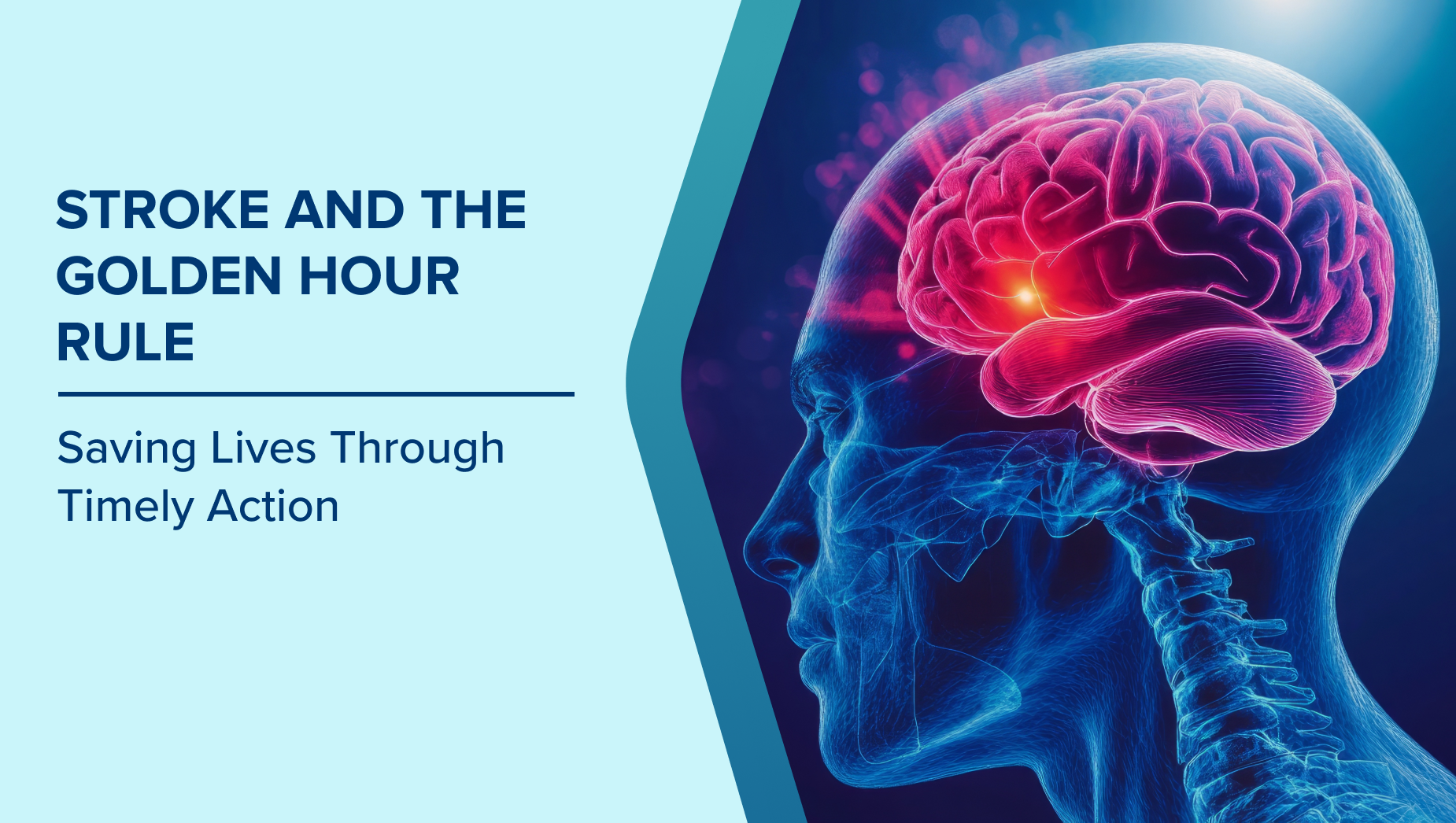
Stroke is a serious health condition that can have life-altering consequences. It happens when the flow of blood to a specific part of the brain is blocked or reduced, leading to sudden loss of function such as difficulty in speaking, facial deviation, loss of limb movement, vision problems, dizziness, or imbalance.
Major Risk Factors for Stroke
The increasing incidence of stroke in India is closely linked to rising non-communicable diseases and lifestyle changes. The most common risk factors include:
- Hypertension
- Diabetes
- Smoking
- Dyslipidaemia (abnormal cholesterol levels)
Recognising a Stroke: Act FAST
Known as the "golden hour," the first sixty minutes following a stroke are crucial for both preventing long-term impairment and saving a patient's life. Use the B.E. F.A.S.T rule to identify a stroke quickly:
- B – Balance: Sudden loss of balance or difficulty walking
- E – Eyes: Sudden vision problems, such as double vision
- F – Face: Facial drooping or uneven appearance
- A – Arms: Weakness or numbness in one arm
- S – Speech: Slurred or strange speech
- T – Time: Act immediately and take the patient to the nearest emergency hospital with neurology and neuro-emergency facilities.
Treatment Options for Stroke
Medications for Secondary Prevention
Blood thinners (antiplatelets like aspirin) and cholesterol-lowering drugs (statins) are often prescribed to prevent further strokes.
Thrombolysis
- A clot-busting injection given within 4.5 hours of symptom onset.
- Helps restore blood flow to the brain in 40–50% of patients.
- Requires early diagnosis and access to a stroke-ready hospital with CT Scan and MRI facilities.
Mechanical Thrombectomy
A procedure to remove blood clots from large brain vessels using specialised devices.
Most effective when done within 6–8 hours of symptom onset, but may be performed up to 24 hours in selected cases.
Conclusion
A stroke is a medical emergency in which every minute is crucial. Recognising symptoms early and ensuring the patient reaches a stroke-ready hospital within the golden hour can make a life-saving difference. Modern treatments like thrombolysis and thrombectomy are transforming stroke care, but they require timely action.
Written and Verified by:

Related Blogs

Dr. Chandril Chugh In Neurosciences , Interventional Neurology
Nov 08 , 2020 | 1 min read

Dr. Chandril Chugh In Neurosciences , Interventional Neurology
Nov 08 , 2020 | 2 min read
Most read Blogs


Related Blogs
Dr. Chandril Chugh In Neurosciences , Interventional Neurology
Nov 08 , 2020 | 1 min read
Dr. Chandril Chugh In Neurosciences , Interventional Neurology
Nov 08 , 2020 | 2 min read
Most read Blogs