 WhatsApp Us (24/7)
 +91 926 888 0303 (24/7)


To Book an Appointment
Call Us+91 926 888 0303Step-by-Step IVF Process: Risks, Side Effects and Tips
By Dr Arti Sharma in Infertility & IVF , Obstetrics And Gynaecology
May 08 , 2026

The IVF process is a multi-step fertility treatment used to help couples facing infertility conceive a child. The IVF treatment steps involve stimulating the ovaries, retrieving eggs, fertilising them in a laboratory, and transferring the resulting embryo into the uterus. Understanding how IVF works helps patients prepare better for the emotional, physical, and medical journey ahead.
What Is IVF and Who Needs It?
In Vitro Fertilisation (IVF) is an advanced assisted reproductive technology where fertilisation occurs outside the body in a laboratory setting. IVF is commonly recommended for:
- Blocked or damaged fallopian tubes
- Male infertility (low sperm count or motility)
- Endometriosis
- Polycystic Ovary Syndrome (PCOS)
- Unexplained infertility
- Age-related fertility decline
Doctors suggest IVF when other fertility treatments, such as medication or IUI, are not successful or suitable.
Step 1: Ovarian Stimulation
The IVF process begins with ovarian stimulation to produce multiple eggs.
- Hormonal injections are given for 8–12 days
- These medications stimulate the ovaries to produce several eggs instead of one
- Regular ultrasound and blood tests monitor follicle growth
The goal is to increase the chances of obtaining healthy, mature eggs for fertilisation.
Step 2: Egg Retrieval
Once the eggs are mature, they are collected in a minor procedure.
- Performed under mild sedation or anaesthesia
- A thin needle is used to collect eggs from the ovaries
- The procedure takes about 15–30 minutes
- Patients usually go home the same day
It is a safe, minimally invasive procedure with a quick recovery.
Step 3: Sperm Collection and Preparation
On the same day as egg retrieval:
- A sperm sample is collected from the male partner
- In some cases, donor sperm may be used, if indicated and with the consent of both partners
- The sample is processed in the laboratory
- Healthy and active sperm are separated for fertilisation
This ensures the best quality sperm are used for the next stage.
Step 4: Fertilisation in the Laboratory
This is a key step in the IVF treatment procedure.
- Eggs and sperm are combined in a controlled laboratory environment
- Fertilisation occurs naturally or through ICSI (Intracytoplasmic Sperm Injection)
IVF vs ICSI
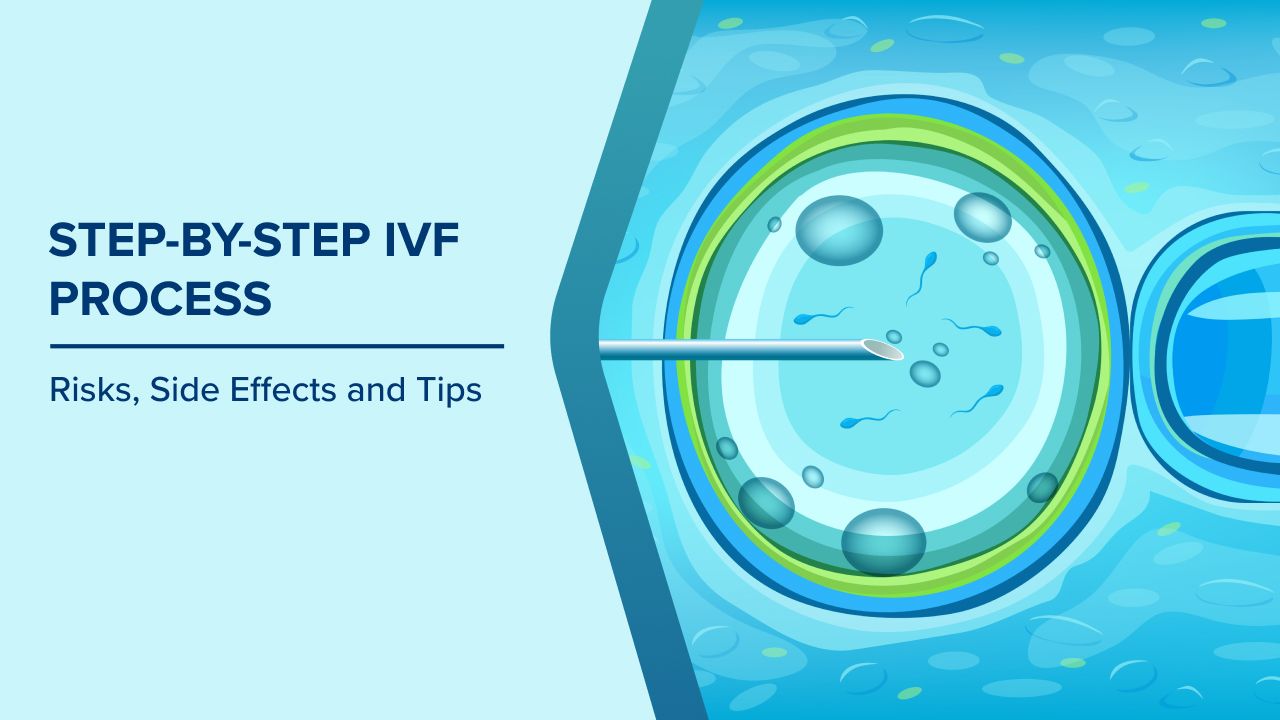
- IVF: sperm fertilises the egg naturally in the lab
- ICSI: a single sperm is directly injected into the egg
Within 12–24 hours, fertilised eggs begin forming embryos.
Step 5: Embryo Culture and Monitoring
After fertilisation:
- Embryos are grown in a lab for 3–5 days
- They are closely monitored for development
- Embryologists assess embryo quality
- The best-quality embryos are selected for transfer
Some embryos may also be frozen for future use.
Step 6: Embryo Transfer
Embryo transfer is a simple and painless procedure.
- A selected embryo is placed into the uterus using a thin catheter
- No anaesthesia is usually required
- The procedure takes 10–15 minutes
- Patients can resume normal activities shortly after
Fresh vs Frozen Transfer
- Fresh transfer: embryo transferred in the same cycle
- Frozen transfer: embryo transferred in a later cycle after freezing
Step 7: Pregnancy Test After IVF
After embryo transfer:
- A waiting period of about 10–14 days is required
- A blood test (beta hCG) confirms pregnancy
- This is often referred to as the “two-week wait”
This phase is emotionally sensitive for most patients.
IVF Timeline: How Long Does the Process Take?
A complete IVF cycle usually takes:
- Around 4 to 6 weeks
This includes:
- Ovarian stimulation (10–12 days)
- Egg retrieval
- Fertilisation and embryo development (3–5 days)
- Embryo transfer and waiting period
In some cases, multiple cycles may be required.
Success Rate of IVF
IVF success depends on several factors:
- Age of the woman (most important factor)
- Quality of eggs and sperm
- Underlying medical conditions
- Lifestyle habits (smoking, obesity, stress)
- Quality of the fertility clinic
Younger women generally have higher success rates than older women.
Risks and Side Effects of IVF
IVF is generally safe but may involve mild side effects:
- Bloating or mild abdominal discomfort
- Mood changes due to hormones
- Mild cramping after egg retrieval
Rare risks include:
- Ovarian Hyperstimulation Syndrome (OHSS)
- Multiple pregnancy (twins or more)
- Emotional stress during treatment
Proper medical supervision helps significantly reduce risks.
Emotional Journey During IVF
IVF is not only a physical process but also an emotional journey. Patients may experience:
- Hope and anxiety during each step
- Emotional stress during the waiting period
- Pressure due to treatment expectations
Support from family, partners, and counselling can play an important role in maintaining emotional balance.
Read More: Insight into In-Vitro Fertilisation (IVF): Procedure, Preparation & Risks
Tips to Improve IVF Success
Patients can improve outcomes by adopting healthy habits:
- Maintain a balanced and nutritious diet
- Exercise regularly (moderate activity)
- Avoid smoking and alcohol
- Manage stress through relaxation techniques
- Follow all medical instructions carefully
A healthy lifestyle supports better reproductive outcomes.
Conclusion
The IVF process is a structured, multi-step fertility treatment that involves careful planning, medical precision, and emotional resilience. From ovarian stimulation to embryo transfer, each stage plays a crucial role in achieving pregnancy. While success depends on multiple factors, such as age, health, and lifestyle, IVF has helped many couples conceive. With proper medical guidance and patience, patients can navigate this journey with clarity and confidence.
Frequently Asked Questions
Is IVF painful?
IVF is not considered painful. Some discomfort may occur during injections or egg retrieval, but the procedure is generally well-tolerated with minimal pain.
How many IVF cycles are usually needed?
Some couples succeed in the first cycle, while others may require multiple cycles depending on age and medical conditions.
What is the success rate of IVF on the first attempt?
Success rates vary widely, but younger patients typically have higher chances in the first IVF cycle compared to older individuals.
How long does each IVF cycle take?
A single IVF cycle usually takes about 4–6 weeks from ovarian stimulation to pregnancy testing.
Can IVF guarantee pregnancy?
No, IVF does not guarantee pregnancy. Success depends on several biological and medical factors, including age and embryo quality.
What is the difference between IVF and IUI?
In IVF, fertilisation happens in a lab, while in IUI, sperm is placed directly into the uterus for natural fertilisation inside the body.
Written and Verified by:

Related Blogs

Dr. Richa Singh In Infertility & IVF
Nov 08 , 2020 | 2 min read

Dr. Richa Singh In Infertility & IVF
Nov 08 , 2020 | 2 min read
Most read Blogs


Related Blogs
Dr. Richa Singh In Infertility & IVF
Nov 08 , 2020 | 2 min read
Dr. Richa Singh In Infertility & IVF
Nov 08 , 2020 | 2 min read
Most read Blogs