 WhatsApp Us (24/7)
 +91 926 888 0303 (24/7)


To Book an Appointment
Call Us+91 926 888 0303Pellagra: Causes, Symptoms, Diagnosis, and Treatment
By Dr. Namrita Singh in Internal Medicine
Apr 07 , 2026

Pellagra is a disease caused by a lack of niacin, also known as vitamin B3, in the body. Once widespread in many parts of the world, it still occurs in India, particularly in communities that rely heavily on jowar (sorghum) or maize without enough protein-rich foods such as dal, milk, or meat. The condition typically leads to skin rashes, digestive problems, and mental confusion, which can become serious if left untreated. The good news is that Pellagra is both preventable and treatable through proper nutrition and vitamin supplementation. This blog explores the causes, symptoms, and treatment options for Pellagra, offering a clear guide to understanding and addressing this condition.
What is Pellagra?
Pellagra is a disease caused by a deficiency of niacin, also known as vitamin B3, or its precursor, the amino acid tryptophan. Niacin plays a vital role in the body by helping convert food into energy and supporting the health of the skin, digestive system, and nervous system. A lack of niacin disrupts these processes, leading to a range of symptoms that usually affect the skin, gastrointestinal tract, and brain.
The classic signs of Pellagra are often summarised as the “three Ds”: dermatitis, which causes red, scaly rashes often appearing on areas exposed to sunlight; diarrhoea, resulting from digestive disturbances; and dementia, which includes confusion, memory loss, and mood changes. In severe or untreated cases, Pellagra can lead to death.
The condition is more common in populations with diets heavily based on maize or sorghum without sufficient protein intake and can also occur in people with certain medical conditions or chronic alcohol use that impair nutrient absorption. The good news is that Pellagra is preventable and treatable through a diet rich in niacin and tryptophan, along with vitamin supplementation when needed.
What Causes Pellagra?
Pellagra develops when the body does not get enough niacin or cannot use it properly. Several factors can contribute to this deficiency including:
Dietary Deficiency of Niacin
The most common cause of Pellagra is an insufficient intake of niacin in the diet. Niacin is found in foods such as meat, fish, eggs, milk, and legumes. Diets heavily based on maize (corn) or sorghum without adequate protein sources can lead to niacin deficiency. Maize contains niacin, but it is in a form that the body cannot easily absorb unless it is treated with alkali. Populations relying on untreated maize as a staple food are therefore at higher risk.
Low Tryptophan Intake
Tryptophan is an amino acid that the body can convert into niacin. Diets lacking in protein-rich foods such as milk, eggs, meat, and legumes can reduce tryptophan levels, indirectly causing niacin deficiency and increasing the risk of Pellagra.
Alcoholism
Chronic alcohol consumption can contribute to Pellagra in two ways. Alcohol often replaces nutrient-rich foods in the diet, leading to poor overall nutrition. Excessive alcohol also interferes with the absorption of niacin and tryptophan in the intestines, increasing the risk of deficiency.
Medical Conditions Affecting Absorption
Certain medical conditions can impair the body’s ability to absorb or metabolize nutrients. These include chronic diarrhoea or gastrointestinal diseases such as Crohn’s disease or celiac disease, liver disorders that interfere with tryptophan conversion, and kidney dialysis, which can lead to loss of water-soluble vitamins including niacin.
Medications Interfering with Niacin Metabolism
Some medications may affect how the body processes niacin or tryptophan, increasing the risk of Pellagra. These include certain anti-tuberculosis drugs, chemotherapy agents, and medications for HIV or epilepsy.
Other Risk Factors
Poverty and food insecurity can limit access to niacin-rich foods. Elderly adults may have poorer diets or absorption issues. Pregnancy and breastfeeding increase nutritional requirements, exposing women to higher risk if diets are inadequate.
What are the Symptoms of Pellagra?
Pellagra affects multiple systems in the body, so its symptoms can appear in the skin, digestive tract, and nervous system. The severity of symptoms can vary depending on the duration and degree of niacin deficiency.
Dermatitis
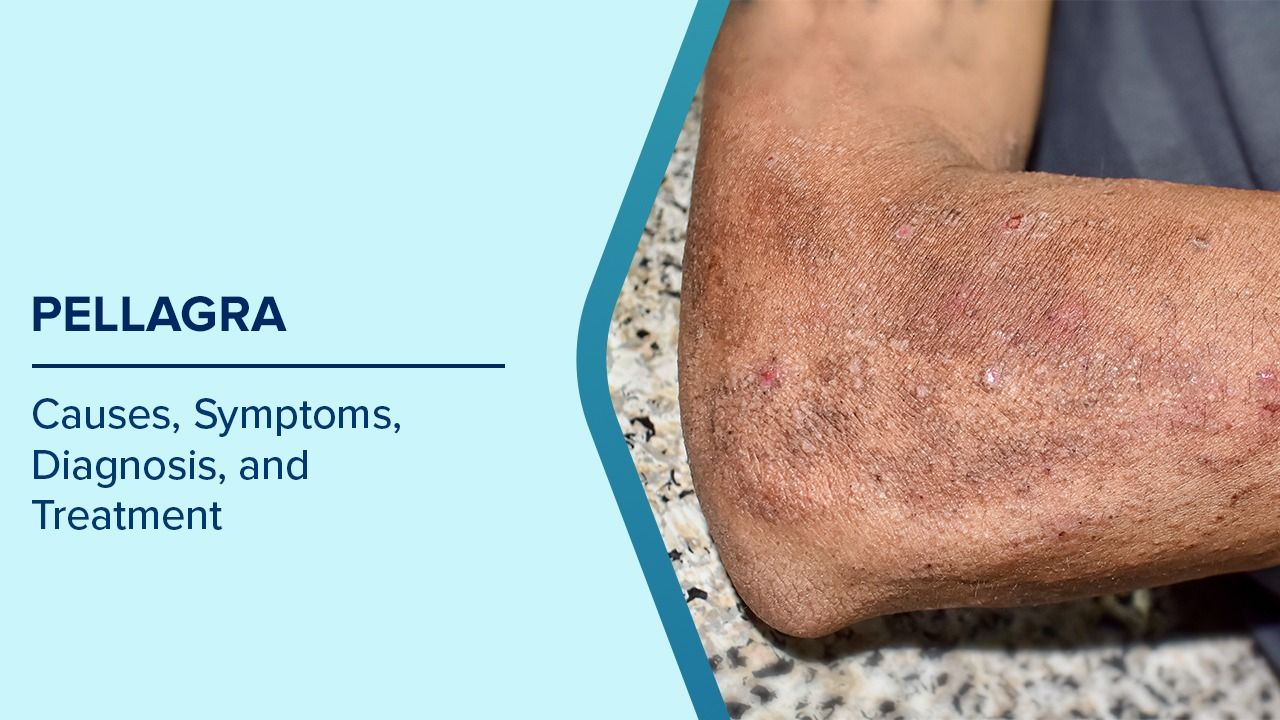
Skin changes are often the first visible signs of Pellagra. Red, inflamed, or darkened patches typically appear on areas exposed to sunlight, such as the face, neck, hands, and feet. The affected skin may become rough, scaly, cracked, and sensitive to touch. In chronic cases, the skin can thicken and develop a pigmented, leathery appearance. Burning or itching sensations may also occur.
Diarrhoea
Digestive system involvement leads to frequent loose stools or diarrhoea. Nausea, abdominal pain, and indigestion are common, along with loss of appetite, which can worsen nutritional deficiencies. In severe cases, prolonged diarrhoea may cause dehydration and weight loss.
Dementia
Niacin deficiency affects the nervous system, causing mental and cognitive changes. Confusion, irritability, memory loss, and difficulty concentrating are common. Mood changes such as anxiety and depression may also appear. In severe or untreated Pellagra, disorientation, hallucinations, and delirium can occur.
Other Accompanying Symptoms
Other signs of Pellagra may include:
- Fatigue and general weakness
- Swelling in the hands or feet
- Inflammation of the tongue (glossitis)
- Painful mouth sores
How is Pellagra Diagnosed?
Diagnosing Pellagra involves a combination of medical history, physical examination, and laboratory tests. Because the symptoms can resemble those of other conditions, accurate diagnosis is essential for proper treatment.
Clinical Examination
A doctor begins with a thorough physical examination, looking for characteristic signs of Pellagra. This includes examining the skin for red, scaly, or darkened patches, especially in areas exposed to sunlight. The doctor may also check for glossitis, mouth sores, and signs of malnutrition. Mental status and cognitive function are assessed to detect confusion, memory loss, or mood changes associated with the condition.
Medical and Dietary History
Information about diet and lifestyle plays a key role in diagnosis. The doctor may ask about staple foods, protein intake, alcohol consumption, and any medical conditions that could affect nutrient absorption. A history of chronic diarrhoea, liver or kidney disorders, or use of medications that interfere with niacin metabolism can also provide important clues.
Laboratory Tests
Blood or urine tests may be performed to support the diagnosis. These may include:
- Measurement of niacin levels in blood or its metabolites
- Evaluation of tryptophan levels, which can indicate niacin deficiency
- Urine tests to detect niacin metabolites, confirming deficiency
What Treatment Options are Available for Pellagra?
Pellagra is both preventable and treatable. Effective management focuses on correcting niacin deficiency, addressing underlying causes, and relieving symptoms.
Niacin or Vitamin B3 Supplements
The main treatment for Pellagra is supplementation with niacin or nicotinamide. These supplements restore normal niacin levels and often lead to rapid improvement in symptoms. Dosage and duration depend on the severity of deficiency and overall health. Skin lesions, digestive issues, and cognitive symptoms usually start improving within days to weeks of starting treatment.
Dietary Changes
A diet rich in niacin and tryptophan is essential to prevent recurrence. Foods such as meat, fish, eggs, milk, legumes, and fortified cereals help restore nutrient levels. Adequate protein intake also supports the body’s conversion of tryptophan into niacin.
Addressing Underlying Causes
Managing medical conditions that contribute to niacin deficiency is an important part of treatment. Gastrointestinal disorders, chronic diarrhoea, liver or kidney problems, and chronic alcohol use must be treated to ensure proper absorption and metabolism of niacin.
Supportive Care and Symptom Management
Supportive care helps relieve discomfort while the deficiency is corrected. This includes managing skin rashes, oral lesions, digestive problems, and fatigue. Protecting affected skin from sunlight and maintaining hydration can also support recovery.
How Can Pellagra be Prevented?
Pellagra can be effectively prevented by ensuring sufficient intake of niacin and maintaining a balanced diet. Key preventive measures include:
- Eat a Balanced Diet: Include niacin-rich foods such as meat, fish, eggs, milk, legumes, and fortified cereals in daily meals.
- Include Protein Sources: Adequate protein intake provides tryptophan, which the body can convert into niacin. Foods like dairy, lentils, eggs, and meat are important.
- Diversify Staple Foods: Avoid relying solely on maize or sorghum unless properly treated (e.g., nixtamalization) to improve niacin availability.
- Limit Alcohol Consumption: Excessive alcohol can reduce nutrient absorption, so moderation helps maintain adequate niacin levels.
- Manage Underlying Health Conditions: Treat gastrointestinal disorders, liver or kidney issues, and other medical conditions that affect nutrient absorption.
- Consider Supplementation if Needed: In high-risk populations, niacin or multivitamin supplements may be recommended under medical supervision.
- Regular Check-ups: Individuals at risk, including the elderly, pregnant or breastfeeding women, and those with poor diets, should have regular medical reviews to detect early signs of deficiency.
Consult Today
Even though rare, pellagra can still affect people, especially if diets are lacking in niacin or protein. If you notice persistent skin changes, digestive issues, or unusual fatigue and mood changes, it’s worth talking to someone who can help. A nutritionist or gastroenterologist at Max Hospital can assess your symptoms, guide you on the right diet, and recommend the proper supplements to get you back on track. So, do not wait for things to get worse and seek medical help at the first unusual sign.
Frequently Asked Questions
Can children get Pellagra?
Yes, children can develop Pellagra, especially if their diet is low in niacin or protein. Early signs in children may include skin rashes, digestive problems, or irritability, so it’s important to ensure they get a balanced diet.
How quickly do Pellagra symptoms appear?
Symptoms can develop gradually over weeks to months if niacin intake is insufficient. Early signs may be mild, such as fatigue or skin sensitivity, and worsen if the deficiency continues.
Is Pellagra contagious?
No, Pellagra is not contagious. It is caused by a nutritional deficiency or underlying medical conditions, not by an infection.
Can Pellagra be reversed completely?
Yes, most cases of Pellagra can be reversed with proper niacin supplementation and dietary changes. Early treatment usually leads to full recovery, though severe cases may take longer to heal.
Are there specific foods that can quickly improve niacin levels?
Foods rich in niacin, such as meat, fish, eggs, and fortified cereals, can help restore levels quickly. Protein-rich foods also provide tryptophan, which the body converts into niacin.
Can Pellagra come back after treatment?
Pellagra can recur if dietary habits remain insufficient or underlying health issues affecting absorption are not addressed. Maintaining a balanced diet and managing health conditions is key to preventing recurrence.
Does Pellagra only occur in certain countries?
Pellagra is more common in regions where diets rely heavily on maize or sorghum without enough protein. However, it can occur anywhere if niacin intake is inadequate or absorption is impaired.
Written and Verified by:

Related Blogs


Dr. Vandana Boobna In Internal Medicine
Nov 08 , 2020 | 2 min read
Blogs by Doctor

What is Anaemia: Symptoms, Causes & Prevention Strategies
Dr. Namrita Singh In Internal Medicine
Jul 29 , 2024 | 3 min read

Typhoid Fever Symptoms, Diagnosis, and Debunking Common Myths
Dr. Namrita Singh In Internal Medicine
Jul 31 , 2024 | 2 min read
Most read Blogs


Related Blogs
Dr. Vandana Boobna In Internal Medicine
Nov 08 , 2020 | 2 min read
Blogs by Doctor
What is Anaemia: Symptoms, Causes & Prevention Strategies
Dr. Namrita Singh In Internal Medicine
Jul 29 , 2024 | 3 min read
Typhoid Fever Symptoms, Diagnosis, and Debunking Common Myths
Dr. Namrita Singh In Internal Medicine
Jul 31 , 2024 | 2 min read
Most read Blogs