 WhatsApp Us (24/7)
 +91 926 888 0303 (24/7)


To Book an Appointment
Call Us+91 926 888 0303Ovarian Cyst vs PCOS: Types, Symptoms and Causes
By Dr. Pratibha Singhal in Obstetrics And Gynaecology
Mar 24 , 2026
1

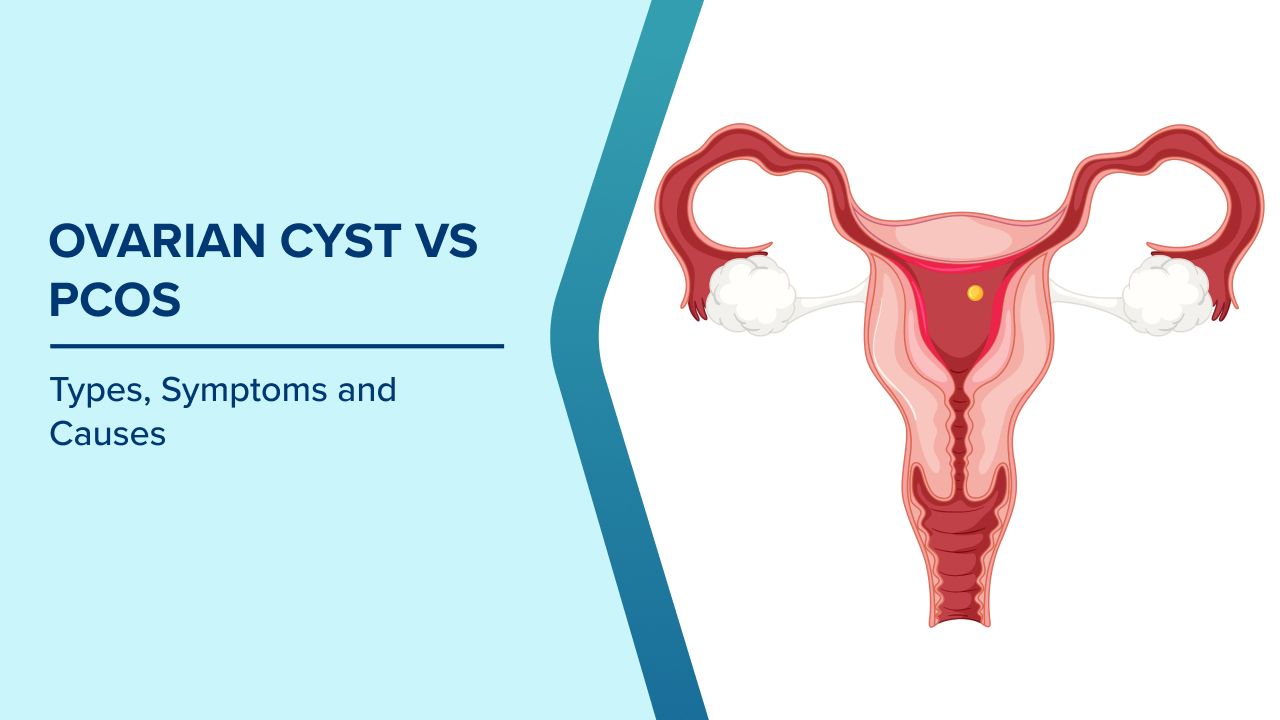
Many women experience changes in their menstrual cycle, pelvic discomfort, or hormonal symptoms at some point in life. When these concerns appear, two conditions often come up during medical discussions: ovarian cysts and PCOS. Because both involve the ovaries and may cause similar symptoms, they are frequently confused.
However, ovarian cysts and polycystic ovary syndrome are not the same condition. They differ in their causes, effects on the body, and how they are managed. Understanding the difference is important for women who want clarity about their reproductive health and hormonal balance.
Recognising these conditions early also helps women seek appropriate care, avoid unnecessary worry, and manage symptoms effectively.
Understanding Ovarian Cysts
An ovarian cyst is a fluid-filled sac that develops on or inside an ovary. Ovaries naturally form small cysts during the menstrual cycle. In many cases, these cysts disappear on their own without causing symptoms.
However, some cysts grow larger or remain in the ovary for longer periods. Depending on their size and type, they may cause discomfort or other health concerns.
Common Types of Ovarian Cysts
Some of the common types include:
- Functional cysts: These form as part of the normal menstrual cycle and are usually harmless.
- Dermoid cysts: These cysts develop from reproductive cells and may contain different types of tissue. Dermoid cysts should usually be operated early because they have a higher risk of twisting (ovarian torsion), which can create an emergency condition requiring urgent surgery.
- Endometriomas: These are associated with endometriosis and may cause pelvic pain.
- Cystadenomas: These cysts develop from ovarian tissue and can grow larger than functional cysts. When ovarian cysts grow larger than 5 cm, they are more likely to be pathological. Common examples include serous cystadenomas and mucinous cystadenomas, which often require surgical removal.
Possible Causes
Ovarian cysts can develop due to several reasons, including:
- Hormonal changes during the menstrual cycle
- Early or irregular ovulation patterns
- Endometriosis
- Certain medications that stimulate ovulation
Who Is More Likely to Develop Them
Some factors may increase the likelihood of ovarian cysts:
- Reproductive age
- Hormonal imbalances
- Previous history of ovarian cysts
- Certain fertility treatments
In many cases, ovarian cysts remain small and resolve naturally without medical treatment.
Understanding PCOS
Polycystic ovary syndrome, commonly known as PCOS, is a hormonal condition that affects how the ovaries function. Unlike a simple ovarian cyst, PCOS involves a broader hormonal imbalance that can affect several systems in the body.
PCOS has a characteristic ovarian morphology that may be present from birth and has a strong genetic component.
Women with PCOS often experience irregular menstrual cycles because the ovaries may not release eggs regularly. Hormone levels can also become imbalanced, leading to a range of symptoms.
PCOS is seen more frequently in women whose mothers had gestational diabetes mellitus (GDM) during pregnancy.
How PCOS Affects the Body
PCOS affects the endocrine system, which controls hormone production. As hormone levels shift, several body functions may be influenced, including menstrual cycles, metabolism, and reproductive health.
This hormonal imbalance may lead to the development of multiple small follicles in the ovaries that appear like cysts during imaging tests.
Common Symptoms
Symptoms of PCOS can vary between individuals. Some commonly reported symptoms include:
- Irregular or missed menstrual periods
- Acne or oily skin
- Excess facial or body hair
- Weight gain or difficulty managing weight
- Thinning hair on the scalp
Hormonal Imbalance and Menstrual Changes
Hormonal imbalance is a central feature of PCOS. When hormone levels are not balanced, ovulation may not occur regularly. As a result, menstrual cycles can become unpredictable.
Some women may experience fewer periods in a year, while others may have prolonged or heavy cycles.
Read More: Ovarian Cysts and Ovarian Cancer: How Lifestyle Choices Influence Your Risk
Ovarian Cyst vs PCOS: Key Differences
Although both conditions involve the ovaries, they are quite different in their nature and impact on the body.
Underlying cause
- Ovarian cyst: Usually forms as part of the menstrual cycle or due to local ovarian changes
- PCOS: Caused by a broader hormonal imbalance affecting ovulation and metabolism
Hormonal involvement
- Ovarian cyst: Hormones may play a role, but the condition is usually limited to the ovary
- PCOS: Strongly linked with hormonal imbalance affecting multiple body systems
Symptoms
- Ovarian cyst: Often causes mild pelvic discomfort or may remain symptom free
- PCOS: May cause irregular periods, skin changes, hair growth changes, and metabolic concerns
Impact on fertility
- Ovarian cyst: Usually does not affect fertility unless complications occur
- PCOS: May interfere with ovulation, which can affect fertility
Diagnosis
- Ovarian cyst: Typically detected through pelvic examination and imaging tests
- PCOS: Diagnosed based on menstrual history, symptoms, hormone levels, and imaging
Long-term effects
- Ovarian cyst: Many cysts resolve without long-term impact
- PCOS: May require ongoing management to maintain hormonal balance
Symptoms That Should Not Be Ignored
Some symptoms may indicate that a medical evaluation is necessary. These may include:
- Persistent pelvic pain
- Sudden severe abdominal pain
- Irregular menstrual cycles for several months
- Unexplained bloating or abdominal swelling
- Changes in menstrual bleeding patterns
Although these symptoms may have different causes, consulting a healthcare professional can help determine the underlying issue.
How Doctors Diagnose These Conditions
Diagnosing ovarian cysts or PCOS involves a combination of medical history, clinical evaluation, and diagnostic tests. Doctors may use the following approaches:
- Medical history review: Understanding menstrual patterns and symptoms helps identify hormonal concerns.
- Physical examination: A general examination may help identify signs related to hormonal imbalance.
- Pelvic imaging: Ultrasound imaging allows doctors to examine the ovaries and detect cysts or follicle patterns.
- Hormone evaluation: Blood tests may be used to assess hormone levels and understand endocrine function.
A clear diagnosis helps guide the most appropriate treatment plan.
Treatment Options and Management
Management strategies depend on the condition, severity of symptoms, and individual health goals.
Management of Ovarian Cysts
Treatment options may include:
- Monitoring small cysts over time
- Medications to regulate hormones
- Minimally invasive procedures if cysts grow large or cause discomfort
Many cysts disappear naturally without intervention.
Management of PCOS
PCOS management usually focuses on controlling symptoms and supporting hormonal balance. Common approaches include:
- Hormonal regulation through medication
- Weight management strategies
- Treatment for skin or hair-related symptoms
- Support for menstrual cycle regulation
A personalized approach helps address each woman's specific health concerns.
Read More: Polycystic Ovary Syndrome (PCOS): Symptoms, Causes & Treatment
Lifestyle Changes That Support Hormonal Health
Lifestyle habits can play a significant role in maintaining hormonal balance and supporting overall reproductive health.
Helpful strategies include:
- Balanced nutrition: Consuming nutrient-rich foods supports hormonal stability.
- Regular physical activity: Exercise helps maintain metabolic balance and overall well-being. A sedentary lifestyle and increasing body weight can trigger or worsen the clinical manifestations of PCOS in women who are genetically predisposed.
- Stress management: Chronic stress may influence hormone levels, so relaxation practices can be beneficial.
- Consistent sleep patterns: Good sleep supports healthy hormonal regulation.
Small lifestyle adjustments can often make a meaningful difference in long-term health.
When Should You See a Doctor
Seeking medical advice is important if you experience:
- Irregular menstrual cycles lasting several months
- Ongoing pelvic pain or discomfort
- Sudden changes in menstrual patterns
- Symptoms that interfere with daily life
- Difficulty conceiving
Early evaluation helps identify the cause and allows timely management.
Conclusion
Although ovarian cysts and PCOS both involve the ovaries, they are distinct conditions with different causes and health implications. Ovarian cysts are often temporary and related to the natural menstrual cycle, while PCOS is a hormonal condition that may require ongoing management.
Understanding these differences helps women make informed decisions about their health and seek appropriate medical care when needed. Paying attention to symptoms and maintaining regular health checkups can support better reproductive and hormonal health throughout life.
Frequently Asked Questions
Can ovarian cysts turn into PCOS?
Ovarian cysts and PCOS are separate conditions. Having an ovarian cyst does not mean it will develop into PCOS. PCOS involves hormonal imbalance, while most ovarian cysts are temporary changes related to the menstrual cycle.
Is PCOS always visible on an ultrasound scan?
Not always. Some women may have PCOS symptoms even if the ovaries do not show typical changes on imaging tests. Doctors usually consider several factors, such as menstrual history and hormone levels, before confirming the condition.
Do ovarian cysts affect menstrual cycles?
Some cysts may temporarily influence menstrual patterns, but many do not cause noticeable changes in the cycle. When menstrual irregularities persist for several months, medical evaluation may help identify the underlying cause.
Can lifestyle habits influence hormonal balance in PCOS?
Healthy lifestyle habits may support better hormonal regulation. Balanced nutrition, regular exercise, and maintaining a stable routine can help improve overall well-being and symptom management.
Are ovarian cysts common in young women?
Yes, ovarian cysts are quite common during the reproductive years. Many develop as part of normal ovulation and disappear naturally without causing complications.
Written and Verified by:

Related Blogs

Dr. Manju Khemani In Obstetrics And Gynaecology
Oct 27 , 2020 | 3 min read

Dr. Neera Aggarwal In Obstetrics And Gynaecology , Nutrition And Dietetics
Nov 07 , 2020 | 7 min read
Blogs by Doctor
Pregnancy Weeks 1 to 5: A Guide for Moms-to-Be
Dr. Pratibha Singhal In Obstetrics And Gynaecology
Apr 23 , 2025 | 8 min read

PMS and Mental Health: How Hormonal Changes Affect Your Emotions
Dr. Pratibha Singhal In Obstetrics And Gynaecology
Jun 04 , 2025 | 4 min read
Most read Blogs

Related Blogs
Dr. Manju Khemani In Obstetrics And Gynaecology
Oct 27 , 2020 | 3 min read
Dr. Neera Aggarwal In Obstetrics And Gynaecology , Nutrition And Dietetics
Nov 07 , 2020 | 7 min read
Blogs by Doctor
Pregnancy Weeks 1 to 5: A Guide for Moms-to-Be
Dr. Pratibha Singhal In Obstetrics And Gynaecology
Apr 23 , 2025 | 8 min read
PMS and Mental Health: How Hormonal Changes Affect Your Emotions
Dr. Pratibha Singhal In Obstetrics And Gynaecology
Jun 04 , 2025 | 4 min read
Most read Blogs