 WhatsApp Us (24/7)
 +91 926 888 0303 (24/7)


To Book an Appointment
Call Us+91 926 888 0303Knee Pain After Replacement: Causes and When to Seek Help
By Dr. Simon Thomas in Orthopaedics & Joint Replacement
Aug 05 , 2025 | 2 min read

Total Knee Replacement (TKR) is a highly successful procedure, offering pain relief and improved mobility to millions suffering from advanced arthritis. There may be some discomfort after surgery due to the procedure and stitches. Patients often assume normal postoperative pain to be due to some complication and get scared.
So, differentiating the two is very important.
What’s Normal After Knee Replacement?
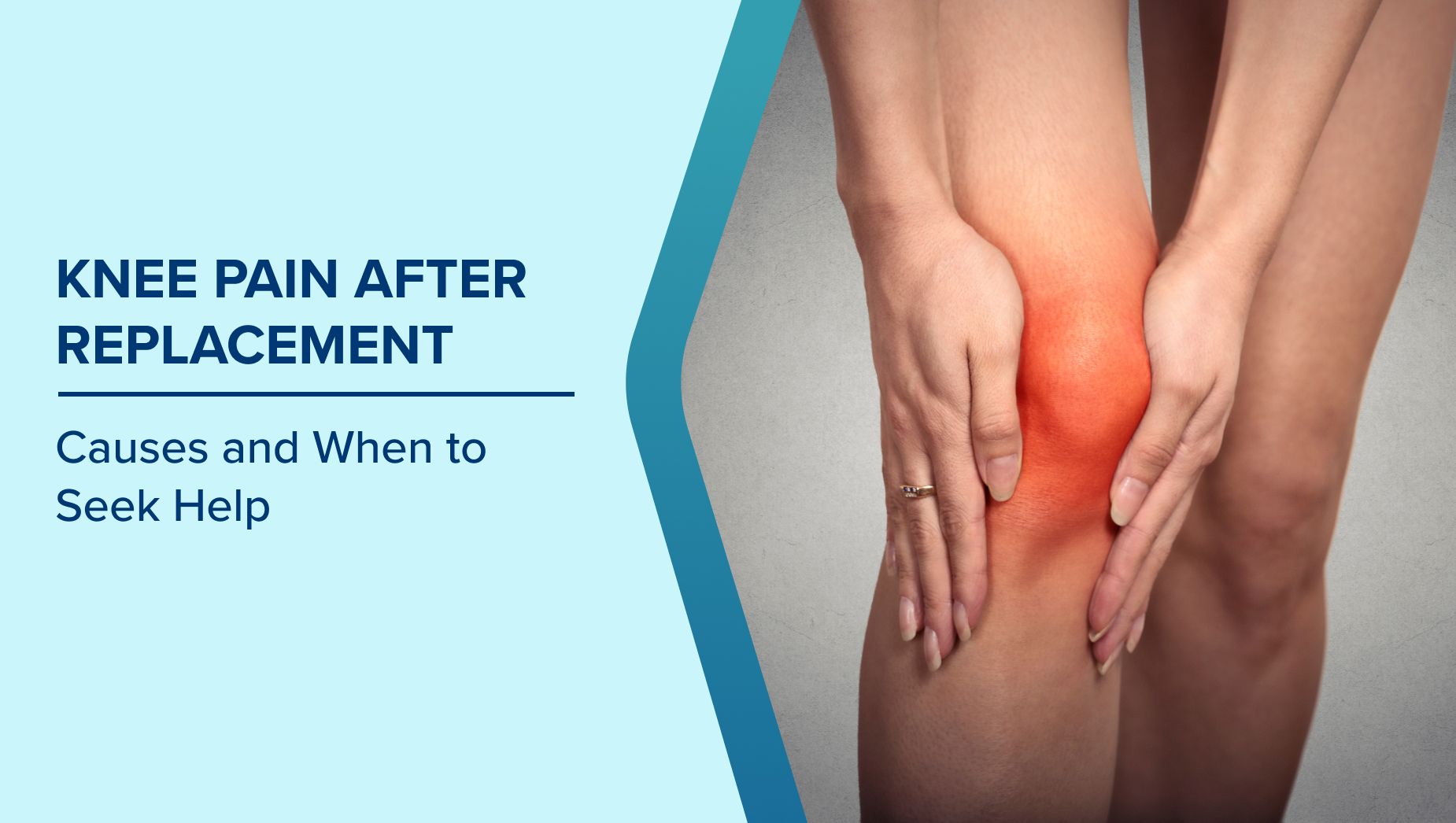
Some pain in the postoperative period may persist for 8 to 12 weeks after the procedure. This pain is mainly because of soft tissue dissection and stitches. The pain usually subsides over time and has a decreasing trend.
Some swelling and redness may also accompany the pain. But they also decrease over time. Pain and swelling may increase with activity, such as prolonged standing, walking, stairs, and after physiotherapy. These symptoms typically reduce with physiotherapy, rest, ice application, and prescribed medications.
When Should You Worry About Knee Pain? When to Consult Your Surgeon?
If knee pain persists beyond the usual recovery window or appears suddenly after a pain-free period, it may indicate a complication. Here are some warning signs to watch for:
- Increasing Pain After Initial Recovery: If your knee was healing well and suddenly becomes more painful weeks or months later, it may be due to implant loosening, instability, or infection.
- Redness, Warmth, and Fever: These are possible signs of infection. An infected joint replacement requires particular attention and warrants early consultation and intervention if required.
- Persistent Swelling: Ongoing swelling beyond the early recovery phase could indicate joint inflammation, deep vein thrombosis (DVT), or mechanical issues like implant malalignment.
- Clicking, Popping, or Instability: If your knee feels unstable, gives way, or you hear unusual sounds, it may be due to ligament imbalance or improper implant positioning.
- Limited Range of Motion: Stiffness that does not improve with physiotherapy may require further intervention. In some cases, manipulation under anaesthesia or, in rare cases, revision surgery may be needed.
Read More: Why Does Your Knee Hurt? 12 Common Causes and When to See a Doctor
Causes of Pain After a Knee Replacement
- Infection: One of the most serious causes, usually requiring urgent attention.
- Implant Loosening: Can occur years later and lead to persistent pain.
- Instability: May result from ligament imbalance or implant malposition.
- Periprosthetic Fractures: Bone fractures near the implant.
- Inflammation or Tendinitis: Due to overuse or muscle imbalance.
Knee replacement is a life-changing procedure, but persistent or new pain post-surgery should never be ignored. Early diagnosis and timely treatment can prevent further complications and ensure that the replaced joint functions smoothly. Regular follow-ups, good rehabilitation, and being alert to warning signs are key to a successful recovery.
If in doubt, get your knee evaluated by your orthopaedic surgeon.
Written and Verified by:

Related Blogs


Dr. Ashish Jain In Orthopaedics & Joint Replacement
Nov 07 , 2020 | 1 min read
Blogs by Doctor

Technology Advancement in Robotic Knee Replacement: Procedure & Benefits
Dr. Simon Thomas In Orthopaedics & Joint Replacement , Robotic Surgery
Sep 16 , 2024 | 4 min read

Benefits of Revision Hip Replacement
Dr. Simon Thomas In Orthopaedics & Joint Replacement , Robotic Surgery
Oct 09 , 2024 | 3 min read
Most read Blogs


Related Blogs
Dr. Ashish Jain In Orthopaedics & Joint Replacement
Nov 07 , 2020 | 1 min read
Blogs by Doctor
Technology Advancement in Robotic Knee Replacement: Procedure & Benefits
Dr. Simon Thomas In Orthopaedics & Joint Replacement , Robotic Surgery
Sep 16 , 2024 | 4 min read
Benefits of Revision Hip Replacement
Dr. Simon Thomas In Orthopaedics & Joint Replacement , Robotic Surgery
Oct 09 , 2024 | 3 min read
Most read Blogs