 WhatsApp Us (24/7)
 +91 926 888 0303 (24/7)


To Book an Appointment
Call Us+91 926 888 0303Achieve Bright and Spotless Skin: A Guide to Treating Hyperpigmentation
By Dr. Ajita Bagai Kakkar in Dermatology
Jul 15 , 2025 | 10 min read
2

Hyperpigmentation can be a source of significant distress, affecting the self-esteem and confidence of affected individuals. That said, the good news is that there are effective treatments available for hyperpigmentation. With the right care and guidance, you can achieve an even skin tone and once again feel confident about your skin and appearance. If you or someone you know is dealing with hyperpigmentation, this article is for you. Read on to gain a comprehensive understanding and discover practical solutions to manage and treat hyperpigmentation effectively. But first, let’s cover some basics.
What is hyperpigmentation?
Hyperpigmentation is a common skin condition characterised by the darkening of certain areas of the skin. This occurs when an excess of melanin, the pigment responsible for skin colour, is produced and deposited in the skin. Hyperpigmentation can appear as dark patches, spots, or an overall uneven skin tone, which can be caused by various factors, including sun exposure, hormonal changes, inflammation, and certain medications. Conditions like melasma, age spots, and post-inflammatory hyperpigmentation (which follows skin injuries or acne) are all forms of hyperpigmentation. While generally harmless, hyperpigmentation can be aesthetically concerning and impact an individual's self-esteem.
What are the Types of Hyperpigmentation?
Hyperpigmentation can manifest in several forms, each with distinct characteristics and causes. Here are the main types:
Melasma
- Characteristics: Melasma appears as large, dark patches, often with an irregular shape.
- Common areas: Typically affects the face, especially the cheeks, forehead, nose, and upper lip.
- Causes: Hormonal changes, such as those during pregnancy (often referred to as the "mask of pregnancy"), and the use of birth control pills or hormone replacement therapy. Sun exposure can also exacerbate melasma.
Post-Inflammatory Hyperpigmentation (PIH)
- Characteristics: PIH manifests as dark spots or patches that develop after an injury or inflammation of the skin.
- Common areas: Hyperpigmentation can occur anywhere on the body where the skin has been affected by acne, eczema, psoriasis, or trauma.
- Causes: Inflammation or injury to the skin triggers an overproduction of melanin as part of the healing process.
Age Spots (Lentigines)
- Characteristics: Age spots, also known as liver spots or solar lentigines, are small, darkened areas on the skin.
- Common areas: Frequently found on sun-exposed areas such as the face, hands, shoulders, and arms.
- Causes: Cumulative sun exposure over time, typically appearing in older adults.
Freckles (Ephelides)
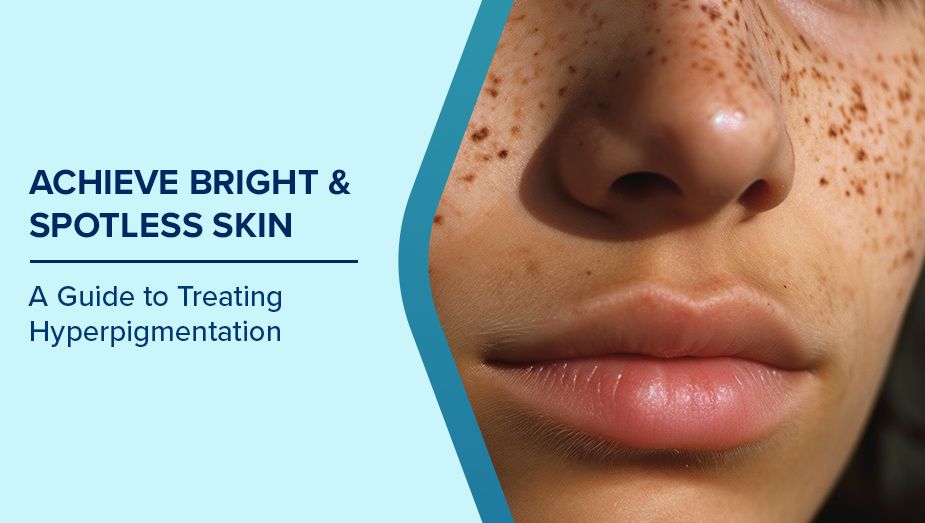
- Characteristics: Freckles are small, flat, brown spots.
- Common areas: Most commonly found on sun-exposed areas like the face, arms, and shoulders.
- Causes: Genetic predisposition and sun exposure. Freckles can darken with more sun exposure and lighten without it.
Sunspots
- Characteristics: Similar to age spots, sunspots are flat, dark patches that result from prolonged sun exposure.
- Common areas: Face, hands, arms, and other areas frequently exposed to the sun.
- Causes: Long-term exposure to ultraviolet (UV) radiation from the sun or tanning beds.
Drug-induced hyperpigmentation
- Characteristics: Hyperpigmentation resulting from the use of certain medications.
- Common areas: hyperpigmentation can occur on various parts of the body, depending on the medication and individual response.
- Causes: Medications such as nonsteroidal anti-inflammatory drugs (NSAIDs), tetracyclines, antimalarials, and certain chemotherapeutic agents.
Understanding the type of hyperpigmentation is crucial for determining the most effective treatment approach.
What are the causes of hyperpigmentation?
Hyperpigmentation is caused by an excess production of melanin, the pigment that gives skin its colour. Various factors can trigger this overproduction, including:
- Sun exposure: Ultraviolet (UV) radiation from the sun stimulates melanin production as a natural defence mechanism to protect the skin from damage. Over time, this can lead to sunspots, freckles, and other forms of hyperpigmentation.
- Hormonal changes: Hormonal fluctuations, particularly those related to pregnancy (melasma), birth control pills, or hormone replacement therapy, can cause an increase in melanin production.
- Inflammation and skin injuries: Post-inflammatory hyperpigmentation (PIH) occurs when the skin darkens after it has been injured or inflamed. Common causes include acne, eczema, psoriasis, or trauma to the skin.
- Medications: Certain medications can cause hyperpigmentation as a side effect. These include some antibiotics (like tetracyclines), chemotherapy drugs, antimalarials, and nonsteroidal anti-inflammatory drugs (NSAIDs).
- Genetic factors: Some individuals are more prone to developing hyperpigmentation due to their genetic makeup. Freckles, for example, are often hereditary and can darken with sun exposure.
- Medical conditions: Conditions such as Addison’s disease and hemochromatosis can cause hyperpigmentation. Addison’s disease affects the adrenal glands, while hemochromatosis involves excess iron in the body, both leading to increased melanin production.
- Exposure to certain chemicals: Contact with certain chemicals, such as coal tar, can result in hyperpigmentation. These chemicals can increase the skin’s sensitivity to sunlight, leading to pigmentation issues.
- Ageing: As the skin ages, it becomes more prone to uneven pigmentation and age spots due to cumulative sun exposure over the years.
Understanding the underlying cause of hyperpigmentation is crucial for effective treatment and prevention. Consulting with a dermatologist can help identify the specific cause and recommend appropriate treatment options.
What are the signs and symptoms of hyperpigmentation?
Hyperpigmentation is characterised by areas of the skin becoming darker than the surrounding skin. The specific signs and symptoms can vary depending on the type and cause of the hyperpigmentation, but common indicators include:
Darkened patches or spots
The most noticeable sign of hyperpigmentation is the presence of dark patches or spots on the skin. These areas can vary in size and shape and are usually darker than the surrounding skin.
Uneven skin tone
Hyperpigmentation often leads to an uneven skin tone, where some areas of the skin appear darker than others.
Colour variation
The colour of hyperpigmented areas can range from light brown to black, depending on the individual's skin tone and the severity of the condition.
Skin texture changes
In some cases, the affected areas may have a slightly different texture compared to the surrounding skin, although this is less common.
Accompanying symptoms
Hyperpigmentation itself typically does not cause pain or physical discomfort. However, if it results from an underlying condition like acne or eczema, there may be associated symptoms such as itching, redness, or swelling.
Freckles
Small, flat, brown spots that appear in sun-exposed areas. Freckles are usually more pronounced in fair-skinned individuals and can become darker with sun exposure.
Commonly affected areas
Hyperpigmentation can occur anywhere on the body, but it is most commonly found on areas frequently exposed to the sun, such as the face, hands, neck, and shoulders. Specific types may affect certain areas:
- Melasma: Usually affects the face, particularly the cheeks, forehead, nose, and upper lip.
- Age spots and sunspots: Typically found on sun-exposed areas like the face, hands, arms, and shoulders.
- Post-inflammatory hyperpigmentation (PIH): This type of hyperpigmentation occurs anywhere on the body where the skin has experienced inflammation or injury.
How is hyperpigmentation diagnosed?
Diagnosing hyperpigmentation typically involves a combination of medical history, physical examination, and sometimes additional tests to determine the underlying cause and appropriate treatment. Here’s how healthcare providers generally diagnose hyperpigmentation:
Medical history
The healthcare provider will ask about your medical history, including any existing conditions, medications you are taking, and your history of sun exposure. They may inquire about the onset, duration, and progression of the dark spots or patches.
Physical examination
A thorough examination of the affected areas will be conducted. The healthcare provider will look at the colour, size, and distribution of the pigmentation.
Wood's lamp examination
In some cases, a Wood’s lamp (a special type of ultraviolet light) may be used to examine the skin more closely. This can help distinguish between different types of pigmentation and determine the depth of pigmentation in the skin.
Biopsy
If the diagnosis is uncertain or if there is a suspicion of an underlying skin condition, the healthcare provider may take a small sample of the affected skin (biopsy) for further examination under a microscope.
Dermatoscopy
A dermatoscope, a handheld device that provides magnification and light, may be used to examine the skin in detail. This can help differentiate hyperpigmentation from other skin conditions.
Additional tests
Blood tests or other laboratory tests may be conducted if an underlying systemic condition (such as Addison’s disease or hemochromatosis) is suspected to be contributing to the hyperpigmentation.
By combining these diagnostic tools, healthcare providers can accurately identify the type and cause of hyperpigmentation, allowing them to recommend the most effective treatment plan. If you notice persistent or worsening dark spots, it’s important to consult a dermatologist for a proper evaluation and diagnosis.
How to Cure Hyperpigmentation?
Curing hyperpigmentation involves a combination of professional treatments, over-the-counter products, home remedies, and lifestyle changes. The appropriate approach depends on the severity and underlying cause of the hyperpigmentation. Here are some effective methods to address hyperpigmentation:
Topical treatments
- Hydroquinone: A skin-lightening agent that reduces the appearance of dark spots. It is available in over-the-counter and prescription formulations.
- Retinoids: Prescription-strength retinoids, such as tretinoin, can help speed up cell turnover and fade dark spots.
- Vitamin C: An antioxidant that can help brighten skin and reduce pigmentation.
- Azelaic acid: Helps reduce inflammation and can lighten dark spots.
- Kojic acid: A natural agent that inhibits melanin production.
- Niacinamide: A form of vitamin B3 that helps reduce the appearance of dark spots and improves skin barrier function.
Chemical peels
- Glycolic acid peels: Exfoliate the skin and help lighten hyperpigmentation by removing the outer layers of dead skin cells.
- Salicylic acid peels: Beneficial for treating acne-related hyperpigmentation.
Laser treatments
- Fractional laser: Q-Switch Lasers targets the pigment in dark spots and helps break it down.
- Intense pulsed light (IPL): Uses light energy to target pigmented areas without damaging the surrounding skin.
Sun protection
- Sunscreen: Use a broad-spectrum sunscreen with at least SPF 30 daily, even on cloudy days. Reapply every two hours when exposed to the sun.
- Protective clothing: Wear hats, sunglasses, and clothing that covers the skin to minimise sun exposure.
Regular skin care routine
- Use gentle cleansers and moisturisers to maintain healthy skin.
- Avoid picking or scratching the skin to prevent further pigmentation issues.
Consult a Dermatologist
For persistent or severe hyperpigmentation, it is essential to consult a dermatologist. They can provide a tailored treatment plan, monitor progress, and adjust treatments as needed.
By combining these methods and maintaining a consistent skincare routine, many people can effectively reduce and manage hyperpigmentation, leading to a more even and radiant complexion.
How to Prevent Hyperpigmentation?
Preventing hyperpigmentation involves a combination of protective measures, good skin care practices, and lifestyle adjustments. Here are some effective strategies to help prevent hyperpigmentation:
Sun protection
- Use sunscreen: Apply a broad-spectrum sunscreen with at least SPF 30 daily, even on cloudy days. Reapply every two hours when outdoors.
- Wear protective clothing: Use wide-brimmed hats, sunglasses, and long-sleeved clothing to shield your skin from direct sun exposure.
- Seek shade: Avoid direct sunlight during peak hours (10 a.m. to 4 p.m.) and seek shade whenever possible.
Avoid picking or scratching
- Do not pick pimples: Avoid picking, scratching, or squeezing pimples, scabs, or insect bites to prevent post-inflammatory hyperpigmentation.
- Gentle skin care: Use gentle skincare products and avoid harsh scrubs that can irritate the skin.
Use gentle skincare products
- Mild cleansers and moisturisers: Opt for gentle, non-irritating cleansers and moisturisers suitable for your skin type.
- Avoid harsh chemicals: Avoid skincare products that contain harsh chemicals, fragrances, or alcohol, which can irritate the skin and contribute to pigmentation.
Manage skin conditions
- Treat acne promptly: Manage acne and other skin conditions with appropriate treatments to reduce the risk of post-inflammatory hyperpigmentation.
- Consult a dermatologist: Seek professional advice for conditions like eczema or psoriasis to prevent flare-ups and associated pigmentation changes.
Maintain a healthy lifestyle
- Balanced diet: Eat a balanced diet rich in antioxidants, vitamins, and minerals to support overall skin health.
- Hydration: Drink plenty of water to keep your skin hydrated and healthy.
Hormonal management
- Consult a specialist: If you are experiencing hormonal changes, such as during pregnancy or while taking birth control pills, discuss potential preventive measures with your healthcare provider.
Regular skin examinations
- Monitor changes: Regularly check your skin for any new or changing dark spots and seek medical advice if you notice significant changes.
By incorporating these preventive measures into your daily routine, you can significantly reduce the risk of developing hyperpigmentation and maintain a more even skin tone. If you have a history of hyperpigmentation or are particularly prone to it, consulting a dermatologist for personalised advice and preventive strategies can be very beneficial.
When to Consult a Doctor For Hyperpigmentation?
If you are experiencing hyperpigmentation and home remedies or over-the-counter treatments have not shown improvement after several weeks, it’s important to consult a doctor. Additionally, if the dark spots are spreading, changing in appearance, or are accompanied by other symptoms such as itching, pain, or bleeding, seeking medical advice is crucial. Individuals with a history of skin conditions, those who are immunocompromised, or who have a family history of pigmentation disorders should also consider professional evaluation. A dermatologist can provide a precise diagnosis, identify any underlying causes, and recommend effective treatments tailored to your specific condition, ensuring the best possible care for your skin.
Conclusion
Dealing with hyperpigmentation can be frustrating, but understanding its causes and exploring effective treatments can lead to significant improvement. Taking proactive steps like protecting your skin from the sun, using targeted treatments, and maintaining a consistent skincare routine can help manage and reduce hyperpigmentation. For persistent or severe cases, professional guidance is essential. At Max Hospitals, our experienced dermatologists provide comprehensive care with advanced treatments and personalised plans. Don’t let hyperpigmentation affect your confidence. Schedule an appointment with a specialist at Max Hospitals today and start your journey towards healthier and radiant skin.
Written and Verified by:

Related Blogs


Blogs by Doctor

9 Dry Skin Treatment and Prevention Tips from Dermatologist
Dr. Ajita Bagai Kakkar In Dermatology
Mar 13 , 2015 | 3 min read
Most read Blogs


Related Blogs
Blogs by Doctor
9 Dry Skin Treatment and Prevention Tips from Dermatologist
Dr. Ajita Bagai Kakkar In Dermatology
Mar 13 , 2015 | 3 min read
Most read Blogs