 WhatsApp Us (24/7)
 +91 926 888 0303 (24/7)


To Book an Appointment
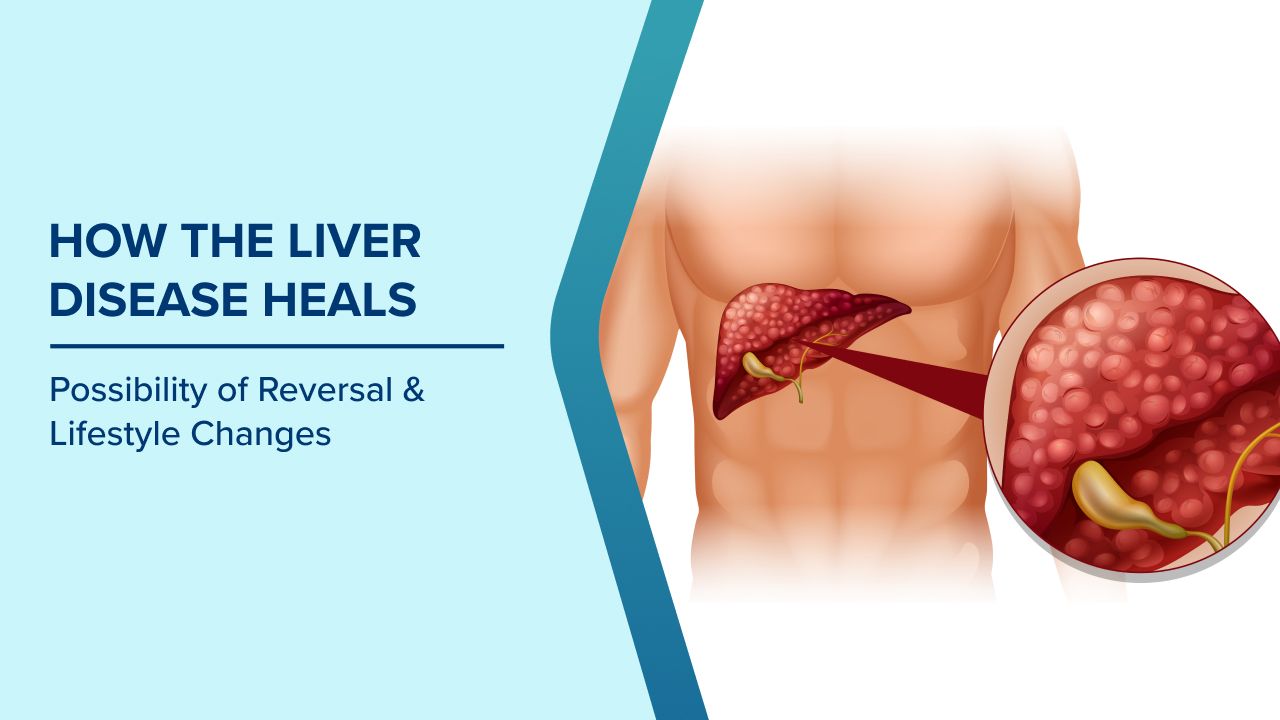
Call Us+91 926 888 0303How the Liver Disease Heals: Possibility of Reversal & Lifestyle Changes
By Dr. Vibhu Mittal in Gastro Intestinal & Hepatopancreatobiliary Surgical Oncology
May 20 , 2026
1

The idea that liver disease always leads to surgery or transplant is not entirely accurate. In many cases, the liver has the ability to recover, sometimes significantly, if the underlying cause is addressed at the right time.
However, the answer is not a simple yes or no. Whether liver disease can be reversed without surgery depends on how early it is detected, what caused it, and how consistently it is managed.
Understanding this difference is important because early action can change the course of the disease completely, often without the need for invasive treatment.
How the Liver Heals: The Science Behind Reversal
The liver is one of the few organs in the body capable of regeneration. When liver cells are damaged, the remaining healthy cells can multiply and restore function, provided the injury is not ongoing.
This means that in certain stages of liver disease, the damage is functional and reversible, rather than permanent.
For reversal to happen:
- The cause of damage must be removed or controlled
- Inflammation needs to be reduced
- Healthy liver cells must be preserved
If these conditions are met, the liver can regain much of its normal function over time.
When Is It Possible for Reversal
Reversal without surgery is most likely when the liver is still structurally intact and has not developed extensive scarring.
- Early Metabolic Liver Changes: Liver stress caused by poor diet, sedentary lifestyle, or metabolic imbalance can often improve with sustained lifestyle correction. The liver responds well when the internal environment is stabilised.
- Toxin or Medication-Induced Damage: If liver injury is due to certain medications, supplements, or toxins, stopping the exposure early can allow the liver to recover.
- Mild Inflammatory Conditions: When inflammation is present but has not yet caused structural distortion, appropriate medical management can help restore normal liver activity.
- Temporary Liver Stress Due to Illness: In some acute conditions, the liver may be temporarily affected but can return to normal once the illness resolves.
When Reversal Becomes Limited
There comes a stage where the liver’s ability to repair itself begins to decline. This is usually due to the formation of scar tissue (fibrosis) that disrupts normal architecture.
As scarring progresses:
- Blood flow within the liver becomes altered
- Functional liver tissue reduces
- Regeneration becomes less effective
At this point, treatment focuses more on slowing progression rather than complete reversal.
Once advanced scarring develops, structural changes are largely permanent, even if the underlying cause is controlled.
Key Factors That Decide Reversibility
Not all patients with liver disease have the same outcome. Several factors influence whether the condition can improve without surgery.
Duration of Damage
The longer the liver has been exposed to injury, the lower the chances of complete reversal.
Cause of Liver Disease
Some causes respond better to treatment than others. Conditions linked to lifestyle or reversible triggers often have better outcomes.
Overall Health
Metabolic health, immunity, and existing medical conditions play a significant role in recovery.
Consistency of Treatment
Irregular treatment or partial lifestyle changes may slow progress but rarely reverse damage completely.
Early Detection
Perhaps the most important factor is that early diagnosis provides the best chance for recovery.
Signs That Your Liver May Be Improving
When liver disease begins to reverse or stabilise, the body often shows subtle improvements before major changes appear in tests.
Some indicators include:
- Gradual improvement in energy levels
- Reduction in abdominal discomfort
- Better appetite and digestion
- Stabilisation of weight
- Improved tolerance to daily activity
These changes may seem small, but they often reflect improving internal liver function.
Lifestyle Changes That Support Liver Reversal
Medical treatment alone is often not enough. The liver responds best when supported by consistent lifestyle changes.
Focus Areas for Recovery
Balanced Nutrition: A diet rich in whole foods, fibre, and controlled sugar intake helps reduce metabolic stress on the liver.
Weight Management: Maintaining a healthy weight reduces fat accumulation and inflammation within liver cells.
Regular Physical Activity: Exercise improves insulin sensitivity and supports better liver metabolism.
Avoiding Harmful Substances: Limiting alcohol and avoiding unnecessary medications or supplements reduces further liver strain.
Sleep and Stress Regulation: Chronic stress and poor sleep can worsen inflammation and metabolic imbalance.
These changes work together to create an environment where the liver can repair rather than deteriorate.
Medical Monitoring Without Surgery
Even when surgery is not required, regular monitoring remains essential. Liver disease can change silently, and improvement needs to be tracked objectively.
Doctors may recommend:
- Periodic liver function tests
- Imaging studies to assess liver structure
- Monitoring of metabolic parameters
- Evaluation of symptoms over time
This helps ensure that:
- The disease is truly improving
- No silent progression is occurring
- Treatment plans are adjusted when needed
When Non-Surgical Treatment Is Not Enough
While many cases improve without surgery, some situations require more advanced intervention.
Non-surgical treatment may not be sufficient when:
- Liver function continues to decline despite treatment
- Complications begin to develop
- Structural damage affects normal blood flow
- Symptoms start the affecting quality of life significantly
In such cases, doctors may evaluate other treatment pathways based on the individual condition.
How Early Action Changes Outcomes
One of the most important aspects of liver disease is that it often progresses silently. Many people are diagnosed during routine tests, before symptoms appear.
This stage offers a critical opportunity:
- Damage is still reversible
- Treatment is less invasive
- Long-term outcomes are significantly better
Delaying action, on the other hand, reduces the window for reversal.
Practical Steps to Protect and Support Your Liver
- Get routine health check-ups, especially if you have risk factors
- Pay attention to subtle, persistent symptoms
- Follow medical advice consistently
- Avoid self-medication or unverified treatments
- Maintain a sustainable, long-term approach rather than short-term fixes
Conclusion
Liver disease does not always require surgery. In many cases, especially in the early stages, it can be reversed or significantly improved through non-surgical treatment. The key lies in recognising the condition early, addressing the cause, and maintaining consistent care.
The liver has a strong capacity to heal, but it needs the right conditions to do so. Acting at the right time can mean the difference between recovery and progression.
Frequently Asked Questions
1. Can liver damage reverse completely on its own?
The liver can repair itself, but recovery usually requires removing the cause and supporting it with proper treatment and lifestyle changes.
2. How long does it take for the liver to recover without surgery?
Recovery time varies widely. Some changes may be seen within weeks, while structural improvement can take months, depending on severity.
3. Is liver disease always progressive?
Not necessarily. With timely intervention, progression can be slowed, stopped, or even reversed in certain stages.
4. Can normal blood tests guarantee a healthy liver?
Not always. Some liver conditions may exist even when routine tests appear normal, which is why imaging and clinical evaluation are important.
5. Does age affect liver recovery?
Yes, younger individuals may recover faster, but improvement is still possible at any age with proper management.
Written and Verified by:

Related Blogs


Blogs by Doctor

Dr. Vibhu Mittal In Gastroenterology, Hepatology & Endoscopy
Dec 16 , 2016 | 2 min read

Binge Drinking and Alcoholic Liver Disease (ALD): Understanding the Link
Dr. Vibhu Mittal In Gastroenterology, Hepatology & Endoscopy
Apr 17 , 2024 | 2 min read
Most read Blogs


Related Blogs
Blogs by Doctor
Dr. Vibhu Mittal In Gastroenterology, Hepatology & Endoscopy
Dec 16 , 2016 | 2 min read
Binge Drinking and Alcoholic Liver Disease (ALD): Understanding the Link
Dr. Vibhu Mittal In Gastroenterology, Hepatology & Endoscopy
Apr 17 , 2024 | 2 min read
Most read Blogs