 WhatsApp Us (24/7)
 +91 926 888 0303 (24/7)


To Book an Appointment
Call Us+91 926 888 0303Cervical Cancer Risk After Menopause: Low Immunity & Risk
By Dr. Kanika Batra Modi in Surgical Oncology , Cancer Care / Oncology , Gynecologic Oncology , Robotic Surgery
Feb 12 , 2026

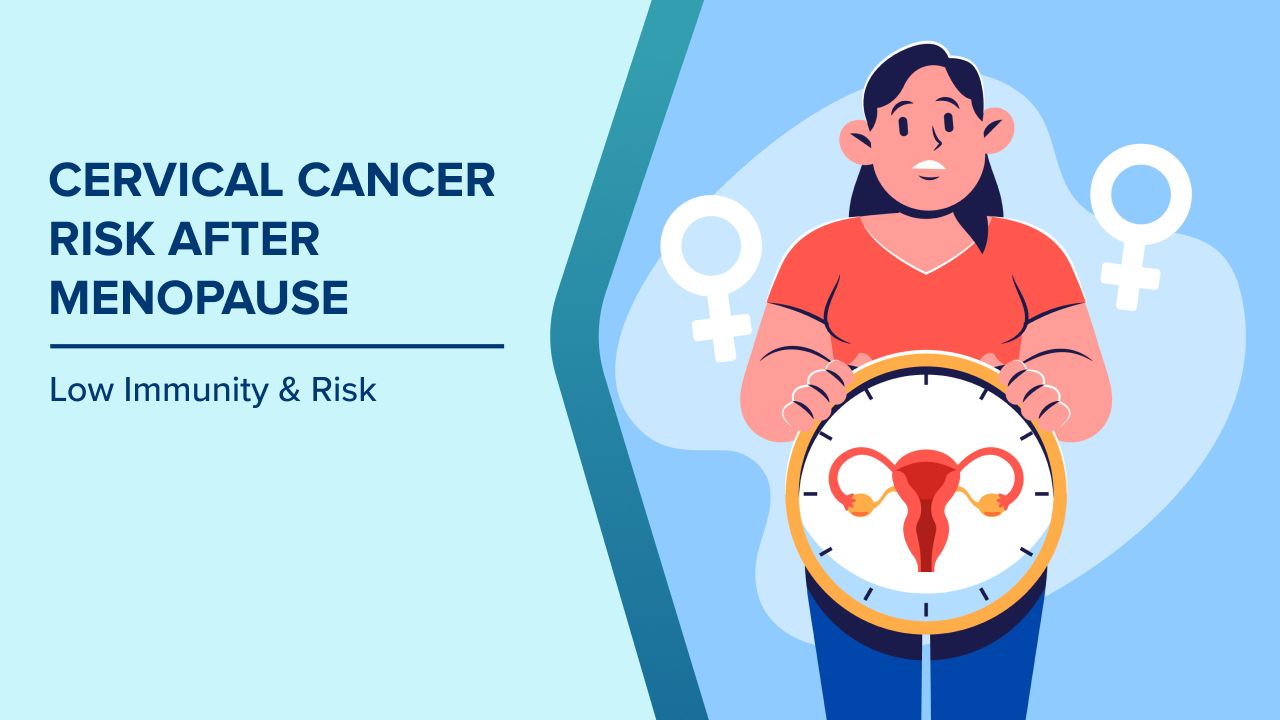
Menopause is often described as “the end of periods”, but it is also a shift in the body’s defence system. With age, our immune response becomes slower and less precise, a phenomenon often called immunosenescence. The fall in oestrogen after menopause also affects the cervico-vaginal environment. Oestrogen helps maintain a healthy, acidic vaginal pH. When oestrogen levels drop, the pH rises (becomes less acidic), protective lactobacilli reduce, and the local microbiome changes. This matters because the microbiome and mucosal lining are part of the body’s frontline immunity. When this local ecosystem is disturbed, the cervico-vaginal barrier and local immune response may become less efficient at controlling infections, including HPV.
Cervical cancer itself is not a sudden disease. It is caused by persistent infection with high-risk human papillomavirus (HPV). Most HPV infections are cleared naturally by the immune system. The problem begins when HPV persists for years, leading to precancerous changes in the cervix that can eventually progress to cancer if not detected and treated in time.
This is where immunity becomes important. When overall immunity is weakened, HPV is more likely to persist. That is why women living with HIV, or those on long-term immunosuppressive medicines (for autoimmune diseases, organ transplant, or certain cancer therapies), have a higher risk of persistent HPV infection and cervical cancer. Menopause does not “cause” cervical cancer, but the combined effects of aging, hormonal changes, and a shift in local vaginal immunity can reduce immune surveillance, increasing the chance that an existing HPV infection stays longer than it should.
There is also an important clinical reality: some women may have acquired HPV earlier in life and remained well for years. As immune control reduces with age, HPV can sometimes become active again or become detectable after a silent phase. The key message is not fear, but vigilance and prevention.
What Should Postmenopausal Women Do?
- Do not stop screening just because periods have stopped: Regular screening with a Pap smear and/or HPV test detects precancer long before cancer develops. Discuss with your gynaecologist which schedule is right for you based on your age and past reports, especially if you were never regularly screened earlier.
- Do not ignore symptoms: Bleeding after menopause, persistent watery or foul-smelling discharge, pelvic pain, or pain during intercourse should always be evaluated. Many causes are benign, but cervical cancer must be ruled out.
- Support immunity and local health: Control diabetes, correct anaemia and vitamin deficiencies, sleep well, stay active, and avoid smoking, which is linked to HPV persistence.
Finally, prevention begins earlier: Encourage HPV vaccination for eligible girls and boys in the family. Cervical cancer is one of the most preventable cancers we treat, and menopause should be a reminder to keep the simplest protections in place: vaccination, screening, and timely evaluation of symptoms.
Written and Verified by:

Related Blogs

Dr. S. VEDA PADMA PRIYA In Surgical Oncology , Cancer Care / Oncology
May 16 , 2016 | 2 min read

Dr. Kanika Batra Modi In Surgical Oncology , Cancer Care / Oncology
May 26 , 2016 | 4 min read
Blogs by Doctor

Health Rumours About Cancer – Busted Or Confirmed
Dr. Kanika Batra Modi In Cancer Care / Oncology
Nov 07 , 2020 | 3 min read

Gynaecologic cancer care - in the times of pandemic
Dr. Kanika Batra Modi In Gynecologic Oncology
Nov 07 , 2020 | 2 min read
Most read Blogs


Related Blogs
Dr. S. VEDA PADMA PRIYA In Surgical Oncology , Cancer Care / Oncology
May 16 , 2016 | 2 min read
Dr. Kanika Batra Modi In Surgical Oncology , Cancer Care / Oncology
May 26 , 2016 | 4 min read
Blogs by Doctor
Health Rumours About Cancer – Busted Or Confirmed
Dr. Kanika Batra Modi In Cancer Care / Oncology
Nov 07 , 2020 | 3 min read
Gynaecologic cancer care - in the times of pandemic
Dr. Kanika Batra Modi In Gynecologic Oncology
Nov 07 , 2020 | 2 min read
Most read Blogs