 WhatsApp Us (24/7)
 +91 926 888 0303 (24/7)


To Book an Appointment
Call Us+91 926 888 0303Robotic Surgery: How It Works, Key Benefits, and Recovery Insights
By Dr. Vishwas Sharma in Laparoscopic / Minimal Access Surgery , Robotic Surgery
Jan 05 , 2026 | 2 min read
3

Modern medical procedures have made significant advancements, and robotic surgery is at the forefront. Once reserved for complex specialities, robotic assistance is now revolutionising routine surgical care. It combines cutting-edge precision with patient-centred care, providing benefits that extend far beyond the operating room.
How Robotic Surgery Works
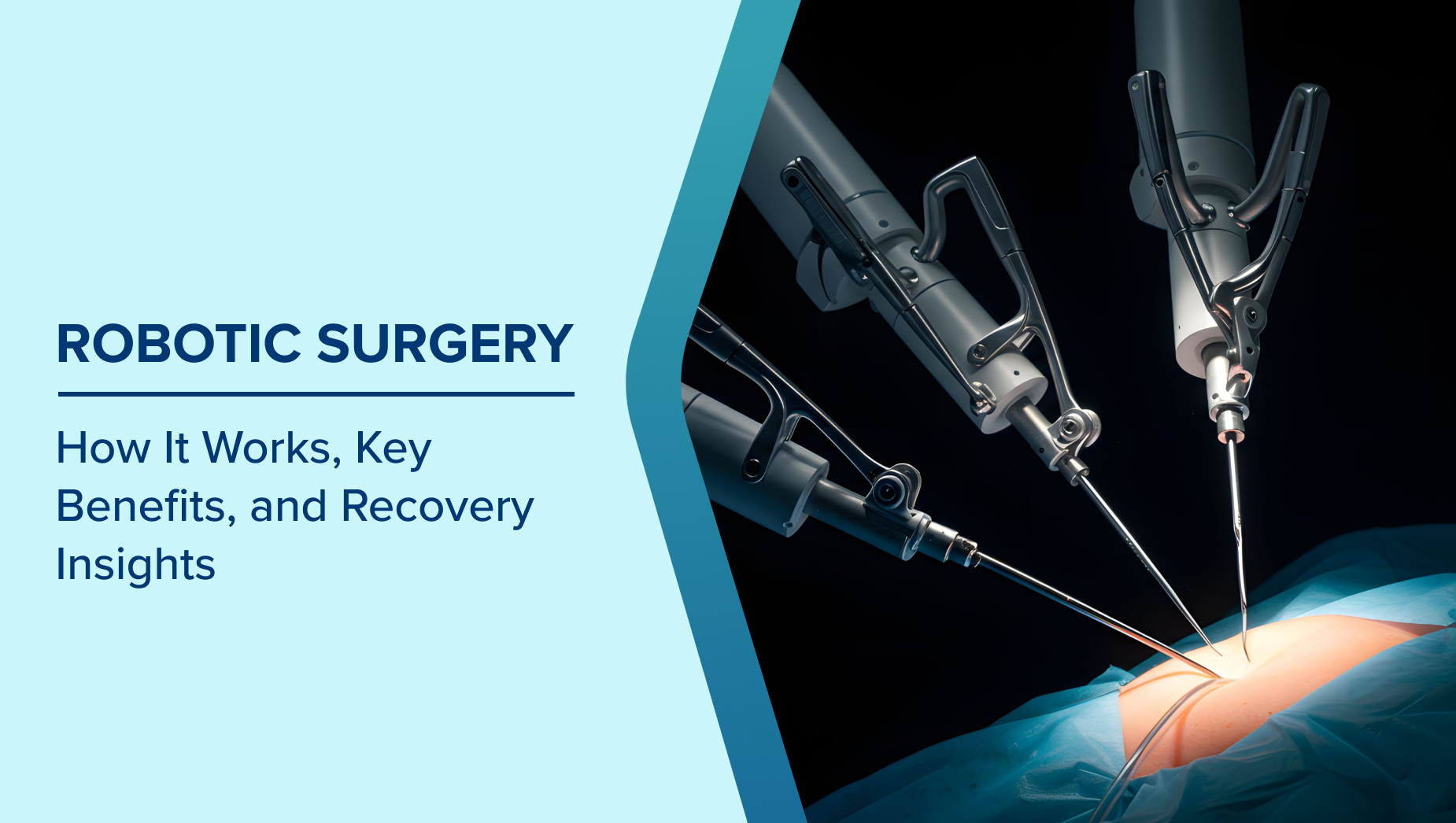
Robotic surgery uses a set of robotic arms equipped with high-definition cameras and ultra-fine instruments. Surgeons operate these robotic arms from a nearby console, where their hand movements are converted into precise, smaller actions within the patient's body.
Despite the term "robotic," these procedures are guided entirely by the surgeon. The robotic system enhances their capabilities, allowing for minimally invasive techniques and unmatched accuracy.
Why Precision Makes All the Difference
Whether it's removing a gallbladder, repairing a hernia, or managing appendicitis, robotic systems offer better visibility and greater control. Precision surgery technology helps minimise damage to surrounding tissues, reduces the risk of complications and improves long-term outcomes.
Benefits of Robotic Surgery That Patients Notice
Here's how robotic surgery improves both the process and the recovery experience:
- Smaller Incisions: Less tissue disruption, which means quicker healing
- Lower Risk of Infection: Minimal exposure reduces complications
- Shorter Hospital Stay: Many patients go home the same day
- Quicker Recovery: Return to work or daily life sooner
- Minimal Scarring: Cosmetic concerns are significantly reduced
Robotic techniques often lead to smoother experiences, with less pain and faster mobility right after surgery.
What Recovery Feels Like After Robotic-Assisted Procedures
Robotic-assisted surgery recovery tends to be gentler than older methods. Most patients report:
- Mild discomfort instead of intense pain
- Early mobility, many walk within hours
- Clean, minimal scars that heal quickly
Recovery timelines vary, but patients often resume everyday tasks within 7 to 10 days.
Is Robotic Surgery an Option for You?
Many common procedures like gall bladder removal, all types of hernias (groin, umbilical, incisional), complex surgeries like hiatus hernia, rectal prolapse, splenectomy and other abdominal surgeries can be done with robotic systems with greater precision and minimal blood loss, leading to early recovery and shorter hospital stay. It is especially beneficial for patients who have high BMI and other comorbidities. However, the final decision should be made by the treating physician based on a comprehensive evaluation of the patient's condition.
A Modern Approach to Safer Surgery
Robotic surgery isn't just about high-tech equipment, it's about better healing, smarter procedures, and compassionate care. It enables skilled surgeons to operate with increased control, making recovery easier for you.
If you're preparing for a procedure, ask your doctor whether robotic assistance is available. Making informed choices helps improve health and brings peace of mind.
Frequently Asked Questions
What types of procedures can be done with robotic assistance?
Many common procedures like gall bladder removal, all types of hernias (groin, umbilical, incisional), complex surgeries like hiatus hernia, rectal prolapse, splenectomy and other abdominal surgeries can be done with robotic systems with greater precision and minimal blood loss, leading to early recovery and shorter hospital stay.
Is robotic surgery more expensive than traditional surgery?
While initial costs may be slightly higher, shorter hospital stays and fewer complications often make it cost-effective over time.
Who controls the robotic instruments during surgery?
Surgeons control them in real-time using a console. The robot doesn't act independently.
How soon can I return to normal activities?
Many patients are mobile the same day, with full recovery typically taking one to three weeks, depending on the procedure.
Is robotic surgery safe for older adults or young patients?
Yes, as long as the person is medically stable. Age alone isn't a limiting factor.
Written and Verified by:

Related Blogs


Dr. Pradeep Chowbey In Laparoscopic / Minimal Access Surgery
Nov 16 , 2020 | 1 min read
Blogs by Doctor

Back Home Faster with Short Stay Surgery
Dr. Vishwas Sharma In General Surgery
Apr 23 , 2015 | 1 min read

Laparoscopic Surgery has Evolved: Know How
Dr. Vishwas Sharma In General Surgery , Laparoscopic / Minimal Access Surgery
Feb 15 , 2017 | 3 min read
Most read Blogs


Related Blogs
Dr. Pradeep Chowbey In Laparoscopic / Minimal Access Surgery
Nov 16 , 2020 | 1 min read
Blogs by Doctor
Back Home Faster with Short Stay Surgery
Dr. Vishwas Sharma In General Surgery
Apr 23 , 2015 | 1 min read
Laparoscopic Surgery has Evolved: Know How
Dr. Vishwas Sharma In General Surgery , Laparoscopic / Minimal Access Surgery
Feb 15 , 2017 | 3 min read
Most read Blogs