 WhatsApp Us (24/7)
 +91 926 888 0303 (24/7)


Abstract: Periodontal disease (PD), a chronic oral inflammatory condition, has been associated with an increased risk of cardiovascular disease (CVD), including complications such as heart failure (HF). Patients with coronary artery disease (CAD) have a higher prevalence of PD, and conversely, individuals with PD are at increased risk of CAD, myocardial infarction, and stroke. HF and PD share common risk factors, such as smoking, diabetes mellitus, alcohol consumption, hypertension, and low socioeconomic status. Chronic inflammation is the primary aetiology for chronic HF regardless of its underlying cause. Increased oral inflammation caused by periodontitis exacerbates systemic inflammatory burden, thereby predisposing individuals to a higher risk of CAD and HF.
Key words: Cardiovascular Disease, Gum Disease, Chronic Heart Failure, Inflammation, Periodontitis, Oral inflammation, Oro-Systemic Inflammation.
Introduction
Heart failure (HF) is a severe manifestation occurring in the late stages of various heart diseases. It is a progressive syndrome characterised by structural and functional cardiac changes resulting in typical symptoms as exertional dyspnoea, ankle swelling, and fatigue. HF is considered a global pandemic, especially affecting the older population. It can be stratified by left ventricular systolic function into HF with preserved ejection fraction (HFpEF), HF with mildly reduced ejection fraction (HFmrEF), and HF with reduced ejection fraction (HFrEF).1 An estimated 64.3 million people worldwide are affected by HF. In developed countries, the prevalence is generally 1%–2%. HF can lead to cardiac arrest and is associated with a high risk of mortality. Inflammation plays an important role in the pathogenesis of cardiovascular diseases (CVD), including HF.2-4 Studies have shown that inflammatory factors contribute to ventricular remodelling, which in turn affects the development of HF.5-7
Periodontitis is described as a chronic infectious inflammatory condition affecting the supporting tissues around the teeth. Severe periodontitis is a serious burden and has been linked to several systemic conditions8,9 including CVD, which may progress to HF.
Pathobiology Underlying Risk Association of Periodontitis and (CVD)
The invasion of oral bacteria (present in dental plaque) into the systemic circulation activates a series of immunoinflammatory responses, leading to a massive release of pro-inflammatory mediators such as interlukin-1 (IL-1), IL-6, tumour necrosis factoralpha (TNF-α, and monocyte chemoattractant protein-1 (MCP-1), along with acute phase proteins, matrix metalloproteinases, C-reactive protein (CRP), fibrinogen, and free radicals.10 These inflammatory mediators impact the cardiovascular system by altering lipid metabolism, causing endothelial injury, and increasing the hypercoagulability of blood and platelets. This, in turn, increases the risk of atherosclerosis, arterial calcification, fibrogenesis, and cardiovascular tissue injury.11-13 Pathway of how inflammatory mediators are linked to periodontitis and atherosclerotic CVDs is shown in Figure 1.
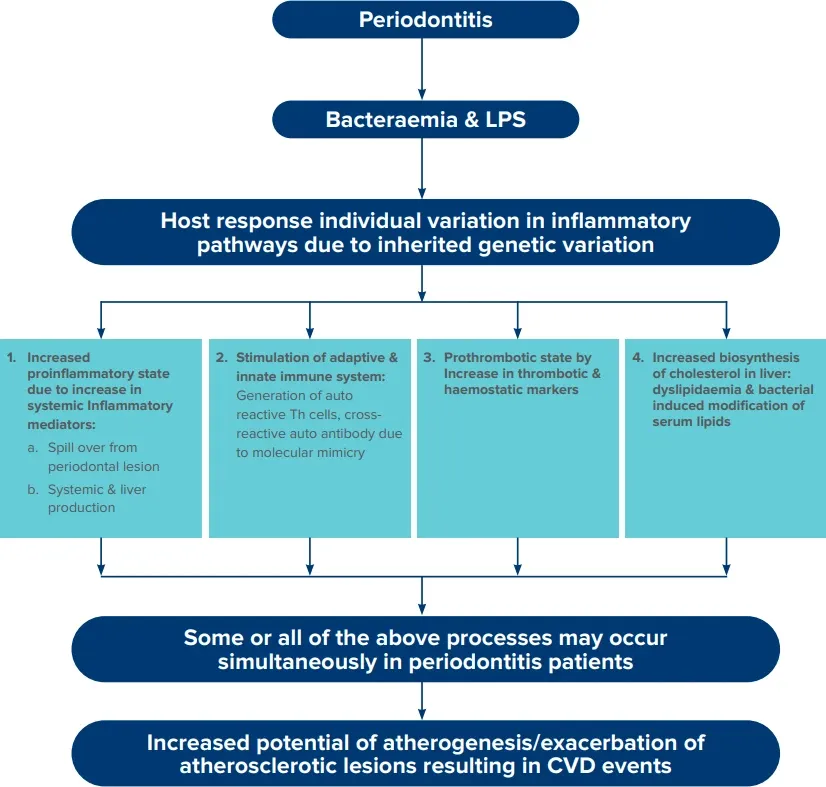
Figure 1: Inflammatory mechanisms linking periodontitis and atherosclerotic cardiovascular disease.36
Abbreviations: CVD: Cardiovascular disease; LPS: Lipopolysaccharide
Studies have confirmed the link between increased oral bacterial load, bacteraemia and CVDs.14-18 Among oral microbes, bacteria associated with periodontal disease, particularly those belonging to the red and orange complexes, have been linked to systemic conditions such as CVDs.19 Furthermore, previous studies have reported the molecular mechanisms through which inflammatory factors contribute to CVDs such as hypertension, atherosclerosis, and myocardial infarction.20,21
Evidence-Based Data on the Association between Periodontitis and Coronary Heart Disease and HF
Published data support the association between CAD and periodontitis. Oral pathogens have been identified in up to 44% of atherosclerotic plaques,22 and a high antibody response against major periodontal pathogens appears to be associated with prevalent CAD.23 Furthermore, dental-plaque bacteria such as Streptococcus sanguis can induce platelet aggregation by expression of the platelet aggregationassociated protein in vitro.24 Intravenous infusion of these pathogens in rabbits has been shown to cause changes in electrocardiographic values, heart rate, blood pressure, and cardiac contractility.25 Frohlich et al., in their study on 71 patients with stable chronic HF reported the prevalence of gingivitis, moderate periodontitis, and severe periodontitis as present in 17 (24%), 17 (24%), and 37 (52%) patients, respectively. Severe periodontitis was more prevalent among chronic HF patients than in the general population. When assessing the relationship between periodontitis severity and HF symptoms, the authors concluded that the 6-minute walking distance (a test to assess physical activity capacity) was significantly lower in patients with severe periodontitis.26
Yan et al., in their population-based study (NHANES III), reported that the incidence of HF in participants with moderate or severe periodontitis was 5.72 times higher (95% CI: 3.76–8.72, p < 0.001). This risk was regardless of the presence or absence of hypertension, and the risk was higher in the non-hypertensive subgroup, suggesting that periodontitis may be an independent risk factor for HF.27 Wood & Johnson were among the first to report this association, having evaluated over 17,000 people from NHANES III. They found that patients with periodontitis had a higher incidence of self-reported HF.28 A large Asian study, using the Taiwan National Health Insurance Research Database, also reported a positive correlation between periodontitis and HF.29
Although HF and periodontal disease differ in aetiology and pathophysiology, both are characterised by chronic, unregulated inflammatory processes, that contribute to myocardial damage, decreased cardiac function, and poor prognosis.30,31 The global cardiovascular mortality report states that many chronic infectious and inflammatory diseases such as periodontitis are associated with a significantly increased risk of cardiovascular adverse events, such as atrial fibrillation, myocardial infarction, and HF.32 Mucci et al., in their study stated that periodontitis and HF have shared risk factors such as: age, gender, smoking, diabetes, hypertension, and hypercholesterolaemia. After adjusting for various confounding factors, they confirmed an independent association between periodontitis and the risk of HF.33 Walther et al., in a study of 6300 patients, reported that patients with periodontitis showed a higher burden of cardiovascular risk factors (e.g., older age, male sex, diabetes mellitus, hypertension) compared to those with no or mild periodontitis. Severe periodontitis was significantly associated with HFmrEF.34
Molensky et al., in their study involving 1,700 patients, reported that baseline periodontal disease and edentulism were associated with incident HF during a 13-year follow-up period. Periodontal status was associated with elevated levels of CRP and N-terminal pro–B-type natriuretic peptide (NT-proBNP). PD was associated with an increased risk for HFpEF and significantly increased risk for HFrEF. Edentulism was associated with unfavourable changes in both CRP and NT-proBNP, while PD was associated only with CRP.35
Conclusion
Poor gum health (periodontal disease) is a potential precursor to systemic inflammation and is highly prevalent in patients with HF irrespective of the cause of HF. Therefore, neglect of oral health should not be overlooked by cardiologists. Cardiologists should be encouraged to refer their patients for dental screening.
Sangeeta Dhir, Viveka Kumar. Oral Inflammation and Chronic Heart Failure: Is there a Risk Association?
MMJ. 2025, September. Vol 2 (3).
References
- Ponikowski P, Voors AA, Anker SD, et al. ESC Scientific Document Group. 2016 ESC guidelines for the diagnosis and treatment of acute and chronic heart failure: The task force for the diagnosis and treatment of acute and chronic heart failure of the European Society of Cardiology (ESC)developed with the special contribution of the Heart Failure Association (HFA) of the ESC. Eur Heart J. 2016;37:2129–2200.
- Pieske B, Tschöpe C, de Boer RA, et al. How to Diagnose Heart Failure with Preserved Ejection Fraction: the HFA-PEFF Diagnostic Algorithm: a Consensus Recommendation from the Heart Failure Association (HFA) of the EuropeanSociety of Cardiology (ESC). Eur Heart J. 2019;40(40):3297–3317.
- Groenewegen A, Rutten FH, Mosterd A, et al. Epidemiology of Heart Failure. Eur J Heart Fail. 2020;22(8):1342–56.
- Schiattarella GG, Sequeira V, and Ameri P. Distinctive Patterns of Inflammation across the Heart Failure Syndrome. Heart Fail Rev. 2020;26:1333–44.
- Al-Taweel A. M, Raish M, Perveen S, et al. Nepeta Deflersiana Attenuates Isoproterenol-Induced Myocardial Injuries in Rats: Possible Involvement of Oxidative Stress, Apoptosis, Inflammation through Nuclear Factor (NF)-κB downregulation. Phytomedicine. 2017;34:67–75.
- Tan H, Song Yn, Chen J, et al. Platelet-Like Fusogenic LiposomeMediated Targeting Delivery of miR-21 Improves Myocardial Remodeling by Reprogramming Macrophages Post Myocardial Ischemia-Reperfusion Injury. Adv Sci. 2021;8(15):2100787.
- Yan Z, Qi Z, Yang X, et al. The NLRP3 Inflammasome: Multiple Activation Pathways and its Role in Primary Cells during Ventricular Remodeling. J Cell Physiol. 2021;236(8):5547–63.
- Sanz M, Herrera D, Kebschull M, et al. Treatment of Stage I-III Periodontitis-The EFP S3 Level Clinical Practice Guideline. J Clin Periodontol. 2020;47:4–60.
- Luo LS, Luan HH, Wu L, et al. Secular Trends in Severe Periodontitis Incidence, Prevalence and Disability-adjusted Life Years in Five Asian Countries: A Comparative Study from 1990 to 2017. J Clin Periodontol. 2021;48(5):627–37.
- Schenkein HA, Papapanou PN, Genco R, et al. Mechanisms Underlying the Association between Periodontitis and Atherosclerotic Disease. Periodontol 2000. 2020;83(1):90–106.
- Amar J. Lange C, Payros G, et al. Blood microbiota dysbiosis is associated with the onset of cardiovascular events in a large general population: The D.E.S.I.R. Study. PLoS ONE. 2013,8:e54461.
- Rajendhran J, Shankar M, Dinakaran V, et al. Contrasting circulating microbiome in cardiovascular disease patients and healthy individuals. Int J Cardiol. 2013;168:5118–20.
- Li X, Kolltveit KM, Tronstad L, et al. Systemic diseases caused by oral infection. Clin Microbiol Rev. 2000;13:547–58.
- Lockhart PB, Brennan MT, Sasser HC, et al. Bacteremia associated with toothbrushing and dental extraction. Circulation. 2008;117;3118–25.
- Gotsman I, Lotan C, Soskolne WA, et al. Periodontal destruction is associated with coronary artery disease and periodontal infection with acute coronary syndrome. J Periodontol. 2007;78:849–58.
- Valtonen VV. Role of infections in atherosclerosis. Am Heart J. 1999;138:S431–S433.
- DeStefano F, Anda RF, Kahn HS, et al. Dental disease and risk of coronary heart disease and mortality. Br Med J. 1993;306:688–91.
- Roivainen M, Viik-Kajander M, Palosuo T, et al. Infections, inflammation, and the risk of coronary heart disease. Circulation. 2000;101:252–57.
- Socransky SS, Haffajee AD, Cugini MA, et al. Microbial complexes in subgingival plaque. J Clin Periodontol. 1998;25:134–44.
- Guzik TJ, Touyz RM. Oxidative Stress, Inflammation, and Vascular Aging in Hypertension. Hypertension. 2017;70(4):660–67.
- Sardu C, Paolisso G, Marfella R. Inflammatory Related Cardiovascular Diseases: From Molecular Mechanisms to Therapeutic Targets. Curr Pharm Des. 2020;26(22):2565–73.
- Haraszthy VI, Zambon JJ, Trevisan M, et al. Identification of periodontal pathogens in atheromatous plaques. J Periodontol. 2000;71(10):1554–60
- Pussinen PJ, Jousilahti P, Alfthan G, et al. Antibodies to periodontal pathogens are associated with coronary heart disease. Arterioscler Thromb Vasc Biol. 2003;23(7):1250–54.
- Erickson PR, Herzberg MC. The Streptococcus sanguis platelet aggregation-associated protein. Identification and characterization of the minimal platelet-interactive domain. J Biol Chem. 1993;268(3):1646–49.
- Herzberg MC, Weyer MW. Dental plaque, platelets, and cardiovascular diseases. Ann Periodontol. 1998;3(1):151–60.
- Fröhlich H, Herrmann K, Franke J, et al. Periodontitis in Chronic Heart Failure. Tex Heart Inst J. 2016;43(4):297–304.
- Yan Y, Mao M, Qin LY, et al. Periodontitis is associated with heart failure: A Population-Based Study (NHANES III). Front Physiol. 2022;13:854606.
- Wood N, Johnson RB. The relationship between tomato intake and congestive heart failure risk in periodontitis subjects. J Clin Periodontol. 2004;31(7):574–80
- Chen DY, Lin CH, Chen YM, et al. Risk of Atrial Fibrillation or Flutter Associated with Periodontitis: A Nationwide, Population Based, Cohort Study. PLoS One. 2016;11(10)–e0165601.
- Dick S A, Epelman S. Chronic Heart Failure and Inflammation. Circ Res. 2016;119(1):159–176.
- Adamo L, Rocha Resende C, Prabhu SD, et al. Reappraising the Role of Inflammation in Heart Failure. Nat Rev Cardiol. 2020;17(5):269–85.
- Roth GA, Forouzanfar MH, Moran AE, et al. Demographic and Epidemiologic Drivers of Global Cardiovascular Mortality. N Engl J Med. 2015;372(14):1333–41.
- Mucci LA, Hsieh C, Williams PL, et al. Do genetic Factors Explain the Association between Poor Oral Health and Cardiovascular Disease? A Prospective Study Among Swedish Twins. Am J Epidemiol. 2009;170(5):615–21.
- Carolin Walther, Jan-Per Wenzel, Renate B, et al. Association between periodontitis and heart failure in the general population. ESC Heart Failure. 2022;9:4189–97.
- Molinsky RL, Yuzefpolskaya M, Norby FL, et al. Periodontal Status, C-Reactive Protein, NT-proBNP, and Incident Heart Failure: The Atherosclerosis Risk in Communities Study. JACC Heart Fail. 2022;10(10):731–41.
- Schenkein HA, Loos BG. Inflammatory mechanisms linking periodontal diseases to cardiovascular diseases. J Clin Periodontol. 2013;40(Suppl. 14):S51–S69.