 WhatsApp Us (24/7)
 +91 926 888 0303 (24/7)


Abstract: With a global boom in travel, it becomes imperative to ensure that the journey is safe, the traveller remains healthy, accidents are avoided, and the trip is a memorable experience rather than a health disaster. Emporiatrics, or travel medicine, is a fascinating, challenging and upcoming branch of medicine. It involves pre-travel consultation, discussion of the itinerary, risks of travel, precautions, immunisation, medical prescriptions, and first aid advice. The physician educates the traveller about insect bite avoidance, protection against heat and cold exposure disorders, and food and water precautions. Individualised advice is provided for special travellers, including pregnant women, infants, and patients with diabetes. The specific medical challenges during adventure travel need to be addressed. Lastly, fever in a person returning from distant lands remains a medical mystery to be solved.
Keywords: Emporiatrics, First Aid Kit, Yellow Fever Vaccine, Malaria Chemoprophylaxis, Motion Sickness, Jet Lag, Venous Thromboembolism, Altitude Sickness, Decompression Sickness, Heat Stroke, Frost Bite, Traveller’s Diarrhoea, In Flight Emergencies, Insect Bites, Fever.
Introduction
“You cannot swim for new horizons until you have courage to lose sight of the shore” — William Faulkner
According to the United Nations World Tourism Organisation, 1.4 billion people travelled internationally in 2024.1 This was 99% of pre-pandemic numbers, representing the indomitable spirit of humans and their unquenchable thirst for travel. Emporiatrics is a highly dynamic and niche branch of medicine focusing on pre-travel advice, and the prevention and management of medical problems faced by international travellers. The word “emporiatrics” originates from two Greek words “emporos” meaning someone who travels by sea and “iatrike” meaning medicine. It is an emerging multi-disciplinary branch that includes specialities like family medicine, tropical medicine, infectious diseases, internal medicine, epidemiology and public health policy. The key aspects of emporiatrics are:
- Pre-travel consultations, including assessment of potential health risks based on the travel plans, and providing individualised advice for vaccination, medications, and preventive measures
- Risk assessment to identify and evaluate health hazards associated with travel, including diseases like malaria, food- and water-borne illnesses, and injuries
- Prevention strategies, including immunisation
- Management of post-travel health issues
- Repatriation of sick travellers and liaison with medical insurance providers
- Public health considerations, including the spread of diseases across borders and monitoring emerging and re-emerging diseases2
A Basic Travel Health Kit (Table 1)
First-aid kits are available online, but it makes better sense to customise them as per individual requirements.
Travellers should be able to self-manage minor injuries, scrapes, cuts, burns, sore-throat, travellers’ diarrhoea, motion sickness, jet lag, and sunburn. Used or expired items must be replaced before each trip.3 Countries like the United Arab Emirates and Dubai have very strict laws that prohibit travellers from carrying any narcotic or psychotropic drugs. This includes medicines like diazepam, clonazepam, tramadol, and codeine.
| Contents of a First Aid Kit |
|---|
| Basic items: Adhesive tape, bandages, crepe bandage, sterile gauze, gloves, antiseptic ointment, sunscreen, insect repellent, hand sanitiser, surgical masks, thermometer, scissors, tweezers, safety pins, rubber tourniquet, cigarette lighter (for starting a fire), Swiss military knife, extra batteries, first-aid manual |
| Medical supplies: Antipyretics, antihistamines, motion sickness medications, antacids, anti-diarrhoeal, laxatives, anti-emetics, aspirin, melatonin, basic antibiotics, malaria prophylaxis, acetazolamide (for high altitude), antibiotic cream, steroid ointment, pain relief spray, calamine lotion, oral rehydration salts, condoms, water purification tablets |
| Personal medication: Sufficient (and extra) supplies, along with a doctor’s prescription mentioning diagnosis, allergies, and medicines. Include any special medicines such as an epinephrine auto-injector pen (EpiPen) if prone to allergies |
| Personal devices: Hearing aids with extra batteries, contact lenses with solution, glucometer, ankle or knee brace, etc |
| Emergency information card: Include your address, family physician’s details, emergency contact details, travel insurance details, and an International Certificate of Vaccination or Prophylaxis (ICVP or Yellow Card) |
Table 1: First aid kit.
Pre-Travel Vaccinations
The vaccines for travellers are categorised as routine, required, and recommended. A pre-travel consult is a good time to update routine vaccinations. The yellow fever (YF) vaccine for visits to Africa and Amazonian regions of South America, and the quadrivalent meningococcal vaccine for Hajj and Umrah, are categorised as ‘required’ vaccines. Other vaccines which are recommended for travel purposes, but not mandatory, include Hepatitis A, Hepatitis B, influenza, typhoid, Japanese encephalitis, and rabies vaccines.4,5
Yellow fever (YF) vaccine
YF occurs in tropical and sub-tropical Africa and South America. As per the World Health Organisation (WHO), African countries include Angola, Benin, Cameroon, Central African Republic, Chad, Republic of Congo, Democratic Republic of Congo, Cote d’Ivoire, Guinea, Ethiopia, Gabon, Gambia, Ghana, Kenya, Liberia, Mali, Mauritania, Niger, Nigeria, Senegal, Sierra Leone, South Sudan, Sudan, Togo, and Uganda. The South American countries with YF include Argentina, Brazil, Colombia, Trinidad and Tobago, Venezuela and others as per the updated WHO list.
YF is a viral infection transmitted by the Aedes aegypti mosquito. In the majority of the patients, it is a selflimiting illness with myalgia and fatigue. In about 15% of individuals, it causes jaundice (hence the name) and can lead to fulminant hepatic failure and death.
The YF vaccine is a live attenuated vaccine, given as a single 0.5 mL subcutaneous dose to all travellers above 9 months of age intending to travel to countries with YF. It can only be administered, and a valid certificate issued, by authorised centres under the International Health Regulations. In 2014, the WHO recommended that a single dose provides 100% immunity, and a booster dose is not required.6 The ‘International Certificate of Vaccination or Prophylaxis’ (ICVP) has lifelong validity. It must be administered at least 10 days before travel to build sufficient immunity and be considered valid. Conception should be avoided for at least one month following vaccination. It is contraindicated in cases of severe allergy to egg, chicken, or gelatine proteins. Being a live vaccine, it is also contra-indicated in immunocompromised travellers, including those with bone marrow or solid organ transplants, cancer, thymoma or thymectomy, and human immunodeficiency virus (HIV). These travellers must obtain an exemption certificate but may still be subject to quarantine on return depending on country policies. Side effects of the YF vaccine include fever, myalgia, and, rarely, encephalitis. It must not be administered with any other live vaccine.
Malaria Chemoprophylaxis (Table 2
Visitors to malaria-endemic regions are at high risk and should be educated about mosquito-bite avoidance, chemoprophylaxis, symptoms of the disease and the need for urgent treatment.7 In a meta-analysis of 52 studies, the pooled prevalence of severe imported malaria was 12.5%, with deaths attributable to the disease being 5.1%.
| Drug | Dose (Adult) | Dose Regimen | Beginning of Prophylaxis | End after Exposure | Side-Effects |
|---|---|---|---|---|---|
| Atovaquone-proguanil | 250 mg/100 mg | Daily | 1 day | 7 days | Mild nausea, headache |
| Mefloquine | 250 mg | Weekly | 1–3 weeks | 4 weeks | Hallucinations, seizures |
| Doxycycline | 100 mg | Daily | 1–2 days | 4 weeks | Photosensitivity, abdominal pain, contraindicated in children and pregnant females |
| Primaquine (check Glucose-6-phosphate dehydrogenase [G6PD]) | 30 mg base (usually two tablets) | Daily | 1 day | 3–7 days | Contraindicated in G6PD deficiency and pregnancy |
| Chloroquine | 300 mg base (500 mg salt) | Weekly | 1 week | 4 weeks | Blurred vision, tinnitus |
Table 2: Malaria chemoprophylaxis.
For children, options include mefloquine and chloroquine. For pregnant and breastfeeding travellers, chloroquine, hydroxychloroquine, or mefloquine may be used.
Motion Sickness
“Basically, it’s a mismatch” — Dr. Kellye Knuepell
Travelling becomes a nightmare if a person is prone to motion sickness. The word “ nausea” has its Greek roots- “naus” meaning a ship. Motion sickness can develop during a car or bus ride, train journey, flight, choppy sea cruise, roller coasters in adventure parks, 3-D movies and virtual reality games.
Symptoms
The symptoms include nausea, vomiting, dizziness, drowsiness, sweating and headache. Other symptoms may include hyperventilation, yawning, increased salivation and blurring of vision.
Mechanism of motion sickness
When the body is in motion, the central nervous system gets neural inputs from the eyes, ears, spinal cord and joints. The cerebellum interprets these cues to decipher the spatial orientation of our head with respect to our body. It is easy to understand these inputs while walking on level ground. When we are travelling in a vehicle there is a mismatch in these visual and vestibular signals and an imbalance between the actual versus the perceived motion. These incongruous signals cause motion sickness.
Risk factors for motion sickness
Female sex (hormonal influences such as menstruation, pregnancy, or oral contraceptive pills), children aged 7–12 years, co-morbidities including migraine and Meniere’s disease, and psychological factors (e.g., travellers who are convinced they will experience travel sickness).
Counter-measures for motion sickness
Focusing on the horizon or looking at a stationary object in the distance, choosing the best seat (front seat in cars, over the wings in planes, lower deck midship on ships, or a front-facing seat in trains), driving the vehicle, listening to music or audiobooks instead of reading or using a phone, sipping liquids intermittently, taking frequent breaks, dietary supplements like ginger, habituation and desensitisation techniques, and avoiding strong food odours, petrol fumes, sleep deprivation, alcohol and smoking.
Pharmacotherapy (Table 3)
Drugs prescribed for motion sickness include antimuscarinics like scopolamine or H1 antihistamines like dimenhydrinate. Other antihistamines like fexofenadine or cetirizine, are ineffective as they do not cross the blood-brain barrier. Ondansetron may prevent vomiting but is ineffective for motion sickness.8,9 Promethazine is the most sedating option. Scopolamine patches may cause dry mouth and urinary retention and are contraindicated in glaucoma or benign prostatic hypertrophy (BPH). These patches need to be replaced every 72 hours, and should not be cut as this interferes with the release mechanism. For short-term motion exposure (< 6 hours), meclizine or dimenhydrinate are preferred. For longer journeys, or in severe symptoms, promethazine or scopolamine may be used. These medicines should be used with caution in children, as they may cause sedation, hallucinations, or agitation.
| Drug | Dose | Route |
|---|---|---|
| Scopolamine (Transdermal patch) | 1–1.5 mg | Transdermal, oral, intramuscular (IM) |
| Promethazine (Phenergan) | 25–50 mg | Tablet/IM/Suppository |
| Dimenhydrinate (Dramamine) | 50–100 mg | Tablet |
| Meclizine (Antivert) | 25–50 mg | Tablet |
| Cinnarizine (Stugeron) | 15–30 mg | Tablet |
Table 3: Drugs used for motion sickness.
In-hospital management
Involves ruling out central and peripheral causes of vertigo, administering intravenous (IV) fluids, IV electrolytes and intramuscular promethazine (25–50 mg) or rectal suppositories.
Mal de Débarquement (MdDS) (Cha, 2009)
Persistence of motion sickness or a rocking sensation even after a journey ends is called Mal de Débarquement Syndrome (disembarkment syndrome). This “drunken sailor syndrome” or “land sickness” can last from a few hours to a few days.10
Jet Lag
“You define a good flight by negatives: you didn’t get hijacked, you didn’t crash, you didn’t throw up, you weren’t late, you weren’t nauseated by the food. So, you are grateful.” — Paul Theroux
Even at the end of a good flight, you can still experience jet lag. Airlines enforce strict rules for their pilots and crews because of constant travel across time zones and disruption to the sleep-wake cycle.
Definition
Jet lag is a sleep disorder in travellers on arriving at their destination due to travel across multiple time zones (at least two). This causes a temporary desynchronisation between the body clock and the local time at the destination.
Time zones
Each time zone is 15 degrees of longitude in width. Since the globe is curved, time zones are maximum at the equator and zero at the poles. For example, the width of the time zone is 1,035 miles in Kenya and 675 miles in Alaska.
Impact and diagnostic criteria for jet lag13
Jet lag impacts the performance of professional athletes,11,12 confuses bankers and businessmen, and makes the international faculty and audiences sleep during conferences. Diagnosis requires the presence of all three criteria listed below:
- Insomnia or excessive sleepiness along with reduced sleep time due to trans - (make it trans-meridian) meridian travel across at least 2 time zones
- Negative impact on daily functions, malaise, abdominal symptoms within 1–2 days after travel
- Not attributable to any other medical, neurological, mental or sleep disorder, medication use or substance abuse
Circadian rhythm and travel
Our circadian rhythm regulates the sleep-wake cycle. Travel across time zones exposes us to different daylight hours, and our internal body clock cannot adapt quickly to these external light-dark cues. This disruption affects sleep, appetite, and bowel movements. The intensity of jet lag is directly proportional to the number of time zones traversed, rather than the duration of the flight, as time zone widths vary.14
Eastward travel, generally causes more jet lag than westward travel, as we ‘lose’ time rather than ‘gain’ it. Jet lag varies from person to person but typically lasts 1–1.5 days per time zone travelled. Symptoms are usually more intense in the elderly.
Preventing jet lag
Preventing jet lag consists of several strategies:
- Planning a flight that arrives at a time to offer sufficient timed light exposure to reset the sleepwake cycle
- Returning the sleep cycle to match the sleep period at the destination (for eastwards journey, prepone sleep time by one hour each night for a few nights and for westwards journey, reset your watch to the destination time and then follow the meal and sleep timings based on the destination time
- Hydrating oneself, as this helps counter jet lag, whereas caffeine and alcohol cause dehydration and can worsen it
- Sleeping only when it is nighttime at your destination (avoiding sedatives with a long half-life)
- Self-exposure to natural daylight after arrival helps the circadian cycle to adapt to the new time zone
- Taking short daytime naps of 20–30 minutes if needed
- Stopping caffeine intake at least 6 hours before your planned sleep time
- Pharmacological measures include:
Melatonin: Melatonin is produced by the pineal gland and regulates the sleep-wake cycle. When the light intensity is lowest at night, the melatonin production is at its maximum with highest levels at 3–4 am. Levels are lowest in daytime.14 Timing of melatonin as a medication is important. For eastward travel, take melatonin at bedtime; for westward travel, take it when the natural clock thinks it's the next morning. A dose of 3 mg is usually sufficient, and melatonin tends to be more effective for eastward travel.
Stimulants and hypnotics: Stimulants such as caffeine and modafinil improve wakefulness.14 Sedatives and hypnotics like zolpidem, midazolam, etizolam, and eszopiclone may be prescribed, but care should be taken regarding their half-life and potential side effects, such as residual drowsiness (hangover) and confusion.
Venous Thromboembolism (VTE)
VTE refers to deep vein thrombosis (DVT), pulmonary embolism (PE), or both.
Pathogenesis
Virchow’s triad explains thrombosis through three mechanisms: venous stasis, vessel wall damage, and hypercoagulability. Prolonged sitting during flights causes venous pooling and stasis, which can in turn injure the vessel wall. Hypoxia and low cabin pressure further exacerbate these changes.
Risk factors for VTE during flight
Includes obesity, height < 1.6 m (excess seat pressure) or > 1.9 m (reduced leg space)15, ageing, oral contraceptives or hormone replacement therapy, pregnancy and postpartum, recent surgery or immobilisation, malignancy, thrombophilia, history of VTE, and medical conditions such as heart failure, connective tissue disorders, or inflammatory bowel disease.
Symptoms
DVT: Pain, swelling, and redness in the calf
PE: Pleuritic chest pain, dyspnoea, and haemoptysis
Diagnosis
Doppler ultrasound for DVT; Computed tomography pulmonary angiography (CTPA) or ventilation-perfusion (V/Q) scan for PE.
Treatment of VTE
Includes heparin (unfractionated or low molecular weight), fondaparinux and oral anticoagulants (apixaban, rivaroxaban, dabigatran, warfarin).
Air travel after VTE
The British Thoracic Society (BTS) 2022 recommends avoiding air travel for at least 2 weeks after a diagnosis of DVT/PE.16 The International Air Transport Association (IATA) allows travel after 5 days if the patient is on a stable anticoagulant dose and maintains adequate oxygen saturation on room air.17
Prevention of VTE
Measures include properly fitted below-knee compression stockings (15–30 mmHg) during flights,18 choosing an aisle seat, performing calf muscle exercises, and, for high-risk individuals, administering enoxaparin 40 mg or 1 mg/kg subcutaneously four hours before the flight.
Altitude Sickness
“It is not the mountains we conquer, but ourselves.” — Sir Edmund Hillary
Altitude sickness occurs when travelling to elevations above 8000 ft (2438 m) above sea level, and the probability increases when the rate of ascent is more than 1000 ft per day. The three forms of altitude sickness include: acute mountain sickness (AMS), high altitude pulmonary oedema (HAPE) and high-altitude cerebral oedema (HACE) (Table 4).
Risk factors for altitude sickness
Include climbing too fast, higher sleeping altitude, over-exertion and failure to acclimatise, living close to sea level, a previous history of altitude sickness, genetic predisposition, and age > 50 years.
Acclimatisation
The human body takes 3–5 days to adjust to the high-altitude hypoxia by compensatory mechanisms such as increased ventilation, improved oxygenation and changes in cerebral circulation, all of which help prevent altitude sickness. Travellers should allow one extra night for acclimatisation for every 100 metres of gain in sleeping altitude.
Pathogenesis
The percentage of oxygen in air remains constant at higher elevations. However, atmospheric pressure decreases, causing a fall in partial pressure of oxygen, to about half that at sea level at 5800 m and to about one-third at 8848 m (Mt. Everest).19 Altitude sickness affects between 25% and 85% of high-altitude travellers.
- AMS develops slowly and may be due to activation of the trigeminovascular system.
- HACE has a more acute onset and results from hypoxaemia leading to blood-brain barrier leakage and subsequent raised intracranial pressure.
- HAPE is caused by hypoxia-induced pulmonary hypertension, resulting in pulmonary oedema, capillary leak, and sympathetic overdrive.
| Feature | Acute Mountain Sickness (AMS) | High Altitude Cerebral Oedema (HACE) | High Altitude Pulmonary Oedema (HAPE) |
|---|---|---|---|
| Clinical Features | Headache, giddiness, weakness, fatigue, lightheadedness, nausea, vomiting, sleeping problem, anorexia | Altered mental status, ataxia | Dyspnoea, chest pain, cough, tightness on exertion, congestion, decreased exercise capacity, respiratory distress, cyanosis |
| Timing | Within hours and lasts 1–2 days | Transitions from AMS, worsening to HACE | Within 1–4 days |
| Elevation | 5000–8000 ft | Mostly > 12,000 ft (can occur > 8000 ft) | > 8000 ft |
| Physical Exam | Normal | Truncal ataxia, papilloedema, retinal haemorrhage, cranial nerve palsies | Tachycardia, tachypnoea, haemoptysis, cyanosis, inspiratory crackles |
| Imaging | Normal | MRI: hyperintensities in corpus callosum, cerebellar oedema | CXR: Bilateral patchy infiltrates, perivascular oedema, right ventricular strain |
| Lab Findings | Normal | Normal | ↑ WBC, raised CRP, increased pulmonary artery pressure on ECHO |
Table 4: Comparison of altitude illnesses.
Abbreviations: AMS: Acute Mountain Sickness; CRP: C-Reactive Protein; CXR: Chest X Ray; ECHO: Echocardiography; HACE: High-Altitude Cerebral Oedema; MRI: Magnetic Resonance Imaging; WBC: White Blood Count.
Role of acetazolamide (Diamox)
Acetazolamide is a carbonic anhydrase inhibitor, which leads to bicarbonate diuresis, resulting in metabolic acidosis. This counters the respiratory alkalosis that occurs at high altitude, stimulates ventilation, and improves oxygenation. It promotes acclimatisation and is used for both the prevention and treatment of AMS and HACE. Acetazolamide also helps control periodic breathing and improves sleep quality at high altitude.20
- Dose: 125 mg every 12 hours beginning a day prior to ascent and continuing throughout exposure.
- Side effects: Include paraesthesias, excessive urination, and blurred vision.
- Contraindication: History of sulpha allergy.
Oxygen therapy
Oxygen supplementation is useful in the management of high-altitude illness and can be provided using a hand-held canister, oxygen tank, oxygen concentrator, or a portable pressurisation bag with a pump, known as a Gamow bag.
| Altitude Illness | Medication | Preventive Dose | Therapeutic Dose | Side Effects |
|---|---|---|---|---|
| Headache | Acetaminophen | Oral: 1 g/6h | Oral: 1 g/6h | Gastric bleeding |
| Headache | Ibuprofen | Oral: 400 mg/8h | Oral: 400 mg/8h | Gastric bleeding |
| AMS/HACE/HAPE | Acetazolamide | Oral: 125 mg/12h | Oral: 250 mg/12h | Paraesthesia, nausea, diuresis, visual blurring |
| AMS/HACE | Dexamethasone | Oral: 2 mg/6h 4 mg/12h |
Oral, IM or IV 16h (Loading dose 8mg) F/B 4 mg/6h | Hyperglycaemia, psychiatric symptoms |
| HAPE | Nifedipine | Oral: 20 mg/8-12 h | 20 mg/8-12h | Flushing, headache, hypotension |
| AMS (Severe), HACE, HAPE | Oxygen | Supplement hyperbaric oxygen | Use if descent not possible | Barotrauma, seizures |
Table 5: Medications for prevention and treatment of altitude illness.
Abbreviations: AMS: Acute Mountain Sickness; F/B: Followed by; HACE: High-Altitude Cerebral Oedema; HAPE: High-Altitude Pulmonary Oedema; IM: Intramuscular; IV: Intravenous
The seven golden rules to prevent altitude sickness
“Reaching a summit is optional, coming down is mandatory.” — Ed Viesturs
- Do not ascend higher
- Descend if the symptoms are persistent
- Rest and keep warm
- Avoiding sedative pills, alcohol
- Hydrating well so that the urine is colourless
- Using appropriate medication like acetazolamide, dexamethasone, and nifedipine
- Not to ignore red flags like ataxia or dyspnoea at rest
Heat Stress (Table 6
“Live in the sunshine, swim the sea, drink the wild air” — Ralph Waldo Emerson
But sometimes, excessive sun can ruin a perfect holiday, with hikers and bikers being at highest risk. Heat stress illness can range from the seemingly innocuous prickly heat to the life-threatening heat stroke. Older adults and infants are more vulnerable. Certain medications, including diuretics, beta blockers, antipsychotics, and alcohol may interfere with the body’s ability to lose heat. High ambient temperatures and humidity can further worsen symptoms.
Heat cramps
Heat cramps are painful muscle contractions that typically occur during intense physical activity in hot and humid conditions. They result from dehydration, electrolyte imbalances, and excessive sweating, which deplete sodium, potassium, and magnesium levels in the body. Prevention of heat cramps involves staying hydrated by drinking plenty of fluids, especially water and electrolyte-rich drinks, before, during, and after physical activity. Wearing lightweight, light-coloured clothing, taking breaks in cool environments, and gradually acclimatising to heat are also essential steps to reduce risk.
Treatment of heat cramps
Treatment involves stopping physical activity, moving to a cooler area, and drinking fluids with electrolytes. Gentle stretching and massaging of the affected muscles can help alleviate pain. If cramps persist, medical attention may be required to manage dehydration and electrolyte disturbances.
Heat exhaustion
Heat exhaustion is a condition caused by prolonged exposure to high temperatures, often accompanied by dehydration, resulting in weakness, dizziness, nausea, and heavy sweating. Prevention involves staying hydrated by drinking water regularly, taking frequent breaks in cool, shaded areas, and using fans or air conditioning to stay cool, especially in hot weather, and wearing loose, lightweight clothing.
Treatment of heat exhaustion
Treatment for heat exhaustion includes moving the affected person to a cooler place, ideally an air conditioned room or a shaded area. They should be encouraged to rest in an air-conditioned area and drink electrolyte solutions, to rehydrate. It's important to monitor for worsening symptoms, as untreated heat exhaustion can lead to heat stroke, which requires immediate medical attention.21
Heat stroke
Heat stroke is a life-threatening medical emergency that occurs when the body’s temperature regulation system fails, leading to a dangerous rise in body temperature (above 104°F or 40°C). It usually follows prolonged exposure to extreme heat. Prevention of heat stroke involves staying well-hydrated, avoiding strenuous activities during the hottest parts of the day, wearing lightweight and light-coloured clothing, and taking frequent breaks in cool or shaded areas.
Treatment of heat exhaustion
If you suspect someone has a heat stroke, call emergency services immediately. While waiting for help, move the person to a cooler area, remove excess clothing, and cool them rapidly using methods such as applying cold, wet clothes or immersion in cool water. Offering fluids should be avoided if the person is unconscious or confused. Medical professionals focus on cooling the body effectively and addressing complications such as dehydration, electrolyte imbalance, and organ dysfunction to prevent serious complications or death.
| Feature | Heat Cramps | Heat Exhaustion | Heat Stroke |
|---|---|---|---|
| Definition | Painful, involuntary muscle cramps during/after heat exposure | Failure of thermoregulation with intact CNS function | Complete thermoregulation failure with CNS dysfunction |
| Typical Setting | Hot, humid conditions; after exertion | Hot environments; labourers, elderly, athletes | Extreme heat + exertion or cooling failure |
| Precipitating Factors | Sodium + fluid loss from sweating + hypotonic fluids | Water and sodium depletion from sweating or dehydration | High heat/humidity + impaired heat dissipation |
| Key Symptoms | Muscle cramps, profuse sweating | Dizziness, fatigue, headache, nausea, orthostatic hypotension | Confusion, coma, seizures, hot/dry or sweaty skin |
| Temperature | Normal or slightly high | Usually < 40.5°C (105°F) | > 40.5°C; often > 42°C (107.6°F) |
| Lab Findings | ↓ Na⁺, ↓ Cl⁻, possibly ↓ K⁺ | ↑ Na⁺, ↓ Cl⁻, ↑ LFTs, ↑ urine Na⁺/Cl⁻ | ↑ LFTs, CK, LDH, coagulation issues, hypoglycaemia, rhabdomyolysis |
| Treatment | Oral electrolytes (e.g., 0.1% saline), rest | IV fluids, rest, cooling, correct deficits over 1–2 days | Immediate rapid cooling, IV fluids, CVP monitoring |
| Complications | Rare (e.g., rhabdomyolysis) | Can progress to heat stroke | SIRS, DIC, multiorgan failure, death |
| Special Notes | Self-limiting; due to sweating and salt loss | Diagnosis of exclusion; mild GI/neurologic symptoms | CNS dysfunction is key; can resemble sepsis or toxicosis |
Table 6: Comparison table — Heat cramps vs heat exhaustion vs heat stroke.
Abbreviations: CK: Creatine Kinase; Cl: Chloride; CNS: Central Nervous System; CVP: Central Venous Pressure; DIC: Disseminated Intravascular Coagulation; IV: Intravenous; K: Potassium; LDH: Lactate Dehydrogenase; LFT: Liver Function Test; Na: Sodium; SIRS: Systemic Inflammatory Response Syndrome.
Cold Stress
Tourists, mountaineers and pilgrims are exposed to snow, icy winds, rain, yet may be inadequately clad. Proper base layers of clothing and snow boots are frequently lacking. Non-freezing cold injuries include chilblains, trench foot, and urticaria, while freezing injuries result in frostbite.
Frostbite (Figure 1)
Frostbite is a condition that occurs when the skin and underlying tissues freeze after prolonged exposure to extremely cold temperatures, often affecting the fingers, toes, ears, and nose. Prevention involves dressing in layers to retain body heat, covering exposed skin, and avoiding prolonged exposure to cold weather. Additionally, staying dry and ensuring proper circulation by avoiding tight clothing or footwear can further help reduce the risk.
Treatment of frostbite
Treatment of frostbite requires immediate action to prevent further tissue damage. The affected area should be slowly warmed using warm (not hot) water, around 37–39°C (98.6–102.2°F), for about 30 minutes. Avoid rubbing or massaging the frostbitten areas, as this can worsen the injury. Once rewarming is complete, the skin may appear red or swollen. It is essential to seek medical attention promptly.22
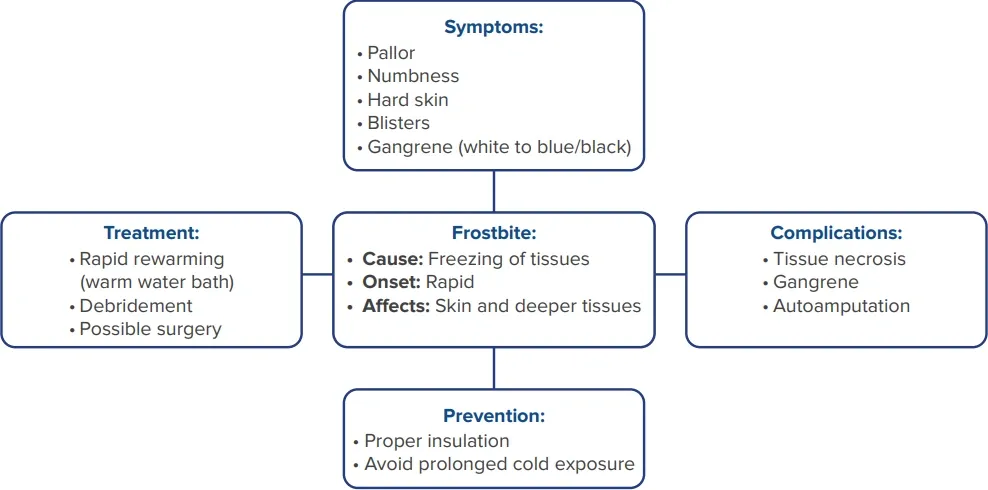
Figure 1: Frostbite.
Chilblain (Figure 2)
Chilblains are painful, itchy lesions that develop on the skin after exposure to cold, damp conditions, typically affecting the fingers, toes, ears, and nose. Prevention involves keeping the body warm and dry during cold weather by wearing insulated clothing, gloves, socks, and shoes. It’s important to avoid sudden temperature changes as it increases the risk of chilblains.
Treatment of chilblain
Treatment for chilblains involves warming the affected area slowly, but gently, by moving to a warmer environment. Applying soothing creams containing corticosteroids can help reduce inflammation and alleviate itching.
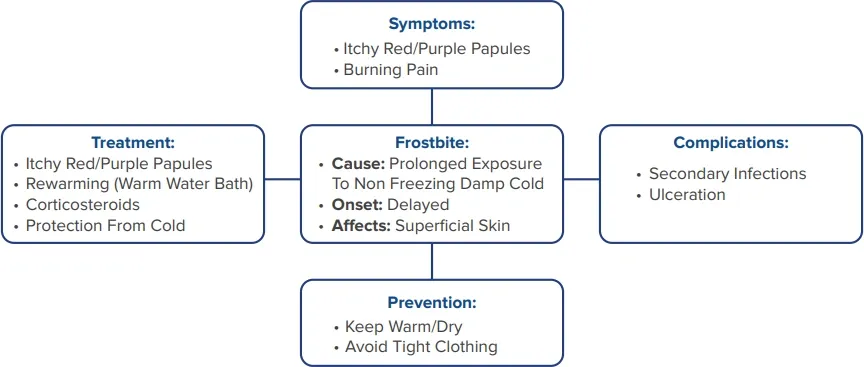
Figure 2: Chilblain.
Trench foot (Figure 3)
Treatment for chilblains involves warming the affected area slowly, but gently, by moving to a warmer environment. Applying soothing creams containing corticosteroids can help reduce inflammation and alleviate itching.
Treatment of trench foot
Treatment for trench foot involves gradually warming the affected feet, gently drying and keeping clean to prevent infection. If the skin appears swollen, blistered, or discoloured, it’s essential to seek medical attention.
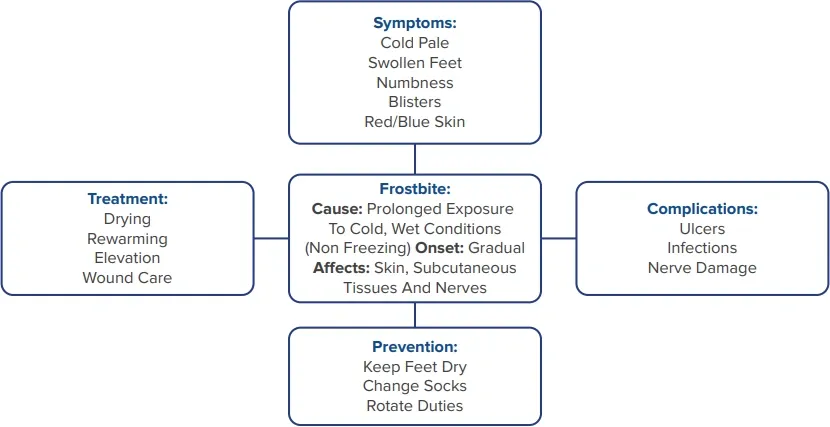
Figure 3: Trench foot.
Triaging patients with cold injury (Figure 4)
This involves rapid assessment of both the severity and type of cold injury — such as frostbite, chilblains, or hypothermia — prioritising life-threatening conditions like systemic hypothermia or deep frostbite. Patients with signs of circulatory compromise, infection, or altered mental status should be prioritised for urgent care.
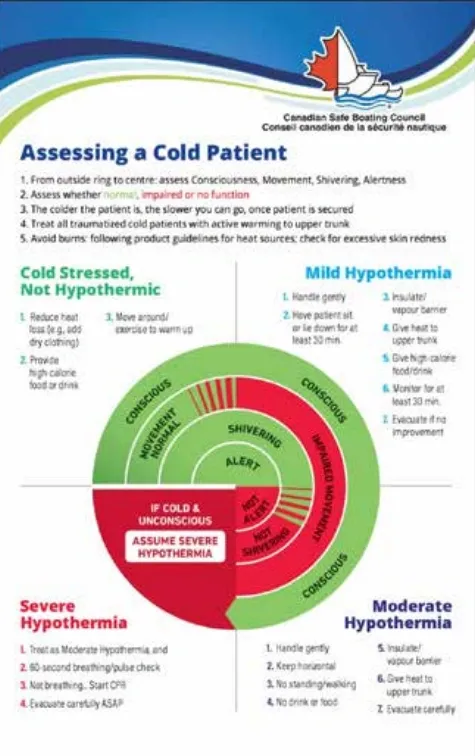
Figure 4: Assessment of hypothermia.23.
Travellers’ Diarrhoea
Gastroenteritis can be broadly categorised based on the setting and causative agents:
- Community-acquired gastroenteritis: Occurs in individuals within the home or local environment. Common viral causes include norovirus and rotavirus (especially in children). Bacterial causes include Campylobacter jejuni, Salmonella spp., Shigella spp., and Escherichia coli (non-travel related strains).24
- Travellers’ diarrhoea: Defined as ≥ 3 loose/watery stools in 24 hours accompanied by symptoms such as abdominal cramps, fever, nausea, vomiting, or blood in the stool. It typically occurs within a few days of travel to high-risk areas (South Asia, Africa, Latin America).
- Most common cause: Enterotoxigenic Escherichia coli (ETEC)
- Other bacterial pathogens: Shigella, Campylobacter, Salmonella, and enteroaggregative Escherichia coli
- Less common causes: Viruses (e.g., norovirus), protozoa (Giardia lamblia, Entamoeba histolytica)
- Acute food poisoning: Refers to rapid onset (< 6 hours) of nausea, vomiting, and diarrhoea due to ingestion of preformed toxins rather than active infection.
- Staphylococcus aureus
- Bacillus cereus
- Clostridium perfringens: Produces enterotoxin causing diarrhoea typically 8–12 hours after ingestion of improperly cooked or stored meat dishes.
| Infection | Key Points |
|---|---|
| Escherichia coli | 1. Common cause of bacterial gastroenteritis, especially in children and travellers 2. Mild watery diarrhoea to severe bloody diarrhoea and abdominal cramps within 12–48 hours of exposure 3. Treatment involves supportive care with oral rehydration to prevent dehydration. Antibiotics are avoided due to increased risk of haemolytic uraemic syndrome (HUS) |
| Giardiasis (caused by Giardia lamblia, a protozoan parasite) | 1. Transmitted through contaminated water, food, or person-to-person contact 2. Commonly affects children and travellers after 7 days of exposure, leading to watery/greasy foul-smelling diarrhoea, bloating, flatulence, and abdominal cramps → malabsorption and weight loss 3. Treatment includes rehydration and antiprotozoal medications, e.g., metronidazole, tinidazole, nitazoxanide 4. Prevention: good hygiene and safe treated water |
| Salmonellosis (Enteric/Typhoid Fever) | 1. Caused by ingestion of contaminated food, especially undercooked poultry, eggs, or unpasteurised dairy 2. Presents with fever, abdominal cramps, nausea, vomiting, watery or sometimes bloody diarrhoea, within 12–48 hours of exposure 3. Treatment: hydration and electrolyte replacement. Antibiotics (ciprofloxacin or azithromycin) reserved for severe cases, infants, elderly 4. Prevention: proper food handling and cooking |
| Shigella | 1. Transmitted via contaminated food, water, or direct contact 2. Commonly affects young children → fever, abdominal cramps, bloody or mucus-filled diarrhoea (dysentery) within 48–72 hours 3. Treatment: oral rehydration; antibiotics (ciprofloxacin or azithromycin) for moderate/severe cases 4. Prevention: hand hygiene and sanitation |
| Staphylococcus aureus | 1. Caused by ingestion of preformed enterotoxins from S. aureus in improperly stored/handled food 2. Symptoms begin within 1–6 hours: nausea, vomiting, abdominal cramps, watery diarrhoea 3. Treatment: supportive, self-limiting; oral rehydration to prevent dehydration 4. Prevention: proper food handling, storage, hygiene |
| Campylobacter | 1. Usually contracted through undercooked poultry, unpasteurised milk, or contaminated water 2. Presents with flu-like prodrome within 48–72 hours → crampy abdominal pains, fever, diarrhoea (may be bloody); can mimic appendicitis 3. Self-limiting, resolves within a week with supportive care, including oral rehydration 4. Antibiotics such as azithromycin or ciprofloxacin are used for severe cases |
| Bacillus cereus | 1. Caused by ingestion of contaminated food, commonly reheated rice, pasta, or meat 2. Produces two types of illness: a. Emetic form: within 1–6 hours after eating contaminated fried rice b. Diarrhoeal form: within 8–16 hours, with diarrhoea and abdominal cramps without vomiting 3. Usually mild and self-limiting, resolves within 24 hours 4. Treatment: supportive care with oral rehydration; antibiotics typically not required |
| Amoebiasis (caused by Entamoeba histolytica) | 1. Gradual onset (>7 days) of abdominal pain, bloody/mucus-laden diarrhoea, and tenesmus 2. Transmission via ingestion of cysts in contaminated food or water, especially in poor sanitation areas 3. Treatment: metronidazole or tinidazole for invasive forms, followed by luminal agents (e.g., paromomycin) to eliminate cysts and prevent recurrence |
Table 7: Travellers’ diarrhoea.
In Flight Medical Emergencies (Table 8)
More than 3.5 billion passengers travelled in commercial flights in 2022. In-flight medical emergencies (IME) are estimated to occur in 1 per 604 commercial flights. The most frequent IMEs include syncope or pre-syncope (32.7%), gastrointestinal (14.8%), respiratory (10.1%) and cardiovascular (7.0%).25 In these situations, doctors, nurses, and other healthcare providers may be called upon to assist with medical emergencies. In-flight cardiac arrest is rare, occurring in only 0.2% of IMEs. Around 90% of flights continue onwards after an IME, while 10% may require an emergency landing.
Pathophysiology
Commercial aircrafts fly at altitudes of 30,000 to 40,000 feet. The pressurised cabin can cause expansion of gas in the sinuses and middle ear as well as nonphysiological gas buildup in compartments (e.g., pneumothorax). Additionally, while the lower partial pressure of oxygen in the cabin, leads to mild hypoxia in all passengers, it can have a more deleterious impact in those with pre-existing medical conditions and respiratory compromise. The latter individuals may need medical certification for a portable oxygen concentrator during flight. Hypoxia and prolonged immobility can lead to VTE. The dehumidified and dry cabin air can cause dehydration. Recycled air can expose travellers to allergens and airborne communicable pathogens.
In-flight medical equipment
In-flight medical equipment is typically scaled to the number of passenger seats, with larger aircraft carrying multiple medical kits. Automated external defibrillators (AEDs) are present on most U.S. and European flights, though not mandatory on all. Supplemental oxygen is available on larger commercial flights, ensuring basic support for respiratory issues and other in-flight medical emergencies until landing.
The contents of the medical kit include, but are not limited to, swabs, tapes, bandages, splints, scissors, sphygmomanometer, stethoscope, airway, masks, gloves, intravenous set, syringes, needles, and a glucometer. The medicines commonly found in such kits include non-narcotic analgesics, antihistamines, aspirin, antacids, bronchodilators, epinephrine, lidocaine, nitroglycerine, 50% dextrose, and saline. Additionally, some kits may also include a thermometer, umbilical cord clamp, tourniquet, and pulse oximeter.
| Category | Conditions |
|---|---|
| Neurological | Syncope, presyncope, transient ischaemic attack, stroke, migraine, loss of consciousness, hypoglycaemia |
| Cardiac | Angina, acute coronary syndrome, accelerated hypertension, aortic dissection, arrhythmia (ventricular tachycardia, ventricular fibrillation, asystole), cardiac arrest |
| Pulmonary | Asthma, chronic obstructive lung disease, pulmonary embolism, pneumonia, pneumothorax |
| Gastrointestinal | Gastritis, diarrhoea, pain abdomen, pancreatitis, food poisoning |
| Obstetric | Pre-term labour, pre-eclampsia, eclampsia, miscarriage, ectopic pregnancy |
| Urological | Retention of urine |
| Allergic Reaction | Anaphylaxis, urticaria, pruritus |
| Psychiatric | Anxiety, depression, psychosis, mania, post-traumatic stress disorder |
| Substance Abuse | Misuse or withdrawal of drugs and alcohol |
Table 8: In-flight medical emergencies.
Obstetric emergencies
Women beyond 36 weeks of gestation (single pregnancy) or 32 weeks (multiple gestation) are generally not permitted to fly.
Obstetric emergencies constitute 0.7% of IME. For pain in the abdomen or vaginal bleeding before 20 weeks of pregnancy, medical services can be provided on arrival. Beyond 20 weeks, any complication — including pre-term labour — require ground medical support and may require flight diversion.
The role of medical volunteers and ground support
Medical personnel who volunteer in-flight services need not carry their professional license documents. However, they should not volunteer if they have consumed a significant amount of alcohol. The contents of the medical kit may be used only after consulting the ground physician. Final decision-making lies with the ground medical team and in-flight care should be a collaborative effort. Various laws including the Good Samaritan’s Protection, the Warsaw Convention, and the Montreal Convention provide legal protection to the volunteer.26
Scuba Diving and Decompression Sickness (Table 9)
SCUBA is an acronym for ‘self-controlled breathing apparatus’. It is a popular recreational activity as well as a profession for marine biologists, underwater archaeologists, rescue divers and military personnel. The recent advances include rise of ‘Enriched Air Nitrox’ (EANx), which has a higher oxygen concentration, thereby reducing the nitrogen absorption and further chances of decompression sickness
| Condition/Disorder | Examples |
|---|---|
| Cardiac disorders | Coronary artery disease, cardiac stent or coronary artery bypass, cardiac ventricular arrhythmias, valvular lesions, pacemaker implantation, heart failure, intra-cardiac shunts |
| Pulmonary disorders | Asthma, chronic obstructive pulmonary disease (COPD), interstitial lung disease (ILD), bullae, spontaneous pneumothorax |
| Neurological disorders | Epilepsy, stroke, cerebral aneurysm, spinal injury, previous neurosurgery with deficit |
| Ear Nose Throat (ENT) disorders | Tympanic membrane perforation, otitis media, hearing impairment, temporo-mandibular joint dysfunction, previous ear surgery (e.g., myringotomy, stapedectomy) |
| Gastrointestinal disorders | Severe gastroesophageal reflux, hernia, fistulae, inflammatory bowel disorder |
| Endocrine disorders | Obesity, diabetes |
| Orthopaedic conditions | Chronic back pain, scoliosis, amputations |
| Mental disorders | Panic disorder, phobia, alcohol and substance abuse |
| Others | Pregnancy, chronic kidney disease, anaemia, polycythaemia |
Table 9: Medical contraindications for scuba diving.
Decompression Sickness (DCS)
Decompression sickness, commonly known as “the bends” or “Caisson’s disease”, is a life-threatening condition arising from the formation of gas bubbles (generally nitrogen) in body tissues and the bloodstream. This results from a rapid reduction in ambient pressure. It commonly affects deep-sea divers, aviators, astronauts performing experiments outside the space station, and workers in compressed-air environments.
Pathophysiology of DCS
During scuba diving, the diver inhales extra oxygen and nitrogen from the air tank. The former gets utilised whereas the latter remains dissolved in the body tissues and blood due to increased partial pressure. When the diver ascends too rapidly, the pressure is reduced too quickly. The nitrogen gets insufficient time to separate from the blood and forms microbubbles in the bloodstream or the body tissues. Extreme pain causes the person to literally ‘bend’. Nitrogen is an inert gas, but the bubbles cause vascular obstruction and organ damage. Risk factors for DCS include obesity, dehydration, congenital heart defects, injury, coldwater diving, alcohol or tobacco intake, advanced age, and male sex.
Symptoms of DCS
- BENDS: Joint pain (commonly in shoulders, elbows, knees) and ‘dysbaric osteonecrosis’ (DON) due to pressure-induced bone damage.
- CHOKES: Cough, dyspnoea, wheeze, chest pain and right sided heart failure (“air-lock”)
- STAGGERS: Neurological deficits such as headache, blurred vision, paraesthesias, ataxia, behavioural changes, seizures, spinal cord injury, and altered sensorium
Classification of DCS
- Type 1 DCS: ‘Simple’ DCS with mottled skin and musculoskeletal involvement
- Type 2 DCS: ‘Serious’ DCS with CNS or other organ involvement
- STAGGERS: Neurological deficits such as headache, blurred vision, paraesthesias, ataxia, behavioural changes, seizures, spinal cord injury, and altered sensorium
Treatment of DCS
The ideal treatment is hyperbaric oxygen therapy in a recompression chamber.27 This therapy pushes back the nitrogen bubbles from the tissues into the bloodstream and improves oxygenation. The duration of treatment may range from four hours to multiple sessions. Beware of seizures and temporary myopia due to oxygen toxicity. The patient is treated in the Trendelenburg position. IV fluids and anti-inflammatory drugs are administered.
Prevention of DCS
- Avoid rapid ascent.
- Use dive tables. Ascent speed of > 20 metres per minute increases the chances of DCS.
- Avoid flying for a minimum of 12 hours after a single dive and 18 hours after multiple dives.
Management of Bites and Stings
Travellers are often exposed to various arthropod and animal bites or marine stings depending on the destination. Prompt first aid and appropriate medical treatment can prevent serious complications.
Management of insect bites
Includes washing the affected area thoroughly with soap and water, removing the stinger or insect with a pair of tweezers and applying a topical antihistamine or low-potency corticosteroid cream to reduce itching and swelling. Oral antihistamines and analgesics may be prescribed.
Management of animal bites
Includes immediately washing the wound with soap and running water for at least 15 minutes, administering tetanus prophylaxis if not up to date, initiating rabies post-exposure prophylaxis (PEP) immediately as rabies is 100% fatal. Consider starting empirical antibiotics such as amoxicillin-clavulanate, especially for deep or high-risk wounds.
Management of marine stings
Includes using topical jellyfish sting inhibitor lotions for prevention. For jellyfish stings, rinsing the area with vinegar to neutralise nematocysts, immersing the affected limb in hot water (40–45°C) for 20–30 minutes to relieve pain or taking a hot bath to get rid of the nematocysts, picking off tentacles with a tweezer, gloves or towel-wrapped hand is recommended. Seeking emergency medical care in case of systemic symptoms such as difficulty breathing, chest pain, muscle spasms, or hypotension develops is important. Anti-venom is administered IV for box jellyfish stings as mortality is high. Injectable analgesics are needed for ‘Irukandji syndrome’ (chest, back, or abdominal pain with high blood pressure).
| Feature | Acute Mountain Sickness (AMS) | High Altitude Cerebral Oedema (HACE) | High Altitude Pulmonary Oedema (HAPE) |
|---|---|---|---|
| Clinical Features | Headache, giddiness, weakness, fatigue, lightheadedness, nausea, vomiting, sleeping problem, anorexia | Altered mental status, ataxia | Dyspnoea, chest pain, cough, tightness on exertion, congestion, decreased exercise capacity, respiratory distress, cyanosis |
| Timing | Within hours and lasts 1–2 days | Transitions from AMS, worsening to HACE | Within 1–4 days |
| Elevation | 5000–8000 ft | Mostly > 12,000 ft (can occur > 8000 ft) | > 8000 ft |
| Physical Exam | Normal | Truncal ataxia, papilloedema, retinal haemorrhage, cranial nerve palsies | Tachycardia, tachypnoea, haemoptysis, cyanosis, inspiratory crackles |
| Imaging | Normal | MRI: hyperintensities in corpus callosum, cerebellar oedema | CXR: Bilateral patchy infiltrates, perivascular oedema, right ventricular strain |
| Lab Findings | Normal | Normal | ↑ WBC, raised CRP, increased pulmonary artery pressure on ECHO |
| Condition | Key Travel Advice |
|---|---|
| Pregnancy | Avoid travel after 36 weeks, carry prenatal card, avoid Zika zones, use aisle seat & compression stockings, don’t travel with pre-eclampsia or twin gestation |
| Infants | Maintain hydration, immunisations, carry OTC medicines, protect from bites, never leave unsupervised near water |
| Parkinson’s disease | Adhere to medication timing, avoid stress, use wheelchair assistance |
| Dementia | Travel with caregiver, wear medical bracelet, avoid crowds |
| Diabetes | Carry glucometer, adjust insulin as per time zone, carry snacks, avoid extra carbs, don’t walk barefoot |
| HIV | Adhere to ART therapy, safe sex practices, avoid food or water risk |
Table 10: Travel advice for special populations.
Travel advice for special populations.
Nearly 43%–79% of travellers to low and middle-income countries (LMICs) fall sick during or on return from travelling to these places. Since the incubation period of disease is variable, a detailed travel and exposure history and a syndromic approach becomes pertinent. Table 10 represents travel advisory for infants, during pregnancy and other specific conditions
Travel advice for special populations.
Some diseases are highly contagious and when these are suspected or confirmed, use of personal protective equipment (PPE) and isolation of the patient is needed. High Consequence Infectious Diseases (HCIDs) include ‘Contact’ diseases like Ebola, Lassa fever, Marburg disease, and Crimean Congo Haemorrhagic Fever. The ‘Respiratory’ HCIDs include Mpox (Clade 1 only), Avian Influenza A (H5 and H7), Nipah virus, Pneumonic plague and severe acute respiratory syndrome (SARS). These are all notifiable diseases.28
For all other patients, outpatient treatment is advisable unless they are haemodynamically unstable and require hospitalisation. The threshold for admission should be low as these patients can worsen rapidly. Malaria, especially P. falciparum, should be rapidly ruled out. P. knowlesi is an emerging species causing malaria on exposure to macaque monkeys.
Differential diagnoses
- Malaria: Most important and potentially lifethreatening; should always be ruled out first
- Dengue, Chikungunya, Zika virus: Common in tropical and subtropical areas
- Enteric (Typhoid) Fever: Especially in South Asia
- Rickettsial infections: Eschar, rash, thrombocytopenia
- COVID-19, Influenza: Depending on outbreaks and exposure
- Leptospirosis, Schistosomiasis: Freshwater exposure, animal contact
- ‘Undifferentiated’ Fevers with no localising symptoms or signs e.g., Epstein–Barr virus, cytomegalovirus, toxoplasmosis
Most of these illnesses have a short incubation period of up to two weeks e.g., dengue, influenza, travellers’ diarrhoea. Some diseases with an incubation period of 2–6 weeks include acute viral hepatitis, typhoid, malaria, leishmaniasis, malaria, and acute HIV infection. Other diseases like tuberculosis, schistosomiasis, filariasis, and strongyloidiasis can have a variable incubation period of a few months to years. Malaria has an incubation periods ranging from days to months.
The following questions need to be asked:
- Time of onset of symptoms
- Geographical location: When the symptoms started, destination, transit or on return
- Destination, itinerary: Adventure sports, leisure activities, water exposure, bites (mosquito, ticks, sandflies), sexual exposure, tattoos
- Consumption of raw or undercooked food, seafood, unfiltered water
- Use of insect repellents, nets, malaria prophylaxis compliance
- Whether vaccinated for vaccine preventable diseases: Hepatitis A, Hepatitis B, typhoid, influenza
- Treatment received prior to consult
Suggested workup
Includes complete blood count (CBC) with differential count, liver function tests (LFTs), blood cultures, urine routine and culture, stool culture, malaria rapid diagnostic test (RDT), and peripheral smear (thick and thin), dengue NS1 antigen/IgM antibodies, typhoid Widal test/blood culture, chest X-ray if respiratory symptoms are present, tests for rickettsioses, leptospirosis, HIV testing and multiplex PCR respiratory panel.
Management principles
- Administer antipyretics such as paracetamol
- Apply isolation precautions if a contagious infection is suspected
- Initiate specific treatment based on confirmed diagnosis (e.g., antimalarials, antibiotics, supportive care)
Additional resources
The Centre for Disease Control (CDC), Travellers’ Health website, WHO GeoSentinel29 network and the International Society of Travel Medicine (ISTM) provide useful resources for updating physicians about geographical distribution of diseases and outbreaks. Post COVID-19 pandemic, telemedicine has provided a platform for a convenient pre-travel and post-travel consults.
Monica Mahajan, Shubham Tikkiwal. Emporiatrics: The Science and the Art of Safe Travel. MMJ. 2025,
September. Vol 2 (3).
References
Case 1
- World Tourism Organization (UN Tourism). International Tourism Highlights, 2024 Edition. Madrid: UN Tourism; November 2024. ISBN 978-92-844-2579-2 (print); 978-92-844-2580-8 (electronic). Available at: https://www.unwto.org/WTO_highlights_2024.pdf. Accessed: 21th July 2025.
- Aw B, Boraston S, Botten D, et al. Travel medicine: what’s involved? When to refer? Can Fam Physician. 2014;60(12):1091–103.
- Brandenburg WE, Blosser BW. Mountain medical kits: epidemiology-based recommendations and analysis of medical supplies carried by mountain climbers in Colorado. J Travel Med. 2017;24(2):taw088.
- Freedman DO, Chen LH. Vaccines for international travel. Mayo Clin Proc. 2019;94(11):2314–39.
- Steffen R, Chen LH, Leggat PA. Travel vaccines—priorities determined by incidence and impact. J Travel Med. 2023;30(7):taad085.
- Schnyder JL, de Jong HK, Bache BE, et al. Long-term immunity following yellow fever vaccination: a systematic review and meta-analysis. Lancet Glob Health. 2024;12(3):e445–e456.
- Mahittikorn A, Mala W, Wilaartana P, Siri S, et al. Prevalence, anti-malarial chemoprophylaxis and causes of death for severe imported malaria: a systematic review and meta-analysis. Travel Med Infect Dis. 2022;49:102408.
- Golding JF. Motion sickness. In: Furman JM, Lempert T, eds. Handbook of Clinical Neurology. Vol 137. Amsterdam: Elsevier; 2016. p. 371–90.
- Murdin L, Golding JF, Bronstein AM. Managing motion sickness. BMJ. 2011;343:d7430.
- Ali A, Mir S, Waked S, Ali NL, et al. Mal de Débarquement Syndrome: an often unrecognized and unreported condition. Cureus. 2024;16(7):e64590.
- Janse van Rensburg DC, Jansen van Rensburg A, Fowler PM, et al. Managing travel fatigue and jet lag in athletes: a review and consensus statement. Sports Med. 2021;51(10):209–52.
- Waterhouse J, Reilly T, Atkinson G. Jet-lag. Lancet. 1997;350(9091):1611–16.
- American Academy of Sleep Medicine. International Classification of Sleep Disorders. 3rd Edition. Darien, IL: American Academy of Sleep Medicine; 2014. ISBN: 0991543416 (print), 0991543408 (online).
- Ambesh P, Shetty V, Ambesh S, et al. Jet lag: heuristics and therapeutics. J Family Med Prim Care. 2018;7(3):507–10.
- Reyes NL, Abe K, de Jesus M. Deep vein thrombosis and pulmonary embolism. In: CDC Yellow Book 2026: Health information for international travel. New York: Oxford University Press; 2025. Chapter updated 23 April 2025. Available from: https://wwwnc.cdc.gov/travel/yellowbook/2026/travel-by-air/deep-vein-thrombosis-and-pulmonary-embolism.htm. Accessed: 13th August 2025.
- Coker RK, Armstrong A, Church AC, et al. BTS clinical statement on air travel for passengers with respiratory disease. Thorax. 2022;77(4):329–350.
- International Air Transport Association (IATA), Medical Advisory Group. Medical Manual for Aviation. 12th Edition. Montreal/Geneva: International Air Transport Association; 2020. ISBN 978-92-9264-250-1.
- Clarke MJ, Broderick C, Hopewell S, et al. Compression stockings for preventing deep vein thrombosis in airline passengers. Cochrane Database Syst Rev. 2021;(4):CD004002.
- Bärtsch P, Swenson ER. Clinical practice: Acute high-altitude illnesses. N Engl J Med. 2013;368(24):2294–302.
- Luks AM, Beidlem BA, Freer L, et al. Wilderness Medical Society Clinical Practice Guidelines for the Prevention, Diagnosis, and Treatment of Acute Altitude Illness: 2024 Update. Wilderness Environ Med. 2024;35(1 Suppl):25–19S.
- Sorensen C, Hess J. Treatment and prevention of heat-related illness. N Engl J Med. 2022;387(15):1404–13.
- McIntosh SE, Freer L, Grissom CK, et al. Wilderness Medical Society Clinical Practice Guidelines for the Prevention and Treatment of Frostbite: 2024 Update. Wilderness Environ Med. 2024;35(2):183–97.
- Giesbrecht GG. Cold Card to guide responders in the assessment and treatment of cold-exposed patients. Wilderness Environ Med. 2018 Oct;29(4):512–13.
- Riddle MS, Connor BA, Beeching NJ, et al. Guidelines for the prevention and treatment of travellers’ diarrhoea: a graded expert panel report. Journal of Travel Medicine, 2017;24(Suppl 1):S57–S74.
- Martin-Gill C, Doyle TJ, Yealy DM. In-flight medical emergencies: A review. JAMA. 2018;320(24):2580–90.
- de Caprariis PJ, de Caprariis‑Salerno A, Lyon C. Healthcare professionals and in‑flight medical emergencies: resources, responsibilities, goals, and legalities as a Good Samaritan. South Med J. 2019;112(1):60–5.
- Denoble PJ, Chimiak J. Travellers Medical Guide. Durham, NC: Divers Alert Network; 2022. Available from: https://www.dan. org/wp-content/uploads/2021/08/dan-travel-medical-guide. pdf dan.org+13cdc.gov+13dan.org+13. Accessed:
- Atkinson B, Beadsworth M, Dunning J. Cases of high‑consequence infectious diseases identified in the UK, 1962–2023. J Med Microbiol. 2025;74(3):001982.
- Angelo KM. Twenty-five years: GeoSentinel’s impact on travelrelated surveillance and its vision for the future. J Travel Med. 2020;27(7):taaa132.